

A density meter that was stable last week and is now bouncing around is one of the most common field complaints. Sometimes the cause is obvious. Sometimes it takes a bit of digging. The good news is that most fluctuation problems trace back to one of a handful of common causes, and most of them are fixable without pulling the instrument from the pipe.
First: Is It Actually Fluctuating?
Before assuming the instrument is faulty, check the timescale of the fluctuation. Density in a process line does change, especially during batch transitions, startup, or when a control loop is still settling.
A reading that swings by 0.005 g/cm³ over a few minutes might be real. A reading that swings by the same amount in ten seconds is almost certainly noise. The first step is always to understand the timescale before looking for a cause.
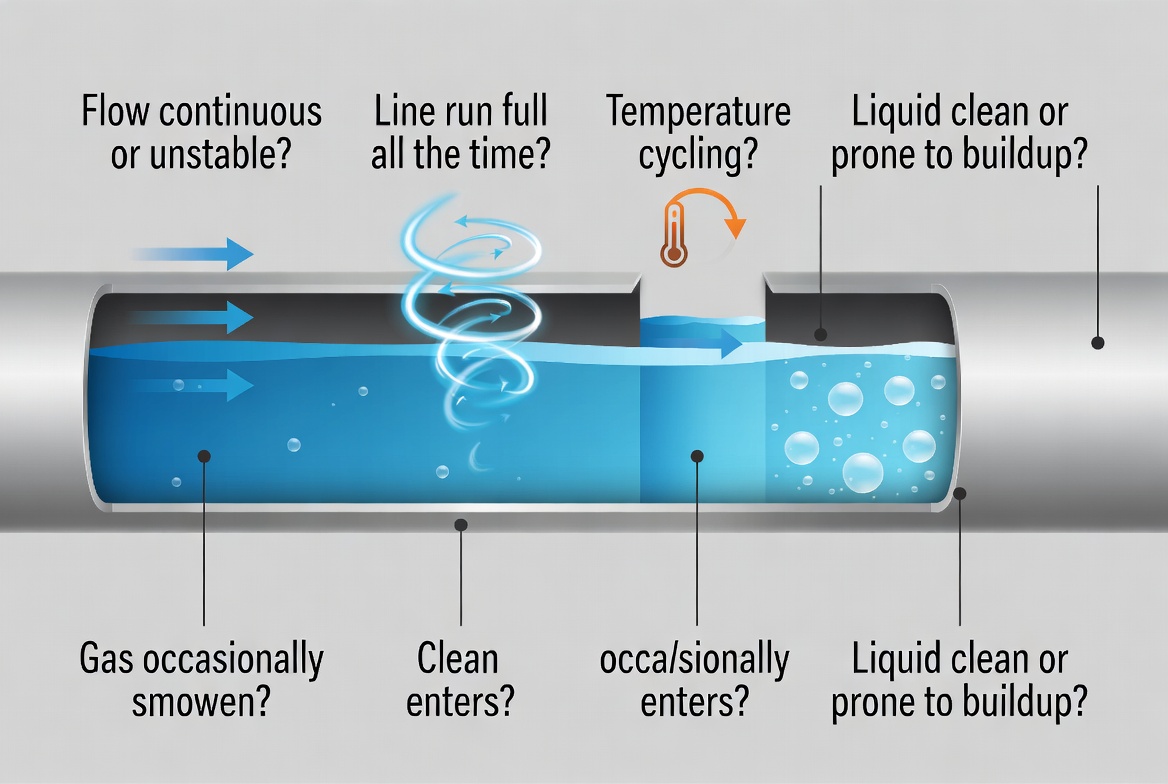
Cause 1: Air Bubbles on the Fork
This is the number one cause of noisy density readings. Air bubbles cling to the fork prongs and change the effective density that the instrument sees. The bubbles come and go, so the reading bounces.
Bubbles are most common when the process liquid has surfactants, when the inlet pressure is low, or when the pipe is not fully flooded. The fix depends on the source. Raising the backpressure slightly can help keep bubbles from forming. Relocating the instrument to a fully flooded section of pipe is the more permanent solution.
Cause 2: Flow Turbulence
If the density meter is installed directly after a pump, a valve, or a pipe elbow, the flow is turbulent. Turbulence shakes the fork unevenly, and the vibration signal picks that up as noise.
You can usually tell turbulence is the cause because the fluctuation gets worse at higher flow rates and settles down when the flow slows. The fix is to relocate the instrument to a section with at least 10 pipe diameters of straight run upstream.
Cause 3: Temperature Swings
Density changes with temperature. If your process temperature is swinging, the density reading will swing with it. This is not a fault. It is physics.
The way to tell the difference is to look at the temperature reading at the same time. If the density and temperature move together in a predictable way, the instrument is probably fine and the process is just changing.
If the temperature is stable but the density is not, the problem is somewhere else.
Cause 4: Coating or Scaling on the Fork
Process liquids that leave deposits, like scaling water or polymerizing resins, can build up on the fork prongs over time. A thin coating changes the mass of the fork and shifts the frequency baseline. If the coating is uneven or flaking off, the reading will drift and fluctuate at the same time.
This one is usually a slow development. The reading gets noisier over days or weeks, not suddenly overnight. The fix is to clean the fork. How you clean it depends on what the deposit is. Mild acid for scaling, solvent for resins, or just mechanical cleaning with a soft brush.
Cause 5: Electrical Interference
Density meters with 4-20mA output are fairly resistant to electrical noise, but it still happens. A poorly shielded cable running next to a variable frequency drive or a large motor can pick up interference that shows up as fluctuation in the reading.
The quick check is to look at the signal at the instrument end with a multimeter, then look at it at the DCS end. If the fluctuation only shows up at the DCS, the problem is in the signal path, not the instrument.
Quick Diagnostic Checklist
|
Observation |
Most Likely Cause |
|
Fluctuates on seconds timescale |
Air bubbles or turbulence |
|
Fluctuates with temperature |
Real process density change |
|
Gets worse at higher flow |
Flow turbulence |
|
Gradual increase in noise over weeks |
Fork coating or scaling |
|
Only noisy at the DCS, not at meter |
Electrical interference in signal cable |
|
Sudden total loss of stable reading |
Fork damaged or piezoelectric element failed |
When to Call the Factory
If you have ruled out bubbles, turbulence, temperature, coating and electrical interference, and the instrument still fluctuates, it may be a hardware fault. Piezoelectric driver failure is rare but it does happen, usually after several years of continuous operation or after a dry-running incident.
At that point, the most practical path is usually to contact the manufacturer. Trying to repair a piezoelectric driver in the field is not realistic for most plants.
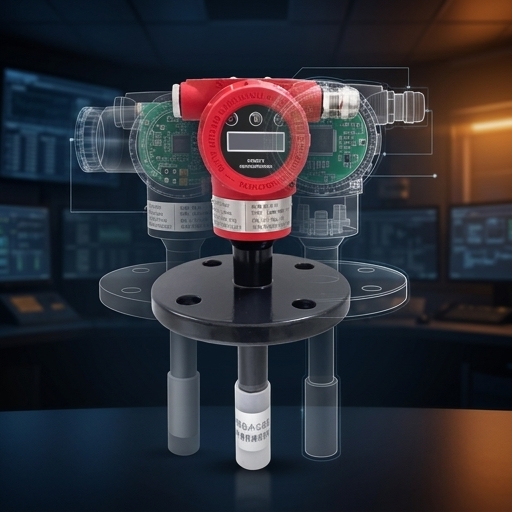
LONNMETER Technical Support
If you are seeing unstable readings from a LONNMETER LONN700 density meter, the technical team can help you work through the diagnostic steps remotely before deciding whether the instrument needs to be returned.
In many cases the issue turns out to be an installation or process condition that can be corrected on-site. The support team can also advise on whether the fork sensor needs cleaning or replacement, and what the lead time would be if a return is necessary.
Post time: Jun-12-2026


