

Why Density Measurement Matters in Oil & Gas Pipelines
In oil & gas operations, density is not just a physical property — it directly impacts:
- Product quality (API gravity)
- Custody transfer accuracy
- Interface detection between different products
- Blending efficiency
In pipeline systems where multiple products (crude oil, diesel, gasoline) are transported, even small density deviations can lead to:
- Product contamination
- Financial losses
- Operational inefficiencies
That’s why more operators are moving toward real-time, inline density measurement instead of relying on manual sampling.
At LONNMETER, we provide online density measurement solutions designed specifically for pipeline conditions in oil & gas environments.
Typical Applications in Oil & Gas Pipelines
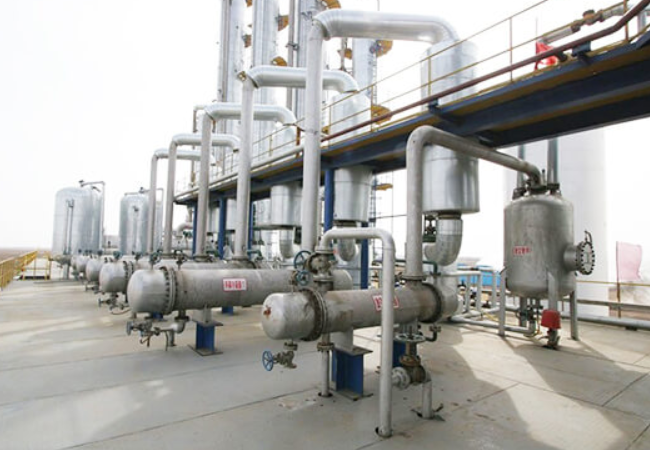
1. Multi-Product Pipeline Interface Detection
When transporting different products in sequence, detecting the interface accurately is critical.
Challenges:
- Mixing zones between products
- Delayed lab results
- Product loss during switching
Solution:
Online density meters provide real-time density changes, allowing operators to:
- Identify product boundaries instantly
- Reduce mixing loss
- Improve operational efficiency
2. Crude Oil Density Monitoring
Crude oil density varies depending on source and composition.
Why it matters:
- Affects API gravity calculation
- Impacts pricing and custody transfer
- Influences downstream processing
With LONNMETER:
- Continuous monitoring ensures stable and traceable data
- Supports integration with control systems
3. Refined Product Quality Control
For products like gasoline and diesel, density must stay within strict ranges.
Use cases:
- Refinery output monitoring
- Storage tank transfer
- Pipeline distribution
Real-time density measurement helps:
- Maintain product specifications
- Reduce off-spec batches
- Improve consistency
4. Blending and Mixing Optimization
In blending processes, density is often used as a control parameter.
Benefits:
- More precise blending ratios
- Reduced raw material waste
- Faster process adjustment
Why Online Density Measurement Is Better Than Manual Sampling
Many pipeline systems still rely on lab testing.
But in reality:
|
Method |
Limitations |
| Manual sampling | Time delay, labor intensive |
| Lab measurement | Not real-time |
| Online density meter | Continuous, real-time, automated |
The difference is simple:
Online measurement allows you to react immediately, not after the problem occurs.
Key Requirements for Pipeline Density Measurement
From real field experience, oil & gas engineers usually focus on five things:
1. Stability in Flow Conditions
Pipeline environments are dynamic:
- Flow fluctuations
- Pressure changes
- Pump vibration
A reliable solution must deliver stable readings despite these conditions.
2. Resistance to Temperature and Pressure
Typical pipeline conditions require:
- Temperature range: -25°C to 120°C (or higher)
- Pressure resistance: up to 2.5 MPa or more
3. Compatibility with Petroleum Products
The instrument must handle:
- Crude oil
- Diesel
- Gasoline
- Mixed hydrocarbons
Material selection is critical to ensure long-term durability.
4. Easy Integration with Existing Systems
Pipeline operations depend heavily on automation.
A density meter should support:
- 4–20 mA output
- RS485 communication (optional)
- Integration with DCS / SCADA systems
5. Low Maintenance in Remote Locations
Pipelines often operate in remote or harsh environments.
The instrument should:
- Require minimal maintenance
- Allow simple on-site calibration
- Resist fouling and contamination
LONNMETER Online Density Meter for Pipelines
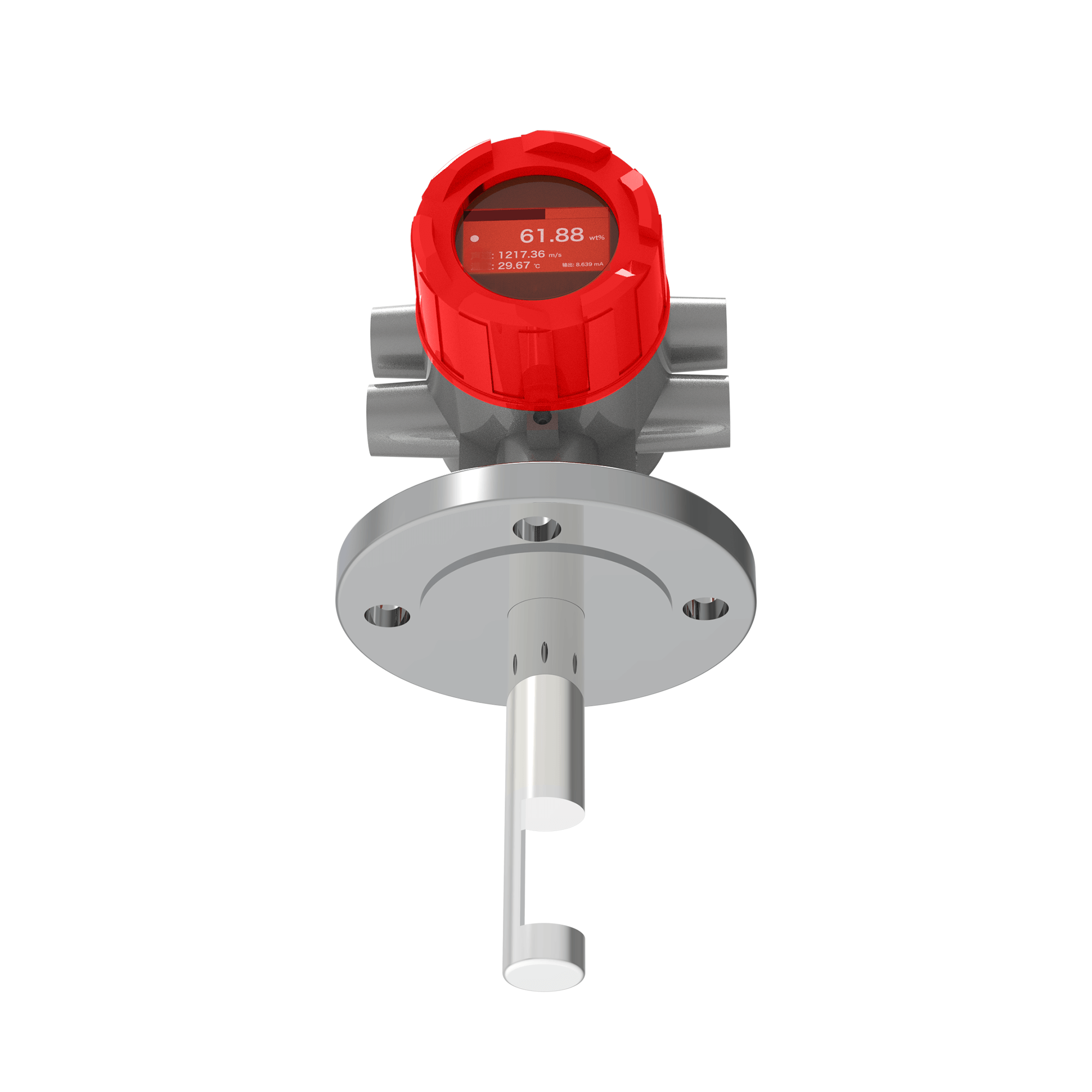
Based on real industrial requirements, LONNMETER online density meters are designed for pipeline applications.
Core Features
- Measurement range: 0 – 2 g/cm³
- Accuracy: ±0.002 g/cm³
- Repeatability: ±0.0001 g/cm³
- Built-in temperature compensation
- Process connection: flange / threaded / clamp
- Materials available:
- 316L stainless steel
- Hastelloy
- Titanium
- Temperature: -25°C to 120°C (customizable)
- Pressure: up to 2.5 MPa (higher on request)
- 4–20 mA output
- RS485 communication (optional)
- Compatible with DCS / PLC systems
Mechanical Design
Operating Conditions
Output & Integration
Installation Considerations for Pipeline Applications
Correct installation is essential for reliable measurement.
Recommended practices:
- Install away from pumps or strong vibration sources
- Maintain stable flow conditions (≤ 1 m/s when possible)
- Ensure full contact between sensor and liquid
- Provide straight pipe sections:
- Upstream ≥ 600 mm
- Downstream ≥ 300 mm
�� Proper installation significantly improves measurement stability and lifespan.
Common Challenges — and How to Avoid Them
Issue: Unstable readings
Cause: air bubbles or turbulence
Solution: optimize installation location and flow conditions
Issue: Measurement drift
Cause: sensor fouling or coating
Solution: regular cleaning and calibration
Issue: Incorrect readings
Cause: multi-phase flow (gas + liquid)
Solution: ensure suitable application conditions
Why Work with LONNMETER
At LONNMETER, we focus on practical solutions — not just specifications.
We support customers with:
- Application-based product selection
- Installation guidance
- Fast technical support
- Custom solutions for challenging environments
Our instruments are already used in:
- Petrochemical plants
- Pipeline transportation systems
- Chemical processing facilities
Request a Quote or Technical Consultation
If you are working on a pipeline project or upgrading your measurement system, we can help.
Visit: https://www.lonnmeter.com/
Contact our team for:
- Product recommendations
- Technical consultation
- Fast quotation
Post time: Apr-15-2026


