

Every refinery engineer knows that density matters. Crude oil pricing is by API gravity. Product quality is tied to density. Blending is controlled by density. But if you ask where exactly inline density measurement changes how the plant runs, the answers are more specific than the textbooks suggest.
This article walks through three process units where inline density measurement makes a real operational difference: the crude desalting system, the atmospheric distillation column, and the fluid catalytic cracking unit. Not generic “petroleum density measurement” — specific units, specific measurements, specific outcomes.
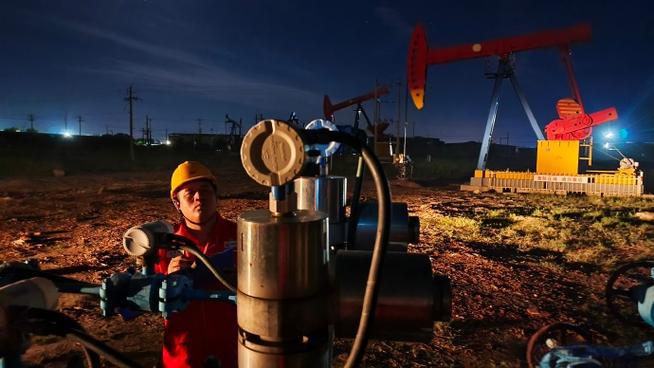
Unit 1: Crude Desalting — Where the Measurement Protects Everything Downstream
Before crude oil enters the distillation column, it is desalted to remove water, salt (NaCl), and suspended solids. The desalting vessel mixes the crude with wash water and applies an electric field to coalesce the water droplets so they settle out.
The key control variable in desalting is the water content of the crude leaving the vessel. Too much water carries salt into the furnace tubes, where it causes fouling and corrosion. The water content is inferred from density.
The density difference between crude and water is significant: crude oil is typically 0.80–0.95 g/cm³, wash water is 1.00 g/cm³. A water content of 0.5% by volume changes the crude density by about 0.001 g/cm³. A density meter with ±0.001 g/cm³ accuracy can detect that shift.
In practice, the density reading is used as an inferential measurement for water content. The operator sets a density setpoint that corresponds to the target water cut. When the density drops below setpoint (lighter fluid = more water in the crude), the water content has increased and the wash water rate is increased.
|
Desalting density measurement: key specs Density range: 0.85 – 0.95 g/cm³ (crude) Required accuracy: ±0.001 g/cm³ or better (to detect 0.5% water) Temperature: 100 – 150°C (upstream of furnace) Key output: inferential water content, alarm if water cut rises Hazard area: Class I Div 1 or Zone 1 — explosion-proof meter required |
Unit 2: Atmospheric Distillation — Naphtha Endpoint Control
The atmospheric distillation column separates crude into fractions by boiling range. The key cuts: naphtha (below 180°C), kerosene (180–260°C), gasoil (260–360°C), and residuum (above 360°C). The boundaries between cuts are controlled by temperature, but the density of each side product is the quality indicator.
The naphtha cut point is the most critical. Naphtha that is too heavy (high density, high final boiling point) contaminates the gasoline pool. Naphtha that is too light (low density) reduces refinery yield. The target naphtha API gravity is typically 60–65°API, which corresponds to 0.72–0.74 g/cm³ at 15°C.
An inline density meter on the naphtha side draw gives the control room a continuous reading of naphtha quality. The column reflux and side draw rates are adjusted to hold the target density. Without it, the operator relies on lab samples taken every 2–4 hours. Between samples, the column can drift.
The temperature-density relationship in distillation is not simple. The naphtha density changes with both the cut temperature and the crude composition. When the crude slate changes (different feedstock), the temperature setpoint and the density setpoint may need to move together. An inline density meter captures this relationship in real time.
|
Distillation naphtha density: key specs Density range: 0.70 – 0.76 g/cm³ Required accuracy: ±0.0005 g/cm³ (naphtha API gravity tolerance ±0.5°API) Temperature: 150 – 220°C at the draw tray Key output: naphtha API gravity, cut point control Note: compensation to 15°C reference is essential (distillation temperatures vary) |
Unit 3: FCCU — Feed Preheating and Slurry Density Control
The fluid catalytic cracking unit (FCCU) converts heavy gasoil into gasoline and lighter products. The feed is heavy gasoil from the atmospheric column, preheated to 300–360°C before entering the reactor.
Two places where density matters in the FCCU:
Feed preheat control. The feed density at the preheat coil inlet tells the operator whether the gasoil composition is within the FCC design window. A density that is too high means the feed is too heavy (higher Conradson carbon, more catalyst deactivation). A density that is too low means the feed is too light (lower conversion yield). The target density range is typically 0.90–0.96 g/cm³ at 15°C.
Slurry oil density. The bottom product of the FCCU main fractionator is slurry oil. It contains fine catalyst particles (50–150 micrometers) that make it abrasive and opaque. Measuring its density is difficult with optical instruments. A tuning fork density meter handles slurry without the sensor fouling issues of optical methods. The slurry density (typically 1.0–1.15 g/cm³) is used to control the slurry settling and the draw rate.
|
FCCU density measurement: key specs Feed density range: 0.88 – 0.96 g/cm³ Slurry density range: 1.00 – 1.15 g/cm³ (with 1–3% catalyst solids) Required accuracy: ±0.001 g/cm³ Temperature: 300 – 360°C (feed), 280 – 320°C (slurry) Hazard: high temperature + explosive atmosphere Slurry note: tuning fork preferred over optical (fouling resistance) |
What these three units have in common
First: the density reading is not an end in itself. It is a proxy for something else — water content in desalting, API gravity in naphtha, catalyst loading in slurry. That distinction matters when you are specifying the meter. You are not buying density accuracy for its own sake; you are buying the ability to infer your real process variable through density.
Second: temperature compensation is non-negotiable. Every refinery measurement is reported at 15°C (or 60°F in US units) because the process temperature varies throughout the day. An uncompensated density reading is meaningless in a refining context. Make sure the meter’s compensation algorithm matches the standard your refinery uses for API gravity calculation.
Third: explosion protection is standard, not optional. Every location described here is Class I Division 1 or Zone 1. The meter must carry ATEX/IECEx/FM/CSA certification for the classified area. Confirm the certification covers the specific gas group present — hydrogen sulfide (H₂S) is common in crude units and affects the gas group rating.
A note on API gravity vs density
API gravity is an inverse measure of density, calculated as:
API = (141.5 / Specific Gravity at 60°F) − 131.5
Most modern density meters can be configured to output API gravity directly, applying the formula internally after the temperature compensation. If your refinery uses API gravity as the operating unit, configure the meter that way — it is more intuitive for the operators and avoids conversion errors in the control room.
LONNMETER instruments for refinery applications
The LONN700 explosion-proof configuration covers the temperature and pressure ranges at all three units described. ATEX/IECEx/FM certification is standard. API gravity output (to 60°F reference) is configurable. For the FCCU slurry application, the Hastelloy sensor option handles the abrasive catalyst solids.
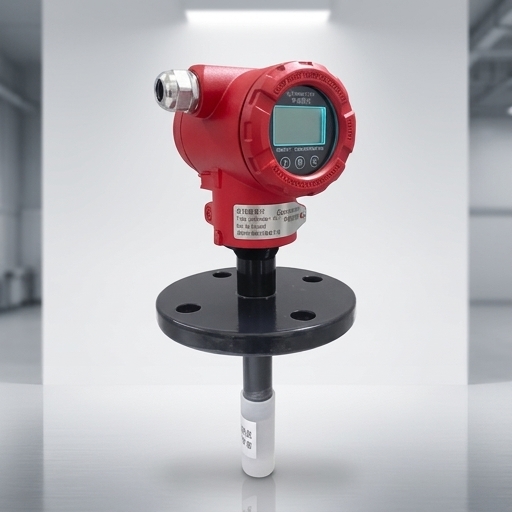
If you are specifying density measurement for a refinery process unit and want to discuss the explosion protection requirements, the gas group certification, or the API gravity configuration, the LONNMETER technical team can review your P&ID and instrument data sheets.
Questions on refinery density measurement
Why is API gravity used instead of density in refineries?
Historical convention and practical range. API gravity is an inverted scale — higher API means lighter product — which makes the numbers intuitive: light crude (30–40°API), heavy crude (10–20°API), gasoline (60–70°API). The scale compresses the heavy end and expands the light end, giving better resolution across the product range most refineries care about.
Can a tuning fork density meter handle slurry with catalyst fines?
Yes, with caveats. The fork vibration prevents solids accumulation under normal conditions. However, the catalyst fines in FCC slurry (1–3% by weight, 50–150 µm particle size) are abrasive over time. Specify Hastelloy or a hardfaced sensor. Check the frequency trend during operation — a slow upward drift in frequency over months indicates wear.
What gas groups are present in a typical crude distillation unit?
The primary explosion hazard in crude units is H₂S (hydrogen sulfide), which is Group IIB in IECEx/ATEX classification. Methane and light hydrocarbons are also present, but H₂S is the more stringent designation. Confirm the gas group with your safety department before specifying the meter — Group IIB is different from Group IIC, and certification to IIB does not cover IIC areas.
What reference temperature does the petroleum industry use?
Globally, 15°C (59°F) is the standard reference temperature for petroleum measurement (ASTM D1250, API MPMS Chapter 11). In the US, 60°F (15.6°C) is used, which is effectively the same number. If your refinery is in a different jurisdiction, check whether the local standard is 15°C, 20°C, or 60°F — and configure the meter accordingly.
How does H₂S affect material selection for density meters?
H₂S causes sulfide stress cracking in some stainless steels under tensile stress. For wetted parts in H₂S service, specify 316L (which has good H₂S resistance in annealed condition) or duplex stainless steel. Avoid 304 in H₂S service. Confirm with the material certs — the refinery safety department will require documentation of material compatibility.
Post time: Jul-27-2026


