

The short answer: a tuning fork density meter can measure most clean, low-to-medium viscosity liquids. The longer answer depends on three limiting factors, viscosity, solids content, and chemical compatibility, which determine whether you get an accurate reading or no useful reading at all.
Liquids That Work Well
Tuning fork density meters perform reliably on any liquid that is Newtonian, relatively clean, and within the viscosity limit of the instrument. The typical viscosity ceiling is around 2000 cP for standard models, though some designs extend higher.
|
Liquid Category |
Density Range |
Examples |
|
Petroleum products |
0.65 – 1.10 g/cm³ |
Crude oil, diesel, kerosene, fuel oil |
|
Acids and alkalis |
0.90 – 1.85 g/cm³ |
H₂SO₄, HCl, NaOH, HNO₃ |
|
Food and beverage |
0.90 – 1.40 g/cm³ |
Sugar solutions, juice, milk, beer |
|
Solvents and chemicals |
0.70 – 1.20 g/cm³ |
Ethanol, methanol, glycol, toluene |
|
Water-based solutions |
0.99 – 1.30 g/cm³ |
Brine, battery electrolyte, plating bath |
Liquids That Cause Problems
There are three categories of liquid that tuning fork density meters struggle with. Not all of them are hard stops, but all of them require careful evaluation.
High-viscosity liquids. Above roughly 2000 cP, the damping on the fork becomes excessive and the frequency shift is no longer proportional to density. Very thick oils, heavy syrups, and polymer melts are typical examples. If your viscosity is in this range, a rotational viscometer with density capability may be more appropriate.
Slurries and solids-laden liquids. Suspended solids can deposit on the fork and change its effective mass, which shifts the calibration. Mild slurries with fine particles and good flow velocity are usually manageable. Heavy slurries or liquids that settle quickly will cause drift.
Non-Newtonian liquids. The viscosity of a non-Newtonian fluid changes with shear rate. Since the fork applies its own shear field, the reading you get depends on the vibration amplitude, not just the fluid density. Some thixotropic fluids can be measured if the process conditions are stable, but the accuracy will not match what you get with a Newtonian liquid.
What About Corrosive Liquids?
Corrosiveness does not affect the measurement principle, only the materials of construction. A tuning fork density meter can measure sulfuric acid just as accurately as it measures water, as long as the wetted parts survive.
For most common acids and alkalis, 316L stainless steel or Hastelloy sensors are available. For the most aggressive chemicals, PTFE-lined or Tantalum sensors extend the compatibility range. The key is to specify the correct material at the time of purchase.
Quick Compatibility Check
|
Your Liquid |
Compatible? |
Note |
|
Clean, low viscosity (<500 cP) |
✅ Yes |
Ideal application |
|
Medium viscosity (500–2000 cP) |
✅ Yes |
Check specific model rating |
|
High viscosity (>2000 cP) |
⚠️ Marginal |
May need alternative technology |
|
Mild slurry, fine particles |
✅ Yes |
Maintain flow, clean periodically |
|
Heavy slurry or settling solids |
❌ Problematic |
Fork will drift from deposits |
|
Non-Newtonian (thixotropic) |
⚠️ Possible |
Accuracy reduced, site test advised |
|
Strong acid or alkali |
✅ Yes |
Select correct wetted material |
|
Abrasive slurry |
❌ No |
Fork erosion, rapid wear |
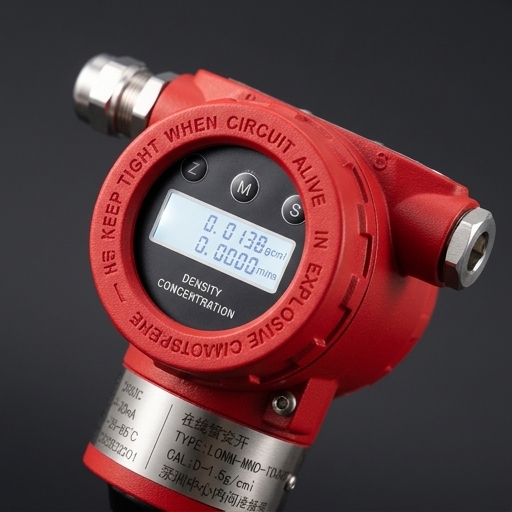
LONNMETER LONN700 Compatibility
The LONNMETER LONN700 tuning fork density meter is designed for clean to moderately contaminated liquids across the density range of 0 to 2.0 g/cm³. Wetted materials include 316L stainless steel as standard, with Hastelloy C-276 and Tantalum options for aggressive chemical service.
If your liquid falls into a borderline category, the LONNMETER technical team can evaluate the specific process conditions and advise whether the LONN700 is the right instrument or whether a different measurement approach would serve you better.
Post time: Jun-18-2026


