

What Engineers Should Know Before Choosing an Online Density Meter
A Practical Guide to Improving Process Accuracy and Reducing Operational Risk
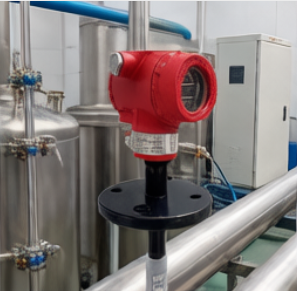
Introduction: Why Density Measurement Still Causes Problems
In many industrial processes, density is treated as a basic parameter — something that should be easy to measure and control.
But in practice, density measurement is often where problems begin.
Unstable readings, unexpected drift, installation issues, or inconsistent results between lab and field measurements are all common challenges. These issues don’t just affect data — they affect production decisions, product quality, and overall efficiency.
That’s why choosing the right online density meter is not just a technical decision. It’s an operational one.
At LONNMETER, we’ve seen how small improvements in density measurement can lead to measurable gains in process stability and cost control. This guide focuses on what actually matters when selecting and using an online density meter in real industrial environments.
Understanding How an Online Density Meter Works
Before selecting a device, it helps to understand the basics.
Most industrial online density meters used in pipelines and tanks rely on the vibrating fork principle. The sensor vibrates at a certain frequency, and when it comes into contact with a liquid, that frequency changes depending on the density of the fluid.
This allows the instrument to:
- Measure density continuously
- Provide real-time data
- Operate directly in pipelines or tanks
Unlike laboratory methods, an online density meter does not require sampling. This eliminates delays and allows operators to respond immediately to process changes.
Where Online Density Measurement Adds Value
In real applications, density is rarely measured for its own sake. It is used as an indicator of something more important.
1. Process Control
In chemical and petrochemical industries, density is often used to control:
- Concentration levels
- Reaction conditions
- Blending ratios
A stable online density meter helps maintain consistent process conditions without relying on manual intervention.
2. Product Quality Assurance
For industries such as oil & gas or food processing, density directly affects product specifications.
For example:
- Fuel products must meet strict density ranges
- Liquid chemicals require consistent concentration
With continuous measurement, deviations can be detected early — before they become costly problems.
3. Interface Detection in Pipelines
In multi-product pipelines, density differences between liquids make it possible to detect product interfaces.
An online density meter allows operators to:
- Identify transitions between products
- Reduce mixing losses
- Improve recovery rates
This is one of the most practical applications in pipeline operations.
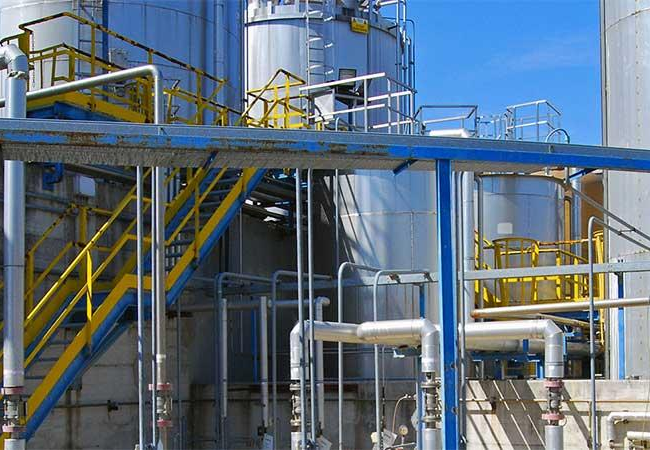
Common Challenges in Density Measurement
Even with the right instrument, real-world conditions can create issues.
1. Unstable Readings
This is one of the most frequent complaints.
Typical causes:
- Flow turbulence
- Vibration from pumps or nearby equipment
- Air or gas bubbles in the fluid
In many cases, the problem is not the online density meter itself, but where and how it is installed.
2. Measurement Drift Over Time
Some users notice that readings slowly become less accurate.
Possible reasons:
- Sensor fouling or buildup
- Temperature variation beyond expected range
- Lack of periodic calibration
A well-designed online density meter should include temperature compensation and allow simple recalibration when needed.
3. Incorrect Application
Not all processes are suitable for standard density measurement.
For example:
- Multi-phase flows (gas + liquid)
- Fluids with large solid particles
- Extremely high viscosity beyond design limits
Understanding the application is just as important as choosing the instrument.
Key Factors to Consider When Selecting an Online Density Meter
When engineers evaluate options, a few factors consistently come up.
1. Accuracy and Repeatability
Accuracy is important, but repeatability is often more critical in process control.
Typical industrial requirements:
- Accuracy around ±0.002 g/cm³
- High repeatability for stable trends
2. Process Compatibility
The instrument must match the process conditions:
- Temperature range
- Pressure rating
- Chemical compatibility
Material selection (such as 316L stainless steel or corrosion-resistant alloys) plays a major role in long-term reliability.
3. Installation Conditions
Proper installation is essential for stable performance.
Best practices include:
- Avoiding high turbulence areas
- Ensuring full contact between sensor and liquid
- Maintaining reasonable flow conditions
Ignoring installation guidelines often leads to inaccurate results, regardless of instrument quality.
4. Integration with Control Systems
Modern processes rely on automation.
An online density meter should support:
- 4–20 mA output
- Digital communication such as RS485
- Integration with DCS or PLC systems
This allows density data to be used directly in process control.
5. Maintenance Requirements
Ease of maintenance is often underestimated during selection.
Look for features such as:
- Simple calibration methods
- Easy cleaning
- Stable long-term operation
A low-maintenance instrument reduces downtime and operational costs.
How LONNMETER Approaches Density Measurement
At LONNMETER, the focus is not just on delivering instruments, but on making sure they work in real conditions.
Our online density meters are designed for:
- Continuous inline measurement
- Industrial environments with vibration and flow variation
- Applications in oil & gas, chemical processing, and beyond
- Measurement range: 0–2 g/cm³
- Accuracy up to ±0.002 g/cm³
- Built-in temperature compensation
- Flexible installation options
Key characteristics include:
More importantly, we work closely with customers to ensure the solution fits the application — not just the specification sheet.
Practical Tips from Field Experience
Based on real projects, a few simple practices can significantly improve results:
- Choose installation points carefully — avoid turbulence
- Verify calibration periodically using standard references
- Monitor for buildup on the sensor surface
- Ensure the process stays within the designed operating range
These steps are often more important than upgrading to a more expensive instrument.
Conclusion: Focus on What Actually Matters
Density measurement is not just about getting a number.
It’s about getting reliable data that can be trusted for decision-making.
An online density meter should:
- Deliver stable readings
- Fit the process environment
- Require minimal intervention
When these conditions are met, density measurement becomes a powerful tool for improving efficiency and reducing risk.
Need Support for Your Application?
If you’re evaluating an online density meter or dealing with unstable measurement issues, it’s worth reviewing both the instrument and the installation conditions.
At LONNMETER, we provide practical support based on real applications.
Visit: https://www.lonnmeter.com/
Contact our team for:
- Technical consultation
- Product recommendations
- Fast response for industrial projects
Post time: Apr-20-2026


