

When you are specifying an inline density meter, the choice often comes down to two technologies: ultrasonic and tuning fork. Both are widely used, both have proven track records, and both will show up in manufacturer catalogs with confident claims.
The problem is that the marketing sheets do not always tell you where each technology actually struggles in real process conditions. So let us go through the comparison properly.
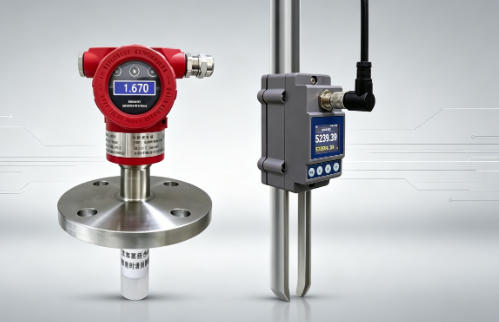
How Each Technology Works
Ultrasonic density meters measure the speed of sound through a liquid. The instrument sends an ultrasonic pulse from one transducer to another, measures the time of flight, and converts that into a density reading. Temperature compensation is built in because sound speed changes with both density and temperature.
Tuning fork density meters, by contrast, measure the resonant frequency of a vibrating fork immersed in the liquid. Denser liquid slows the fork down. The instrument tracks that frequency in real time and converts it to density through a factory calibration curve.
Head-to-Head Comparison
| Factor | Ultrasonic | Tuning Fork |
| Accuracy | ±0.003 g/cm³ typical | ±0.002 g/cm³ (LONN700) |
| Viscosity limit | Handles very high viscosity well | Typically limited to ~2000 cP |
| Wetted parts | No moving parts, fully non-intrusive | Fork prongs immersed in process |
| Installation | Clamp-on or inline, very flexible | Inline insertion, threaded or flanged |
| Cost | Generally higher | Generally lower |
| Maintenance | Minimal, no wetted electronics | Periodic cleaning may be needed |
| Best for | High-viscosity, corrosive, or clamp-on needs | Standard process fluids, cost-sensitive projects |
When Ultrasonic Makes More Sense
Ultrasonic meters have two advantages that matter in specific situations. First, there are no wetted moving parts and nothing physically intruding into the flow path. For extremely corrosive liquids where even 316L stainless steel is questionable, ultrasonic can be the safer choice.
Second, some ultrasonic designs allow clamp-on installation. You mount the transducers on the outside of the pipe. No process connection, no penetration, no leak path. That is valuable in high-pressure or hazardous-area installations where breaking the pipe is expensive or risky.
When Tuning Fork Is the Better Choice
Tuning fork meters tend to be more forgiving in normal industrial fluids. The accuracy is typically a bit better than ultrasonic for standard process conditions, and the cost of ownership over a multi-year period is usually lower.
Response time is also faster. A tuning fork updates its reading in seconds. Ultrasonic meters sometimes need longer settling time, especially if the sound path is affected by bubbles or temperature gradients in the pipe.
For most refining, chemical processing, and food and beverage applications, tuning fork is the practical default unless the process has unusual requirements that rule it out.
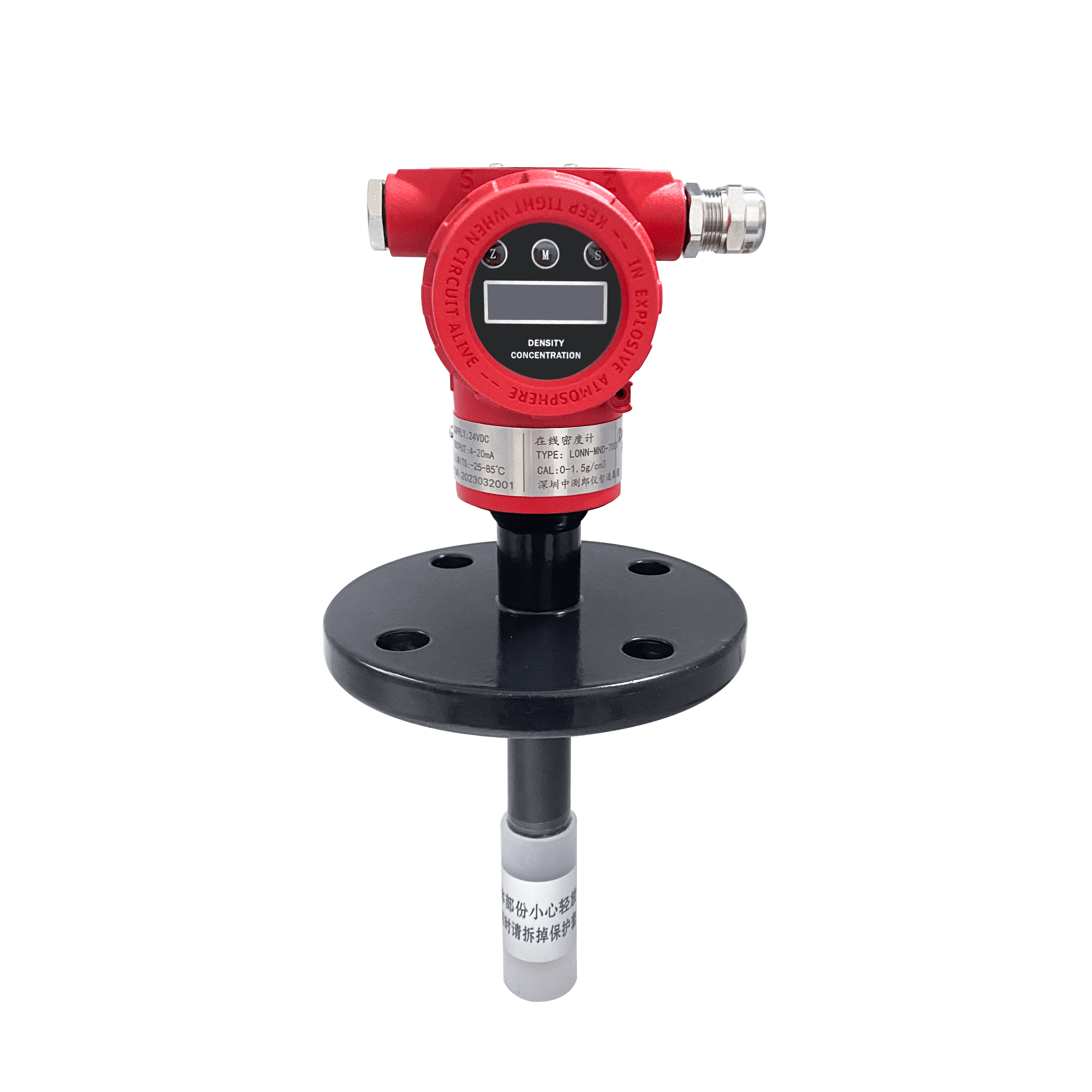
The LONNMETER LONN700: Tuning Fork Done Properly
If your process falls within the viscosity and temperature range of a tuning fork meter, the LONNMETER LONN700 is built to be the instrument you install once and then mostly forget about.
Accuracy is specified at ±0.002 g/cm³. Temperature compensation covers the range most refinery and chemical processes actually operate in. The remote transmitter keeps the electronics away from process heat, which helps with long-term stability.
Output options cover both 4-20mA and RS485 Modbus RTU, so integration with an existing DCS or PLC usually takes more time for the paperwork than for the wiring.
If you are unsure whether your application is better suited to ultrasonic or tuning fork, the LONNMETER technical team can review your process parameters and give you a straight answer.
Post time: May-28-2026


