

Concentration measurement shows up wherever a process depends on the exact strength of a solution. Acid concentration in pickling lines. Caustic strength in cleaning baths. Sugar content in beverage production. Salt brine in food processing. In all of these cases, knowing the concentration in real time is better than waiting for lab results.
Online concentration meters fall into two main technology families: ultrasonic and tuning fork. Both convert a physical property of the liquid into a concentration reading, but they measure different properties and work best in different conditions.
How Ultrasonic Concentration Meters Work
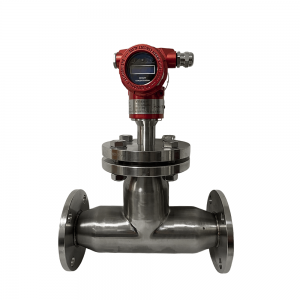
Ultrasonic concentration meters measure the speed of sound through the liquid. Sound velocity changes with the concentration of dissolved solids or gases, and also with temperature. The instrument sends an ultrasonic pulse through the liquid, measures the time of flight between transducers, and converts that into a sound velocity value. From there, a calibration curve translates sound velocity into concentration.
Ultrasonic meters have two big advantages. They are non-intrusive in many designs, meaning nothing protrudes into the flow path. And they handle corrosive liquids well, because the wetted parts can be lined with PTFE or other chemically resistant materials.
The limitation is that sound velocity is not uniquely determined by concentration. Density, viscosity and temperature all affect the signal. For simple binary solutions like sulfuric acid and water, the calibration is straightforward. For complex mixtures, the correlation can become noisy.
How Tuning Fork Concentration Meters Work
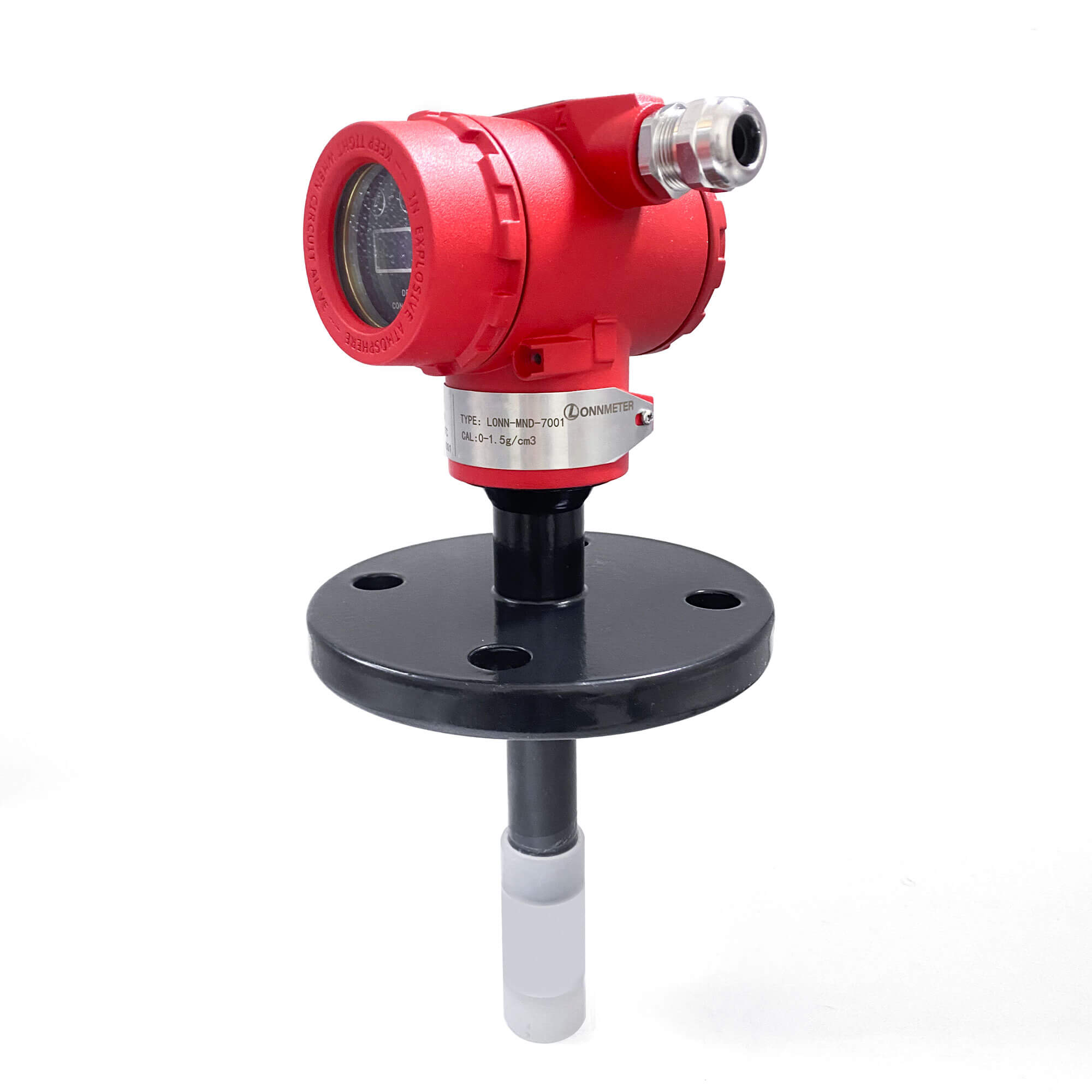
Tuning fork concentration meters work on a different principle. A vibrating fork immersed in the liquid oscillates at a frequency that depends on the density of the surrounding fluid. Since density correlates with concentration for many solutions, the frequency signal can be converted into a concentration reading.
The fork design is mechanically simple. No rotating parts, no optical windows, and no seals in contact with the process. The sensor is compact, which makes it easier to install in small process lines or retrofit into existing piping.
Tuning fork meters are especially common for acid and alkali concentration measurement, where the density-concentration relationship is well characterized and the process temperatures are within the instrument is range.
Side-by-Side Comparison
|
Factor |
Ultrasonic |
Tuning Fork |
| Measured property | Sound velocity | Density via vibration frequency |
| Corrosive liquids | Excellent with PTFE lining | Good with Hastelloy/Tantalum |
| Installation | Clamp-on or inline spool | Threaded or flanged insertion |
| Response time | Fast, typically seconds | Fast, typically seconds |
| Cost | Higher, especially clamp-on | Lower, more compact |
| Best for | Highly corrosive acids, complex mixtures | Acid/alkali, sugar, brine, clean solutions |
Choosing the Right Technology for Your Process
If your main concern is extreme corrosion, ultrasonic with a suitable lining is often the safer choice. For standard acid and alkali concentration measurement where the density-concentration curve is well known, tuning fork offers a simpler, lower-cost solution.
In practice, many chemical plants use both technologies in different parts of the process. Ultrasonic for the most aggressive streams, tuning fork for routine concentration monitoring in storage tanks and transfer lines.
The LONNMETER Concentration Meter Series
LONNMETER offers both tuning fork and ultrasonic concentration measurement options depending on the process requirements. The tuning fork based concentration meters, built on the same platform as the LONN700 density meter, provide accurate concentration readings for acids, alkalis and many common industrial solutions.
Temperature compensation is integrated, so the instrument handles the normal variations in process temperature without manual correction. Output options cover both 4-20mA for basic control loops and RS485 Modbus RTU for integration into larger process systems.
If you are specifying a concentration meter for acid, alkali or solution strength measurement, the LONNMETER technical team can review your process conditions and recommend the right configuration.
Post time: Jun-05-2026


