

Acid and alkali concentration is one of the most common inline measurement points in chemical plants. Pickling lines monitor sulfuric acid strength. Caustic cleaning systems track sodium hydroxide concentration. Electroplating baths depend on precise acid levels for consistent results. In all of these cases, the concentration meter has to survive in an environment that would destroy most instruments.
Selecting the right meter for acid and alkali service comes down to three things: material compatibility, concentration range, and how the instrument handles temperature.
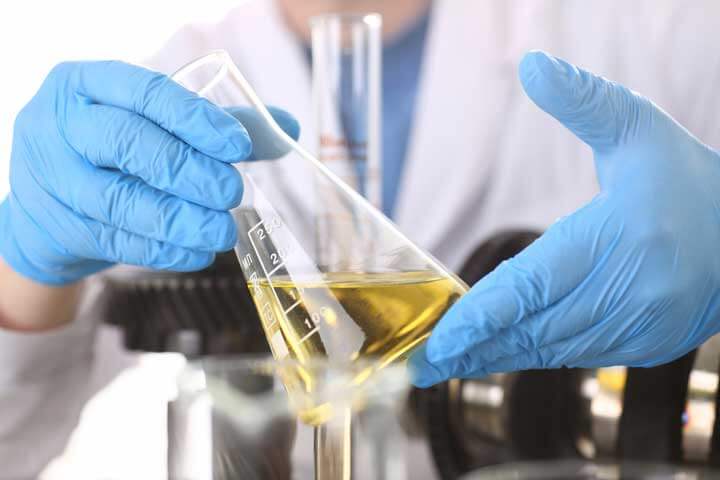
Common Acid and Alkali Applications
The concentration ranges and process conditions vary widely depending on the specific chemical. Here are the most common applications and what they require from a meter.
|
Solution |
Conc. Range |
Temperature |
Typical Application |
|
Sulfuric acid (H₂SO₄) |
10 – 98% |
20 – 80°C |
Steel pickling, battery acid, chemical processing |
|
Hydrochloric acid (HCl) |
5 – 37% |
20 – 60°C |
Pickling, pH control, water treatment |
|
Nitric acid (HNO₃) |
20 – 68% |
20 – 50°C |
Metal etching, chemical synthesis |
|
Sodium hydroxide (NaOH) |
5 – 50% |
20 – 80°C |
Caustic cleaning, pulp and paper, alumina |
|
Hydrofluoric acid (HF) |
5 – 40% |
20 – 60°C |
Glass etching, petrochemical alkylation |
Material Compatibility: The Non-Negotiable
In acid and alkali service, material compatibility is not a preference. It is the difference between an instrument that lasts years and one that fails in weeks.
316L stainless steel handles most dilute acids and alkalis. Sulfuric acid above roughly 85% concentration is a notable exception, where carbon steel is actually preferred because the acid forms a protective sulfate layer. Hydrochloric acid is aggressive to most stainless steels, and Hastelloy or PTFE-lined wetted parts are the safer choice.
Hydrofluoric acid is the extreme case. It attacks glass, ceramics and many metals. Only a few materials, such as Monel and PTFE, survive extended exposure. If your process involves HF, the material question needs to be resolved before anything else.
Technology Choice for Acid and Alkali
Most acid and alkali solutions are binary mixtures, meaning the concentration-to-density relationship is well characterized. That makes tuning fork concentration meters a practical fit for the majority of applications.
Ultrasonic meters come into play when the process is highly corrosive and a PTFE-lined sensor is needed, or when the installation requires a non-intrusive, clamp-on design. For standard acid and alkali concentration ranges in moderate conditions, tuning fork is usually the more cost-effective choice.
Selection Checklist for Acid/Alkali Service
Before specifying a concentration meter, confirm these five items:
Exact chemical and expected concentration range. Narrow the range as much as possible rather than asking for a universal instrument.
Process temperature range, including startup and upset conditions. Concentration accuracy depends on temperature compensation.
Wetted material compatibility. Check a corrosion chart, not just the instrument is standard spec sheet.
Installation type. Inline insertion for continuous monitoring, or tank mount for batch checks.
Output format. 4-20mA for basic control, RS485 Modbus for systems that need diagnostics and remote configuration.
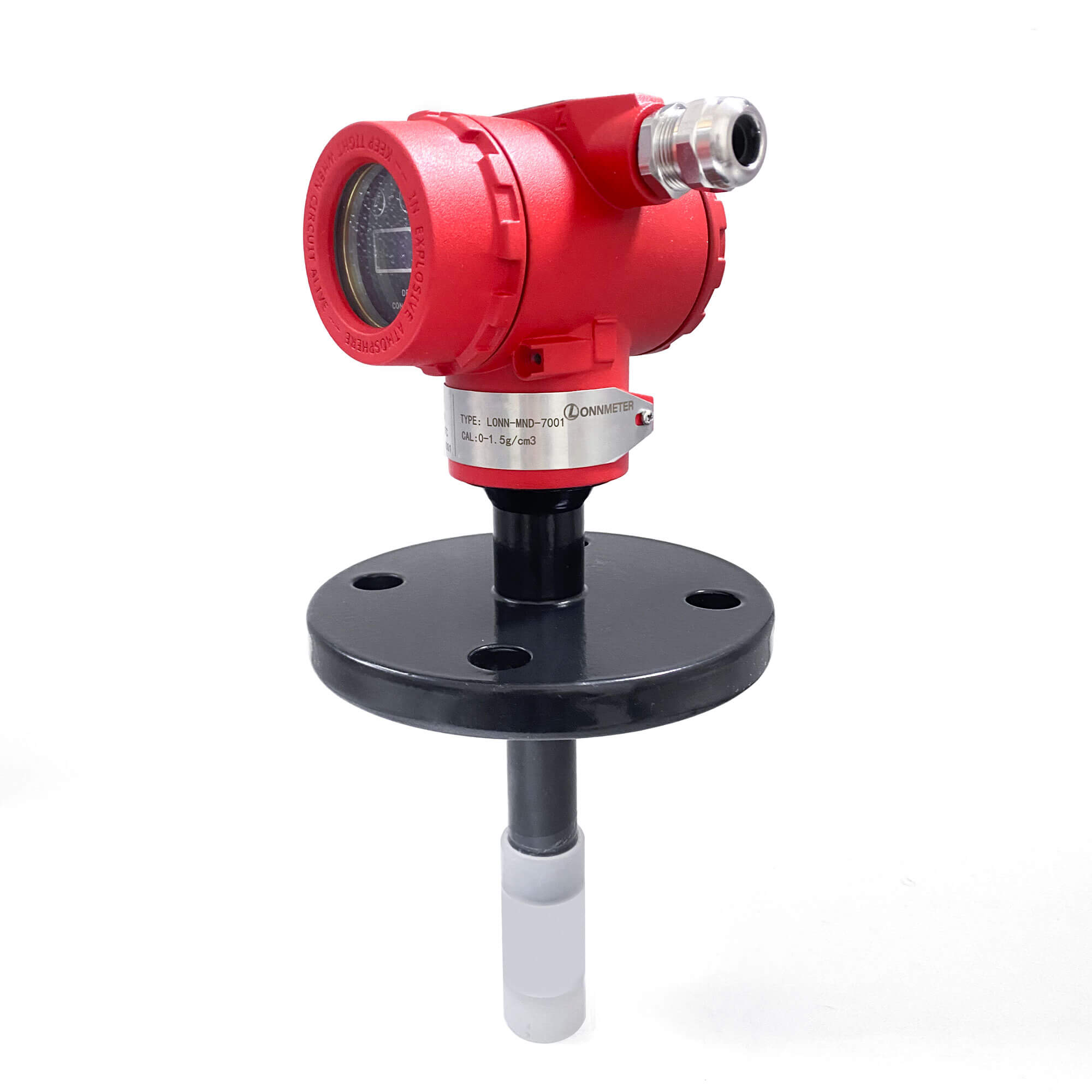
LONNMETER Concentration Meters for Acid and Alkali
LONNMETER concentration meters based on the LONN700 tuning fork platform are factory calibrated for specific acid and alkali solutions. The calibration curve for each chemical is established using traceable reference standards, so the instrument ships ready to measure.
Wetted materials are selected to match the specific chemical. Standard 316L for dilute solutions. Hastelloy or Tantalum options for more aggressive acids. Temperature compensation is integrated and covers the process ranges typical of acid and alkali applications.
If you are specifying a concentration meter for a specific acid or alkali solution, the LONNMETER technical team can confirm material compatibility and recommend the right calibration for your concentration range.
Post time: Jun-17-2026


