

Two Different Approaches to Density Measurement
When companies start evaluating density measurement solutions, one question comes up frequently:
Should the process use an inline density meter or a portable one?
At first glance, both instruments measure the same parameter.
But in actual industrial use, they solve very different problems.
An inline density meter is designed for continuous monitoring inside the process.
A portable density meter is designed for flexibility and spot checking.
Neither is universally better. The right choice depends on how the measurement will be used in daily operation.
At LONNMETER, many customers eventually use both because each serves a different role in process control.
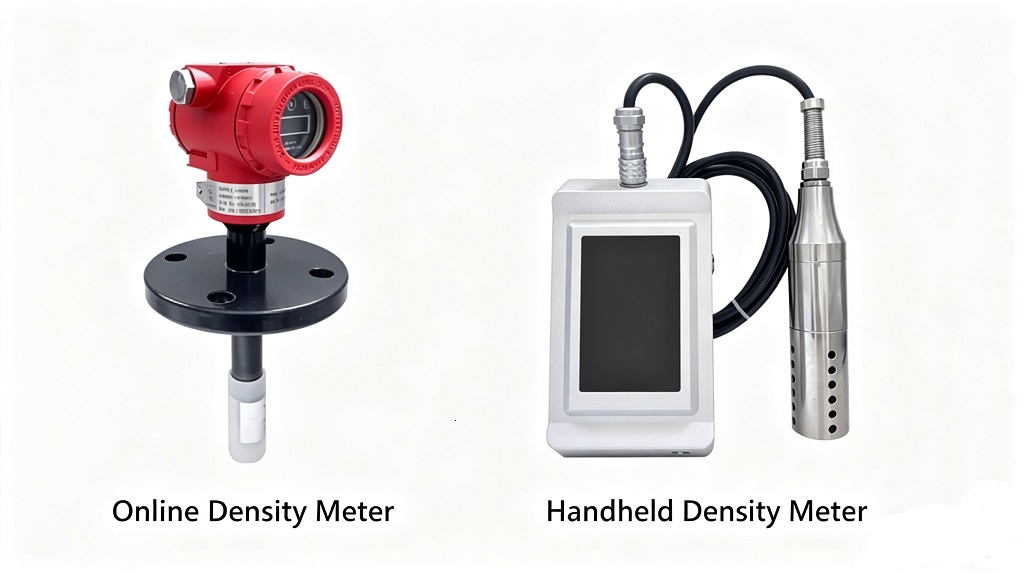
What Is an Inline Density Meter?
An inline density meter, also called an online density meter, is installed directly in a pipeline or process system.
It continuously measures density while the process is running.
Typical applications include:
· pipeline monitoring
· blending systems
· chemical processing
· fuel transfer
· tank monitoring
Because the measurement is continuous, operators can monitor changes in real time without manual sampling.
What Is a Portable Density Meter?
A portable density meter is designed for manual or field-based measurement.
Instead of staying permanently installed, it is carried to different locations when needed.
Typical uses include:
· field inspection
· spot checks
· laboratory verification
· fuel testing
· troubleshooting process issues
Portable systems are especially useful when continuous monitoring is not necessary.
The Biggest Difference: Continuous vs Spot Measurement
The main difference is how the data is collected.
Inline density meter
· continuous monitoring
· real-time process visibility
· automatic integration with control systems
Portable density meter
· manual measurement
· used only when needed
· flexible across multiple locations
If operators need constant process visibility, inline measurement is usually the better fit.
If occasional testing is enough, portable measurement may be more practical.
Accuracy in Real Operating Conditions
Both types can provide accurate measurement when used correctly.
But operating conditions affect them differently.
Inline systems
Because they measure continuously, they are better at tracking:
· process trends
· sudden density changes
· long-term stability
Portable systems
Portable devices can provide very accurate spot measurements, but results depend more heavily on:
· operator handling
· sampling quality
· environmental conditions
In practice, inline systems usually provide better process visibility, while portable devices are better for verification and inspection.
Installation and Setup
This is one area where the difference becomes very clear.
Inline density meter
Requires:
· installation in the pipeline
· process integration
· electrical and communication setup
The initial setup takes more effort, but once installed, the system operates automatically.
Portable density meter
Requires almost no installation.
Operators simply:
· collect the sample
· perform the measurement
· record the result
This makes portable devices much easier to deploy quickly.
Maintenance Considerations
Maintenance requirements are also different.
Inline systems
Need:
· periodic inspection
· cleaning if buildup occurs
· occasional calibration checks
Because they operate continuously, preventive maintenance becomes important.
Portable systems
Usually require:
· sensor cleaning after use
· battery management
· regular calibration verification
Maintenance is simpler overall, but measurement consistency depends more on the user.
Cost Considerations
Portable density meters are generally less expensive initially.
There is:
· no installation cost
· less system integration
· simpler operation
Inline systems involve higher upfront investment because they become part of the production process.
However, for continuous industrial operation, inline measurement often reduces:
· labor requirements
· manual sampling
· process delays
Over time, the operational value can outweigh the higher installation cost.
When Inline Density Meters Make More Sense
Inline systems are usually the better choice when:
· the process runs continuously
· real-time monitoring is important
· automation is required
· product consistency must be maintained closely
Common industries include:
· oil & gas
· chemical processing
· food and beverage production
· blending operations
When Portable Density Meters Are the Better Option
Portable systems are often preferred when:
· measurements are occasional
· multiple locations must be tested
· mobility is important
· field inspection is required
Typical applications include:
· fuel inspection
· on-site testing
· laboratory verification
· maintenance troubleshooting
Why Many Facilities Use Both
In real industrial environments, it’s common to use inline and portable density meters together.
For example:
· inline systems provide continuous monitoring
· portable devices verify readings or support field inspection
This combination offers both process visibility and operational flexibility.
How LONNMETER Supports Different Measurement Needs
At LONNMETER, we work with customers using both inline and portable density measurement systems across industrial applications.
Our solutions are designed for:
· stable industrial operation
· practical field use
· reliable long-term measurement
Support typically includes:
· application analysis
· installation guidance
· product selection recommendations
The focus is always on matching the measurement method to the actual process requirements.
Conclusion: Choose Based on How the Data Will Be Used
The decision between inline and portable density measurement is really about workflow and process needs.
Inline systems provide:
· continuous monitoring
· automation support
· real-time process visibility
Portable systems provide:
· flexibility
· mobility
· convenient field testing
The best choice depends on whether the process requires continuous control or occasional verification.
In many industrial operations, both approaches work together rather than replacing each other.
Need Help Choosing the Right Density Measurement Solution?
If you are comparing inline and portable density meters for your application, it helps to evaluate how the measurement will actually be used during operation.
You can learn more at:
https://www.lonnmeter.com/
Or contact LONNMETER for practical guidance based on real industrial applications.
Post time: May-12-2026


