

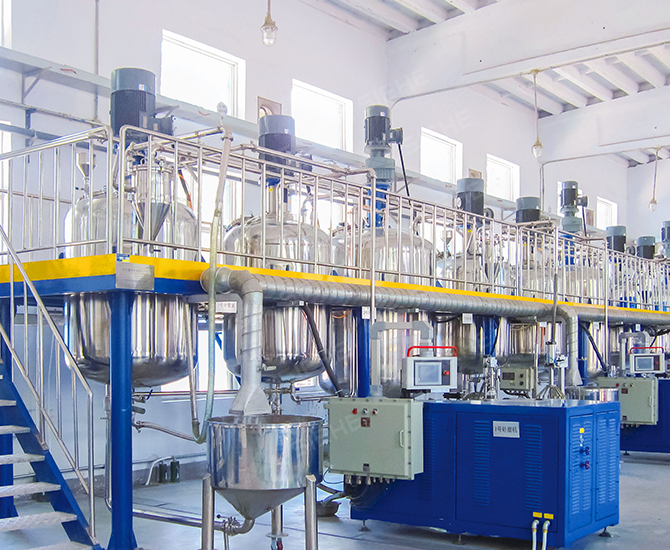
Viscosity is one of those process variables that sounds simple until you actually try to measure it continuously in a production line. Lab viscometers are easy enough. But inline measurement, where the instrument sits in a pipe or tank and gives you a live reading, is a different problem entirely.
Two main technologies dominate the inline viscometer market: vibrational and rotational. Both work, but they work differently, and the choice between them has real consequences for installation, maintenance and measurement range.
How a Vibrational Viscometer Works
A vibrational viscometer uses a sensing element, typically a tuning fork or a rod, that is driven to oscillate at its natural frequency. When the element is immersed in a liquid, the liquid dampens the vibration. Higher viscosity means more damping, which the instrument detects as a change in amplitude or power required to maintain oscillation.
The key advantage is simplicity. There is no rotating shaft, no bearings in contact with the process, and no seals to wear out. The sensing element is solid and the drive mechanism is typically piezoelectric.
Vibrational viscometers respond quickly, usually within seconds, and they handle mid-range viscosities well. The typical limit is around 50,000 centipoise, although some designs push higher. They also tend to be more compact, which makes them easier to install in tight process piping.
How a Rotational Viscometer Works
A rotational viscometer measures viscosity by rotating a spindle or cylinder in the liquid and sensing the torque required to maintain a constant speed. The higher the viscosity, the higher the torque. Some designs work the opposite way: apply constant torque and measure the resulting speed.
Rotational viscometers can handle very high viscosities, well beyond what vibrational designs typically manage. Some models are rated for several hundred thousand centipoise or even higher. That makes them the default choice for extremely thick materials like heavy oils, pastes and adhesives.
The tradeoff is mechanical complexity. The rotating shaft requires a seal, and that seal is a wear point. Over time, especially in abrasive or hot process conditions, the seal can leak or fail. Response time is also slower than vibrational designs, because the measurement depends on steady-state rotation.
Side-by-Side Comparison
| Factor | Vibrational | Rotational |
| Viscosity range | Up to ~50,000 cP typical | Up to several 100,000+ cP |
| Response time | Seconds | Tens of seconds to minutes |
| Moving parts | None in process contact | Rotating shaft with seal |
| Maintenance | Low, occasional cleaning | Seal replacement required periodically |
| Installation size | Compact, inline insertion | Larger, needs more space |
| Best for | Paints, coatings, foods, light chemicals | Heavy oils, pastes, high-viscosity polymers |
Which Technology Fits Your Process
If your viscosity range is moderate, say below 20,000 centipoise, and you want something you can install and largely forget about, vibrational is usually the better choice. Faster response, fewer moving parts and lower maintenance add up over the life of the instrument.
If you are dealing with extremely high viscosities, or your process involves materials that are borderline solids at room temperature, rotational may be your only realistic option despite the higher maintenance burden.
For most paint, coating, food and light chemical applications, vibrational inline viscometers cover the required range and do it with less hassle.
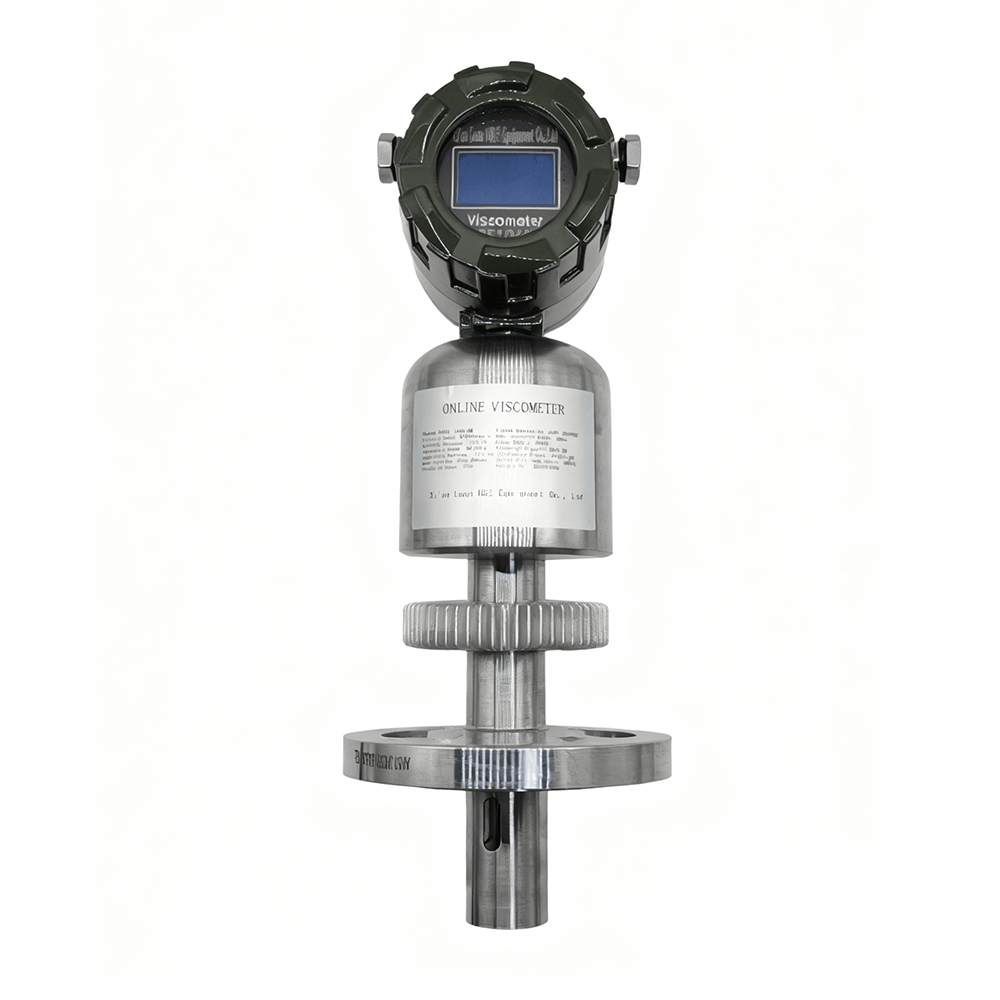
The LONNMETER LONN-DN100 Vibrational Viscometer
The LONNMETER LONN-DN100 is a vibrational inline viscometer designed for continuous process measurement. It uses a tuning fork sensor that handles viscosity ranges typical of paints, inks, food products and many chemical process streams.
The sensor has no moving parts in contact with the process, which means no seals to fail and no bearings to replace. Response time is on the order of seconds, making it suitable for processes where viscosity changes need to be detected quickly.
Standard output is 4-20mA, with RS485 Modbus RTU available for installations that want access to diagnostics and configuration data. The remote transmitter design keeps electronics away from process heat.
If you are evaluating inline viscometers for your process, the LONNMETER technical team can confirm whether the LONN-DN100 fits your viscosity range and installation conditions.
Post time: Jun-01-2026


