

Viscosity is a deceptively complex measurement. It is not a single number that describes a fluid — it is a relationship between shear stress and shear rate that can be constant (Newtonian) or variable (non-Newtonian) depending on the fluid. And the number you measure depends heavily on how you measure it.
The most common mistake we see is engineers specifying a viscosity meter without first determining whether their fluid is Newtonian or non-Newtonian. If the fluid is non-Newtonian, a single-point viscosity measurement will not tell them what they think it tells them. And if the measurement is in-process, the shear rate of the sensor needs to be relevant to the process.
This guide starts with the fluid. Everything else follows.
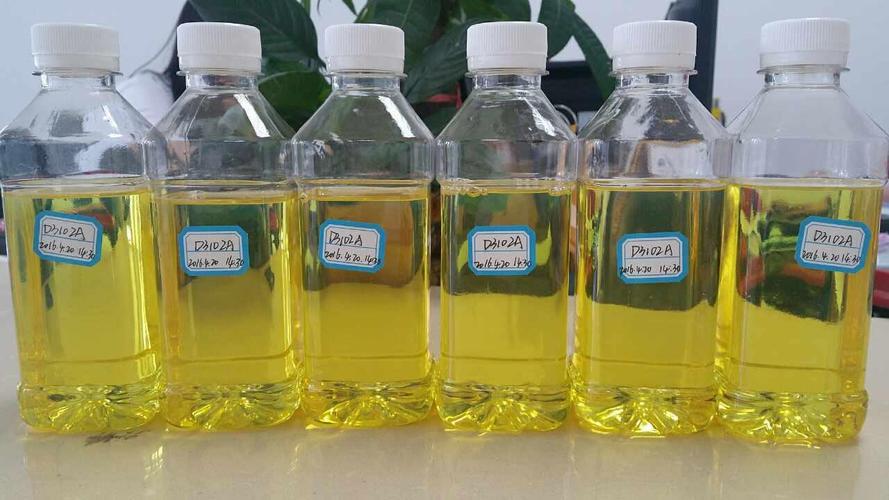
Question 1: Is your fluid Newtonian or non-Newtonian?
This is the most important question and the one most often skipped. A Newtonian fluid has a viscosity that does not change with shear rate. Water, mineral oil, and low-viscosity syrups are Newtonian. A non-Newtonian fluid has a viscosity that changes with shear rate. Most paints, inks, polymer solutions, drilling muds, and mining slurries are non-Newtonian.
How to tell: take three measurements at three different shear rates (or three different spindle speeds if using a rotational viscometer). If the viscosity is the same at all three, the fluid is Newtonian. If it changes, it is non-Newtonian.
If your fluid is non-Newtonian, you need to characterize the viscosity-shear rate relationship, not just measure viscosity at one point. The right approach depends on what you are trying to control.
The four measurement principles and where they fit
| Principle | Measures at | Viscosity Range | Non-Newtonian | Inline Capable | Best For |
| Vibrational (tuning fork / vibrating rod) | One effective shear rate (sensor-dependent) | 1 – 5,000 mPa·s | Limited (one point) | Yes | Clean liquids, blending control, Newtonian or mildly shear-thinning fluids |
| Rotational (Couette / bob-and-cup) | Controlled, multiple shear rates available | 1 – 10⁶ mPa·s | Full curve (shear rate sweep) | Lab mainly; some inline versions | QC lab, R&D, non-Newtonian characterization |
| Falling ball / capillary | Low shear (gravity-driven) | 0.5 – 100,000 mPa·s | Single point (Newtonian assumption) | No (batch method) | Standards labs (ISO 12002), Newtonian oils, hydraulic fluids |
| Differential pressure flow | Process shear rate (pipe-dependent) | Any range | Process apparent viscosity | Yes | Large pipes, non-Newtonian monitoring, trending (not absolute accuracy) |
Why the shear rate question matters
Shear rate is the velocity gradient in a flowing fluid — it describes how fast adjacent layers of fluid are sliding past each other. It is measured in reciprocal seconds (s⁻¹). Different process conditions produce very different shear rates:
| Typical shear rates in process equipment:
Gravitational flow (settling): <1 s⁻¹ Pipe laminar flow (low rate): 1 – 50 s⁻¹ Pipe turbulent flow: 100 – 1,000 s⁻¹ Mixer blade (slow): 10 – 100 s⁻¹ Mixer blade (fast): 500 – 10,000 s⁻¹ Pump impeller: 1,000 – 10,000 s⁻¹ Spray / atomization: 10,000 – 100,000 s⁻¹
A viscosity meter that measures at 500 s⁻¹ is measuring a different property than the same fluid flowing at 50 s⁻¹ in your process pipe. Choose the sensor shear rate to match the relevant process condition. |
Question 3: What are you controlling?
The answer to this question determines the specification priority. There are three common scenarios:
Process blending control. You are adding one component to another and want to hold a target viscosity. The viscosity target is a setpoint. The instrument needs to be inline, fast-responding, and reliable. A vibrational viscometer in the appropriate viscosity range is usually the right choice. Accuracy of ±2–5% is usually sufficient.
Quality control / batch release. You are measuring a batch against a specification limit. The instrument needs good accuracy and repeatability. A rotational viscometer in the lab is the standard approach. If inline QC is required, a vibrational viscometer with documented accuracy can be used.
Non-Newtonian characterization. You need the full viscosity-shear rate curve. A rotational viscometer with a shear rate sweep is required. This is an R&D or product development application rather than a process control application. If you need this data inline, a differential pressure measurement on the process line can give you an approximate curve, but the accuracy is lower.
Quick reference by industry
| Paint, coatings, ink:
Non-Newtonian (shear-thinning). Control at application shear rate (spray: 10,000+ s⁻¹). Inline sensor shear rate should be in the process range, not the application range. Typical: vibrational viscometer at 100–500 s⁻¹ for process monitoring.
Chemicals / polymers: Newtonian or non-Newtonian depending on MW and concentration. Polymer solutions: often shear-thinning above 10 cP. Vibrational viscometer works for blending; rotational for characterization.
Food: Newtonian: honey, sugar syrups, water-based beverages → vibrational. Non-Newtonian: ketchup, mayonnaise, chocolate → rotational (lab) or vibrational (trend). Hygienic sensor material (316L/electropolished) required.
Mining / slurries: Bingham plastic or shear-thinning. High solids. Vibrational viscometer for grinding circuit monitoring. Yield stress is not measured by vibrational sensors — use rotational in lab.
Lubricants / hydraulic oils: Mostly Newtonian. Vibrational or capillary viscometer. ISO VG grade based on kinematic viscosity (cSt) at 40°C. Temperature control is critical — specify with temperature compensation. |
Question 4: What are the temperature conditions?
Viscosity is temperature-sensitive. For most liquids, viscosity changes 2–4% per °C. This means a temperature shift of 5°C produces a 10–20% change in viscosity even if the fluid composition has not changed. Any inline viscosity measurement that does not include temperature compensation will read as a process change when it is actually a temperature fluctuation.
If your process temperature varies significantly during operation, specify a viscometer with built-in temperature measurement and compensation. Alternatively, install a temperature sensor alongside the viscometer and compensate in the DCS.
High-temperature applications (above 200°C) require a sensor with a high-temperature rating and the appropriate seal material. The O-ring or gasket is usually the limiting component. Specify FFKM (Kalrez) or graphite-filled seals for temperatures above 200°C.
Question 5: What material compatibility is required?
The sensor wetted material is determined by the fluid. Standard options:
316L stainless steel. Standard for most aqueous and hydrocarbon fluids. Not suitable for strong acids or halogens.
Hastelloy C-276. For acidic and chloride-containing fluids. Standard for chemical processing.
PTFE / Hastelloy with PTFE coating. For highly corrosive fluids where Hastelloy is insufficient. PTFE is chemically inert but the coating must be intact.
Aluminum oxide (ceramic). For abrasive fluids and food applications where metal is undesirable. Alumina sensors are common in food and beverage viscometers.
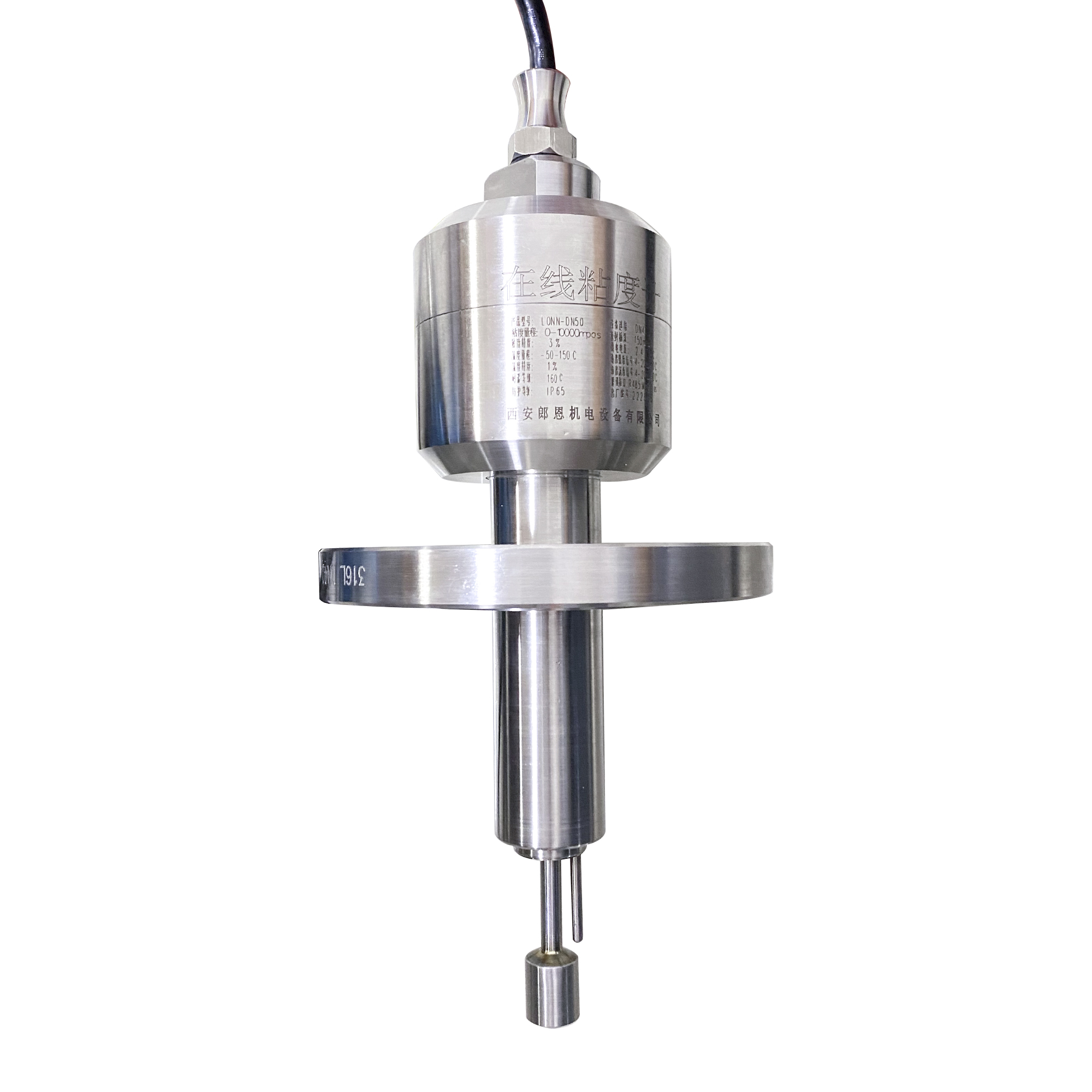
LONNMETER viscosity measurement solutions
The LONNMETER LONN-V100 inline vibrational viscometer covers 1–5,000 mPa·s in most industrial configurations, with Hastelloy and ceramic sensor options. For higher viscosity ranges or non-Newtonian applications requiring shear rate characterization, the LONN-V200 rotational system is available with controlled shear rate capability.
To specify the right viscosity meter, tell us: fluid name, viscosity range, temperature range, whether the fluid is Newtonian or non-Newtonian, and what you are controlling. We will confirm whether the LONN-V100 covers the range or whether LONN-V200 is the better fit.
Common questions on viscosity meter selection
What is the difference between dynamic viscosity and kinematic viscosity?
Dynamic viscosity (μ, measured in mPa·s or cP) is the shear stress divided by shear rate. Kinematic viscosity (ν, measured in mm²/s or cSt) is dynamic viscosity divided by density. At 20°C, the conversion for water is approximately 1 cP = 1 cSt. For oils and other fluids, density is not 1, so the conversion requires the density. ISO VG grades for lubricants are based on kinematic viscosity at 40°C.
Can a vibrational viscometer measure Bingham plastic fluids?
Partially. A vibrational viscometer measures viscosity above the yield stress — it cannot detect the yield stress itself because it applies a continuous vibration rather than a measurable shear stress below the yield threshold. For Bingham plastic fluids, the reading gives you the plastic viscosity (the slope above the yield point) but not the yield stress. If you need both yield stress and plastic viscosity, use a rotational viscometer.
What viscosity accuracy do I need for blending control?
For blending control, ±2–5% of full scale is usually sufficient. The blending tolerance is typically ±5–10% of the target viscosity. If your process tolerance is ±10%, you do not need ±1% instrument accuracy. Accuracy tighter than the process tolerance adds cost without adding control quality. Calibrate the zero and span against known reference standards every 6 months.
How does pressure affect viscosity measurement?
Pressure has a small effect on viscosity for most liquids (1–2% change per 10 bar). At process pressures below 20 bar, pressure correction is usually not required. Above 50 bar, the pressure effect becomes measurable and should be considered if the viscosity specification is tight. Viscosity standards at high pressure are difficult to establish, so high-pressure viscometers are typically calibrated at atmospheric pressure with a documented pressure correction factor.
Why does my inline viscometer read differently from my lab viscometer?
Three common reasons: (1) Different shear rate — the inline sensor operates at a different shear rate than the lab instrument. (2) Temperature difference — the fluid temperature differs between the process and the lab sample. (3) Non-Newtonian behavior — the lab instrument measured at one shear rate and the inline sensor measures at another. Establish a correlation between the two instruments under process conditions, not under lab conditions.
Post time: Aug-12-2026


