

How to Detect Product Interface in Multi-Product Pipelines
Practical Methods to Reduce Mixing Loss and Improve Pipeline Efficiency
Introduction: The Hidden Cost of Product Interfaces
In multi-product pipelines, transporting different liquids in sequence — such as gasoline, diesel, and crude oil — is standard practice.
What’s less straightforward is what happens between those products.
The interface zone — where two products mix — is unavoidable.
But if it’s not properly detected, it can lead to:
- Product contamination
- Increased reprocessing volume
- Financial loss during batch switching
Most operators don’t struggle with moving product.
They struggle with knowing exactly when one product ends and the next begins.
At LONNMETER, this is one of the most common challenges we see in pipeline projects.
What Is a Product Interface — and Why Is It Difficult to Detect?
A product interface is the transition zone where two different fluids mix during pipeline transport.
In theory, this should be a clear boundary.
In reality, it’s a gradual mixing zone influenced by:
- Flow rate
- Pipeline length and diameter
- Fluid properties (density, viscosity)
- Turbulence and pressure changes
This makes interface detection less about “seeing a line”
and more about identifying a measurable change.
Common Methods for Interface Detection
Different technologies are used depending on accuracy requirements and budget.
1. Manual Sampling
Still used in some operations.
How it works:
- Operators take samples at intervals
- Analyze density or composition in a lab
Limitations:
- Time delay
- Labor intensive
- High risk of late detection
In most modern operations, this is no longer sufficient.
2. Flow and Time Estimation
Some systems estimate the interface based on:
- Flow rate
- Pipeline volume
- Pumping time
Problem:
- Assumes ideal conditions
- Does not account for mixing behavior
This method is simple, but often inaccurate in real conditions.
3. Density-Based Detection (Most Practical Solution)
This is currently one of the most reliable and widely used approaches.
Why density works:
Different petroleum products have different densities:
- Gasoline: lower density
- Diesel: higher density
- Crude oil: varies but typically higher
As the interface passes through the measurement point,
density changes continuously — and that change can be tracked in real time.
How Online Density Meters Detect Interfaces
An online density meter installed in the pipeline continuously measures fluid density.
As product changes, the system detects:
- Stable density (Product A)
- Gradual change (Interface zone)
- New stable density (Product B)
This allows operators to:
- Identify the start of mixing
- Track the interface zone
- Determine the optimal switching point
At LONNMETER, our online density meters use a vibrating fork principle, which provides stable measurement even under flowing conditions.
Why Density Measurement Is Preferred in Pipelines
From field experience, density-based detection offers several advantages:
Real-Time Monitoring
No waiting for lab results.
Operators can react immediately.
High Sensitivity to Product Changes
Even small differences between products can be detected.
Continuous Operation
Works inline without interrupting the process.
Easy Integration
Can be connected to:
- DCS systems
- SCADA platforms
- Automated control logic
Key Factors That Affect Detection Accuracy
Even with the right instrument, performance depends on process conditions.
1. Flow Stability
Unstable flow can distort readings.
Recommendation:
- Avoid installation near pumps
- Minimize turbulence
2. Air or Gas Bubbles
Gas in the pipeline can affect density readings.
Recommendation:
- Install in locations with full liquid flow
- Avoid high points where gas accumulates
3. Installation Position
Sensor placement directly impacts accuracy.
Best practices:
- Ensure full immersion in the fluid
- Maintain straight pipe sections where possible
4. Product Density Difference
The larger the density difference between products,
the easier the interface detection.
Typical Results in Real Applications
When properly installed, density-based systems help operators:
- Reduce interface mixing volume
- Improve product recovery rates
- Minimize contamination between batches
- Optimize switching timing
In many cases, customers report significant reduction in product loss after implementing online density measurement.
LONNMETER Solution for Interface Detection
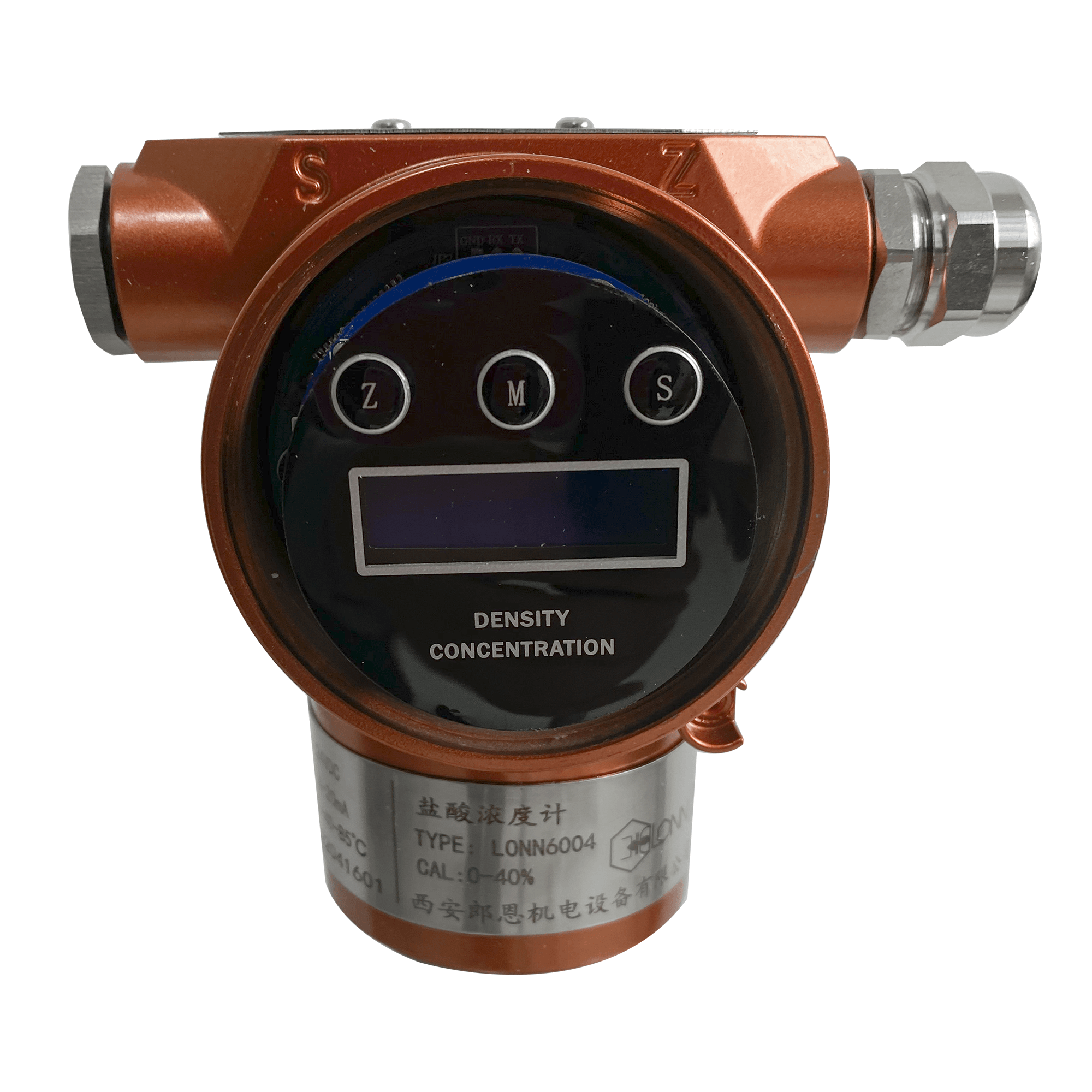
Based on pipeline requirements, LONNMETER online density meters are designed for stable, continuous operation.
Key capabilities:
- Density measurement range: 0 – 2 g/cm³
- Accuracy: ±0.002 g/cm³
- Repeatability: ±0.0001 g/cm³
- Built-in temperature compensation
- مقاust to vibration and flow changes
- Suitable for petroleum products
- Supports continuous inline monitoring
- 4–20 mA output
- RS485 communication (optional)
- Compatible with DCS / SCADA systems
Designed for pipeline environments:
Integration:
When Should You Use Density-Based Interface Detection?
This method is especially suitable when:
- Transporting multiple refined products in one pipeline
- Needing real-time switching control
- Reducing product mixing loss
- Automating pipeline operations
Final Thoughts: Better Detection, Lower Loss
Interface detection is not just a measurement issue —
it’s a cost control and efficiency problem.
Manual methods and estimations can only go so far.
In modern pipeline operations, real-time data is what makes the difference.
At LONNMETER, we focus on providing solutions that work in real conditions — not just in theory.
Talk to Our Engineers
If you’re dealing with product mixing issues or planning a pipeline upgrade, we can help.
Visit: https://www.lonnmeter.com/
Get in touch for:
- Application advice
- Technical recommendations
- Fast quotation
Post time: Apr-16-2026


