

Why Slurry Density Measurement Is Harder Than It Looks
If you have not worked with mining slurry before, it is easy to assume that density measurement is straightforward. Measure the density, relate it to solids concentration, done. The reality is messier.
Mining slurry is a two-phase fluid: solid particles suspended in water. The particles vary in size from microns to millimeters. They vary in hardness from soft talc to granite. Some slurries settle quickly when the flow stops. Others are stable for hours. That variability is the core challenge.
A density meter that works fine on a uniform chemical solution will struggle on a settling slurry if the installation or the measurement principle does not account for the solid phase. Getting it right starts with understanding what your slurry actually does, not just what the process description says.
Mining Applications Where Density Measurement Shows Up
Density is a process variable in most mining circuits. The exact application depends on the ore and the process.
In flotation circuits, the feed density to the flotation cells is a critical operating parameter. Too thick and bubble-particle attachment is reduced. Too thin and you waste energy and reagents. Most operations run at 30-45% solids by weight, and density measurement is what tells you whether you are in that window.
In thickening and tailings management, density measurement monitors the underflow density from the thickener. A correctly operating thickener produces underflow at 50-65% solids by weight. Below that and you are wasting water recovery. Above that and the thickener is overloading.
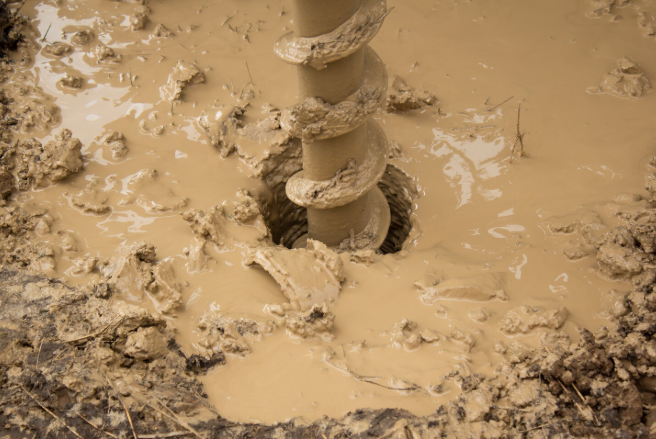
In drilling fluid applications (drilling mud), density is the primary indicator of hole stability. If the mud density drops below the formation pressure, you get a kick. If it is too high, you lose circulation. Drilling crews monitor mud density continuously — it is one of the most safety-critical density measurements in the mining industry.
In gold leaching circuits, the density of the leaching pulp determines the leaching kinetics and the recovery rate. Operators need to maintain consistent feed density, typically 40-55% solids, to achieve designed recovery.
|
Application |
Solids (wt%) |
Density |
Particle Size |
|
Flotation feed |
30 – 45% |
1.20 – 1.45 g/cm³ |
P80: 75 – 150 μm |
|
Thickener underflow |
50 – 65% |
1.50 – 1.75 g/cm³ |
Variable, often finer |
|
Drilling mud (weighted) |
10 – 35% |
1.05 – 1.60 g/cm³ |
Barite + cuttings, <200 mesh |
|
Gold leaching pulp |
40 – 55% |
1.35 – 1.55 g/cm³ |
P80: 50 – 100 μm |
|
Coal slurry (deslime) |
15 – 30% |
1.10 – 1.30 g/cm³ |
Minus 100 mesh (150 μm) |
What to Look for When Selecting a Density Meter for Slurry
Slurry does two things that make density measurement difficult: it settles when flow stops, and it erodes anything that sticks out into the flow stream.
The measurement principle has to be tolerant of entrained solids. Nuclear gauges (gamma densitometers) are common in mining because they measure through the pipe wall and are not affected by particle size or flow regime. But they require licensing, shielding, and regular source checks. Not every operation wants that overhead.
Vibrating element meters (tuning fork or vibrating tube) work on a different principle: the resonant frequency of the sensor changes with the density of the fluid. For settling slurries, a single-point insertion tuning fork design has a practical advantage — the measurement section is small enough that solids do not accumulate on it between readings. If the fork is vibrating at 1000+ Hz, settled particles tend to be thrown off rather than accumulating.
For higher-density slurries (above 1.6 g/cm³), verify that the vibrating frequency range of the meter covers your viscosity and density range. Some meters designed for chemical service have a frequency range that does not extend into the high-density slurry range. If your thickener underflow runs at 1.65 g/cm³, you need a meter rated for that.
Abrasive wear is the other issue. Slurries with high hardness minerals (silica, iron ore) will erode the sensor over time. Hardfaced or Hastelloy sensor options extend service life in abrasive service. The rule of thumb: if your ore contains more than 15% silica by weight, ask the manufacturer for abrasion test data before ordering.
Installation: The Details That Actually Matter
A good density meter in the wrong location will still give bad readings. In slurry service, installation location is half the specification.
Horizontal pipe runs are preferred over vertical. In a vertical pipe, the heavier slurry tends to migrate to the bottom, creating a density gradient. An inline density meter on the bottom of a vertical pipe will read higher than average. In a horizontal pipe at full flow, the mixing is better and the density reading is more representative.
Flow velocity matters. The meter needs enough velocity to keep solids in suspension. For most mineral slurries, 1.5 m/s minimum is a practical rule to prevent settling in the line. If the pipeline operates at lower velocities during shutdowns, you need a location where the density meter will be the first thing to see flow when the pump starts.
Upstream straight run reduces measurement noise. 5 pipe diameters of straight run upstream of the meter is a good baseline. If you put a density meter immediately downstream of a pump or a sharp bend, the turbulence will add noise to your reading and accelerate sensor wear.
Calibration: Two Approaches and When to Use Each
Every density meter ships with a factory calibration, usually against de-aerated water and one or two standard solutions. That calibration is valid for those reference conditions. For slurry service, you typically need a site-specific calibration.
The most reliable approach is sampling calibration. Collect simultaneous samples from the process line and record the meter reading. Send the samples to the lab for density measurement (typically by pycnometer or by drying and weighing). Then adjust the meter calibration to match the lab result.
This requires at least three data points across your operating range. One at low density, one at normal operating density, one at high density. Spread them across different shifts or different feed conditions if possible. The calibration equation should be linear for most mineral slurries, but verify that — some ore bodies produce slurries that deviate from linearity at high solids loadings.
Recalibration frequency depends on the slurry. A well-characterized thickener underflow might need recalibration once a quarter. A variable ore body or a system with abrasive wear will drift faster — monthly checks are not unreasonable. The meter output should be logged and compared against periodic manual samples as part of the operating procedure.
For drilling mud applications, daily calibration checks against a mud balance (a manual hydrometer) are standard practice. The mud balance reading is the reference standard. If the inline meter drifts more than 0.01 g/cm³ from the mud balance, investigate before drilling continues.
LONNMETER for Mining Slurry Applications
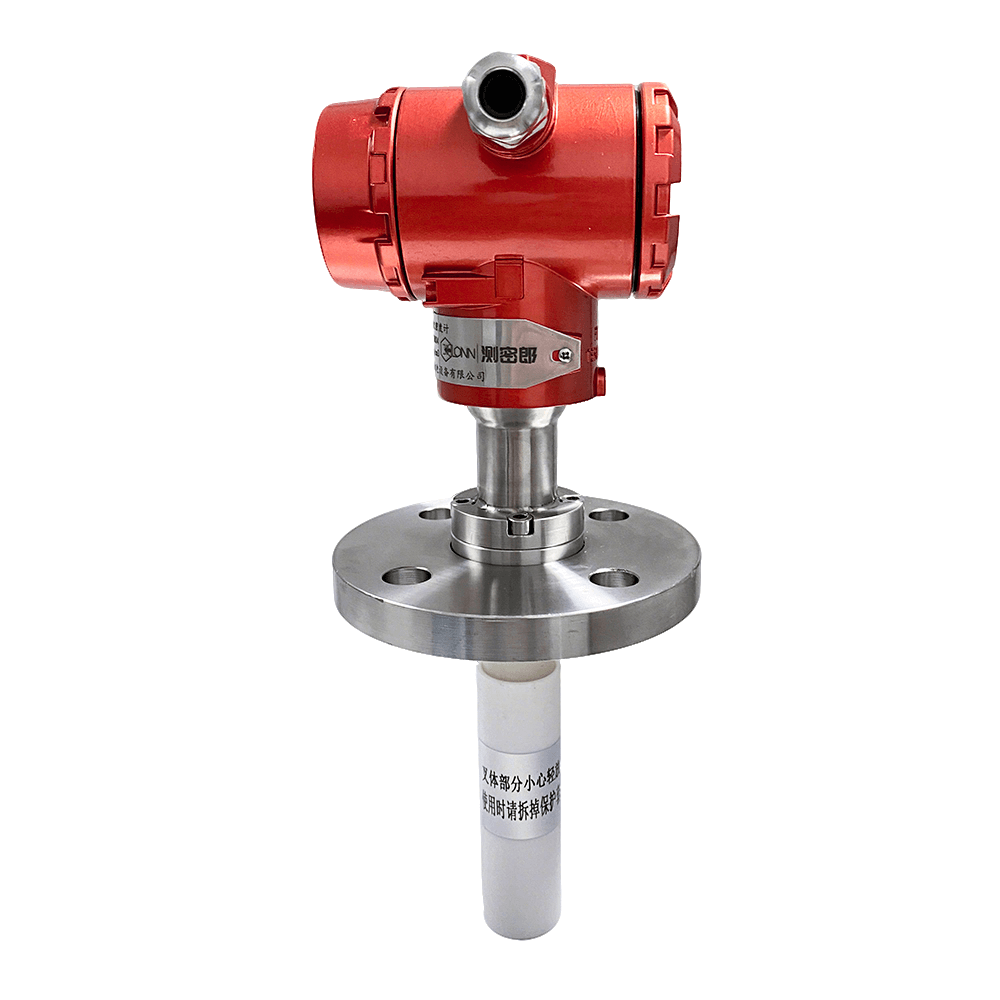
The LONNMETER LONN-DN100 is a single-point insertion tuning fork density meter designed for slurry applications. The sensor is available in 316L stainless steel for general mineral slurry and in Hastelloy C-276 for high-silica or high-abrasion applications.
The LONN-DN100 covers a density range up to 2.0 g/cm³, which handles most thickener underflow applications. For drilling mud applications with barite weighting agents, a dedicated configuration is available with extended range up to 2.5 g/cm³.
If you are specifying density measurement for a mining slurry application, the LONNMETER technical team can review your ore characteristics, process conditions, and installation layout to recommend the right configuration and calibration approach.
Common Questions About Mining Slurry Density Measurement
Q: Can a standard inline density meter handle settling slurries?
A: It depends on the design. A single-point insertion tuning fork with sufficient vibration frequency can handle settling slurries in many applications. A static dip pipe or a differential pressure gauge will accumulate solids and give erroneous readings. Always verify the measurement principle against the settling behavior of your specific slurry.
Q: How often should a mining slurry density meter be calibrated?
A: At minimum quarterly, using process samples as reference. High-variability ore bodies or abrasive applications may need monthly recalibration. Drilling mud applications should be checked daily against a mud balance reference.
Q: Nuclear gauge vs. vibrating meter — which is better for slurry?
A: Nuclear gauges are accurate and unaffected by flow regime, but require licensing, safety procedures, and source replacement. Vibrating element meters are easier to install and maintain, and modern designs handle most mineral slurries without issue. For most mining operations, the vibrating meter is the more practical choice unless you have a specific reason to accept the overhead of nuclear instrumentation.
Post time: Jun-26-2026


