

In a refinery, density is not just another process variable. It is how you know what is in the pipe, whether your product meets spec, and when to switch from one storage tank to another. From the moment crude oil arrives at the gate to the final blending of gasoline or diesel, density measurement shows up at nearly every critical decision point.
Where Density Matters in a Refinery
Density data feeds into three main areas of refinery operations. Crude oil reception, where it helps determine the grade and value of incoming feedstock. Product switching in pipelines, where real-time density tells operators exactly when one product ends and another begins. And finished fuel blending, where density confirms that the final product meets specifications like API gravity or regional standards.
Missing any of these measurements, or getting them wrong, means either product downgrade or contamination. Neither is cheap at scale.
Typical Density Ranges for Petroleum Products
One reason density works so well in refineries is that most petroleum products have naturally different densities. The gaps between them are large enough to be measured reliably, even under less-than-perfect process conditions.
| Product | Density Range | API Gravity |
| Gasoline | 0.72 – 0.76 g/cm³ | 55 – 70 |
| Kerosene / Jet Fuel | 0.78 – 0.81 g/cm³ | 42 – 50 |
| Diesel | 0.83 – 0.86 g/cm³ | 30 – 40 |
| Heavy Fuel Oil | 0.92 – 1.00 g/cm³ | 10 – 20 |
| Crude Oil (varies) | 0.80 – 0.97 g/cm³ | 15 – 45 |
The Pipeline Switching Problem
Many refineries move different products through the same pipeline, one after another. Gasoline in the morning, diesel a few hours later, jet fuel after that. At the boundary where one product pushes another, a mixing zone forms. The density in that zone changes continuously, and the operator has to decide when to redirect the flow from one storage tank to another.
This is where inline density meters earn their keep. A well-placed instrument on the pipeline gives continuous feedback, so operators do not have to guess or wait for lab results that arrive after the interface has already passed.
The cost of getting it wrong is not theoretical. Misdirected product ends up as downgraded blending stock, and in large transfer systems, even a few seconds of delay can mean thousands of liters of contamination.
What to Consider When Selecting a Density Meter for Refinery Use
Refinery environments put specific demands on instruments that you do not see in every industry. A few things to think about before choosing:
Temperature variation. Pipelines running outdoors for kilometers see significant temperature swings between day and night. The density meter needs reliable temperature compensation, not just at a single point but across the full operating range.
Flow stability. Density readings are more reliable under steady flow. If the meter is installed right after a pump or a valve, the signal will be noisier. Location matters as much as the instrument itself.
Corrosion resistance. Some crude feeds contain sulfur compounds that attack standard stainless steel. Make sure the wetted materials match your process chemistry.
Hazardous area certification. Most refinery installations require ATEX or IECEx approval. Not every density meter on the market has this.
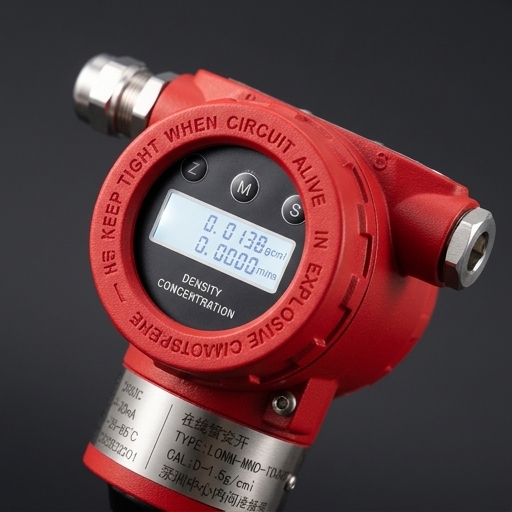
The LONNMETER LONN700 in Refinery Applications
The LONNMETER LONN700 inline density meter is built with these conditions in mind. Its tuning fork sensor handles the density range of light and heavy petroleum products with an accuracy of ±0.002 g/cm³, which is well within the tolerance needed for both product switching and blending verification.
The built-in temperature compensation covers the process temperature ranges typical of refinery pipelines. The remote transmitter design separates the electronics from the heat of the process, which improves long-term stability. And the 4-20mA output integrates directly with existing DCS infrastructure, while the RS485/Modbus RTU option provides access to diagnostics and additional process data.
For refineries evaluating inline density measurement for pipeline switching, blending control or crude reception monitoring, the LONNMETER technical team can review specific process conditions and recommend the right configuration.
Post time: May-26-2026


