The word “concentration” means something different in hydrometallurgy than it does in food and beverage. In a gold heap leach, you are not measuring Brix. You are measuring how many grams of cyanide per tonne of ore, or how many grams of gold per cubic meter of pregnant leach solution. The concentration numbers are small, the fluids are aggressive, and the measurement conditions are harsh.
This article covers two of the most common mining applications for concentration measurement: heap leaching of gold and copper, and acid mine drainage treatment. Neither application uses a standard Brix meter. Both need inline instruments that can survive the fluid chemistry and provide the specific concentration data that the process requires.
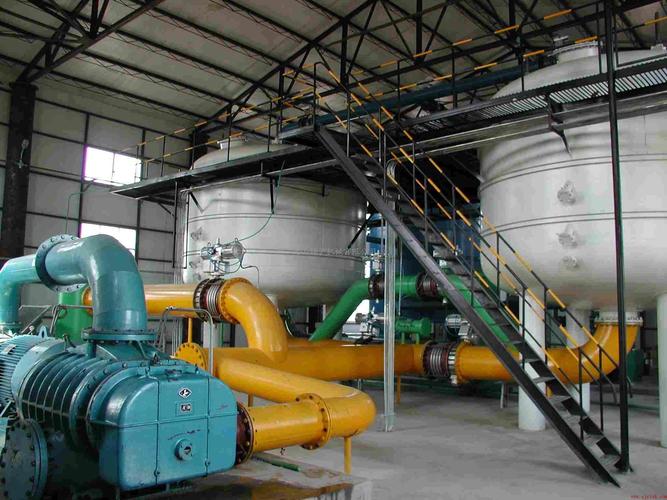
Heap leaching: the chemistry and where concentration fits
Heap leaching stacks crushed ore on a lined pad and irrigates it with a leaching solution. Gold is leached with cyanide (NaCN) at pH 10–11. Copper is leached with sulfuric acid (H₂SO₄). The leaching solution percolates through the ore, dissolves the target metal, and the pregnant leach solution (PLS) is collected in lined ponds and sent to metal recovery.
The key process variables in heap leaching are the concentration of the leaching agent in the irrigation solution and the concentration of the target metal in the PLS. Both determine the efficiency of metal extraction and the economics of the process.
| Two concentration measurements in heap leaching:
1. Leaching agent concentration (irrigation solution): Gold: NaCN, typical range 200–500 mg/L (ppm), target 250–400 mg/L Copper: H₂SO₄, typical range 1–10 g/L, target 2–5 g/L Role: confirms that the solution is strong enough to dissolve the metal
2. Metal concentration in PLS (pregnant leach solution): Gold: 0.5–5 mg/L (ppm) Copper: 1–10 g/L Role: indicates how much metal is being extracted; also determines recovery circuit loading |
Measuring cyanide concentration in gold leaching
Cyanide is both the process reagent and a significant safety concern. Too little cyanide: gold dissolution rate drops and extraction efficiency falls. Too much: safety risk, higher reagent cost, and potential for passive dissolution of other minerals that consume cyanide without producing gold.
The standard method for cyanide measurement in gold leaching is titrimetric analysis in the lab. Inline continuous cyanide measurement is not standard practice in most gold heap leach operations. The reason: cyanide concentration can be inferred from other parameters, and the titrimetric method is considered reliable enough for process control at the frequency it is run.
However, there is one parameter that correlates well with cyanide concentration and can be measured inline: solution density. As cyanide is consumed in the leaching reaction, the solution density changes in a way that correlates with the cyanide consumption. More importantly, the density of the barren solution (after gold recovery) is a check on whether the cyanide is being regenerated or is being permanently consumed.
For inline cyanide monitoring, the practical options are:
Density-based inference. A density meter on the barren solution line gives a continuous density reading that correlates with cyanide concentration over time. This requires calibration against the lab method for your specific ore type.
Electrochemical sensors. lon-selective electrodes for cyanide are available but require regular maintenance in the high-pH, high-salt environment of a gold leach circuit. They are not widely used for continuous inline monitoring in heap leach operations.
Measuring acid concentration in copper heap leaching
Copper heap leaching uses sulfuric acid as the leaching agent. The acid concentration in the irrigation solution is critical: too low and copper dissolution is incomplete; too high and the acid dissolves unwanted minerals (primarily iron) which consumes acid and contaminates the copper cathode.
Acid concentration in copper leaching is typically 2–5 g/L H₂SO₄ in the irrigation solution. The PLS leaving the heap contains copper in solution (1–10 g/L Cu) plus residual acid (0.5–2 g/L H₂SO₄). The residual acid concentration is important because it determines how much neutralization is needed before the copper electrowinning stage.
For inline acid concentration measurement, the options are different from food and beverage because the fluid is conductive, corrosive, and contains suspended solids:
Density measurement. Sulfuric acid has a well-defined density-concentration relationship between 1% and 30% H₂SO₄. A density meter calibrated for the acid range can output concentration directly. The relationship is non-linear (the density-concentration curve has an inflection point near 95% H₂SO₄), but in the dilute range used in leaching (1–10 g/L), it is monotonic and reliable.
Conductivity measurement. Sulfuric acid conductivity vs concentration has a maximum at around 25% H₂SO₄. Below that, conductivity increases with concentration. Above that, conductivity decreases due to ion pairing. In the dilute range (1–10 g/L), conductivity is monotonic with concentration and can be used as a proxy. However, conductivity is affected by dissolved copper and other ions in the PLS.
Density is the more reliable choice for copper heap leaching because it is not affected by dissolved copper and other ions the way conductivity is. Load the density-to-H₂SO₄ concentration table for the specific gravity range you are operating in.
| Density-to-acid concentration for dilute sulfuric acid (15°C reference):
1.005 g/cm³ → ~1 g/L H₂SO₄ 1.025 g/cm³ → ~3 g/L H₂SO₄ 1.050 g/cm³ → ~8 g/L H₂SO₄ 1.080 g/cm³ → ~13 g/L H₂SO₄
Required accuracy: ±0.001 g/cm³ (corresponds to ±0.2–0.5 g/L H₂SO₄) Temperature compensation: essential (acid density is temperature-sensitive) Sensor material: Hastelloy or tantalum for acid resistance |
Acid mine drainage: the concentration problem
Acid mine drainage (AMD) is generated when sulfide minerals (primarily pyrite, FeS₂) are exposed to air and water. The oxidation of pyrite produces sulfuric acid and dissolved iron, which lowers the pH to as low as 2–3 in untreated drainage. The drainage also contains elevated concentrations of dissolved metals (Al, Mn, Zn, Cu) that are mobilized at low pH.
AMD treatment uses alkaline reagents (lime, limestone, or sodium hydroxide) to raise the pH and precipitate the dissolved metals as hydroxides. The treatment objective is typically pH 7–8.5 and metal concentrations below regulatory limits.
The concentration measurement in AMD treatment is not a single parameter. AMD treatment plants monitor:
pH. The primary control variable. pH probes are standard and well-understood. Online pH is reliable if the probe is maintained and cleaned regularly in the high-solids, iron-rich environment.
Total dissolved solids (TDS). Inferred from conductivity or density. TDS is a measure of the ionic load and affects the reagent dosing rate.
Dissolved iron. Measured by spectrophotometric online analyzers or inferred from conductivity. Ferrous iron (Fe²⁺) oxidizes to ferric iron (Fe³⁺) as pH rises, and Fe³⁺ precipitates as Fe(OH)₃ at pH above 3. Monitoring iron concentration tracks the precipitation progress.
Material selection for mining concentration applications
The fluid chemistries in mining concentration applications are aggressive enough that material selection is not optional. The most common choices:
Hastelloy C-276. Standard choice for sulfuric acid service at concentrations up to 10 g/L and temperatures up to 100°C. Good all-round corrosion resistance in acid-chloride environments. Slightly expensive but reliable.
Tantalum. Required for higher acid concentrations (above 10 g/L) or elevated temperatures. Impervious to HCl and H₂SO₄ at most concentrations. Fragile and expensive. Use only where Hastelloy is marginal.
PTFE-lined sensors. For applications where the sensor must contact the fluid but metal corrosion is a concern. PTFE is chemically inert but the lining must be intact. If the lining cracks, fluid gets behind it and the sensor fails.
Ceramic sensors. Used in pH measurement for their chemical resistance. Alumina (Al₂O₃) is standard. Zirconia is used in some high-temperature applications.
One more thing: measuring gold concentration in PLS
Gold concentration in PLS is typically 0.5–5 mg/L (ppm). At these levels, density measurement cannot resolve gold concentration — the contribution of dissolved gold to the solution density is too small. Gold concentration is measured by:
Atomic absorption spectroscopy (AAS) or ICP in the lab. Standard method. Sample turnaround time is 30 minutes to several hours depending on the lab location.
Online X-ray fluorescence (XRF). Can measure gold and other metals in solution inline. Capital cost is significant. Used at large operations where the economics justify the investment.
What a density meter tells you about the PLS, even if it cannot measure gold directly: the PLS density tells you whether the solution is becoming richer (more dissolved solids, higher density) or being diluted. Combined with the barren solution density, it tells you whether the leaching circuit is performing within the expected range. This is useful for monitoring circuit behavior even when gold concentration is not accessible inline.
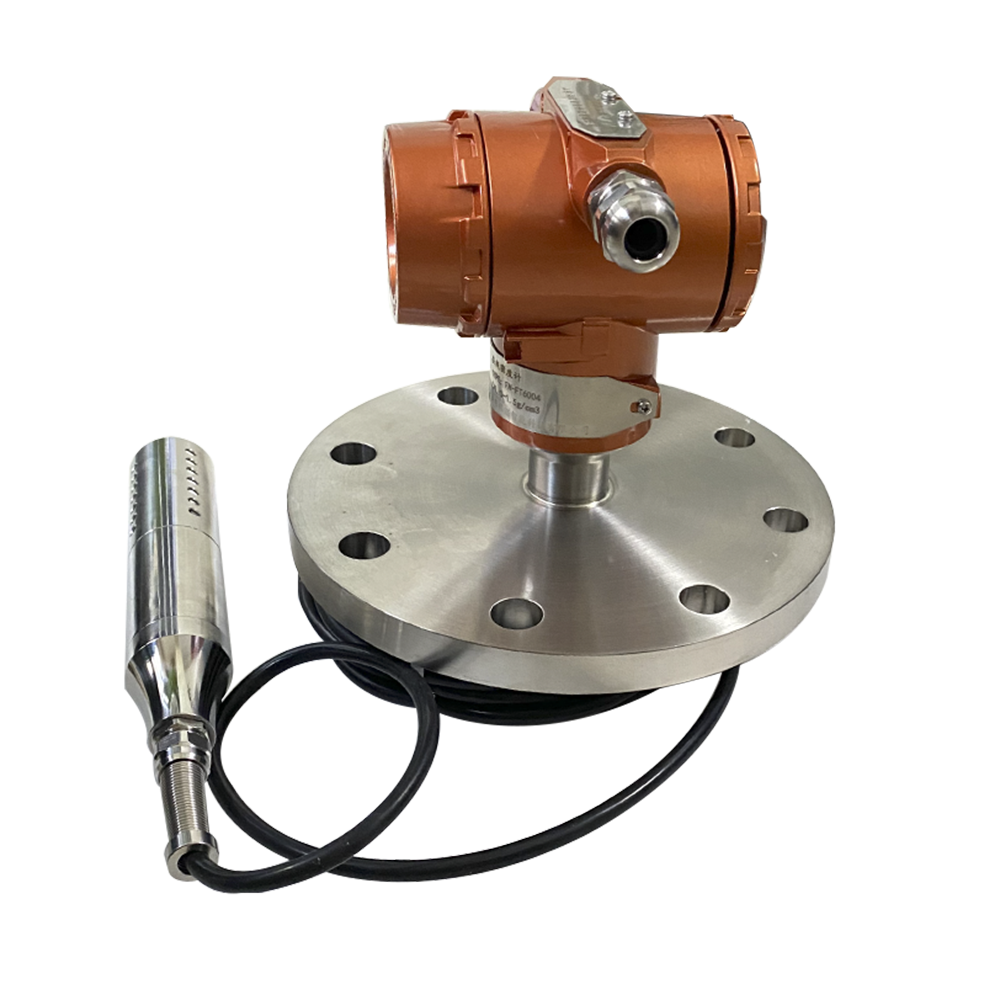
LONNMETER for mining concentration applications
For copper heap leaching acid concentration monitoring, the LONNMETER LONN-700 with Hastelloy sensor configuration handles the H₂SO₄ range (1–13 g/L) with temperature compensation to 15°C reference. The output is configurable as density or acid concentration (g/L H₂SO₄).
If you are specifying concentration measurement for a mining hydrometallurgy application and need to review the acid range, the material options, or the density-to-concentration calibration for your specific solution, the LONNMETER technical team can work through the requirements with you.
Questions on mining concentration measurement
Can I measure cyanide concentration inline in gold heap leaching?
Inline cyanide measurement is not standard practice. Density can be used as an inferential parameter correlated to cyanide consumption, but the correlation is ore-specific and must be validated against lab titrations. Electrochemical cyanide sensors exist but require maintenance in the high-pH, high-salt leach environment. Most gold heap operations rely on regular lab titration.
Why is Hastelloy preferred over stainless steel for acid service in mining?
Stainless steel 316L has adequate corrosion resistance to dilute sulfuric acid (below 1 g/L at room temperature). In heap leaching solutions (2–5 g/L H₂SO₄), 316L suffers under-deposit corrosion and crevice attack in the presence of chloride ions. Hastelloy C-276 has significantly better resistance to chloride-induced pitting and crevice corrosion, which makes it the standard for any application where the acid contains chloride from the ore.
What is the maximum acid concentration for Hastelloy in heap leaching?
Hastelloy C-276 is rated for H₂SO₄ at concentrations up to 50% at room temperature and up to 20% at 80°C. In heap leaching, the irrigation solution is typically 1–5 g/L (0.1–0.5%), which is well within the Hastelloy service range. For higher acid concentrations, consider tantalum or PTFE-lined sensors.
Can a density meter measure gold concentration in PLS?
No, at gold concentrations of 0.5–5 mg/L, the dissolved gold contributes less than 0.000005 g/cm³ to the solution density — well below the resolution of any inline density meter. Gold is measured by AAS, ICP, or online XRF. A density meter on the PLS line is useful for monitoring solution loading (more dissolved solids = higher density) but cannot resolve gold concentration.
What is the main challenge in AMD pH measurement?
Iron hydroxide precipitation coats the pH electrode. In the Fe³⁺ concentration range typical of AMD (10–500 mg/L), a coating of Fe(OH)₃ forms on the glass bulb within hours to days, causing the reading to drift. The solution is to use a pressurized flow cell that keeps the electrode immersed in flowing solution, and to implement an automatic cleaning cycle (acid or mechanical) if the drift exceeds 0.2 pH units between calibrations.
Post time: Aug-07-2026