

What is Fuel Oil Viscosity?
Viscosity, fundamentally defined as the internal friction within an oil that resists flow, represents the single most crucial characteristic governing the handling, treatment, and eventual performance of fuel oil. For process control and quality assurance, viscosity cannot be treated merely as an empirical data point; it is a foundational metric that determines component protection and energy efficiency.
Fuel Oil Production and Quality Specification: Where Viscosity is Established
The characteristics of fuel oils are fundamentally determined within the refinery structure. Production commences with crude distillation, where separation occurs based on boiling point. Heavy Fuel Oil (HFO) and residual fuels are, the bottom cuts of this process, defined by their high density and intrinsically high viscosity. Subsequent operations, such as conversion processes, further alter the molecular structures, which explains the wide variance in viscosity exhibited by final residual products.
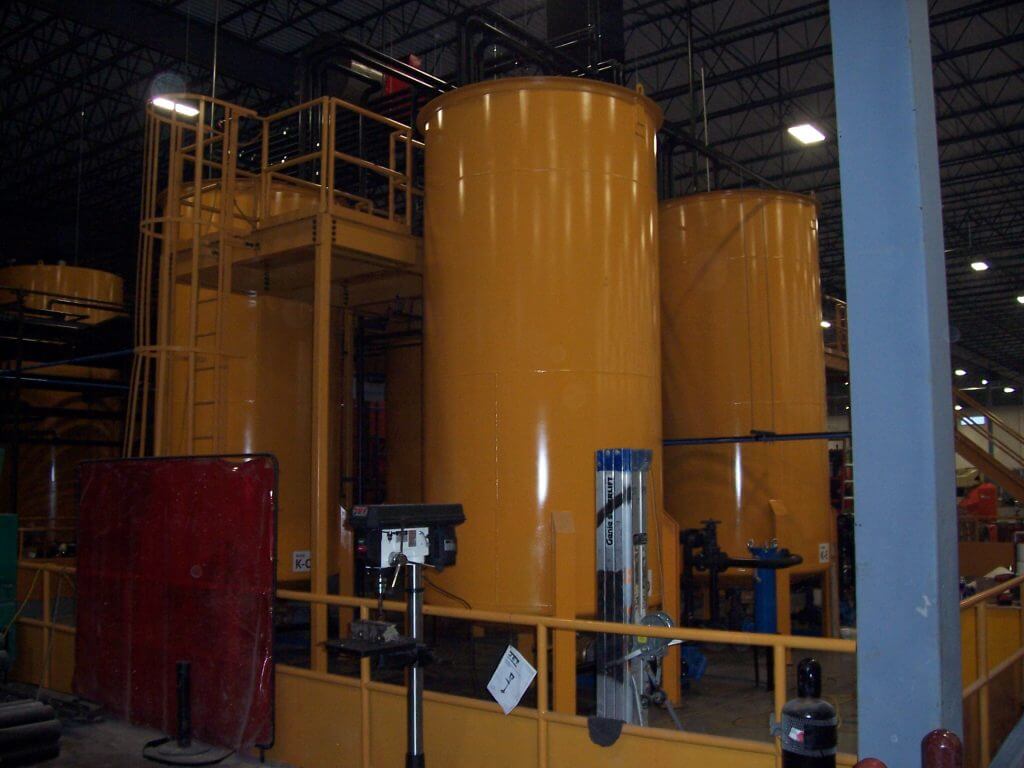
Precision Blending: The Art and Science of Achieving Target Viscosity
Given that the viscosity of raw residual outputs is typically too high for immediate market acceptance, blending serves as the core mechanism for achieving target viscosity grades. This process involves incorporating lighter distillate cutter stocks, such as marine diesel, gasoil, or light cycle oil (LC(G)O). The success of the blending operation hinges entirely on dynamically adjusting the ratio of HFO to cutter stock based on the fluctuating characteristics of the input feedstocks and their temperature.
A significant operational vulnerability arises from relying on delayed lab analysis to verify the blending ratio required to hit kinematic viscosity of fuel oil targets. Since precise viscosity limits are achieved through calculated blending ratios, an incorrect ratio—caused by delayed feedback or sampling errors—carries the massive risk of solubility failure. When solvency fails, highly stabilized asphaltenes precipitate, leading to sludge and catastrophic instability. This potential failure mode is far more costly and damaging than merely missing a viscosity specification slightly. Implementing an advanced oil viscosity measuring instrument in the blending manifold provides the instantaneous feedback signal necessary to adjust flow meters in real-time, thereby ensuring product stability is actively maintained and quality failure is preempted.
Beyond blending, viscosity can also be managed through temperature regulation. Heating heavy fuel oil remains the primary, basic method for lowering its viscosity to a point where it can be pumped and atomized. However, temperature is an indirect proxy for viscosity. Due to the inherent variability in feedstock properties, exclusive reliance on static temperature set-points is insufficient to guarantee consistent viscosity. Furthermore, specific chemical additives or mechanical treatments like homogenization can be applied to fine-tune rheological properties and improve the overall stability and consistency of the heavy fuel oil.
It is important to acknowledge that highly viscous residual oils exert considerable mechanical strain on pumping equipment and pipelines during the refining and transfer stages. When viscosity spikes unexpectedly—perhaps due to temperature drops or feedstock changes—the resulting load increase threatens the integrity of capital assets, potentially leading to increased pump wear, seal failures, or major line blockages. The ROI associated with deploying an on-line oil viscosity measuring instrument extends well beyond product quality control; it acts as a critical protective layer for the mechanical assets within the production line, dramatically reducing the likelihood of unscheduled downtime.
How Viscosity Directly Governs Performance
Atomization and Combustion Efficiency
The final, decisive operational role of viscosity control is its direct influence on fuel atomization. Optimal atomization—the process of transforming bulk fuel into a fine, uniform mist of droplets—is necessary for rapid and complete combustion.
When fuel oil viscosity measurement indicates the fuel is too high (too thick), the fuel resists flow and fails to break up properly inside the nozzle. This invariably results in the formation of larger droplets and inefficient, incomplete combustion. The immediate consequence is a waste of energy, the formation of excessive soot, and coking, which degrades heat exchangers and burner components. Studies confirm that thicker oil entering the nozzle reduces rotational velocity, resulting in a heavier wall thickness cone that simultaneously increases the flow rate (wasting fuel) and generates larger droplets that struggle to vaporize and ignite.
Conversely, if the viscosity is too low (too thin), while flow is easier, two major problems emerge. First, very low viscosity can compromise the required hydrodynamic lubrication film protecting fuel system components like pumps and injectors, accelerating wear and risking failure. Second, poor combustion stability can result from over-atomization or non-uniform ignition, leading to fluctuations in engine power output.
Does Oil Viscosity Affect Fuel Consumption?
The question, does oil viscosity affect fuel consumption, can be answered unequivocally: yes, profoundly, through two distinct but interconnected pathways: the reduction of parasitic mechanical friction and the maximization of combustion efficiency.
Lower viscosity oils circulate and flow with greater ease, substantially reducing the mechanical loss required to pump the fluid through the system. This reduction in parasitic energy demand directly translates into measurable fuel economy improvements. For fleets utilizing optimized lubricants, switching to lower-viscosity heavy-duty engine oils (HDEO) has been shown to yield fuel consumption reductions between 0.9% and 2.2% annually. The objective is always to find the ideal equilibrium: the oil must be thin enough to reduce resistance and allow for fuel-efficient powering of the engine, but sufficiently viscous to maintain the essential protective fluid film (boundary layer separation) between critical moving parts. Choosing an oil that is too thin sacrifices engine durability and protection, a compromise deemed unacceptable given the high cost of engine wear and component lifespan reduction.
Viscosity’s Role in Emission Control and Engine Health
Optimized viscosity is critical for achieving cleaner operation and mitigating harmful emissions. Improved spray breakup at lower viscosities or stabilized boundary layers at higher viscosities enhance the fuel-air mixture, which consequently lowers unburned hydrocarbon (HC) emissions. Furthermore, careful control of viscosity is essential for mitigating Nitrogen Oxide (NOx) formation, as excessive viscosity increases can contribute directly to pollutant generation.
For heavy liquid fuel (such as mazut or high-viscosity HFO), preheating is a mandatory step to reduce viscosity and improve flowability prior to combustion. The specific atomization strategy employed—ranging from pressure-jet burners for low-viscosity fuels to specialized steam-assisted or rotary cup burners for high-viscosity fuels (>100 cSt)—is determined by the fuel’s measured viscosity.
The ability of burners to operate efficiently depends on receiving fuel within a narrow viscosity band. As feedstocks become increasingly variable due to blending and the introduction of new marine fuel types, relying on static pre-heater temperature setpoints becomes a constant source of inefficiency. The problem is that the temperature required to achieve the necessary atomization viscosity (e.g., 10–20 cSt) shifts dramatically depending on the base characteristics of the fuel batch. If an operator relies on the old setpoint for a new, variable batch, the viscosity delivered to the nozzle will be suboptimal, guaranteeing incomplete combustion, increased emissions, and higher operational costs. Direct, continuous fuel oil viscosity measurement eliminates this inherent vulnerability.
Furthermore, managing viscosity properly minimizes the auxiliary energy required to transfer and pump the fuel through the system. When viscosity is allowed to fluctuate high, the electrical or steam load on transfer pumps and heating systems spikes. By maintaining optimal viscosity in real-time through an automatic control loop, the system reduces the mechanical strain on pumps and minimizes the energy consumed by transfer oil heating systems, offering a significant and quantifiable ROI beyond just combustion improvement.
Table: Operational Consequences of Viscosity Deviation
|
Viscosity State |
Impact on Flow/Pumping |
Impact on Combustion/Atomization |
Impact on Efficiency & Components |
|
Too High (Thick) |
Increased pumping energy, reduced rotational velocity in nozzles. Risk of pipe blockage. |
Poor atomization, larger droplets leading to incomplete combustion. |
Wasted fuel, increased soot/coking, higher HC/NOx emissions. Excessive preheating required. |
|
Too Low (Thin) |
Inadequate boundary layer separation, poor film strength in pumps. |
Risk of over-atomization or unstable flame, loss of ignition uniformity. |
Accelerated wear and failure of critical fuel system components (pumps, injectors). Reduced protection from mechanical friction. |
Real Time Fuel Oil Viscosity Control
The Inherent Weakness of Discontinuous Lab Sampling
Relying on traditional, periodic laboratory checks or monthly sampling introduces critical lag time between a viscosity anomaly and corrective action. In dynamic processes, whether in refinery blending or high-speed engine systems, oil quality can shift instantaneously due to factors like oxidation, dilution with process gas, or contamination. In critical applications, such as gas screw compressors, a rapid drop in lube oil viscosity can lead to bearing failure, long before a lab report confirming the issue is received. The current methodology of off-site lab testing is suboptimal and costly due to logistical hurdles and the unacceptable time delay in receiving actionable information.
Transforming Reactive Monitoring to Proactive Management
The solution lies in adopting a closed-loop control, where a feedback signal is continuously utilized to maintain a desired state, making the fuel oil viscosity control system fully self-regulating.
The most valuable implementation of this technology ensures that the measured viscosity directly commands the required pre-heater temperature, fundamentally changing the control architecture. This methodology eradicates the previous reliance on temperature as an indirect proxy for viscosity, instead providing constant, automatic fuel oil viscosity measurement at the point of use (e.g., the burner tip). This eliminates viscosity fluctuations that occur when transitioning between different fuel loads or batches.
The benefits of moving to real-time, continuous monitoring are substantial: instantaneous feedback allows for continuous process optimization, driving up product consistency while minimizing the production of off-spec waste. Furthermore, the automation eliminates the constant, tedious manual monitoring required of skilled personnel and significantly improves the energy efficiency of the transfer oil heating system by preventing excessive heating.
For real-time data to be truly actionable within a regulated industry, particularly regarding custody transfer or compliance with marine standards, the on-line oil viscosity measuring instrument must possess verifiable accuracy. Because the commercial specification often requires reporting kinematic viscosity of fuel oil at a standard temperature (e.g., 50°C), the closed-loop system must not only provide rapid dynamic viscosity data but also integrate density measurements to automatically calculate and report the required kinematic value, thus maintaining a robust and verifiable audit trail for quality control.
It is essential for plant managers to understand that successfully deploying a functional fuel oil viscosity control system requires a holistic engineering approach, not merely installing a sensor. The integrity of the measurement hinges on the quality of the sample received by the sensor. Challenges common in industrial setups—such as excessively long sample transfer lines, insufficient flow, pressure variations, or unnecessary deadlegs—can severely distort the measurement. The success of the closed-loop system depends on optimizing the fluidic and thermal parameters surrounding the oil viscosity measuring instrument to guarantee the delivery of a representative sample.
Learn About More Density Meters


More Online Process Meters
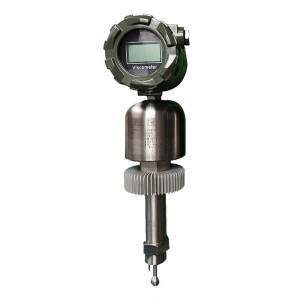

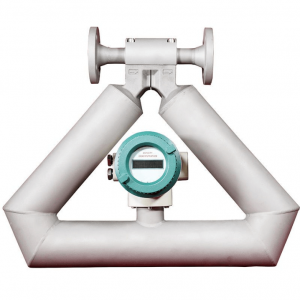
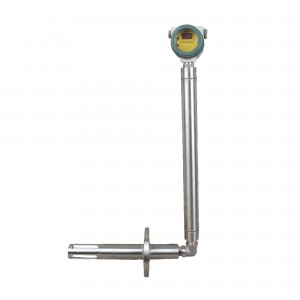
The Lonnmeter Advantage: A Robust Oil Viscosity Measuring Instrument for Critical Lines
The demanding environment of fuel oil production—involving high pressures, elevated temperatures, and the inherent challenges of handling abrasive and fouling heavy oils—necessitates an oil viscosity measuring instrument built for extreme durability and precision. The Lonnmeter Viscometer, engineered utilizing advanced vibrating rod or acoustic wave (AW) technology, delivers the reliability required in these critical process lines.
Technical Superiority: Lonnmeter’s Measurement Methodology
The core strength of the Lonnmeter lies in its robust, solid-state sensing design, which typically employs an electromagnetically vibrated rod. This non-mechanical approach eliminates the inherent weaknesses of traditional mechanical viscometers, ensuring minimal maintenance and providing superior resistance to the severe fouling and contamination common in HFO service.
The Lonnmeter technology is specifically designed for full immersion and provides reliable, high-precision measurement even under strenuous operational parameters, including pressures up to 10,000 psi (700 bar) and temperatures reaching 180 °C. A critical functional advantage in process control is the instrument's robustness against common line disturbances: its high-strength sensor measures viscosity while remaining unaffected by the significant vibration and flowrate fluctuations typical of refinery manifolds or marine engine rooms. This convergence of robustness and high precision enables the tracking of minute changes in fuel oil viscosity measurement with exceptional data quality, offering high accuracy (e.g., 3% RM) and outstanding repeatability (e.g., ).
Integration and Reliability: Minimizing Operational Disruption
Lonnmeter viscometers provide an instantaneous data stream, enabling true real-time feedback essential for continuous process control in blending, pre-heating, and asset condition monitoring applications. Their standard universal plug-and-play connectivity simplifies integration with existing Industrial Control Systems (ICS) via digital or analog (4-20mA) outputs, allowing for easy and cost-effective retrofitting to existing oil transfer heaters and blending systems.
Beyond monitoring fuel quality, the technology is vital for protecting internal assets. Lonnmeter systems are used extensively for monitoring lubricant health in critical equipment, such as gas screw compressors, where rapid viscosity drops caused by gas dilution or oxidation can instantly jeopardize rotary or thrust bearings. Continuous, on-line monitoring acts as an early warning system, preventing high-cost failures and plant downtime.
Table: Lonnmeter (Proprietary Vibrating Rod Technology) On-Line Viscometer Specifications
|
Feature/Metric |
Typical Performance Standard |
Operational Benefit to Fuel Oil Management |
|
Measurement Type |
Dynamic Viscosity (Pa·s or cP) |
Provides the direct measure of fluid resistance required for accurate blending and pre-heater control. |
|
Operating Temperature |
Up to 180 °C |
Uninterrupted measurement under extreme refining or high-pressure pre-combustion heating conditions. |
|
Operating Pressure |
Up to 10,000 psi (700 bar) |
Allows installation directly in high-pressure lines without modification, minimizing system complexity. |
|
Robustness & Design |
No Moving Parts, High-Strength Sensor (e.g., 316L Stainless Steel) |
Minimal maintenance, imperviousness to physical contamination, vibration, and flow variations. |
|
Repeatability |
Excellent (e.g., ) |
Provides reliable input essential for self-regulating closed-loop systems. |
|
Output/Connectivity |
4-20mA / Digital / Universal Plug-and-Play |
Seamless integration into existing fuel oil viscosity control system infrastructure. |
REQUEST A CONSULTATION: Optimize your blending process today.


