

The Installation Discussion Usually Starts Before the Meter Is Purchased
One thing people outside industrial projects sometimes underestimate is how early installation concerns appear.
In many plants, engineers start discussing pipeline conditions before they even finalize the density meter model.
Because by the time the equipment arrives onsite, changing the piping layout is already expensive.
And honestly, most long-term measurement problems can usually be traced back to decisions made during the installation planning stage.
At LONNMETER, installation conversations often reveal more about the application than the specification sheet itself.
The First Question Is Usually: “What Is the Process Actually Doing?”
Before talking about accuracy or communication protocols, experienced engineers usually want to understand the process itself.
For example:
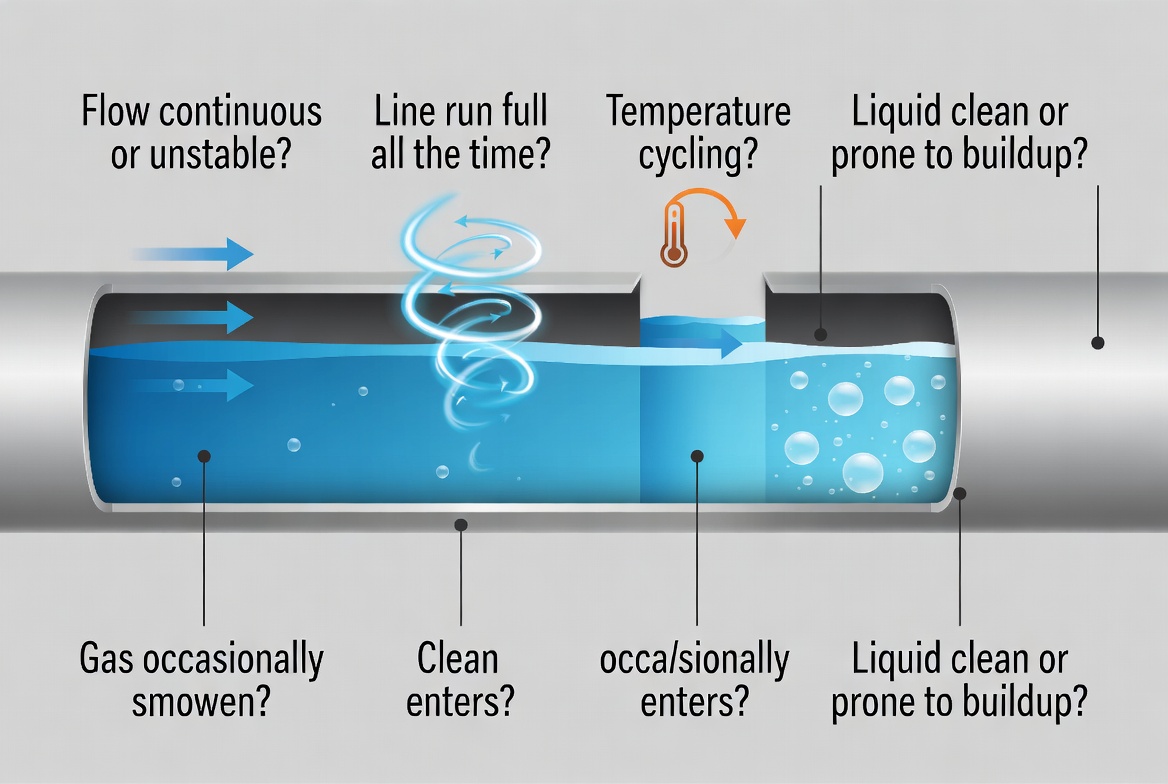
- Is the flow continuous or unstable?
- Does the line run full all the time?
- Is there temperature cycling?
- Does gas occasionally enter the system?
- Is the liquid clean or prone to buildup?
These questions matter because density meters respond directly to real process conditions, not ideal laboratory conditions.
Two pipelines carrying the same product can behave completely differently depending on how the process operates.
Pipeline Location Matters More Than Many Expect
A density meter doesn’t simply measure liquid.
It measures whatever is happening at that exact point in the pipeline.
That’s why installation location becomes critical.
Experienced engineers usually avoid placing sensors:
- directly after pumps
- near fast-closing valves
- immediately after elbows
- at pipeline high points where gas collects
Those areas tend to create unstable flow conditions.
And unstable flow almost always turns into unstable readings sooner or later.
In many cases, moving the installation point a short distance downstream improves the measurement dramatically.
Full Pipe Conditions Are Extremely Important
This gets overlooked surprisingly often.
Inline density measurement works best when the sensor stays completely surrounded by liquid.
Partially filled pipelines create problems quickly:
- trapped gas
- inconsistent wetting
- fluctuating readings
That’s why engineers usually check:
- pipe orientation
- filling behavior
- operating flow conditions
before finalizing the installation layout.
Even a good density meter struggles if the process itself isn’t hydraulically stable.
Temperature Stability Is Part of the Planning Process
Temperature discussions happen early because they affect both:
- the process
- the measurement itself
For example:
- outdoor pipelines may experience large thermal swings
- heated chemical systems may fluctuate during startup
- blending lines may change temperature throughout the day
Engineers often evaluate:
- whether insulation is needed
- where temperature sensors should be placed
- how quickly the process temperature changes
Because once production starts, thermal instability becomes much harder to correct later.
Vibration Is Usually a Bigger Concern in Older Facilities
In newer plants, vibration control is often built into the system design.
Older facilities are different.
Years of operation gradually change:
- pump behavior
- pipe supports
- structural stability
Sometimes a pipeline vibrates so consistently that operators stop noticing it completely.
But the density meter still notices.
This is why engineers frequently inspect:
- nearby rotating equipment
- support structures
- pipeline movement
before deciding where to install the sensor.
Maintenance Access Is Often Forgotten Until It’s Too Late
This happens constantly.
The installation looks perfect on paper, but later nobody can comfortably access the sensor for:
- cleaning
- inspection
- calibration checks
Eventually maintenance gets delayed simply because the installation is inconvenient.
Experienced engineers usually think ahead about:
- working space
- valve positioning
- sensor accessibility
because long-term usability matters just as much as initial installation success.
The Process Fluid Changes the Entire Installation Strategy
Not every liquid behaves the same way.
Some fluids are:
- clean and stable
- highly viscous
- corrosive
- temperature-sensitive
- prone to coating buildup
Each one affects installation planning differently.
For example, viscous products may require slower flow areas, while corrosive liquids may influence material selection and maintenance intervals.
Good installation planning always starts with understanding the actual fluid behavior.
Simpler Installations Usually Perform Better Long Term
One thing many experienced engineers eventually realize:
The best measurement installations are usually the least complicated.
Stable density measurement often comes from:
- predictable flow
- stable temperature
- minimal turbulence
- good pipe filling
rather than overly complicated piping arrangements.
This is one reason vibrating fork inline density meters are commonly used in industrial environments. They tend to integrate relatively well into continuous production systems without requiring excessive complexity.
Good Engineers Usually Think Beyond Startup Conditions
Startup is easy compared to long-term operation.
A system may look stable during commissioning but behave very differently six months later.
Engineers often ask:
- What happens during seasonal temperature changes?
- Will flow rates increase later?
- Could product types change?
- Will maintenance still be practical years from now?
Long-term thinking usually prevents many future measurement problems.
Why Installation Planning Often Matters More Than Specifications
Industrial buyers sometimes spend weeks comparing specification sheets:
- accuracy
- repeatability
- communication protocols
But in actual production environments, installation quality often influences performance more than tiny specification differences.
A properly installed system with stable process conditions usually outperforms a theoretically “better” meter installed poorly.
That’s something most experienced operators eventually learn firsthand.
How LONNMETER Supports Installation Planning
At LONNMETER, installation planning is treated as part of the measurement solution itself.
Because reliable density measurement depends heavily on:
- process behavior
- pipeline layout
- operating conditions
- long-term maintenance practicality
In many projects, the most valuable discussions happen before the equipment is ever installed.
Conclusion: Good Density Measurement Starts Before Installation
Most stable density measurement systems have one thing in common:
The installation was carefully considered from the beginning.
Things like:
- flow stability
- full pipe conditions
- temperature behavior
- vibration
- maintenance access
all influence long-term performance far more than many people initially expect.
And in real industrial environments, thoughtful installation planning usually saves far more time than troubleshooting later.
Need Help Planning a Density Meter Installation?
If you are evaluating an inline density measurement system, installation conditions should always be reviewed alongside instrument specifications.
You can learn more at:
https://www.lonnmeter.com/
Post time: May-21-2026


