

Water-based fireproof coatings are formulated as a protective layer for steel structures, combining environmental safety with reliable fire resistance. Their notable characteristics include low volatile organic compound (VOC) emissions, the absence of halogens, and a formulation that prioritizes safety for users and the environment. These coatings are particularly valued in sectors where reducing toxic emissions and adhering to sustainable practices is critical, such as commercial high-rises and infrastructure projects.
A primary advantage of water-based fire-resistant coatings is their halogen-free composition. By eliminating chlorine, bromine, and related compounds, these coatings reduce the risk of toxic gas emission during a fire. This directly addresses concerns about the release of dioxins and furans in combustion, responding to stricter fireproof coating standards and improving site safety for both occupants and responders.
Critical to the effectiveness of these coatings is the synergy between the binder system and solid fillers. Inorganic fillers such as magnesium carbonate (MgCO₃), magnesium hydroxide (Mg(OH)₂), and aluminum hydroxide (Al(OH)₃) are widely used for their role as thermal barriers. They serve several functions: they suppress smoke, absorb heat through endothermic decomposition, release water vapor to cool the substrate, and enhance the mechanical integrity of the film. For example, magnesium hydroxide releases water vapor when exposed to high temperatures, which helps slow flame propagation.

Fire Resistant Coating for Steel Structure
*
The uniform distribution and particle morphology of these fillers strongly influence fire-resistive coating density measurement, performance, and consistency. Proper dispersion ensures the coating forms a continuous thermal shield during a fire event. However, excessive filler loading can compromise process stability, making spray-on fireproofing or brush application techniques more challenging. There is a necessary balance: enough filler for optimal flame retardancy, but not so much that it diminishes adhesion or flexibility.
Alongside inorganic components, organic polymers bind the components together and contribute to the film’s flexibility. Enhanced by properly chosen fillers, the resulting composite coating achieves high thermal stability, reducing the speed of temperature rise and improving the protective window during a fire. When applied in the fireproof coating production mixing stage, careful selection and mixing of fillers and binders determine final performance. This process is tightly linked to outcomes such as reduced smoke emission, improved intumescence (expansion of coating under heat), and better mechanical durability.
Water-based coatings also cut VOC emissions, a benefit for air quality and worker safety. This is primarily achieved through the use of water as the solvent and higher mineral filler content, replacing volatile organic binders. This aligns with sustainability and green building certification requirements, making these coatings among the best fire-resistant coatings for buildings striving for environmental compliance.
In summary, the convergence of halogen-free, water-based technology with advanced inorganic fillers yields eco-friendly, fire-resistant coatings finely tuned for steel structure protection. Uniform dispersion, optimal content, and a careful fireproof coating mixing process ensure reliable, high-performance results for building safety frameworks.
Importance of Inline Density Measurement in Fire-Resistive Coatings
Consistent density in spray-on fireproofing is crucial for achieving high-performance fire-resistant coatings tailored for steel structures. The density of water-based fireproof coating directly determines its thermal insulation properties, affecting how long the steel substrate maintains integrity under fire exposure. Experiments have shown that slight deviations in density can cause significant changes in both thermal conductivity and compressive strength, influencing the coating’s ability to provide adequate passive fire protection.
Inline density measurement enables immediate adjustment during the fireproof coating production mixing stage. With real-time monitoring by in-line density meters such as those supplied by Lonnmeter, manufacturers maintain strict control over the water-based fireproof coating density. This guarantees uniform application thickness and prevents voids or weak spots, both of which can undermine fire resistance.
- Density control impacts several critical properties:Fire Resistance: Reliable fire-resistive coating density measurement allows precise formulation during the fireproof coating mixing process. Under-dense coatings may fail premature during a fire event, while overly dense coatings could crack or separate from the steel, compromising protection.
- Coverage Efficiency: Maintaining correct density helps optimize the material spread rate in fireproof spray coating application techniques, affecting overall coverage and cost-efficiency for projects such as the best fire-resistant coatings for buildings or economical fireproof spray for homes.
Mechanical Durability: Density management ensures that fire-resistant coating for steel structures retains adequate adhesion, flexibility, and resistance to physical damage. Research employing positron annihilation analysis demonstrates that fluctuations in density can disrupt the microstructure, creating weak regions within the coating matrix. Microstructural consistency correlates with higher tensile strength and reduced risk of premature failure. For water-based fireproof coatings with dispersed nanoparticle additives, real-time density measurement is essential. Over-concentration can cause clumping, raising density unevenly and reducing mechanical reliability. Precise inline control prevents such issues, supporting long-term durability and the rigorous demands of fireproof coating standards and testing.
Poor density regulation in the fireproof coating mixing stage may also result in uneven foaming and air entrapment, reducing the efficacy of high-performance fire-resistant coatings and requiring costly remediation. Hence, continuous monitoring via inline density meters like those from Lonnmeter is indispensable for meeting modern fire safety compliance and sustaining the benefits of water-based fireproof coating technology.
The essential link between inline density measurement and the consistent, repeatable quality of spray-on fireproofing is backed by finite element modeling and real-world production data. This approach ensures that building materials always operate at their intended performance level, supporting both safety and efficiency in fireproof coating production and application.
Below is a representative chart illustrating the relationship between fireproof coating density and thermal conductivity, emphasizing why tight density control is critical (simulated data for conceptual visualization):
Density (kg/m³) | Thermal Conductivity (W/m·K)
----------------|-----------------------------
300 | 0.10
400 | 0.12
500 | 0.15
600 | 0.18
700 | 0.20
800 | 0.23
A small increase in density can double thermal conductivity, reducing insulation effectiveness. Inline monitoring ensures precision, making advanced fireproof spray coating application techniques safer and more consistent across various projects.
Challenges and Solutions in the Production Mixing Stage
In the production mixing stage of water-based fireproof coatings for steel structures, achieving and maintaining density uniformity is essential. Density uniformity ensures not only a reliable fire-resistant barrier but also compliance with fireproof coating standards and effective application methods for spray-on fireproofing and other techniques.
The process begins with integrating a range of solid fillers, intumescent agents, binders, and rheology modifiers into an aqueous matrix. One persistent challenge is particle aggregation, where fillers like ammonium polyphosphate and expanded graphite clump together without sufficient shear or dispersion. This aggregation leads to local density gradients in the mixture, directly impacting the density profile of the applied fire-resistive coating. When density variation occurs, expansion during fire exposure becomes unpredictable, producing weak points that can compromise protection—this link between density uniformity and fire barrier effectiveness is firmly supported by both laboratory and field studies.
Another prevalent issue is the settling of solid particles during or after mixing, especially when energy input is inadequate or viscosity control is insufficient. Settling causes fillers and flame-retardant additives to stratify, creating undesirable layer effects. When these coatings are applied, spray consistency and fireproof spray coating thickness suffer, leading to patchy fire-resistance properties. High viscosity alone does not guarantee stability; improper addition sequence and lack of homogeneity at the micro-level may still result in hidden density inconsistencies. Research demonstrates that even a 5% coefficient of variation in batch density numbers can signal significant risk for coating performance in building fire scenarios.
Preventing such issues begins with staged addition of powders to the liquid phase, under active mechanical agitation. High-shear mixers and dispersers produce a uniform suspension, collapsing initial agglomerates and aiding in even filler distribution. However, if agitation intensity is too low or mixing time is insufficient, air can be entrained, lowering the measured density and damaging the ultimate coating’s fire-resistance. Conversely, excessive shear can degrade some binder chemistries, highlighting the need for precise control.
Batch-to-batch consistency emerges as a recurring concern, notably in site mixing or field batch processes, where variations in ambient conditions and mixing protocols limit reproducibility. Without ongoing monitoring, performance can deviate from what is achievable in a controlled industrial setting. Here, inline density meters like those produced by Lonnmeter become indispensable. They sample the mixture in real time, detecting small density deviations that signify settling, clumping, or incomplete dispersion. When coupled with automated controls, mixer speed and ingredient dosing are dynamically adjusted, closing the feedback loop and ensuring that each batch aligns with target density ranges for high-performance fire-resistant coatings.
For regulatory and practical compliance, many production lines pair inline density measurement with inline viscosity meters. This tandem approach is crucial, since fire-resistant coatings must meet both density and rheological criteria for optimum sprayability, coverage, and fire protection. Industrial practice—aligned with guidance from agencies like UL—advocates post-mix quality checks. Yet the most effective systems integrate sensors within the mixing vessel or recirculation line, allowing real-time interventions and reducing waste due to out-of-spec material.
In summary, the production mixing stage for water-based fireproof coatings presents complex challenges: preventing settling and clumping, achieving consistent dispersion, and ensuring batch-to-batch reproducibility. Solutions hinge upon optimized mechanical mixing, careful ingredient integration, and above all, continuous real-time monitoring using inline density meters from manufacturers such as Lonnmeter. This ensures the fire-resistive coating density measurement remains within strict tolerances required for building safety and regulatory approval.

Methods and Technologies for Inline Density Measurement
Density measurement is central to maintaining the quality and fire resistance of water-based fireproof coatings during production. Modern manufacturing of fire-resistant coating for steel structures relies on precise monitoring to ensure conformity with fireproof coating standards and testing requirements, while also optimizing the fireproof coating mixing process.
Physical Principles and Measurement Tools
- Two primary physical principles underpin most advanced inline density measurement for spray-on fireproofing and water-based fireproof coatings:Ultrasonic Density Measurement uses the propagation of high-frequency sound waves through the coating. Sensors assess the speed of sound and acoustic impedance—both directly affected by the coating’s density and composition. Variations in pigment, resin, and solvent concentrations alter the acoustic profiles. Precise formulas such as ( c = \sqrt{K/\rho} ) (where c is speed of sound, K is bulk modulus, and ρ is density) are employed. The technology rapidly detects process changes, like water dilution, solid settling, or the appearance of foam or bubbles, which can affect insulation quality and bonding on steel surfaces.
Oscillating U-Tube Technology utilizes a vibrating U-shaped tube filled with the fire-resistive coating. The tube’s oscillation frequency changes proportionally to the coating’s mass and density; the principle is expressed as ( f \propto 1/\sqrt{m_{tube} + m_{fluid}} ). This technology is robust and highly repeatable, remaining calibrated over long mixing cycles and withstanding variable viscosities present in high-performance fire-resistant coatings. Graphical analyses demonstrate the direct relationship between frequency drop and density increase during pigment or solids addition.Both technologies demand accurate temperature compensation, as coating density is sensitive to even minor thermal shifts, which can lead to off-spec batches or compromised fire performance.
Manual Sampling vs. Real-Time Inline Techniques
Traditional density measurement in fireproof spray coating application techniques relies on manual sampling, such as periodic collection of coating from the line and laboratory analysis. This method is time-consuming, subject to operator error, and incapable of providing immediate feedback. Delays between sample collection and result interpretation can allow non-compliant material to proceed unchecked, risking fireproof spray for homes and buildings.
Conversely, real-time inline techniques—enabled by ultrasonic and oscillating U-tube meters—continuously monitor density in the process stream. The immediate feedback supports tighter control of each batch during the fireproof coating production mixing stage. Inline control:
- Reduces downtime by minimizing frequent stops.
- Detects deviations rapidly, avoiding costly reworks or waste.
- Enables automatic adjustment of water, pigment, or additive ratios to maintain specified fire-resistance properties.
Automated inline density measurement is key for achieving uniformity in the best fire-resistant coatings for buildings, as well as fulfilling quality assurance demands without interrupting production.
Features and Benefits of Modern Inline Density Measurement Systems
Modern inline density meters—such as those manufactured by Lonnmeter—offer critical advancements for water-based fireproof coating benefits and efficiency:
- High Sensitivity and Accuracy: Devices routinely detect density changes as small as 0.001 g/cm³, essential for compliance and repeatable fireproofing results. This is especially relevant when monitoring water-based formulations, which can change density subtly due to evaporation or ingredient blending.
- Durable Construction: Sensors are engineered for chemical resistance to handle corrosive or particulate-laden coatings over extended periods, sustaining performance in the demanding environments of steel structure fireproofing processes.
- Digital Integration and Diagnostics: Features like temperature compensation routines and diagnostic outputs allow operators to track sensor health, troubleshoot quickly, and maintain consistency in fireproof coating application techniques.
- Continuous Process Control: Integration with PLCs or SCADA systems ensures density data is logged and monitored. Automatic deviation alerts support immediate corrective actions to uphold both product safety and manufacturing efficiency.
For example, in-line ultrasonic sensors installed on high-velocity mixers ensure that resin dispersion remains consistent, preventing stratification or settling that could undermine fireproofing quality. Oscillating U-tube meters allow operators to tweak water content live, guaranteeing each batch maintains the ideal density range required for adherence to steel substrates.
The use of modern inline density measurement transforms quality control behaviors—moving from reactive intervention to active prevention of off-specification fire-resistive coating density measurement. As a result, manufacturers mitigate waste, assure safety, and meet the rigorous demands of high-performance fire-resistant coatings, both for industrial steel structures and residential fireproof spray applications.
Effects of Density Variation on Spray-on Fireproofing Application
Water-based fireproof coating density directly shapes sprayability, adhesion, and surface finish in fireproof spray coating application techniques for steel structures. Industry data show that density, when not closely monitored, results in inconsistent coating quality, erratic adhesion, and unpredictable fire-resistant outcomes.
Influence of Density on Sprayability, Adhesion, and Surface Finish
The density of a fire-resistant coating affects its atomization through spray equipment. A density range of 1.2–1.4 g/cm³ enables consistent atomization, helping prevent equipment clogging and delivering uniform film deposition. Densities above this range often require higher pump pressures or larger nozzle orifices. This can increase overspray, produce uneven spray patterns, and cause sagging or running, particularly on vertical steel surfaces. For example, airless sprays show tendency towards “curtain” effects when spraying high-density mixtures, resulting in heavy edges and thin centers that complicate meeting required film builds.
Low-density fireproof sprays, while atomizing more readily, may fail to produce the specified dry film thickness in a single pass. As a result, edge coverage and total engulfment around I-beams or connection details can be inconsistent. Film continuity, crucial for maximum fire resistance, is directly linked to density control at the production mixing stage and ongoing application monitoring.
Adhesion strength is another critical parameter shaped by coating density. High-density fire-resistant coating for steel structures tends to increase solids content. This can help mechanical interlocking on steel surfaces, but with too much density, the increased solids impede wetting and substrate penetration, lowering adhesive strength especially on primed or smooth substrates. Lower-density formulations, while showing improved wetting, often exhibit pinholing, higher evaporation rates, and eventual film cracking or delamination if the water carrier escapes too rapidly during drying.
Measured values from pull-off adhesion tests (ASTM D4541) show maximum bond strengths (often >2.5 MPa) in the optimal density band, while both under- and over-dense mixes tend to fall below 2.0 MPa due to either cohesion or wetting deficit.
Surface finish also shows a strong dependency on density. Excessively dense coatings risk orange peel textures or rough, ridged dried films. Too dilute suspensions lead to sag-free but uneven, pitted, or thin surface profiles, especially when applied to complex steel geometries.
Best Practices for Maintaining Application Consistency on Steel Structures
Maintaining stable density during the fireproof coating production mixing process is imperative. Inline density measurement, enabled by instruments such as those manufactured by Lonnmeter, provides operators with continuous feedback and immediate alerts to out-of-spec changes. This reduces the risk of density drift due to batch composition inaccuracies or losses of water to evaporation – issues especially relevant in high-temperature or low-humidity site conditions.
Precise inline control ensures that each batch delivered to the spray nozzle matches the density targets required for optimal atomization and coverage. Sampling alone is an unreliable safeguard; field data confirms that real-time inline measurement quickly identifies process deviations before they impact application results or violate fireproof coating standards and testing criteria.
Adjusting the proportions of binders, fillers, and intumescents helps fine-tune density and, in turn, sprayability and film build. For steel columns and beams, standard practice recommends maintaining density within the 1.3–1.4 g/cm³ range, correlating with best results in both field and laboratory evaluations.
Correlation Between Measured Density and Expected Fire Resistance Outcomes
Comprehensive studies illustrate a direct correlation between properly measured fire-resistive coating density and the material’s tested fire resistance. Uniform, adequately thick coatings, made possible by maintaining target density, achieve the specified time-to-failure in standardized fire tests (such as ASTM E119 and EN 13381). Under-dense coatings risk subpar performance, failing to insulate steel substrates sufficiently in prolonged fire exposure scenarios.
Conversely, over-dense coatings may initially exceed minimum mass requirements but often develop dry cracks or adhesion weaknesses, undermining fireproofing reliability over time. The use of real-time inline density meters throughout the fireproof spray for homes and industrial settings is therefore linked with higher rates of compliance in fireproof coating standards and testing protocols and is regarded as essential in the delivery of high-performance fire-resistant coatings for buildings.
By regulating fire-resistant coating density at key production and application stages, professionals ensure that water-based fireproof coating benefits translate reliably into robust on-site performance, extending service life and protecting steel integrity under fire.
Practical Guidance for Implementing Density Measurement
Effective inline density measurement is integral to the fireproof coating mixing process, particularly for water-based fire-resistant coatings used on steel structures. The following guidance centers on practical implementation during the production mixing stage.

Setting Up Inline Monitoring During the Production Mixing Stage
Install inline density meters—such as vibrating tube densitometers, ultrasonic sensors, or Coriolis-based devices—directly in the recirculation line or in a bypass loop, downstream of the mixing tank. Position the measuring system after high-shear emulsification but before final filler addition to capture representative density values as components blend. The sensor must be compatible with aqueous, alkaline, and high-solids fireproof coating mixtures. Ensure that sensor housings meet water-resistance and explosion-proof requirements to comply with industry standards.
Connect the density meter to the plant’s control system, allowing automatic adjustments:
- If density readings drift below target, dosing controls increase dry material addition.
- If density exceeds specifications, water addition is triggered, maintaining optimal fire-resistive coating properties.
Refer to strict specification windows (commonly ±0.01–0.02 g/cm³) for quality assurance. Monitor density continuously to mitigate risks such as uneven intumescence and film application variability, affecting both fire protection and compliance with fireproof coating standards and testing requirements.
Example: During the blending of acrylic emulsions and intumescent fillers for spray-on fireproofing formulations, continuous inline density measurement prevents sedimentation and ensures homogeneity. This approach is particularly relevant for best fire-resistant coatings for buildings and fireproof spray coating application techniques.
Calibration, Validation, and Maintenance of Measurement Tools
Schedule regular calibration routines for inline density meters using standard calibration fluids matched to the density range of targeted fireproof coatings. Rely on traceable calibration protocols before the start of a production batch and after maintenance interventions. Validate sensor accuracy by cross-referencing inline readings with periodic manual sampling and laboratory tests.
Maintenance should include:
- Routine cleaning procedures compatible with water-based formulations (CIP compatiblity).
- Inspection for buildup or film on sensor surfaces, which may distort readings.
- Checking sensor seals and housings for corrosion or leakage.
In practice, calibration and validation data feed into documentation required for regulatory compliance, ensuring high-performance fire-resistant coatings meet industry benchmarks.
Troubleshooting Common Issues in Density Control Specific to Water-Based Fireproof Coatings
Address potential problems that affect inline density measurement accuracy in water-based fireproof coating systems:
Air Entrapment: Vigorous mixing can introduce air bubbles, falsely lowering measured density. Countermeasures include optimal mixing speed adjustment and bubble traps ahead of the sensor.
Temperature Fluctuations: Changes in mixture temperature can shift density readings. Utilize temperature compensation features integrated into the measurement setup and continuously log sample temperature alongside density data.
Sedimentation or Inhomogeneity: Dense fillers may settle, resulting in inconsistent density readings. Maintain sufficient recirculation and mixing rates and position the density meter where the mixture is fully homogenized.
Sensor Fouling: Intumescent agents and binders may form deposits on sensors, leading to erroneous measurements. Implement regular clean-in-place cycles as part of maintenance.
In automated fireproof coating mixing processes, resolving these common issues ensures that inline density control directly supports the performance, application quality, and regulatory compliance of both fire-resistant coating for steel structures and fireproof spray for homes.
A robust inline density monitoring workflow, properly installed, calibrated, and maintained, directly upholds the water-based fireproof coating benefits sought in modern building protection standards.
Environmental and Safety Advantages of Precise Density Control
Precise density control of water-based fire-resistant coating delivers measurable environmental and safety benefits in the production and application of fireproof spray coatings for steel structures.
Optimal density management significantly reduces material waste throughout the entire fireproof coating mixing process. Uniform density promotes consistent film formation during spray-on fireproofing, preventing over-application and reducing overspray. For example, a technical study in 2024 found that continuous density monitoring led to a 12% reduction in total waste during large-scale water-based intumescent coating projects. In controlled mixing stages, maintaining narrow density tolerances reduced off-spec batches by 10–15%, minimizing discarded materials and rejecting fewer products due to sedimentation or phase separation.
Enhanced material utilization not only boosts economic efficiency but ensures the active fireproofing agents, binders, and fillers remain consistently distributed. This stability prevents the need for corrective rework or excess touch-ups that otherwise generate waste and increase project costs. In-line density meters such as those manufactured by Lonnmeter enable real-time adjustments, which address formulation issues before they cause large-scale production losses. Industry reports confirm these technologies can decrease process waste by as much as 8%, demonstrating tangible gains over traditional batch sampling techniques.
Worker safety is directly improved when fireproof coating density is precisely controlled. Formulation stability reduces harmful particulates, volatile emissions, and off-target spray drift during fireproof spray application. Proper density also lowers airborne mist and drip hazards, allowing better adherence to fireproof coating standards and minimizing the risk of slips or respiratory exposure in confined areas. Workers report fewer instances of equipment clogging and required maintenance, contributing to safer, more predictable application environments. Material formulations optimized for safe spray viscosity—all stemming from calibrated density control—make it easier to apply the best fire-resistant coatings for buildings and homes without exceeding safe limits for exposure.
The eco-friendly advantages of water-based fireproof coating are maximized when density control is integrated into the fireproof coating production mixing stage. Water-based technology is inherently lower in volatile organic compounds (VOCs) compared to solvent-based alternatives, but only proper density management guarantees that environmental targets for minimal waste and emissions are consistently met. Lower reject rates and better coverage per liter translate into lower carbon and water footprints throughout the supply chain. These outcomes align with stringent environmental regulations introduced after 2023, reinforcing the sustainability profile of high-performance fire-resistant coatings for steel structures.
Selection Criteria for Effective Fire Resistant Coating Production
In producing high-performance, water-based fire-resistant coatings for steel structures, several performance and process selection criteria are critical. At the forefront are key indicators such as fire resistance, abrasion and impact durability, long-term stability under varying environmental conditions, and minimizing environmental impact—all of which must align with stringent testing standards like ASTM E119 and ISO 834.
Key Performance Indicators
Fire resistance remains the primary benchmark, measured by the coating’s ability to delay temperature rise and structural failure under standard fire exposure curves. The best fire-resistant coatings for buildings are engineered to form an intumescent char when exposed to high temperatures, slowing heat transfer and protecting steel substrates for extended periods, as validated in controlled test environments per ASTM E119 and ISO 834 protocols.
Abrasion and impact durability are crucial for spray-on fireproofing systems, which must withstand mechanical wear during both application and building service life. Coatings achieving high durability often incorporate advanced polymer networks or fillers that enhance toughness without sacrificing fire resistance.
Long-term stability, particularly under humid or wet conditions, is vital. Water-based fireproof coatings tend to lose effectiveness after exposure to moisture, experiencing breakdown or leaching of key fire-retardant ingredients. Recent advances include integrating hydrophobic monomers (like UDMA) and increasing crosslink density—sometimes via UV-curing—to reduce water absorption. These modifications help coatings retain fire-resistive performance and pass rigorous accelerated aging tests with combined heat and humidity exposure, better simulating real-world building environments.
Low environmental impact drives the shift toward water-based formulations, driven by regulations on volatile organic compounds (VOCs). Water-based fireproof coatings benefit project sites, public health, and overall sustainability by generating minimal hazardous emissions during both mixing and application stages.
Ingredient and Equipment Considerations for Inline Process Monitoring
Selection of ingredients for high-performance, water-based fire-resistant coatings balances fire protection, environmental resilience, and processability. Components like expandable graphite, phosphorus-containing flame retardants, and polysiloxane-bonded resins must be uniformly dispersed and measured for consistent product quality. The fireproof coating production mixing stage is sensitive to batch randomness, especially as viscosity and density changes can affect final fire-resistive properties.
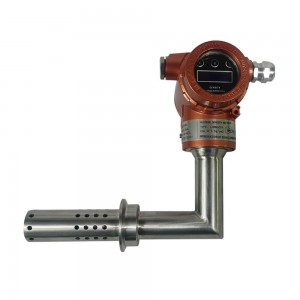
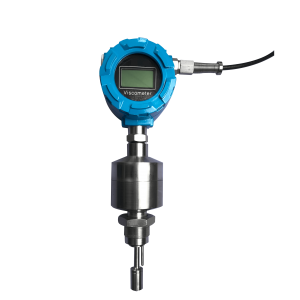
Measuring and controlling fire-resistant coating density inline is fundamental to reliable performance. Inline density meters, such as those manufactured by Lonnmeter, provide real-time monitoring of the coating’s density throughout the mixing and application process. These devices operate continuously, delivering instantaneous data for process adjustments to maintain uniformity and adherence to specifications. For example, in fire-resistive coating density measurement, even slight deviations signal potential inconsistencies in flame retardant loading or binder dispersion.
Equipment selection also accounts for safe handling of water-based chemistries in hazardous plant environments. Modern inline viscosity and density meters, particularly those designed for explosion-proof operation, ensure quality control during the fireproof spray coating application process. Their integration minimizes rejected batches and improves compliance to fireproof coating standards and testing protocols.
Effective process monitoring at these stages not only supports consistent premium product output but also enables robust data documentation that underpins regulatory and insurance compliance throughout the coating’s lifecycle.






Frequently Asked Questions
What are the main benefits of using a water-based fire resistant coating for steel structures?
Water-based fire-resistant coatings shield steel with an intumescent barrier that expands and insulates when exposed to heat. These coatings offer substantial fire protection, often meeting or surpassing industry standards for up to 120 minutes on structural steel, according to recent research in materials science and fire safety journals. Using water as their primary carrier, these coatings minimize environmental hazards by drastically lowering volatile organic compound (VOC) emissions—often under 50 g/L, far below the 250 g/L typical of solvent-based systems. This reduction improves indoor air quality and supports compliance with regulations from the US EPA and European REACH. Fewer toxic chemicals and safer working conditions make them suitable for both interiors and exteriors, contributing to greener building certifications such as LEED. Case studies in commercial buildings show these coatings reduce worker exposure to hazardous chemicals and VOCs, while maintaining robust fire protection performance.
How does inline density measurement improve spray on fireproofing application?
Inline density measurement delivers real-time oversight of the coating mixture’s consistency. Continuous monitoring ensures the water-based fire-resistant coating maintains a uniform density as it is dispensed and applied to steel surfaces. Consistent density supports even spray coverage, optimal adhesion, and steady intumescent action upon exposure to fire. This reduces the occurrence of weak spots and ensures the applied coating meets fire resistance specifications. Manufacturers using inline density meters, like those produced by Lonnmeter, can make immediate adjustments during the mixing and spraying process to avoid costly rework or compromised fireproofing.
What challenges can occur during the production mixing stage of water-based fireproof coating?
Production mixing for water-based fire-resistant coatings presents several challenges. Incomplete mixing can lead to density fluctuations and uneven dispersion of critical fillers. These inconsistencies can manifest as variable viscosity, resulting in streaking or gaps during the spray-on application. Areas with too little filler may lose fire resistance; excessively thick regions can compromise adhesion, form cracks, or reduce durability. Without proper monitoring and control, such defects undermine compliance with fireproof coating standards and jeopardize structural safety.
Why is fire-resistive coatings density measurement important for quality control?
Fire-resistive coating density measurement is a cornerstone of quality control in manufacturing. Accurate density readings help maintain the intended char-forming properties that deliver fire protection. If density exceeds specifications, coatings may be too heavy, risking delamination or unnecessary material use; too low, and fire resistance may be diminished. Inline measurement enables material consistency throughout production, improving reliability, compliance with building codes, performance, and overall safety. Facilities implementing real-time density monitoring report fewer quality failures and more consistent fire protection outcomes.
Which tools are suitable for inline density measurement in fireproof coating manufacturing?
Common tools for inline density measurement include densitometers, ultrasonic sensors, and automated sampling systems. Devices such as those from Lonnmeter provide continuous feedback during the coating mixing process, allowing technicians to swiftly correct deviations. Ultrasonic sensors measure density by detecting changes in sound velocity as the mixture passes through the sensor. Automated sampling systems extract periodic samples, ensuring process control without manual interruption. These technologies help manufacturers maintain stringent standards for water-based fireproof coating density, directly impacting the effectiveness of fireproof spray coating application techniques and overall product quality.
Post time: Dec-11-2025


