

Two Technologies, One Job
Flow meters that have no moving parts tend to last longer in industrial service. Ultrasonic and Coriolis flow meters both fall into that category. They measure flow using physical principles that do not require a turbine, a paddlewheel, or a diaphragm.
Ultrasonic meters measure flow by timing how long an ultrasonic pulse takes to travel across the pipe — with the flow and against it. The difference gives you the flow velocity. Coriolis meters measure mass flow directly by detecting the Coriolis force acting on a vibrating tube. Different physics, same goal: knowing how much fluid is moving through the pipe.
Ultrasonic: How It Works and Where It Fits
There are two main ultrasonic flow meter types. Transit-time meters work by comparing the travel time of an ultrasonic pulse in the flow direction vs. against it. Doppler meters work by bouncing the signal off particles or bubbles in the fluid and measuring the frequency shift.
Transit-time ultrasonic meters are the ones you see in clean liquid applications — water, oil products, chemicals. They need a relatively clean fluid with Reynolds number above 4000 (turbulent flow) for best accuracy. Doppler meters handle dirty liquids with entrained solids or bubbles, but they are less accurate and mostly used for monitoring rather than custody transfer.
Clamp-on ultrasonic meters are a big selling point. The transducers attach to the outside of the pipe, so there is no process intrusion, no pressure drop, and no wetted parts to corrode. That makes them attractive for large-diameter pipes and temporary flow surveys.
The accuracy of a clamp-on ultrasonic meter depends heavily on the pipe material and lining. A carbon steel pipe with no lining is fine. A lined pipe (rubber, PTFE) can attenuate the signal and reduce accuracy. Always verify the pipe condition before specifying clamp-on.
Coriolis: Direct Mass Flow Without Conversion
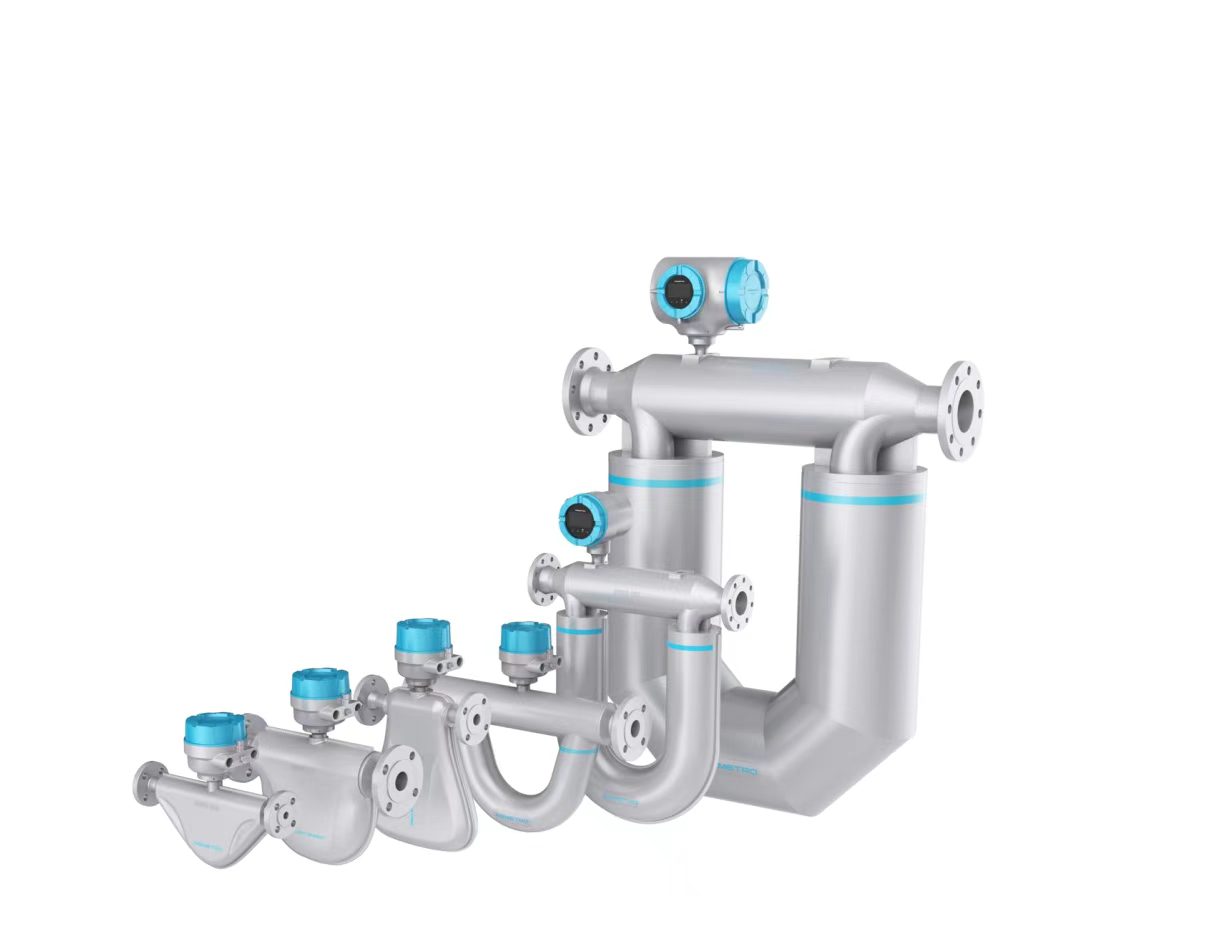
Most flow meters measure volume flow. If you want mass flow, you multiply by density. That introduces an extra error source. Coriolis meters skip that step. They measure mass flow directly by detecting the Coriolis force on a vibrating tube. The result is mass flow, not volume flow, with no density multiplication needed.
This matters most in applications where the fluid density changes or where mass balance is critical. Custody transfer of liquids, batch blending, and reactor feed control all benefit from direct mass flow measurement. In those applications, a Coriolis meter typically pays for itself through reduced measurement uncertainty.
The trade-off is pressure drop and cost. The fluid has to pass through the vibrating tube, which adds pressure drop. For large line sizes (above DN100/4 inch), the pressure drop and the meter cost both rise quickly. Coriolis meters are common up to DN150 (6 inch). Above that, ultrasonic or differential pressure meters are usually more economical.
Quick Comparison
|
Factor |
Ultrasonic |
Coriolis |
Pick This When |
|
Measures |
Volume flow (velocity) |
Mass flow (direct) |
Mass balance critical |
|
Accuracy (liquid) |
±0.5 – 2% of rate |
±0.1 – 0.5% of rate |
High accuracy needed |
|
Pressure drop |
Near zero (wetted) / zero (clamp-on) |
Moderate (tube restriction) |
Low pressure drop required |
|
Large pipe sizes |
Excellent (clamp-on) |
Limited (cost rises fast) |
DN200 and above |
|
Dirty / slurry fluid |
Doppler type handles it |
Can handle some slurries |
Fluid has solids |
|
Cost (small line) |
Lower |
Higher |
DN25 – DN80 range |

When LONNMETER Recommends Each Type
LONNMETER focuses on density, concentration, and viscosity measurement, not flow metering. But our density meters are often specified alongside flow meters in the same process line. Based on what we see in the field, here is the practical guidance we give.
Pick ultrasonic if: the pipe is large (DN200+), the fluid is clean, pressure drop must be near zero, or you need a temporary or clamp-on installation for a flow survey.
Pick Coriolis if: mass flow accuracy is critical, the line size is DN150 or smaller, custody transfer is involved, or the process needs both mass flow and density from one instrument.
For many of our customers, the right answer is to use both: an ultrasonic meter for the large pipe feed line and a Coriolis meter on the small-line dosing and blending skids.
Post time: Jul-01-2026


