

Top 5 Problems with Density Measurement (and How to Fix Them)
Practical Solutions for More Stable and Reliable Process Data
When Density Data Becomes Unreliable
In many industrial processes, density is a key control parameter. It’s used to monitor product quality, control concentration, and optimize blending operations.
But in real-world conditions, density measurement is not always as stable as expected.
Engineers often encounter issues like:
- Fluctuating readings
- Unexpected drift
- Inconsistent data between lab and field
- Poor repeatability
These problems don’t just affect measurement — they impact production decisions.
At LONNMETER, we regularly work with customers who are not looking for “better instruments,” but for more reliable results.
This article breaks down the five most common density measurement problems — and what you can do to fix them.
Problem 1: Unstable or Fluctuating Readings
This is one of the most common complaints with any online density meter.
What it looks like:
- Density values constantly jumping
- No clear trend in the data
- Difficult to use for process control
- Flow turbulence
- Pump or equipment vibration
- Air or gas bubbles in the liquid
Common causes:
In many cases, the instrument itself is working correctly — but the process conditions are interfering with the measurement.
How to fix it:
- Install the density meter away from pumps or strong vibration sources
- Ensure stable flow conditions (avoid highly turbulent zones)
- Remove or minimize air entrainment in the pipeline
- Adjust damping settings if available
In practice, improving installation conditions often solves the issue without changing the instrument.
Problem 2: Measurement Drift Over Time
Another common issue is gradual loss of accuracy.
What it looks like:
- Readings slowly shift away from expected values
- Increasing difference compared to lab measurements
- Sensor fouling or coating
- Temperature variations
- Lack of periodic calibration
Common causes:
Over time, even a small layer of buildup on the sensor can affect measurement accuracy.
How to fix it:
- Schedule regular cleaning of the sensor surface
- Perform periodic calibration using a known reference (e.g., water at 25°C)
- Use instruments with built-in temperature compensation
At LONNMETER, we design online density meters with simple calibration methods so adjustments can be done on-site without complex procedures.
Problem 3: Inconsistent Results Between Lab and Online Measurement
This is a frequent concern, especially in quality control environments.
What it looks like:
- Lab results do not match online readings
- Operators lose confidence in real-time data
Why it happens:
Lab measurements are typically done under:
- Controlled temperature
- Stable conditions
- No flow
Online measurements, on the other hand, are affected by:
- Temperature changes
- Flow conditions
- Pressure variations
These differences can lead to expected but misunderstood discrepancies.
How to fix it:
- Ensure temperature compensation is enabled
- Compare measurements under similar conditions when possible
- Use calibration fluids that match the actual process
Instead of expecting identical values, focus on consistent trends and repeatability.
Problem 4: Incorrect Installation
This is one of the most overlooked issues — and one of the most impactful.
What it looks like:
- Unstable or noisy readings
- Delayed response
- Unexpected measurement errors
- Installing too close to pumps
- Mounting in high turbulence zones
- Poor sensor immersion
- Ignoring pipe layout requirements
Common mistakes:
Even a high-quality online density meter will struggle if installed incorrectly.
How to fix it:
- Install in areas with stable flow
- Maintain straight pipe sections where possible
- Upstream: at least 600 mm
- Downstream: at least 300 mm
- Ensure the sensor is fully in contact with the liquid
- Avoid locations where air can accumulate
At LONNMETER, installation guidance is part of every project, because we know it directly affects performance.
Problem 5: Using the Wrong Type of Density Meter
Not every application is suitable for every type of instrument.
What it looks like:
- Measurement never stabilizes
- Readings are consistently inaccurate
- Frequent troubleshooting without clear improvement
- Measuring multi-phase flow (gas + liquid)
- Fluids with large particles or heavy solids
- Viscosity outside the instrument’s design range
Typical causes:
In these cases, the issue is not the instrument quality —
it’s a mismatch between the application and the technology.
How to fix it:
- Confirm whether your process is single-phase or multi-phase
- Check viscosity and particle content
- Choose an instrument designed for your specific conditions
A vibrating fork online density meter works best in:
- Single-phase liquid systems
- Moderate viscosity ranges
- Clean or slightly contaminated fluids
A Practical Approach to Better Density Measurement
From field experience, most density measurement problems can be solved by focusing on three things:
1. Installation
Proper placement often matters more than upgrading the instrument.
2. Maintenance
Simple cleaning and calibration can prevent long-term issues.
3. Application Matching
Choosing the right type of density meter for the process is essential.
How LONNMETER Helps Improve Measurement Reliability
At LONNMETER, we focus on practical performance — not just specifications.
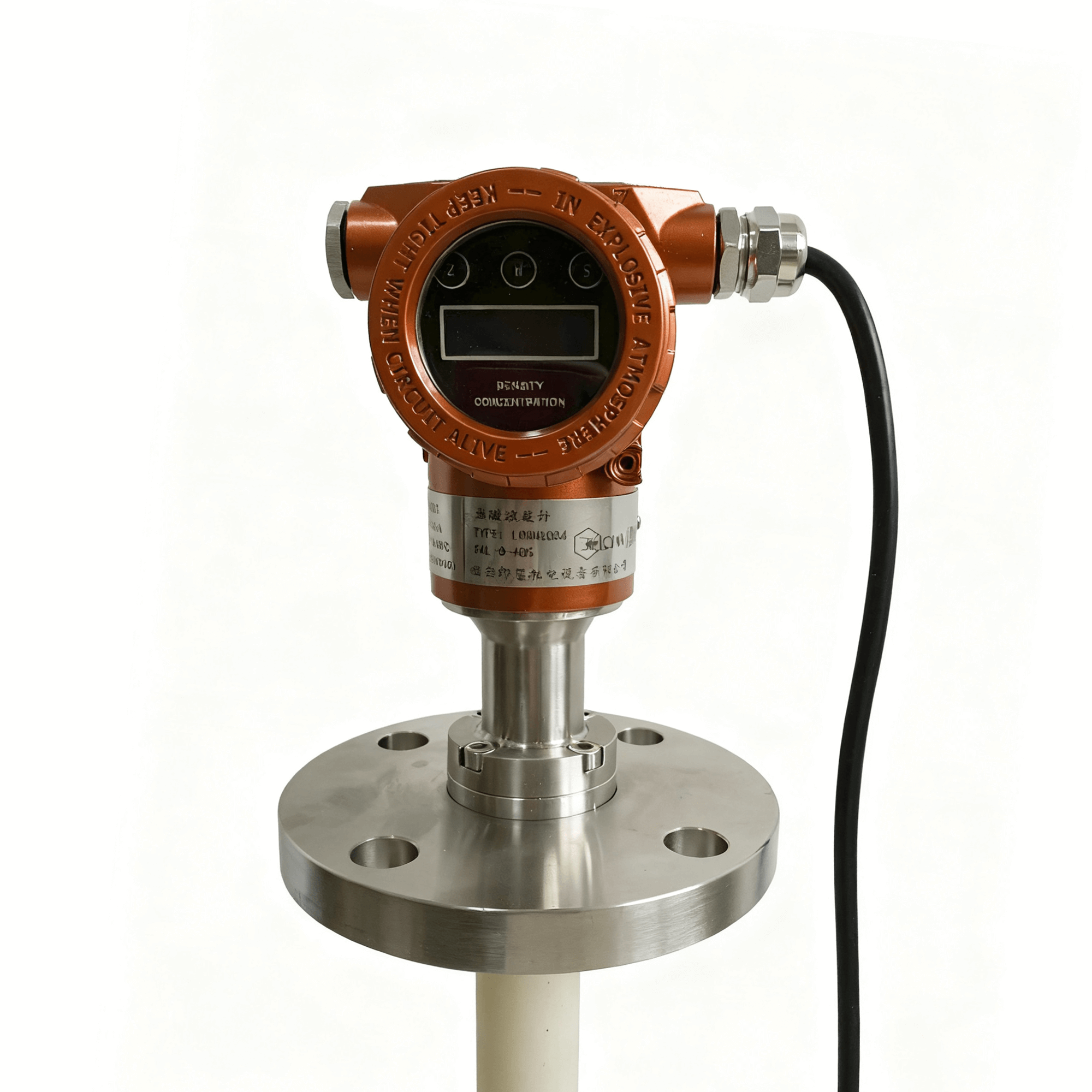
Our online density meters are designed to handle:
- Real pipeline conditions
- Temperature variation
- Continuous operation
- Accuracy up to ±0.002 g/cm³
- Repeatability up to ±0.0001 g/cm³
- Built-in temperature compensation
- Flexible installation options
Key features include:
More importantly, we support customers with:
- Application evaluation
- Installation recommendations
- Ongoing technical support
Because in most cases, solving density measurement problems requires more than just replacing a device.
Conclusion: Fix the Root Cause, Not Just the Symptom
When density measurement becomes unreliable, it’s tempting to assume the instrument is the problem.
But in reality, most issues come from:
- Installation conditions
- Process variability
- Lack of maintenance
By identifying the root cause and applying the right fixes, you can significantly improve measurement stability — without unnecessary cost.
Need Help Troubleshooting Your Density Measurement?
If you’re dealing with unstable readings or inconsistent data, it may be worth reviewing your setup.
At LONNMETER, we help customers identify problems and improve performance based on real-world conditions.
Visit: https://www.lonnmeter.com/
Contact us for:
Post time: Apr-21-2026


