

Chemical mechanical planarization (CMP) is a foundational process in advanced semiconductor manufacturing. It delivers atomic-level flatness across wafer surfaces, enabling multilayer architectures, tighter device packing, and more reliable yields. CMP integrates simultaneous chemical and mechanical actions—using a rotating pad and a specialized polishing slurry—to remove excess films and smooth surface irregularities, crucial for feature patterning and alignment in integrated circuits.
Wafer quality after CMP depends strongly on careful control of the polishing slurry’s composition and characteristics. The slurry contains abrasive particles, such as cerium oxide (CeO₂), suspended in a cocktail of chemicals designed to optimize both physical abrasion and chemical reaction rates. For example, cerium oxide offers optimal hardness and surface chemistry for silicon-based films, making it the material of choice in many CMP applications. The effectiveness of CMP is dictated not only by the abrasive particle properties but also by precise management of slurry concentration, pH, and density.

Chemical Mechanical Planarization
*
Fundamentals of Polishing Slurries in Semiconductor Manufacturing
Polishing slurries are central to the chemical mechanical planarization process. They are complex mixtures engineered to achieve both mechanical abrasion and chemical surface modification on wafer surfaces. The essential roles of CMP slurries include effective material removal, planarity control, uniformity over large wafer areas, and defect minimization.
Roles and Compositions of Polishing Slurries
A typical CMP slurry contains abrasive particles suspended in a liquid matrix, supplemented by chemical additives and stabilizers. Each component plays a distinct role:
- Abrasives: These fine, solid particles—primarily silica (SiO₂) or cerium oxide (CeO₂) in semiconductor applications—perform the mechanical part of material removal. Their concentration and particle size distribution control both removal rate and surface quality. Abrasive content typically ranges from 1% to 5% by weight, with particle diameters between 20 nm and 300 nm, tightly specified to avoid excessive wafer scratching.
- Chemical Additives: These agents establish the chemical environment for effective planarization. Oxidizers (e.g., hydrogen peroxide) facilitate the formation of surface layers that are easier to abrade. Complexing or chelating agents (such as ammonium persulfate or citric acid) bind metal ions, enhancing removal and suppressing defect formation. Inhibitors are introduced to prevent unwanted etching of adjacent or underlying wafer layers, improving selectivity.
- Stabilizers: Surfactants and pH buffers maintain slurry stability and uniform dispersion. Surfactants prevent abrasive agglomeration, ensuring homogeneous removal rates. pH buffers enable consistent chemical reaction rates and reduce the likelihood of particle clumping or corrosion.
The formulation and concentration of each component are tailored to the specific wafer material, device structure, and process step involved in the chemical mechanical planarization process.
Common Slurries: Silica (SiO₂) vs Cerium Oxide (CeO₂)
Silica (SiO₂) polishing slurries dominate oxide planarization steps, such as interlayer dielectric (ILD) and shallow trench isolation (STI) polishing. They use colloidal or fumed silica as abrasives, often in a basic (pH ~10) environment, and are sometimes supplemented with minor surfactants and corrosion inhibitors to limit scratch defects and optimize removal rates. Silica particles are valued for their uniform size and low hardness, providing gentle, uniform material removal suitable for delicate layers.
Cerium oxide (CeO₂) polishing slurries are chosen for challenging applications requiring high selectivity and precision, such as final glass substrate polishing, advanced substrate planarization, and certain oxide layers in semiconductor devices. CeO₂ abrasives exhibit unique reactivity, especially with silicon dioxide surfaces, enabling both chemical and mechanical removal mechanisms. This dual-action behavior delivers higher planarization rates at lower defect levels, making CeO₂ slurries preferable for glass, hard disk substrates, or advanced logic device nodes.
Functional Purpose of Abrasives, Additives, and Stabilizers
- Abrasives: Execute the mechanical abrasion. Their size, shape, and concentration dictate removal rate and surface finish. For example, uniform 50 nm silica abrasives ensure gentle, even planarization of oxide layers.
- Chemical Additives: Enable selective removal by facilitating surface oxidation and dissolution. In copper CMP, glycine (as a complexing agent) and hydrogen peroxide (as an oxidizer) work synergistically, while BTA acts as an inhibitor protecting copper features.
- Stabilizers: Keep the slurry composition uniform over time. Surfactants prevent sedimentation and agglomeration, ensuring that abrasive particles are consistently dispersed and available for the process.
Unique Properties and Usage Scenarios: CeO₂ and SiO₂ Slurries
CeO₂ polishing slurry offers elevated selectivity between glass and silicon oxide due to its inherent chemical reactivity. It is particularly effective for planarizing hard, brittle substrates or composite oxide stacks where high material selectivity is essential. This makes CeO₂ slurries standard in advanced substrate preparation, precision glass finishing, and specific shallow trench isolation (STI) CMP steps in the semiconductor industry.
SiO₂ polishing slurry provides a balanced combination of mechanical and chemical removal. It is widely used for bulk oxide and interlayer dielectric planarization, where high throughput and minimal defectivity are necessary. The uniform, controlled particle size of silica also limits scratch generation and ensures superior final surface quality.
Importance of Particle Size and Dispersion Uniformity
Particle size and dispersion uniformity are critical to slurry performance. Uniform, nanometer-scale abrasive particles guarantee consistent material removal rates and a defect-free wafer surface. Agglomeration leads to scratching or unpredictable polishing, while wide size distributions cause non-uniform planarization and increased defect density.
Effective slurry concentration control—monitored by technologies such as a slurry density meter or ultrasonic slurry density measurement devices—ensures constant abrasive loading and predictable process outcomes, directly affecting yield and device performance. Achieving precise density control and uniform dispersion are key requirements for chemical mechanical planarization equipment installation and process optimization.
In summary, the formulation of polishing slurries—especially the choice and control of abrasive type, particle size, and stabilization mechanisms—underpins the reliability and efficiency of the chemical mechanical planarization process in semiconductor industry applications.
Importance of Slurry Density Measurement in CMP
In the chemical mechanical planarization process, precise measurement and control of slurry density directly affect the efficiency and quality of wafer polishing. Slurry density—the concentration of abrasive particles within polishing slurry—functions as a central process lever, shaping the polishing rate, final surface quality, and overall wafer yield.
Relationship Between Slurry Density, Polishing Rate, Surface Quality, and Wafer Yield
Abrasive particle concentration within a CeO₂ polishing slurry or other polishing slurry formulation determines how quickly material is removed from the wafer surface, commonly termed the removal rate or material removal rate (MRR). Increased slurry density generally raises the number of abrasive contacts per unit area, accelerating the polishing rate. For instance, a 2024 controlled study reported that raising silica particle concentration up to 5 wt% in colloidal slurry maximized removal rates for 200 mm silicon wafers. However, this relationship is not linear—a point of diminishing returns exists. At higher slurry densities, particle agglomeration causes a plateau or even reduction in removal rate due to impaired mass transport and increased viscosity.
Surface quality is equally sensitive to slurry density. At elevated concentrations, defects such as scratches, embedded debris, and pits become more frequent. The same study observed a linear rise in surface roughness and significant scratch density when increasing slurry density above 8–10 wt%. Conversely, lowering density reduces defect risk but can slow removal and compromise planarity.
Wafer yield, the proportion of wafers meeting process specs post-polishing, is regulated by these combined effects. Higher defect rates and non-uniform removal both reduce yield, underscoring the delicate balance between throughput and quality in modern semiconductor fabrication.

Impact of Minor Slurry Concentration Variations on the CMP Process
Even minimal deviations from optimal slurry density—fractions of a percent—can materially impact process output. If abrasive concentration drifts above target, particle clustering may occur, leading to rapid wear on pads and conditioning discs, higher surface scratch rates, and possible clogging or erosion of fluidic components in chemical mechanical planarization equipment. Under-density can leave residual films and irregular surface topographies, which challenge subsequent photolithography steps and reduce yield.
Variations in slurry density also influence chemical-mechanical reactions on the wafer, with downstream effects on defectivity and device performance. For example, smaller or non-uniformly dispersed particles in diluted slurries affect local removal rates, creating microtopography that can propagate as process errors in high-volume manufacturing. These subtleties demand tight slurry concentration control and robust monitoring, particularly in advanced nodes.
Real-Time Slurry Density Measurement and Optimization
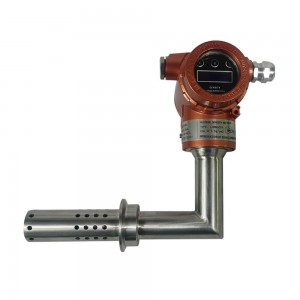
Real-time measurement of slurry density, enabled by deployment of inline density meters—such as the ultrasonic slurry density meters manufactured by Lonnmeter—is now standard in leading-edge semiconductor industry applications. These instruments allow continuous monitoring of slurry parameters, providing instant feedback on density fluctuations as the slurry moves through CMP toolsets and distribution systems.
The key benefits of real-time slurry density measurement include:
- Immediate detection of off-specification conditions, preventing propagation of defects through costly downstream processes
- Process optimization—enables engineers to maintain an optimal slurry density window, maximizing removal rate while minimizing defectivity
- Enhanced wafer-to-wafer and lot-to-lot consistency, translating to higher overall fabrication yield
- Prolonged equipment health, as over-concentrated or under-concentrated slurries can accelerate wear on polishing pads, mixers, and distribution plumbing
Installation placements for CMP equipment typically route sample loops or recirculation lines through the metering zone, ensuring density readings are representative of the actual flow delivered to the wafers.
Precise and real-time slurry density measurement forms the backbone of robust slurry density control methods, supporting both established and novel polishing slurry formulations, including challenging Cerium oxide (CeO₂) slurries for advanced interlayer and oxide CMP. Maintaining this critical parameter directly links to productivity, cost control, and device reliability throughout the chemical mechanical planarization process.
Principles and Technologies for Slurry Density Measurement
Slurry density describes the mass of solids per unit volume in a polishing slurry, such as Cerium oxide (CeO₂) formulations used in chemical mechanical planarization (CMP). This variable determines material removal rates, output uniformity, and defect levels on polished wafers. Effective slurry density measurement is vital for advanced slurry concentration control, directly influencing yield and defectivity in semiconductor industry applications.
A range of slurry density meters is deployed in CMP operations, each utilizing different measurement principles. Gravimetric methods rely on collecting and weighing a defined slurry volume, offering high accuracy but lacking real-time capability and making them impractical for continuous use in installation placements for CMP equipment. Electromagnetic density meters use electromagnetic fields to infer density based on changes in conductivity and permittivity due to suspended abrasive particles. Vibrational meters, such as vibrating tube densitometers, measure the frequency response of a tube filled with slurry; variations in density affect vibration frequency, enabling continuous monitoring. These technologies support inline monitoring but can be sensitive to fouling or chemical variations.
Ultrasonic slurry density meters represent a key technological advance for real-time density monitoring in chemical-mechanical planarization. These instruments emit ultrasonic waves through the slurry and measure the time-of-flight or velocity of sound propagation. The speed of sound in a medium depends on its density and concentration of solids, allowing precise determination of slurry properties. The ultrasonic mechanism is highly suitable for abrasive and chemically aggressive environments typical of CMP, as it is non-intrusive and reduces sensor fouling compared to direct contact meters. Lonnmeter manufactures inline ultrasonic slurry density meters tailored for semiconductor industry CMP lines.
Advantages of ultrasonic slurry density meters include:
- Non-intrusive measurement: Sensors are typically installed externally or within bypass flow cells, minimizing disturbance to the slurry and avoiding abrasion of sensing surfaces.
- Real-time capability: Continuous output enables immediate process adjustments, ensuring slurry density stays within defined parameters for optimal wafer polishing quality.
- High precision and robustness: Ultrasonic scanners offer stable and repeatable readings, unaffected by fluctuating slurry chemistry or particulate load over extended installations.
- Integration with CMP equipment: Their design supports installation placements in recirculating slurry lines or delivery manifolds, streamlining process control without extensive downtime.
Recent case studies in semiconductor fabrication report up to 30% defectivity reduction when in-line ultrasonic density monitoring complements chemical mechanical planarization equipment installation for Cerium oxide (CeO₂) polishing slurry processes. Automated feedback from ultrasonic sensors allows for tighter control over polishing slurry formulations, resulting in improved thickness uniformity and lower material waste. Ultrasonic density meters, when combined with robust calibration protocols, maintain reliable performance in the face of slurry composition shifts, which are frequent in advanced CMP operations.
In summary, real-time slurry density measurement—particularly using ultrasonic technology—has become central to precise slurry density control methods in CMP. These advances directly improve yield, process efficiency, and wafer quality in the semiconductor industry.
Installation Placements and Integration in CMP Systems
Proper slurry density measurement is vital for controlling slurry concentration in the chemical mechanical planarization process. Selecting effective installation points for slurry density meters directly impacts accuracy, process stability, and wafer quality.
Critical Factors for Selecting Installation Points
In CMP setups, density meters should be positioned to monitor the actual slurry used for wafer polishing. The primary installation placements include:
- Recirculation Tank: Placing the meter at the outlet provides insight into the base slurry condition before distribution. However, this location may miss changes occurring further downstream, such as bubble formation or local thermal effects.
- Delivery Lines: Installing after mixing units and before entering distribution manifolds ensures the density measurement reflects the slurry’s final formulation, including Cerium oxide (CeO₂) polishing slurry and other additives. This position allows prompt detection of slurry concentration shifts just before wafers are processed.
- Point-of-Use Monitoring: The optimal location is immediately upstream of the point-of-use valve or tool. This captures real-time slurry density and alerts operators to deviations in process conditions that can arise from line heating, segregation, or microbubble generation.
When selecting installation sites, additional factors such as flow regime, pipe orientation, and proximity to pumps or valves must be considered:
- Favor vertical mounting with upward flow to minimize air bubble and sediment accumulation on the sensing element.
- Maintain several pipe diameters between the meter and major sources of turbulence (pumps, valves) to avoid reading errors due to flow disturbances.
- Use flow conditioning (straighteners or calming sections) for evaluating the density measurement in a steady laminar environment.
Common Challenges and Best Practices for Reliable Sensor Integration
CMP slurry systems pose several integration challenges:
- Air Entrainment and Bubbles: Ultrasonic slurry density meters can misread density if microbubbles are present. Avoid placing sensors near points of air ingress or abrupt flow transitions, which commonly occur near pump discharges or mixing tanks.
- Sedimentation: In horizontal lines, sensors may encounter settling solids, especially with CeO₂ polishing slurry. Vertical mounting or positioning above possible settle zones is recommended to maintain accurate slurry density control.
- Sensor Fouling: CMP slurries contain abrasive and chemical agents that may lead to fouling or coating of the sensor. Lonnmeter inline instruments are designed to mitigate this, but regular inspection and cleaning remain essential for reliability.
- Mechanical Vibrations: Close placement to active mechanical devices can induce noise within the sensor, degrading measurement precision. Select installation points with minimal vibration exposure.
For best integration results:
- Employ laminar flow sections for installation.
- Ensure vertical alignment wherever possible.
- Provide easy access for periodic maintenance and calibration.
- Isolate sensors from vibration and flow disruptions.

CMP
*
Slurry Concentration Control Strategies
Effective slurry concentration control in the chemical mechanical planarization process is essential to maintain consistent material removal rates, reduce wafer surface defects, and ensure uniformity across semiconductor wafers. Several methods and technologies are used to achieve this precision, supporting both streamlined operations and high device yield.
Techniques and Tools for Maintaining Optimal Slurry Concentration
Slurry concentration control begins with real-time monitoring of both abrasive particles and chemical species in the polishing slurry. For Cerium oxide (CeO₂) polishing slurry and other CMP formulations, direct methods such as inline slurry density measurement are fundamental. Ultrasonic slurry density meters, such as those manufactured by Lonnmeter, deliver continuous measurements of slurry density, which correlates strongly with total solid content and uniformity.
Complementary techniques include turbidity analysis—where optical sensors detect scatter from suspended abrasive particles—and spectroscopic methods like UV-Vis or Near-Infrared (NIR) spectroscopy to quantify key reactants in the slurry stream. These measurements form the backbone of CMP process control systems, enabling live adjustments to maintain target concentration windows and minimize batch-to-batch variability.
Electrochemical sensors are employed in formulations rich in metal ions, providing rapid response information on specific ionic concentrations and supporting further fine-tuning in advanced semiconductor industry applications.
Feedback Loops and Automation for Closed-Loop Control
Modern chemical-mechanical planarization equipment installations increasingly use closed-loop control systems that connect inline metrology with automated dispensing systems. Data from slurry density meters and related sensors are fed directly to programmable logic controllers (PLCs) or distributed control systems (DCS). These systems automatically actuate valves for make-up water addition, concentrated slurry dosing, and even stabilizer injection, ensuring the process remains within the required operating envelope at all times.
This feedback architecture allows for continuous correction of any deviations detected by real-time sensors, avoiding over-dilution, preserving optimal abrasive concentration, and reducing excess chemical usage. For example, in a high-throughput CMP tool for advanced wafer nodes, an inline ultrasonic slurry density meter will detect a drop in abrasive concentration and immediately signal the dosing system to increase slurry introduction, until the density returns to its setpoint. Conversely, if the measured density exceeds specification, the control logic initiates make-up water addition to restore correct concentrations.
Role of Density Measurement in Adjusting Make-Up Water and Slurry Addition Rates
Slurry density measurement is the keystone of active concentration control. The density value provided by instruments such as Lonnmeter’s inline density meters directly informs two critical operational parameters: make-up water volume and concentrated slurry feed rate.
By locating density meters at strategic points—such as before the CMP tool input or after the point-of-use mixer—real-time data enables automated systems to adjust the make-up water addition rate, thus diluting the slurry to desired specifications. Simultaneously, the system can modulate the feed rate of concentrated slurry to maintain abrasive and chemical concentrations precisely, accounting for tool usage, aging effects, and process-induced losses.
For example, during extended planarization runs for 3D NAND structures, continuous density monitoring detects slurry aggregation or settling trends, prompting automatic increases in make-up water or agitation, as required for process stability. This tightly regulated control loop is foundational in maintaining stringent wafer-to-wafer and within-wafer uniformity targets, particularly as device dimensions and process windows narrow.
In summary, slurry concentration control strategies in CMP rely on a blend of advanced in-line measurements and automated closed-loop responses. Slurry density meters, especially ultrasonic units like those from Lonnmeter, play a central role in delivering the high-resolution, timely data needed for rigorous process management in critical semiconductor manufacturing steps. These tools and methodologies minimize variability, support sustainability by optimizing chemical use, and enable the precision needed for modern node technologies.
Slurry Density Meter Selection Guide for the Semiconductor Industry
Selecting a slurry density meter for chemical mechanical planarization (CMP) in the semiconductor industry demands careful attention to a range of technical requirements. Key performance and application criteria include sensitivity, accuracy, compatibility with aggressive slurry chemistries, and ease of integration within CMP slurry delivery systems and equipment installations.
Sensitivity and Accuracy Requirements
CMP process control depends on tiny variations in slurry composition. The density meter must detect minimum changes of 0.001 g/cm³ or better. This level of sensitivity is essential for identifying even very slight shifts in abrasive content—such as those found in CeO₂ polishing slurry or silica-based slurries—because these affect material removal rates, wafer planarity, and defectivity. A typical acceptable accuracy range for semiconductor slurry density meters is ±0.001–0.002 g/cm³.
Compatibility with Aggressive Slurries
Slurries used in CMP can contain abrasive nanoparticles like cerium oxide (CeO₂), alumina, or silica, suspended in chemically active media. The density meter must withstand prolonged exposure to both physical abrasion and corrosive environments without drifting out of calibration or suffering from fouling. Materials used in wetted parts should be inert to all commonly used slurry chemistries.
Ease of Integration
Inline slurry density meters must fit readily into existing CMP equipment installations. Considerations include:
- Minimal dead volume and low pressure drop to avoid influencing the slurry delivery.
- Support for standard industrial process connections for quick installation and maintenance.
- Output compatibility (e.g., analog/digital signals) for real-time integration with slurry concentration control systems, but without providing those systems themselves.
Comparative Features of Leading Sensor Technologies
The density control of polishing slurries is managed mainly via two sensor classes: densitometry-based and refractometry-based meters. Each brings strengths relevant to semiconductor industry applications.
Densitometry-based Meters (e.g., Ultrasonic Slurry Density Meter)
- Uses the propagation velocity of sound through the slurry, directly relating to density.
- Provides high linearity in density measurement across a range of slurry concentrations and abrasive types.
- Well-suited for aggressive polishing slurries, including CeO₂ and silica formulations, as the sensing elements can be made physically isolated from chemicals.
- Typical sensitivity and accuracy meet the sub-0.001 g/cm³ requirement.
- Installation typically inline, allowing continuous real-time measurement during chemical mechanical planarization equipment operation.
Refractometry-based Meters
- Measures the refractive index to infer the slurry density.
- Effective for detecting subtle changes in slurry composition due to high sensitivity to concentration shifts; capable of resolving <0.1% mass fraction changes.
- However, refractive index is sensitive to environmental variables like temperature, mandating careful calibration and temperature compensation.
- May have limited chemical compatibility, especially in highly aggressive or opaque slurries.
Particle Size Metrology as a Complement
- Density readings can be skewed by changes in particle size distribution or agglomeration.
- Integration with periodic particle size analysis (e.g., dynamic light scattering or electron microscopy) is recommended by industry best practices, ensuring that apparent density shifts are not solely due to particle agglomeration.
Considerations for Lonnmeter Inline Density Meters
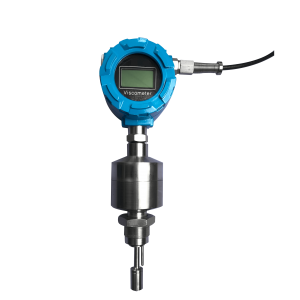
- Lonnmeter specializes in manufacturing inline density and viscosity meters, without supplying supporting software or system integrations.
- Lonnmeter meters can be specified to withstand abrasive, chemically active CMP slurries and are designed for direct inline installation in semiconductor process equipment, fitting the needs for real-time slurry density measurement.
When reviewing options, focus on core application criteria: ensure that the density meter achieves the required sensitivity and accuracy, is constructed from materials compatible with your slurry chemistry, withstands continuous operation, and integrates seamlessly into polishing slurry delivery lines in the CMP process. For the semiconductor industry, precise slurry density measurement underpins wafer uniformity, yield, and manufacturing throughput.
Impact of Effective Slurry Density Control on CMP Outcomes
Precise slurry density control is crucial in the chemical mechanical planarization process. When density is kept consistent, the amount of abrasive particles present during polishing remains stable. This directly impacts the material removal rate (MRR) and surface quality of the wafer.
Reduction in Wafer Surface Defects and Improved WIWNU
Maintaining optimal slurry density is proven to minimize wafer surface defects such as microscratches, dishing, erosion, and particle contamination. Research from 2024 shows that a controlled density range, typically between 1 wt% to 5 wt% for colloidal silica-based formulations, yields the best balance between removal efficiency and defect minimization. Excessively high density increases abrasive collisions, leading to a two- to three-fold rise in defect counts per square centimeter, as confirmed by atomic force microscopy and ellipsometry analyses. Tight density control also improves within-wafer non-uniformity (WIWNU), ensuring material is removed evenly across the wafer, which is essential for advanced node semiconductor devices. Consistent density helps prevent process excursions that could jeopardize film thickness targets or flatness.
Extension of Slurry Lifetime and Reduction in Consumables Cost
Slurry concentration control techniques—including real-time monitoring with ultrasonic slurry density meters—extend the useful lifetime of CMP polishing slurry. By preventing overdosing or excessive dilution, chemical mechanical planarization equipment achieves optimal use of consumables. This approach reduces the frequency of slurry replacement and enables recycling strategies, lowering total costs. For example, in CeO₂ polishing slurry applications, careful density maintenance allows for reconditioning of slurry batches and minimizes waste volume without sacrificing performance. Effective density control enables process engineers to recover and reuse polishing slurry that remains within acceptable performance thresholds, further driving cost savings.
Enhanced Repeatability and Process Control for Advanced Node Manufacturing
Modern semiconductor industry applications demand high repeatability in the chemical-mechanical planarization step. In advanced node manufacturing, even minor fluctuations in slurry density can result in unacceptable variation in wafer outcomes. Automation and integration of inline ultrasonic slurry density meters—such as those manufactured by Lonnmeter—facilitate continuous, real-time feedback for process control. These instruments deliver accurate measurements in the harsh chemical environments typical of CMP, supporting closed-loop systems that respond immediately to deviations. Reliable density measurement means greater uniformity from wafer to wafer and tighter control over the MRR, which is vital for sub-7nm semiconductor production. Proper equipment installation—correct positioning in the slurry delivery line—and regular maintenance are essential to ensure meters function reliably and provide data critical for process stability.
Maintaining adequate slurry density is fundamental for maximizing product yield, minimizing defectivity, and ensuring cost-effective fabrication in CMP processes.






Frequently Asked Questions (FAQs)
What is the function of a slurry density meter in the chemical mechanical planarization process?
A slurry density meter plays a critical role in the chemical mechanical planarization process by continuously measuring the density and concentration of the polishing slurry. Its primary function is to provide real-time data on the abrasive and chemical balance in the slurry, ensuring that both are within precise limits for optimal wafer planarization. This real-time control prevents defects like scratching or uneven material removal, common with over- or under-diluted slurry mixtures. Consistent slurry density helps maintain reproducibility across production runs, minimizes wafer-to-wafer variation, and supports process optimization by triggering corrective actions if deviations are detected. In advanced semiconductor fabrication and high-reliability applications, continuous monitoring also reduces waste and supports stringent quality assurance measures.
Why is CeO₂ polishing slurry preferred for certain planarization steps in the semiconductor industry?
Cerium oxide (CeO₂) polishing slurry is chosen for specific semiconductor planarization steps because of its exceptional selectivity and chemical affinity, particularly for glass and oxide films. Its uniform abrasive particles result in high-quality planarization with very low defect rates and minimal surface scratching. The chemical properties of CeO₂ enable stable and repeatable removal rates, which are essential for advanced applications such as photonics and high-density integrated circuits. Additionally, CeO₂ slurry resists agglomeration, maintaining a consistent suspension even during extended CMP operations.
How does an ultrasonic slurry density meter operate compared to other measurement types?
An ultrasonic slurry density meter operates by transmitting sound waves through the slurry and measuring the speed and attenuation of these waves. Slurry density directly impacts how fast the waves travel and the extent to which their intensity diminishes. This measurement approach is non-intrusive and provides real-time slurry concentration data without needing to isolate or physically disrupt the process flow. Ultrasonic methods show less sensitivity to variables such as flow velocity or particle size when compared to mechanical (float-based) or gravimetric density measurement systems. In chemical mechanical planarization, this translates into reliable, robust measurements even in high-flow, particulate-rich slurries.
Where should slurry density meters typically be installed in a CMP system?
Optimal installation placements for a slurry density meter in chemical mechanical planarization equipment include:
- The recirculation tank: to continuously monitor the overall slurry density before distribution.
- Before point-of-use delivery to the polishing pad: to guarantee the supplied slurry meets target density specifications.
- After slurry mixing points: ensuring that newly prepared batches conform to required formulations before entering the process loop.
These strategic positions allow quick detection and correction of any deviation in slurry concentration, preventing compromised wafer quality and process interruptions. Placement is dictated by slurry flow dynamics, typical mixing behavior, and the necessity for immediate feedback near the planarization pad.
How does precise slurry concentration control improve CMP process performance?
Precise slurry concentration control improves the chemical mechanical planarization process by ensuring uniform removal rates, minimizing sheet resistance variation, and reducing the frequency of surface defects. Stable slurry density extends both polishing pad and wafer lifespan by preventing abrasive overuse or underuse. It also lowers process costs by optimizing slurry consumption, reducing rework, and supporting higher semiconductor device yields. Especially in advanced manufacturing and quantum device fabrication, strict slurry control supports reproducible flatness, consistent electrical performance, and reduced leakage across device architectures.
Post time: Dec-09-2025


