

Effective management of water injection wells in heterogeneous reservoirs relies on precise profile control and the strategic use of plugging agents. These agents—such as chemical gels, polyacrylamide (PAM) microspheres, and polyethylene glycol (PEG)—are engineered to block high-permeability zones and ensure a balanced displacement of injected water throughout the reservoir. This process is especially critical in fields where permeability contrasts have intensified due to long-term production, resulting in uneven water flow and reduced hydrocarbon recovery rates.
The ability to monitor and control the density of plugging agents in real time is fundamental for optimizing their performance and distribution. Inline density measurement delivers continuous data on fluid properties directly within the injection pipeline, enabling rapid adjustments and minimizing operational risks. Real-time tracking supports dynamic response to fluctuating reservoir conditions and promotes the efficient deployment of chemical profile control agents for water injection wells.
In oilfield operations, ensuring the correct density of plugging agents—such as PAM systems for enhanced oil recovery—is vital. Achieving optimal agent density influences both plugging efficacy and long-term stability within the reservoir, while improper densities can lead to poor conformance and diminished sweep efficiency. Recent peer-reviewed research demonstrates that modern real-time inline density measurement systems are indispensable for chemical plugging agent density optimization, reducing product waste, and improving oil recovery outcomes.

Water Injection Development Technology
*
Understanding Water Injection Wells and Heterogeneous Reservoirs
Water injection wells play a vital role in secondary oil recovery by maintaining reservoir pressure and driving oil toward production wells. When natural drive mechanisms decline, waterflooding supplements pressure and extends oil recovery, often boosting the recovery factor by up to 50% of the original oil in place. Optimal placement and injection patterns—such as five-spot or line-drive arrangements—are tailored to specific reservoir geometries and capillary pressure zones, leveraging both vertical and areal sweep efficiencies to maximize output.
Heterogeneous reservoirs present distinct challenges that complicate the uniform distribution of injected water. These formations typically feature significant intra-layer and inter-layer permeability variations. For example, high-permeability layers form preferential paths for water flow, while low-permeability zones may be largely bypassed. Such disparities result in non-uniform sweep, rapid water breakthrough in dominant zones, and stagnant oil in unswept regions.
The most prevalent issues in these reservoirs include non-uniform water injection, channeling, and loss of sweep efficiency. Non-uniform injection leads to unequal fluid displacement, with injected water favoring well-connected, high-permeability layers or fractures. Channeling occurs when water preferentially travels through thief zones or dominant channels, bypassing large oil-saturated volumes—even if injectivity appears adequate. This is common in fields with complex layering, vertical fractures, or strong reservoir connectivity.
Sweep efficiency loss is a direct consequence, as increasing volumes of injected water may reach producing wells without contacting previously unswept oil-rich zones. For instance, water may move swiftly through a thief zone, displaying early water breakthrough and diminishing oil recovery from adjacent intervals. These phenomena are quantitatively described using models that correlate water injection rates, permeability profiles, and dynamic reservoir flow data.
Effective mitigation strategies for these problems combine real-time monitoring, chemical treatments, and adaptive injection management. Techniques such as profile control agents, plugging agents, and segmented or pulsed water injection are researched to counteract non-uniform distribution and channeling. Real-time density measurement—using equipment compatible with plugging agents or high-performance profile control agents from manufacturers like Lonnmeter—enables precise adjustment and optimization of chemical concentrations within the injection stream. This ensures the plugging agents maintain desired properties, enhancing conformance and sweep in complex, heterogeneous environments.
Polyacrylamide (PAM) and other advanced plugging agents are increasingly used for profile control in heterogeneous reservoirs. Their effectiveness depends on accurate density measurement and distribution within the injection lines, which can be monitored inline for real-time adjustments. By leveraging such technologies, operators address the core issues associated with water injection in heterogeneous reservoirs—delivering improved recovery, reduced water production, and optimal operational efficiency.
Profile Control Agents: Types, Functions, and Selection Criteria
Profile control agents (PCAs) play a critical role in managing water injection wells, especially in heterogeneous reservoirs where high-permeability channels can cause excessive water cut and bypassed oil zones. Agents are classified mainly as gels—most notably Polyacrylamide (PAM), microspheres, PEG-based materials, and composite or combined systems, each tailored for specific reservoir challenges.
Polyacrylamide gels are widely utilized for their robust plugging capabilities. PAM can be formulated as in situ gels or preformed particle gels (PPGs), which swell in brine, offering controlled size and enhanced stability. Modified PAM-based gels incorporate nano silica, cellulose, graphite, and other additives to increase mechanical strength and resist degradation under high temperatures and salinity. These developments have demonstrated superior plugging efficiency, with gel dispersions achieving rates above 86% in sand-pack simulations and delivering oil recovery increments up to 35%, particularly useful for heterogeneous oilfields.
Microspheres are engineered for physical and elastic plugging. They migrate from larger pore spaces to smaller ones, repeatedly blocking, deforming, and moving through pore throats. This plugging–deformation–migration–replugging cycle diverts water from high-permeability zones, thereby enhancing displacement efficiency. Experiments with NMR and CT imaging have confirmed their effectiveness in reducing water cut and improving sweep efficiency by selectively targeting the most conductive channels within the reservoir.
PEG-based agents are valued for their stability and swellability, particularly under varying reservoir chemistries. Their plugging performance is often tailored via crosslinking techniques, providing flexibility for use in layered or fractured formations. Combined agents, which may incorporate elements of gels, microspheres, and PEG, offer multidimensional approaches to conformance control, especially where reservoir heterogeneity impedes oil recovery.
The mechanisms of profile control typically involve selective plugging of high-permeability zones, diversion of injected water away from previously dominant pathways, and enhanced displacement of trapped oil. Polymer gels, like PAM, form in situ structures or emplaced particles that physically block and stabilize the targeted zones. Microspheres exploit elasticity and deformability to migrate and plug efficiently, while PEG materials provide sustained conformance due to their chemical and thermal resilience.
Selection criteria for PCAs are determined by compatibility with reservoir fluids, stability under thermal and chemical stresses, plugging performance relative to the reservoir’s permeability profile, and adaptability to dynamic injection conditions. Compatibility ensures that the agent interacts effectively with reservoir brines without precipitating or breaking down. Stability—both chemical and thermal—is fundamental for withstanding harsh environments, as demonstrated by enhancements in PAM with nano additives and the development of heat- and salt-tolerant materials.
Plugging efficiency is assessed by laboratory flooding experiments, breakthrough pressure measurements, and real-time density monitoring. Lonnmeter’s density measurement equipment and inline systems contribute to chemical plugging agent density optimization, enabling operators to adjust formulations in real time for maximum effect. Adaptability is closely linked to the agent’s ability to maintain plugging under reservoir stress, variable pore structures, and fluctuating injection rates.
Effective profile control for water injection wells relies upon a thorough analysis of reservoir heterogeneity, careful matching of agent type and deployment strategy, and continuous density measurement for chemical injection to optimize both selection and long-term results. PAM applications in heterogeneous reservoirs, PEG solutions, and microsphere technologies continue to evolve, supported by real-time agent density tracking and monitoring systems in oilfield applications.

Plugging Agents and the Role of Density in Application Efficiency
Plugging agents serve as essential profile control agents for water injection wells, especially in heterogeneous reservoirs. Their main functions include managing gas channeling, controlling injection and reservoir pressure, and boosting oil recovery rates. By targeting high-permeability or “thief” zones, these agents redirect injected water or gas from dominant flow channels into unswept, lower-permeability regions, increasing sweep efficiency and displacing more residual oil. For example, acid-resistant polymer microspheres can achieve up to 95% plugging rate and improve oil recovery by over 21%, even under harsh acidic and supercritical CO₂ conditions. Gel-based plugging agents selectively block fractures with high water or gas production while leaving oil-rich areas less affected, fundamentally supporting sustained production and reservoir health.
The density of plugging agents—reflected as concentration or mass per unit volume—plays a direct role in injection performance and sweep control. A higher density plugging agent for reservoir profile control typically enhances the agent’s ability to penetrate and block high-permeability zones while ensuring the material doesn’t overly impair oil-rich low-permeability layers. For instance, polymer-based agents with tailored viscosity profiles (subject to shear-thinning effects at high injection rates) have been shown to affect placement, migration depth, and selective efficiency. Inline density measurement for plugging agents is critical in operations; it enables real-time chemical agent density tracking, ensuring the correct dosage and consistent rheological properties to optimize sweep efficiency and avoid formation damage. Lonnmeter’s inline density measurement equipment for chemical injection provides immediate data feedback during agent deployment, supporting operators intent on maximizing oilfield profile control agent effectiveness for water injection wells.
Plugging agent combinations have evolved to deliver synergistic effects, especially in complex reservoir environments. Polymer gels, microspheres, and cross-linked polymers like Polyacrylamide (PAM) are often blended to leverage multiple mechanisms—physical blocking, viscoelastic bridging, and self-healing. For example, composite hydrogel/microsphere systems use PAM to combine swelling, water absorption, and self-repair; these features help maintain plug integrity and adjust to newly formed cracks or channels. Synergistic chemical systems frequently integrate nanoemulsions or smart polymer networks that can adapt viscosity and density dynamically based on reservoir flow conditions. Field studies highlight that high-performance profile control agents configured as multi-component blends deliver superior plugging, robust water control, and deeper sweep, especially under challenging conditions presented by fractured or carbonate-rich geological settings.
Reinforced by continuous real-time monitoring using oilfield inline density measurement systems, the application of effective plugging agents for water injection wells is now optimized for complex, heterogeneous reservoir challenges. These technologies provide operational assurance, limit material waste, and drive higher oil recovery rates by leveraging density optimization and intelligent formulation design for chemical plugging agents in oilfield applications.
Measurement of Plugging Agent Density: Key to Optimized Operations
Accurate measurement of plugging agent density is fundamental throughout agent preparation, mixing, and injection, particularly in the challenging conditions of deep, heterogeneous reservoirs. Water injection wells rely on effective plugging agents—such as polyacrylamide (PAM), modified starch gels, and expandable particulates—to control fluid profiles and optimize enhanced oil recovery. Variations in agent density can affect not only the immediate effectiveness of placement but also the long-term conformance of injected agents in complex reservoir matrices.
In deep, heterogeneous reservoirs, maintaining the correct density of plugging agents ensures the agent’s flow properties match target zones, preventing premature breakthrough or uneven distribution. For example, PAM-based profile control agents often require density adjustments to tailor plugging strength and migration depth, especially where permeability contrasts induce rapid channeling. In practice, high-performance profile control agents—graded by density and concentration—enable more precise diversion, as denser slugs near the wellbore deliver robust plugging, while diluted agents travel deeper for broad sweep efficiency.
The operational environment imposes significant technical demands. Plugging agents like modified starch gels with ethylenediamine, as demonstrated in recent laboratory studies, rapidly increase formation pressure and reduce water cut when accurately dosed according to their measured density. Similarly, expandable graphite particles, designed for high-temperature, high-salinity carbonate reservoirs, experience dramatic volume changes—3 to 8 times expansion—altering their suspension density and hence their plugging efficiency. Inline density measurement is vital to compensate for these rapid property shifts, especially during high-throughput injection rounds.
Conventional sampling and offline density measurement approaches present major operational hurdles. The periodic nature of manual sampling makes them unsuitable for detecting rapid fluctuations in agent concentration during dynamic field operations. Delays between sample collection, laboratory analysis, and feedback to the control room can exceed process response times, risking off-spec agent injection and undermining reservoir profile control measures. Sample degradation, temperature shifts, and operator variability further compromise the integrity of offline density data, preventing precise optimization of chemical plugging agent density in oilfield applications.
In contrast, inline density measurement equipment fitted directly to chemical injection stands or mixing manifolds delivers real-time agent density values. This continuous feedback is indispensable for tracking density of plugging agents in oilfield pipelines as conditions and formulations change, ensuring consistent and effective placement. For systems handling multiphase and solid-expanding agents such as WMEG, inline density instruments can monitor both the total and partial densities throughout expansion and mixing, offering process engineers an immediate view into operational quality and flagging deviations before they impact plugging performance.
This real-time capability supports fine-tuned dosing, rapid formula adjustments, and immediate corrective actions, especially when using advanced graded polymer slugs in complex well architectures. The integration of inline density measurement for plugging agents directly informs decisions in water injection, profile control, and the management of heterogeneous reservoirs.
For oilfield operators, leveraging inline density monitoring systems—like those manufactured by Lonnmeter—enables the continuous optimization of chemical injection, addresses the shortcomings of legacy measurement, and forms the foundation for future process control in challenging reservoir environments.

Inline Density Measurement: Principles, Benefits, and Use Cases
Inline density measurement is the direct, real-time detection of the density of fluids as they move through pipes, eliminating the need for manual sampling. For water injection wells and oilfields employing plugging agent for reservoir profile control and high-performance profile control agents, this principle enables immediate, continuous insight into agent composition and behavior.
Principles of Inline Density Measurement
The core methodology relies on two primary devices: the Coriolis flow meter and the vibrating tube densitometer. Coriolis meters detect the phase shift in vibrating tubes, correlating this shift to mass flow rate and vibrational frequency to fluid density. Vibrating tube densitometers operate by monitoring changes in resonance frequency; the frequency decrease is proportional to increased fluid density inside the tube.
Benefits of Inline Density Measurement
- Real-time chemical agent density tracking yields the following process advantages:Process Optimization: Operators can instantly view the concentration and composition of plugging agents, enabling dosing adjustment and reducing agent wastage. Inline density measurement for plugging agents ensures precise targeting of high-permeability zones in heterogeneous reservoirs, boosting the effectiveness of profile control agent for water injection wells.
- Enhanced Control: Immediate feedback on the density of profile control and plugging agents lets field engineers adjust injection rates in response to changing reservoir conditions, maximizing sweep efficiency.
- Immediate Troubleshooting: Density anomalies can flag mechanical problems, incorrect agent blending, or equipment malfunctions during injection, allowing rapid intervention and minimizing downtime.
Improved Agent Utilization: Optimizing the density of plugging agent in oilfield applications with inline monitoring decreases over- and under-injection—this leads to better plugging performance, reduced polymer waste, and both economic and environmental advantages.
Use Cases in Oilfield Applications
Continuous Monitoring During Agent Injection
Inline density measurement equipment for chemical injection is widely deployed during profile control agent and PAM injection in water injection wells. In one documented field trial, the Lonnmeter system maintained continuous density profiles of injected PAM into the formation, providing data at sub-minute intervals. Operators immediately corrected concentration drift, optimizing chemical usage, and achieving improved water shutoff in target reservoir layers.
Large-Scale Field Implementation in Heterogeneous Reservoirs
In heterogeneous reservoirs, real-time density monitoring using Lonnmeter devices enables dynamic adaptation to complex flow paths. By measuring density directly in the injection stream, engineers verify effective deployment of effective plugging agents for water injection wells—particularly important where variable geology demands precision. Laboratory validation studies confirm vibrating tube densitometers can track density changes under dynamic, mixed-phase flow, supporting process control at both pilot and full-field scales.
The density profiles collected help optimize the blend and delivery of chemical agents, streamline mass balance calculations, and assure compliance with technical specifications. Integration with density measurement equipment not only supports quality assurance but also provides actionable analytics for continuous reservoir performance improvement.
In summary, inline density measurement forms the backbone of density optimization and process control for chemical plugging agent injection in oilfields. Lonnmeter instruments provide the necessary resolution, reliability, and speed crucial for today’s oilfield operations, ensuring real-time monitoring and efficient agent utilization across water injection and enhanced oil recovery projects.
Density Measurement Equipment: Solutions for Profile Control Applications
High-precision density measurement is critical for optimizing water injection wells, particularly in the management of heterogeneous reservoirs and the effective deployment of profile control agents or plugging agents. Inline density measurement supports precise dosing of chemical agents such as Polyacrylamide (PAM), ensuring optimal performance in oilfield applications where the density of plugging agents must be tightly controlled.
Modern solutions for density measurement in these scenarios primarily utilize Coriolis flow meters and vibrating tube densitometers. Coriolis flow meters are especially valued for their direct mass flow and density readings. These devices operate by measuring the Coriolis force generated as fluid passes through vibrating tubes, where the frequency and phase shift are mathematically related to the fluid’s density and mass flow. This principle enables highly accurate monitoring of real-time density changes, making them ideal for water injection wells using variable chemical agents.
The accuracy of Coriolis flow meters typically reaches ±0.001 g/cm³ or better, which is crucial when monitoring the density of a plugging agent for reservoir profile control. For example, when injecting PAM-based or other high-performance profile control agents in heterogeneous reservoirs, even minor density deviations can impact conformance control, sweep efficiency, and ultimately, oil recovery rates. The ability to deliver real-time density measurement in oilfield conditions allows for rapid feedback and immediate adjustment of chemical injection rates, preventing under- or over-treatment.
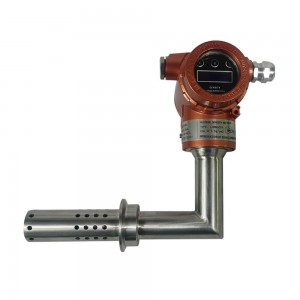
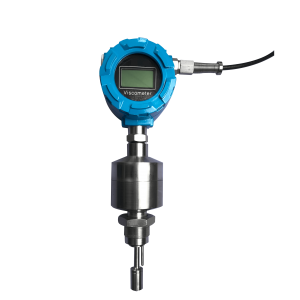
Selection of appropriate density measurement equipment for chemical injection applications requires consideration of several factors. The measurement range must accommodate the variable densities of both injection water and chemical agents, sometimes spanning from light brines to concentrated PAM solutions. Accuracy is paramount, as misreading agent concentrations can lead to suboptimal plugging or even reservoir damage. Chemical compatibility is a foremost concern; Lonnmeter’s inline density meters utilize wetted materials engineered for resistance to corrosion and scale, enabling operation in brine or chemically aggressive environments.
Installation requirements play a significant role in equipment selection. Coriolis flow meters are advantageous due to their flexibility in pipe configuration—they are generally immune to flow profile disturbances and require minimal straight pipe runs, which streamlines integration into complex wellheads and skids. However, the mounting must minimize environmental vibrations to preserve measurement fidelity, especially in remote, outdoor, or mobile water injection units.
Maintenance considerations center on the absence of moving parts in both Coriolis meters and vibrating tube densitometers, reducing wear and the risk of sensor drift or failure. Nonetheless, planned calibration against standard fluids remains necessary, particularly if the composition of injected fluids shifts over time due to production changes or reservoir interventions.
These density measurement solutions are frequently integrated with oilfield automation systems. Real-time density data acquisition supports continuous process feedback, enabling closed-loop control of profile control agent dosing or plugging agent blending. This integration monitors the density of chemical agents as they are injected, detecting any deviation that might compromise reservoir conformance, and automatically adjusts system parameters to maintain optimal treatment. The result is precise inline density measurement for plugging agents and PAM dosing in heterogeneous water injection wells—a key element of modern enhanced oil recovery strategies.
Maintaining high-accuracy, reliable density tracking with tools like Lonnmeter inline density meters ensures effective plugging agent deployment, reduces chemical waste, and sustains well performance. Applications span from simple single-well interventions to complex multi-zone, automated injection networks, where real-time chemical agent density tracking directly supports oilfield operational objectives.
Best Practices for Real-Time Inline Density Measurement
Guidelines for the placement, calibration, and maintenance of inline density meters are foundational for stable, accurate measurement—especially in oilfield applications such as water injection wells and heterogeneous reservoirs. Devices like those from Lonnmeter should be positioned in sections of piping where the flow is uniform and laminar. This means locating meters away from bends, valves, pumps, and any sources of turbulence to prevent stratification or air entrainment, which can impact accuracy by up to 5% if not observed. Standard practice suggests a minimum of 10 times the pipe diameter as a straight run upstream and five times downstream from the sensor, supporting the optimal measurement of plugging agents or profile control agents injected for reservoir management.
Accessibility and environmental safety are vital. Install equipment where routine inspection and calibration can be carried out safely, with minimal exposure to vibration or extreme temperatures. Device orientation—horizontal or vertical—must follow Lonnmeter’s specific guidelines to maintain sensor integrity and lifespan.
Calibration must begin at installation, employing certified reference fluids such as deionized water or other industry-calibrated standards matching the density range of the intended plugging agent. This ensures initial readings are accurate and establishes a baseline for ongoing monitoring. In operational environments, schedule routine calibration—commonly at six-month or annual intervals—tailored to device stability and operational demands. Calibration should include compensation for temperature and pressure fluctuations using embedded sensors and telemetry, as density readings for PAM or other chemical agents deployed for enhanced oil recovery are highly sensitive to these changes.
Verification of inline measurements should be conducted by periodically sampling fluids and analyzing density in a laboratory, with the results compared against in-situ readings. This practice, supported by established recommendations such as API RP 13B-2, helps validate operational accuracy and the effectiveness of ongoing calibration.
Continuous workflows for monitoring agent density rely on integrating inline measurement data with supervisory systems. Real-time tracking of plugging agent density for reservoir profile control allows operators to respond immediately to deviations in composition or concentration, optimizing injection strategies for heterogeneous reservoirs. For example, real-time density measurement highlights when the composition of a chemical plugging agent diverges from the specification, enabling immediate corrective action.
Density data management is crucial. Inline measurement systems should automatically capture every data point, flag anomaly conditions, and log calibration events. Effective data analysis—through graphical trend plots and statistical reports—supports rapid decision-making, enables process optimization, and provides compliance documentation for water injection projects. Operators should leverage this density data to enhance oil recovery from heterogeneous reservoirs, adjust agent concentrations, and validate the performance of high-performance profile control agents.
The use of advanced Lonnmeter equipment for inline density measurement supports strict chemical plugging agent density optimization, enabling oilfield teams to maintain the effectiveness of plugging agents and profile control agents, particularly in complex water injection well operations. Regular review and maintenance of measurement devices, combined with robust calibration and data practices, ensure the continuous reliability of oilfield inline density monitoring systems for Polyacrylamide (PAM) and related agent applications.
Polyacrylamide (PAM) and Other Profile Control Chemicals: Monitoring and Measurement
Inline density measurement in fluids containing polyacrylamide (PAM) and profile control agents for water injection wells requires strategies tailored to the unique properties of these materials. PAM—a polymer used extensively as a plugging agent for reservoir profile control and enhanced oil recovery—exhibits high viscosity and complex phase behavior, which complicates accurate and real-time density monitoring.
High Viscosity and Reactive Media Considerations
PAM solutions, particularly when blended with cross-linkers like polyethylenimine (PEI), transform quickly from liquid to gel, leading to variable viscosity and density. Inline density measurement for plugging agents in oilfield applications must accommodate gels, thixotropic flow, and multiphase regions. As PAM reacts or gels in response to temperature and chemical environment, areas within a single process stream can display different densities and viscosities simultaneously, making uniform measurement difficult. Sudden viscosity increases dampen sensor response, and phase separation (from liquid to semi-solid) interferes with standard sensor principles such as Coriolis or vibrating tube methods, often causing drift or signal loss.
Process temperatures in water injection and heterogeneous reservoir scenarios can reach up to 150°C, intensifying measurement challenges. Elevated temperature not only accelerates gel formation but also increases the rate of polymer degradation, affecting both viscosity and density. The presence of saline water, crude glycerol, or other additives further modifies rheological behavior, thus density measurement equipment for chemical injection must be robust against continual shifts in physical and chemical environment. Field studies show that inline density sensors may need regular recalibration or maintenance to mitigate sensor fouling and loss of sensitivity due to solid content fluctuation and gel aggregation.
Addressing Viscosity and Solid Content Challenges
Inline density measurement for plugging agents is directly impacted by solid particle load in PAM/PEI fluids. As solids or flocs form and settle in mining or oilfield scenarios, localized density—and viscosity—fluctuate over time, complicating the operation of oilfield inline density monitoring systems. Example: during injection of PAM-based profile control agents in heterogeneous reservoirs, the dynamic formation of solid and semi-solid gels may cause rapid phase separation. This can block or bias density sensors positioned in the stream, impacting data reliability.
Real-time chemical agent density tracking requires a measurement system capable of resolving these rapid changes. Advanced sensors may use ultrasound or nuclear methods to overcome limitations of conventional technologies, though the field reliability in high-temperature, multiphase PAM flows remains an area for continual improvement.
Implications for Plugging, Profile Control, and Sweep Augmentation
For effective profile control in water injection wells using PAM and other chemical plugging agents, maintaining correct density is crucial for predicting plugging depth and sweep efficiency. Density optimization of the plugging agent determines its movement through the heterogeneous reservoir matrix, impacting conformance and overall recovery. Inadequate density management can result in premature gelation within injection lines or insufficient penetration into the oil-bearing formation.
During sweep augmentation and conformance control, PAM applications in heterogeneous reservoirs benefit from continuous, accurate feedback on fluid density. Failure to address density variation due to viscosity and solids can reduce the effectiveness of high-performance profile control agents. Inline density measurement systems enable timely interventions—such as injection rate adjustment or formulation modification—based on real-time readings. The density of plugging agent in oilfield applications thus becomes a key parameter for successful water injection and reservoir management.
Summary statistics from experimental runs reveal that the density reading error may exceed 15% during rapid gelation or solid content fluctuation, indicating the need for periodic calibration and sensor maintenance to ensure reliability. Optimizing density measurement technology and protocols is essential to the deployment of effective plugging agents for water injection wells and robust PAM applications in oilfield profile control.
Optimizing Agent Composition and Injection Strategies Using Density Data
Real-time density measurement is central to controlling the composition and injection strategy for profile control and plugging agents in water injection wells, especially in heterogeneous reservoir environments. Inline density data from equipment such as those manufactured by Lonnmeter enable operators to optimize the concentration of chemical agents such as Polyacrylamide (PAM) and advanced polymer microspheres as they are injected, ensuring precise delivery tailored to current reservoir conditions.
Density feedback is a critical parameter for formulation adjustments. Operators can modulate agent concentration and chemical dosing by continuously monitoring the density of plugging agents before and during injection. For example, if inline density measurement detects an unexpected dilution in the plugging agent stream, the control system can automatically increase the concentration or adjust the agent mixture to return to target specifications. This approach maintains the efficacy of PAM or multi-scale polymer microsphere formulations, increasing their plugging performance in water injection wells and mitigating uncontrolled water flow in low-permeability zones.
Optimized density measurement enhances multi-round flooding strategies. By tracking real-time changes in agent density during successive injection cycles, engineers can fine-tune each round—reducing under- or over-treatment of specific reservoir segments. For combined flooding, such as sequential applications of polymer microspheres followed by gel agents, density monitoring identifies blend efficacy and triggers on-the-fly adjustments for maximum conformance control.
The chart below illustrates the relationship between agent density, injection pressure, and oil recovery rate across multi-round applications:
Recovery Rate vs. Agent Density and Injection Pressure| Agent Density (g/cm³) | Injection Pressure (MPa) | Recovery Rate (%) |
|-----------------------|-------------------------|-------------------|
| 1.05 | 12 | 47 |
| 1.07 | 13 | 52 |
| 1.09 | 14 | 56 |
| 1.11 | 15 | 59 |
Higher accuracy and responsiveness in density measurement, such as achieved with inline density monitoring systems from Lonnmeter, directly prevent channeling. Real-time density tracking ensures that the plugging agent is sufficiently concentrated, stalling the development of preferential water channels which can undermine sweep efficiency. The immediate reporting of density allows operators to raise injection pressure or recalibrate the composition, securing uniform plugging and protecting weaker reservoir zones.
Efficient use of density signal data improves injection pressure control. Operators can react to changes in density that affect fluid viscosity and pressure, thereby maintaining optimal pump settings and preventing over-pressurization or underperformance. This data-driven approach increases overall oil recovery while reducing operational costs linked to chemical overuse or inadequate plugging.
For applications in heterogeneous reservoirs, precise density optimization of chemical agents—especially PAM or multi-scale polymer microspheres—tailors the mechanical and chemical profile of the plugging agent to the diversity of pore structures in the rock. The result is enhanced sweep efficiency and long-term improvement in oil recovery for water injection wells. Inline density measurement remains a foundational technology for chemical agent performance, real-time adjustment, and strategic control in modern oilfield operations.






FAQs
What is the significance of inline density measurement for profile control agents?
Inline density measurement plays a pivotal role in managing water injection wells by enabling operators to monitor the composition and effectiveness of profile control agents in real time. With continuous data flow, field engineers can verify whether profile control agents, such as chemical plugging agents, are mixed and injected at intended concentrations. This supports immediate adjustment of injection parameters, reducing overdosing or underdosing, and enhances operational efficiency. Real-time density insights also allow for quick identification of any deviation in fluid properties, enabling swift intervention to maintain process stability and achieve optimal sweep within the reservoir. Inline density meters help prevent issues like channeling by ensuring consistent delivery of agents to intended zones, directly improving reservoir management and oil recovery rates.
How does the density of plugging agents influence their effectiveness in heterogeneous reservoirs?
The density of a plugging agent directly impacts its behavior in complex, heterogeneous reservoirs. Accurate density control is critical to guarantee that the agent reaches target zones, as under-dense agents risk bypassing high-permeability pathways, while overly dense agents may settle prematurely and block unintended zones. This density-matching ensures that the plugging agent migrates effectively, reducing unwanted water channeling and improving sweep efficiency. For effective application, real-time density measurement allows for immediate detection and correction of density variations, thereby maximizing the blocking capacity of the agent and enhancing oil recovery by ensuring it performs as designed in various strata.
What equipment is suitable for real-time density measurement in water injection wells?
Reliable real-time density measurements in the demanding environment of water injection wells require robust and chemically resistant devices. Coriolis flow meters and vibrating tube densitometers are commonly deployed due to their proven accuracy and suitability for inline use. These instruments withstand the high pressures, variable temperatures, and aggressive chemical environments typical of injection operations, providing continuous monitoring of plugging agents and profile control agents without frequent recalibration. The data produced by these meters is integral for process tracking and immediate adjustment, securing performance and mitigating operational risks in the field.
Why is Polyacrylamide (PAM) density measurement challenging in profile control applications?
Measuring the density of Polyacrylamide (PAM), a widely used profile control agent for water injection wells, presents unique operational challenges. PAM’s high viscosity and its tendency for phase separation and gelation under certain conditions can interfere with conventional densitometric methods. This often results in unstable readings. To maintain accuracy, specialized inline devices with enhanced designs—such as self-cleaning vibrating tube densitometers—and regular maintenance routines are necessary. Periodic calibration and vigilance against fouling or air bubble entrapment further ensure that the density data remains reliable, supporting the effective deployment of PAM-based solutions in heterogeneous reservoirs.
Can density data be used to optimize injection strategies for profile control agents?
Yes, integrating real-time density data into injection management empowers operators to dynamically adjust the dosage, concentration, and flow rates of profile control agents and plugging agents alike. This granular monitoring enables precise agent placement and effective blockage of high-permeability channels within heterogeneous reservoirs. Adaptive strategies based on inline density readings improve reservoir conformance, maintain desired pressure distributions, and minimize chemical wastage. The result is a more efficient, responsive approach to enhanced oil recovery—especially valuable in complex or mature oilfields—ensuring that each zone receives optimized agent treatment as conditions evolve throughout the injection process.
Post time: Dec-12-2025


