

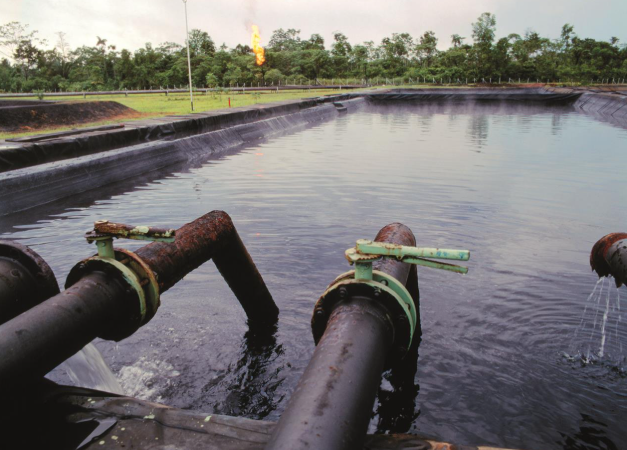
Produced water reinjection (PWRI) is the process of collecting water that emerges as a byproduct of oil and gas production and directing it back into underground geologic formations. This method plays a central role in the oilfield lifecycle, serving both as an environmentally responsible disposal strategy and as a tool for maximizing hydrocarbon recovery. PWRI forms the backbone of enhanced oil recovery techniques and is critical for maintaining reservoir pressure—vital parameters for sustaining production and extending field life.
PWRI is tightly linked to oil displacement and reservoir management. As oil is extracted, natural reservoir pressure declines. Reinjection of produced water counteracts this drop, maintaining formation pressure and improving sweep efficiency. This pressure maintenance is fundamental in secondary recovery, where the injected water displaces residual oil towards production wells. Techniques such as polymer flooding—using polymers to increase water viscosity—further optimize oil displacement and exemplify advanced water management in mature fields.

Produced Water in Oil and Gas Fields
*
Inline and Real-Time Density Measurement for PWRI Optimization
The Importance of Inline Density Measurement
Inline density measurement is essential for optimizing produced water re-injection (PWRI) in modern oilfield operations. By enabling real-time monitoring of produced water density, operators can swiftly detect variations in water composition, such as changes in oil, gas, or solids content. This immediate awareness is crucial for maintaining water quality to meet reinjection specifications and minimizing risks of formation damage, scaling, or plugging.
Real-time data from inline density measurement in oil production allows operators to adjust produced water treatment for reinjection on the fly. This reduces the response time to deviations from target water quality, preventing unplanned downtime and costly maintenance. Furthermore, accurate density profiles ensure that injected water maintains desired formation pressure, which underpins enhanced oil recovery techniques like polymer flooding and traditional waterflooding. Continuous density monitoring also facilitates regulatory compliance, ensuring reinjected water consistently meets environmental and operational standards. These benefits translate into better reservoir pressure maintenance strategies, improved injectivity, and a longer asset lifespan.
In polymer flooding reinjection methods, where water composition can fluctuate due to polymer and chemical dosing, the ability to track density in real time is particularly valuable. It allows for dynamic management of injection protocols, optimization of oil displacement methods, and better control over unwanted formation reactions. Field reports consistently show a reduction in scaling and plugging incidents, improved injection quality, and seamless integration with digital oilfield management tools, all attributing their success to persistent and accurate density measurement capabilities.
Advanced Instrumentation: The Lonnmeter Density Meter
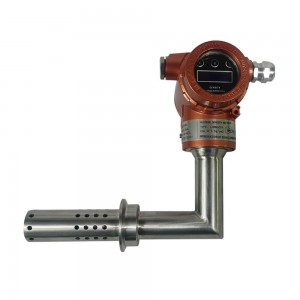
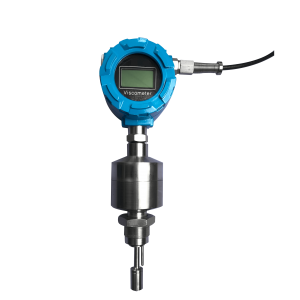
The Lonnmeter density meter operates using advanced vibrating tube or Coriolis principles, delivering precise inline density measurement under the demanding conditions of oilfield environments. By installing directly in the produced water reinjection flowline, the Lonnmeter meter provides continuous, non-intrusive data without disrupting production or requiring manual sampling.
Designed for durability, the Lonnmeter density meter resists fouling and calibration drift, ensuring continued accuracy even as operational conditions shift. Its robust sensor technology measures water density in real time, transmitting results seamlessly to control systems for instantaneous process adjustments. This real-time monitoring is vital during both polymer flooding reinjection and conventional waterflooding, where changes in water density can indicate process anomalies or impending operational issues.
Compared to periodic grab sampling or less reliable laboratory analyses, the Lonnmeter density meter delivers unmatched temporal resolution. Its continuous feedback supports direct coupling to process control systems, enabling automated chemical dosing and filtration strategies based on actual water properties rather than set schedules. This capability significantly improves operational efficiency, reduces chemical usage, and prevents costly downtime due to unexpected process upsets. For instance, if oil carryover or solids breakthrough is detected, corrective actions can be triggered before formation plugging can occur.
The use of inline density measurement tools like the Lonnmeter density meter within produced water treatment for reinjection helps operators more precisely adjust injection protocols and guarantee reliable formation pressure maintenance, as indicated by field studies and industry analyses. The meter’s data can be fed into broader reservoir management systems, complementing other sensors for turbidity, salinity, and oil-in-water content to deliver a holistic view of water quality. As enhanced oil recovery operations become increasingly complex, the accuracy, reliability, and real-time nature of Lonnmeter inline density measurement provide a foundation for maximizing recovery efficiency, maintaining reservoir health, and ensuring regulatory compliance.
Produced Water Treatment for Injection: Ensuring Reliability and Compliance
Produced water treatment for reinjection is central to enhanced oil recovery techniques and sustainable reservoir management. The process begins with robust mechanical separation—removal of free oil, suspended solids, and some dissolved contaminants via gravity separators, hydrocyclones, and flotation units. These units target primary contaminants that could impair injection well performance. For instance, hydrocyclones efficiently separate oil droplets from water, while induced gas flotation systems remove smaller oil droplets and suspended solids, supporting the quality demands of produced water re-injection.
Chemical conditioning follows mechanical separation. Hydrocarbon emulsions and dissolved metals are controlled through the precise addition of demulsifiers, scale inhibitors, and corrosion inhibitors. Demulsifiers break stable oil-water emulsions, improving downstream treatment efficacy. Scale inhibitors suppress mineral scale formation by chelating or sequestering ions like calcium and barium, protecting both pipelines and injection formations. Corrosion inhibitors prevent metal loss and preserve infrastructure integrity, especially where oxygen ingress or acidic gases (CO₂, H₂S) are present. Bactericides mitigate microbial activity, crucial in preventing souring and microbiologically influenced corrosion—a recurring challenge in polymer flooding reinjection methods and other advanced oil displacement methods.
Advanced filtration further polishes treated water by capturing fine suspended solids that could impair injectivity or damage formations. Technologies such as walnut shell filters, nutshell media, and membrane filtration systems are adopted based on produced water composition, pressure requirements, and target water quality. Nanofiltration and ultrafiltration are increasingly used for stringent compliance, especially where reuse or reinjection into sensitive formations is planned.
Produced water quality for reinjection must reliably meet strict thresholds for suspended solids, bacteria, oil content, and ionic composition. Excessive solids or oil can clog reservoir pores, reducing permeability and injectivity. Elevated sulphate, barium, or strontium may trigger scale deposition, and unchecked microbial growth fosters biogenic hydrogen sulfide and corrosion. Real-time density measurement for oilfield water, using inline density measurement in oil production, assists operators in monitoring water quality trends and detecting anomalies that signal upsets or contamination events. The use of Lonnmeter density meter applications enables continuous, real-time monitoring of produced water density throughout treatment and injection stages, improving process control and compliance with operational constraints.
Regulatory requirements for produced water reinjection are increasingly stringent. U.S. federal and state agencies mandate containment of injected water within permitted subsurface formations and enforce specific limits on oil, solids, and microbial loads to prevent formation damage, groundwater pollution, and induced seismicity. Modern compliance frameworks call for routine water testing and operational transparency. Operators must adapt to evolving standards, incorporating robust separation, chemical, and filtration treatments to maintain reliable injection and regulatory alignment while controlling costs.
Produced water reinjection forms a pillar of sustainable formation pressure maintenance strategies and oil reservoir management. By recycling treated water, operators reduce freshwater demand and minimize surface disposal volumes, supporting resource utilization and environmental sustainability. Properly treated water reinjection supports environmental targets while optimizing oil recovery and operational safety. These strategies deliver measurable produced water reinjection benefits: they preserve reservoir drive for enhanced recovery, decrease the need for surface water disposal, and enable advanced polymer flooding technologies to achieve higher oil displacement efficiency.
Instrumentation such as density measurement tools for produced water reinjection, including real-time monitoring with Lonnmeter devices, provides actionable insights for on-spec water delivery. Data integration into SCADA or process management supports prompt intervention and efficient troubleshooting. This layered approach—mechanical, chemical, and filtration treatment combined with continuous density monitoring—ensures compliance and reliable operation, enabling produced water reinjection to meet demanding oil field and environmental requirements.

Strategies for Enhanced Oil Recovery Using Water Reinjection
Oil Displacement Mechanisms
Production water reinjection is a core enhanced oil recovery (EOR) technique designed to increase hydrocarbon extraction by maintaining reservoir pressure and mobilizing residual oil. When water is injected into an oil-bearing formation, it displaces oil trapped within porous rock, pushing hydrocarbons toward production wells. The two dominant displacement mechanisms are piston-like (where a uniform water front pushes oil ahead) and viscous fingering (where injected water bypasses oil due to differences in rock permeability). In real reservoirs, heterogeneity leads to non-uniform displacement, making sweep efficiency a critical variable.
Sweep efficiency defines how much of the reservoir is contacted by the injected water front. In heterogeneous formations, low-permeability streaks trap oil, while high-permeability channels can result in premature water breakthrough. Strategically optimizing water reinjection patterns—such as using alternating injector and producer rows or controlling injection rates—improves conformance and increases the volume of oil displaced. Laboratory and field-scale studies confirm that enhanced sweep efficiency through optimized water management is directly correlated to higher recovery factors, sometimes boosting cumulative recovery by 8–15% over conventional waterflooding methods. This establishes produced water reinjection as a key lever for improved oil displacement and total recovery volumes.
Polymer Flooding Reinjection
Polymer flooding reinjection combines produced water reinjection with the addition of hydrophilic polymer agents, typically polyacrylamides, to increase the viscosity of the injection stream. By increasing the viscosity of water, a more favorable mobility ratio (M < 1) is achieved, reducing viscous fingering and enhancing the piston-like movement of oil toward production wells. Accurate dosing of polymer slugs is essential; overdosing can cause formation damage, while underdosing yields limited sweep improvement.
Inline density measurement and real-time monitoring with tools like the Lonnmeter density meter provide operators with continuous visibility of injected water properties. Real-time viscosity and density data ensure correct polymer concentration is maintained throughout injection, safeguarding both placement efficiency and operational safety. This real-time feedback minimizes the risk of plugging and optimizes the flood front, thus maximizing the EOR process. For mature reservoirs and tight formations, where oil mobility is restricted and conventional waterflooding is insufficient, polymer flooding significantly increases sweep efficiency and overall recovery, often adding another 5–20% of original oil in place to the recovery tally.
Advanced Injection Strategies
Advanced injection strategies combine produced water reinjection with meticulous pressure management and profile control technologies. Formation pressure maintenance ensures that oil remains mobile and prevents early water or gas coning. Adjusting injection pressures and volumes allows operators to target specific reservoir zones, managing conformance and limiting channeling.
Profile control agents—such as gels, foams, and particulates—are introduced to block high-permeability channels. This diverts subsequent injection into less-swept, low-permeability zones, activating unswept oil-bearing volumes. Practical deployment includes selective zonal injection, water shutoff treatments, and alternating injection pressures to incrementally increase the volumetric sweep (Ev). Elevating reservoir pressure with these methods enables recovery from bypassed, tight zones that would remain unrecovered under conventional waterflooding. Evidence from large field pilots demonstrates that, in combination, these advanced techniques can raise incremental oil production and further improve recovery factors by engaging previously unswept reservoir areas.
Continuous, real-time density monitoring with inline tools such as the Lonnmeter density meter supports these strategies. By tracking produced water properties before and after treatment or modification, operators can quickly identify fluid front movement, breakthrough events, and the efficacy of profile control, enabling agile, data-driven adjustments.
Below is a simplified representation of the impact of optimized water injection and advanced EOR strategies on oil recovery:
| Injection Strategy | Typical Recovery Factor Increase |
|-------------------------------|----------------------------------|
| Conventional Waterflood | 10–30% (of OOIP) |
| Produced Water Reinjection | +8–15% (incremental) |
| Polymer Flooding | +5–20% (incremental, mature/tight)|
| Pressure/Profile Control | +3–10% (incremental, zone-targeted)|
Enhancing oil displacement, integrating produced water treatment for reinjection, using polymer flooding methods, and employing real-time density measurement tools collectively enable operators to maximize each reservoir’s hydrocarbon potential.
Maintaining Formation Pressure and Ensuring Reservoir Continuity
Principles of Formation Pressure Maintenance
Formation pressure maintenance is fundamental to efficient oil reservoir management. Sustaining near-original reservoir pressure is essential for maximizing oil displacement efficiency and ensuring prolonged resource extraction. If pressure drops below certain thresholds, such as the bubble point, the reservoir energy dissipates. This often leads to a rapid decline in oil production and accelerates reservoir compaction, which reduces pore space and permeability.
The reinjection of produced water, known as produced water re-injection (PWRI), is one of the most practical enhanced oil recovery techniques used to maintain formation pressure. PWRI balances the injection and production rates, supporting steady-state reservoir conditions and prolonging asset life. The right balance between injected and produced volumes preserves the capillary and viscous forces needed for effective hydrocarbon movement, thus enhancing recovery factors well beyond what is achievable by natural depletion alone. Field data indicate that active pressure maintenance programs achieve recovery uplifts of 10–25% compared to primary production, while significantly reducing the risk of compaction-induced challenges such as subsidence or loss of well integrity.
Recent simulation-driven studies highlight that the success of PWRI and similar oil displacement methods is highly dependent on optimal injection pattern selection, well placement, and real-time monitoring. Reservoirs where pressure has been maintained at or above 90% of initial conditions show minimal compaction and maintain flow properties required for continued production.
Monitoring, Automation, and Troubleshooting
Real-time monitoring is indispensable for efficient produced water reinjection benefits. Inline and real-time density measurement, especially via tools such as Lonnmeter density meters, provide continuous data on injected fluid properties. This dynamic process control enables prompt adjustments of injection parameters—such as rate or quality—corresponding to the changing conditions in the reservoir.
Inline density measurement in oil production is especially vital when produced water may vary due to produced solids, scaling, polymer flooding reinjection methods, or shifts in water salinity during enhanced recovery operations. These variations affect injectivity, formation damage risk, and ultimately, long-term reservoir health. Tools like Lonnmeter offer precise, real-time monitoring of produced water density. This capability allows operators to identify anomalies—such as unexpected density changes signalling chemical breakthrough or solids incursion—and make immediate corrective changes to the injection regime.
Troubleshooting is a core aspect of reservoir pressure maintenance strategies. Loss of injectivity, often caused by plugging due to particulates or biological growth, scaling, or changes in oil viscosity, can reduce the effectiveness of enhanced oil recovery techniques. Using real-time density measurement tools for produced water reinjection including inline viscosity meters helps detect these problems early. For example, a sharp increase in measured density or viscosity may point to solid entry or emulsion formation at the wellbore. Early identification leads to targeted intervention—such as adjusting water treatment, filter maintenance, or flowback rates—preventing well damage and minimizing downtime.
Produced water treatment for reinjection, particularly with advanced monitoring, directly addresses reservoir continuity. Proper monitoring helps manage issues such as water breakthrough or changes in displacement front caused by polymer flooding reinjection methods. Persistent deviations from expected density trends signal uneven sweep or poor reservoir contact, triggering immediate adjustment of polymer concentrations, injection profiles, or water chemistry.
Close integration of density measurement tools with field operations ensures optimal formation pressure maintenance, stable oil reservoir management, and supports reliable, safe, and economically viable long-term recovery. The synergy between monitoring, troubleshooting, and automated controls contributes to the success of all advanced polymer flooding technologies and oilfield reinjection strategies.
Integrating PWRI and EOR for Maximum Value
Designing an Integrated Water Reinjection-EOR Program
Maximizing the value of produced water re-injection (PWRI) and enhanced oil recovery (EOR) requires careful system design linking produced water handling, inline density measurement, and advanced oil displacement methods. A successful integrated program combines real-time produced water monitoring, optimal produced water treatment for reinjection, and application of enhanced oil recovery techniques tuned to reservoir specifics.
The foundation of the integration starts with produced water management. Produced water collected during oil production must be treated to meet specific reservoir and regulatory standards before reinjection. Treatment steps are selected based on produced water quality, which can vary widely. Inline density measurement tools, such as Lonnmeter density meters, deliver continuous verification of the treated water’s density, giving immediate feedback on water quality. These real-time measurements prevent the reinjection of water with incompatible density, reducing risks of reservoir plugging or damage.
During the reinjection phase, maintaining formation pressure is crucial. Produced water is injected to support reservoir pressure, delaying decline and enhancing oil displacement. Accurate monitoring of produced water density ensures that the reinjected water matches reservoir fluid properties, optimizing sweep efficiency and preventing layering of fluids due to density differences. For techniques like polymer flooding reinjection, monitoring viscosity and density in real-time adapts the process to reservoir response and improves overall EOR effectiveness.
Integrating EOR strategies such as advanced polymer flooding or carbonated water injection harnesses the synergy between pressure maintenance and chemical modification of the reservoir environment. Carbonated water injection, for example, changes fluid properties and rock–fluid interactions, leading to improved oil displacement and potential for CO₂ sequestration. Compatibility between these techniques and produced water management depends on data-driven selection based on thorough reservoir characterization, including mineralogy, fluid compatibility, and injectivity analysis.
Throughout the asset lifecycle—from initial produced water handling, through injection well performance monitoring, and on to system optimization—inline density and viscosity meters (such as those from Lonnmeter) are essential. They deliver process-critical data to operators and engineers, supporting adaptive management of the reinjection-EOR program. Real-time monitoring enables rapid response to operational upsets and helps sustain system uptime, which is a key driver of both reservoir recovery and cost control.
Key Performance Indicators (KPIs) and Continuous Improvement
Quantifying the performance of an integrated PWRI-EOR program depends on well-chosen Key Performance Indicators (KPIs). For produced water reinjection, injection quality is monitored via real-time density measurement, ensuring the fluid meets target criteria for salinity, solids content, and density. Lonnmeter density meters, for instance, provide continuous assurance that only qualified water enters the reservoir, reducing risks of injectivity decline and formation damage.
Sweep efficiency reflects the effectiveness with which injected fluids displace oil toward production wells. This is influenced by both injection fluid properties—tracked using inline measurement tools—and reservoir heterogeneity. Formation pressure is another critical KPI; continuous pressure monitoring confirms that reinjection strategies are maintaining or restoring reservoir pressure, postponing water breakthrough and maintaining production rates.
System uptime, tracking period of uninterrupted injection and EOR operation, underpins overall project economics. Breakdowns or deviations, such as a drop in produced water quality or an unexpected pressure dip, are rapidly detected using integrated monitoring systems.
Data-driven improvement efforts combine these KPIs to support continuous optimization. Engineers routinely analyze trends in density data, injection pressures, and sweep efficiency metrics to adjust treatment parameters, polymer concentrations, or injection rates—implementing incremental improvements tailored to evolving reservoir and operational conditions. For mature fields, this iterative approach enables sustained oil recovery and extends asset life, as demonstrated in industry case studies where Decision Support Systems and continuous monitoring achieved marked reductions in water use and increased production.
With robust inline density and viscosity data, operators can correlate system performance with injection parameters in real time. When a KPI such as sweep efficiency falls, the root cause—be it water quality, density mismatch, or mechanical failure—can be traced rapidly, supporting timely interventions.
Integrated PWRI-EOR operations leverage real-time measurement, continuous KPI tracking, and adaptive management to maximize oil recovery, system reliability, and regulatory compliance. This lifecycle approach ensures that produced water is converted from a waste stream into a vital resource for reservoir pressure maintenance and incremental oil recovery, supported by technologies like Lonnmeter density meters for oilfield reinjection optimization.






Frequently Asked Questions (FAQs)
What is inline density measurement, and why is it essential for produced water re-injection (PWRI)?
Inline density measurement is the real-time, continuous monitoring of the fluid density directly in the process line, eliminating the need for manual sampling. In the context of produced water re-injection (PWRI), it provides immediate data on the density of water or polymer solutions being reinjected into the reservoir. This is essential for ensuring that the composition of reinjected fluids remains within optimal specifications, preventing formation plugging, protecting reservoir integrity, and ensuring regulatory compliance. For example, sudden changes in density can signal the intrusion of oil, gas, or solids, allowing operators to quickly intervene and prevent damage to equipment or the formation. The capability to continuously track density supports efficient, safe, and digitally traceable operations, reducing operational costs and enhancing oilfield productivity.
How does produced water reinjection support enhanced oil recovery (EOR) strategies?
Produced water reinjection plays a central role in enhanced oil recovery techniques. By reinjecting treated produced water, operators maintain reservoir pressure, which is key for displacing oil and moving it toward production wells. This approach is vital for both traditional water flooding and advanced polymer flooding reinjection methods. When polymer solutions are injected, density control ensures that the proper polymer concentration is maintained, directly affecting sweep efficiency and oil displacement. The result is higher recovery rates from existing fields and improved sustainability by reducing freshwater usage and managing produced water responsibly.
What are the main challenges of produced water treatment for reinjection?
The primary challenges in produced water treatment for reinjection revolve around removing contaminants such as residual hydrocarbons, suspended solids, and organic matter. If these components are not adequately removed, there is a risk of plugging reservoir pores or injection wells, leading to losses in injectivity and potential reservoir damage. For instance, oil carryover or high solids content can degrade water quality and directly impact downstream processes. Effective treatment minimizes risks of corrosion and scaling, contributing to long-term operational reliability. Achieving consistently high water quality often requires an integrated approach, combining physical separation, filtration, and chemical treatments—each influenced by ongoing feedback from real-time density measurements.
What role does the Lonnmeter density meter play in PWRI and polymer flooding?
The Lonnmeter density meter is specifically designed to deliver highly accurate, real-time measurements of fluid density in critical oilfield applications, including PWRI and advanced polymer flooding reinjection. Real-time monitoring with the Lonnmeter supports precise control of polymer dosing, ensuring that reinjected solutions remain within the desired concentration window for optimal sweep efficiency and minimal formation damage. Consistent density tracking helps operators verify that produced water is properly treated and free from excessive contaminant loads, reducing the likelihood of well failures and maximizing overall EOR performance. By providing trustworthy data directly at the point of injection, the Lonnmeter density meter acts as a vital quality assurance tool for enhanced oil recovery operations.
How does production water reinjection contribute to formation pressure maintenance?
Reinjection of produced water serves to balance the volume of fluids withdrawn during oil production, thereby stabilizing formation pressure. Maintaining adequate pressure is essential for efficient oil extraction, as it prevents reservoir collapse, controls unwanted water or gas production, and helps sustain oil flow rates over the lifetime of the field. For example, improper pressure maintenance can lead to reservoir subsidence or reduced recovery factors. Implementing real-time density measurement tools for produced water reinjection ensures that operators can monitor and maintain both water quality and injection rates, directly supporting the long-term integrity and productivity of the reservoir.
Post time: Dec-12-2025


