

A purchasing engineer sent one line to five suppliers. “0-16 bar, 4-20 mA pressure transmitter, quote 20 pieces please.” The replies came back across a spread wide enough that he assumed somebody had misread the enquiry. Nobody had. Each supplier quietly filled the missing fields with a different assumption about reference type, wetted material, approval and documentation, then priced the instrument they had imagined rather than the one the plant needed. That is the real answer to a pressure transmitter price enquiry. The number is an output of a configuration, and a configuration cannot be inferred from a range and an output signal. Our pressure transmitter range covers gauge, absolute and differential units, and the difference between the cheapest and the dearest offer in that stack usually lives in fields the enquiry never mentioned.
This page replaces a thin catalogue stub that promised price comparison without giving a buyer anything to compare. What follows is the reasoning our application engineers actually use when they turn an enquiry into a written offer, the specification lines that move the number, and the information that makes two quotations genuinely comparable. We do not publish a price list here, and the reason is not secrecy. A list price without a configuration attached is a number that will be wrong by the time it is read.
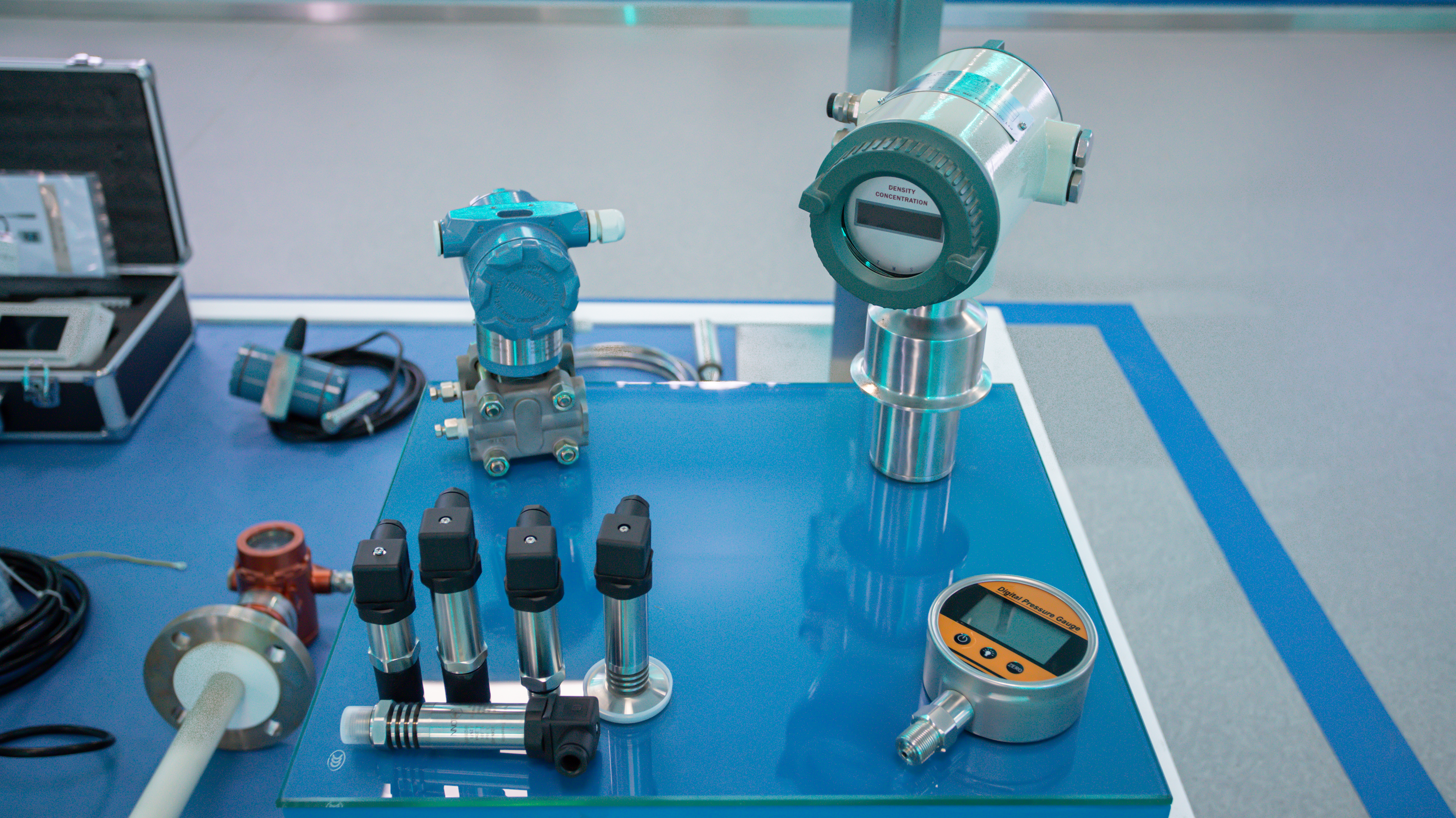
Where a price request goes wrong
The one-line enquiry fails at the first technical word. “0-16 bar” does not say whether the pressure is gauge, absolute or differential, whether 16 bar is the calibrated upper range value or merely the normal operating point, or what overload the sensing cell must survive when a valve closes upstream. In process work those are three different instruments. A gauge unit vents to atmosphere through a filtered breather. An absolute pressure transmitter seals a vacuum reference behind the sensing diaphragm. A differential pressure transmitter exposes two isolators and an oil-filled capsule to a line that may sit at hundreds of bar while measuring a few kPa across it. Each has a different mechanical body, a different test regime and a different bill of materials.
Then the unit disappears. Bar, bar g, MPa, psi and kgf/cm² all appear in real line lists, and we have seen the same numeric value ordered in two different units on the same project. A 16 bar span and a 16 MPa span are not a rounding error apart. Adding the reference letter and the unit to the first email costs nothing and removes the single largest source of incomparable offers.
The output signal is the next trap. “4-20 mA” describes a current loop, not a complete electrical specification. It says nothing about whether HART is required, whether the loop must be intrinsically safe, what supply voltage the cabinet provides, whether a local indicator is needed, or whether the PLC input is isolated. A 4-20 mA loop transmitter with a plain analog output and one with HART 7, a display and a certified barrier are different products occupying the same phrase in an enquiry. If the selection logic behind those choices is unfamiliar, it is worth reading that first, because a price conversation that starts before the reference type is settled will have to be restarted later.
None of this is a supplier trick. A quotation has to state what is being supplied. This is why a pressure transmitter price request that lists only a range and an output signal almost always comes back as a wide spread. When the request omits half the definition, the supplier who asks questions looks slow and the supplier who guesses looks cheap.
A quote is a configuration, not a number
Read a serious offer as a list of physical decisions. Each line exists because something in the process forced it, and each line has a cost that can be traced to a component, a test or a document.
| Quote line | Physical decision behind it | What happens if it is omitted |
| Reference type | One diaphragm vented, sealed or duplicated | Wrong measurement entirely |
| Calibrated span and LRV/URV | Sensor range and turndown | Reading drifts outside the calibrated region |
| Overload and static rating | Isolator and fill system strength | Cell damaged by a single upset |
| Accuracy class | Sensor grade, compensation, characterisation | Error budget quietly doubles |
| Wetted material | Diaphragm and process connection alloy | Corrosion or hydrogen permeation |
| Process connection | Thread, flange, clamp or seal | Adapter stack, extra leak paths |
| Output and protocol | Analog, HART, fieldbus or wireless | Cabinet interface rework |
| Approval | Ex, SIL or hygienic documentation | Plant cannot legally energise it |
| Ingress and ambient | Housing, cable gland, breather | Water ingress on the first washdown |
| Documentation | Calibration certificate, material traceability | Quality release blocked at goods-in |
The table is not a checklist invented for this page. It is the order in which our own configuration sheet is filled, because a quote that starts with a model number tends to end with a missing static rating. A buyer comparing three offers should put them side by side against these rows rather than against the total at the bottom. Comparing a pressure transmitter price across suppliers only works once those rows are aligned. Two offers with the same total rarely contain the same rows.
Three specification lines that move the number most
Accuracy is the first. Reference accuracy is usually quoted as a percentage of calibrated span, not of the reading. The distinction stops being academic as soon as turndown is applied. Take a 0-100 bar sensor configured for 0-10 bar, a 10:1 turndown. A ±0.1% of span claim is ±0.1 bar. At a real operating point of 10 bar that is ±1% of reading, and at 2 bar it is ±5%. A ±0.075% device on the same configured span is not a marginal upgrade in that situation, it is a different error budget. The difference in pressure transmitter price between accuracy grades buys sensor characterisation, temperature compensation and a longer calibration rig time, not marketing. IEC 61298-2 and IEC 60770-1 set out how those claims are evaluated, and reading the methods makes the span-versus-reading distinction impossible to ignore.
Turndown is the second. A wide turndown ratio lets one hardware range cover several services, which is attractive for spares holdings and for skids whose design pressure may change. It also moves the operating point down the calibrated span, where the fixed span-based error term dominates. Our industrial pressure transmitter configurations are usually specified with the working pressure in the upper part of the configured range rather than at the maximum possible turndown, and we will say so on the offer when a request asks for 100:1 on a point that does not need it. Paying for rangeability that pushes the measurement into its least accurate region is a real and common waste.
Overload and static pressure are the third. A gauge transmitter on a pump discharge sees a water-hammer spike that a normal range calculation never includes. A DP transmitter on a filter or an orifice plate may sit at 100 bar of line pressure while measuring 50 kPa across the primary element, and a technician closing the equalising valve in the wrong sequence can put the full line pressure on one port alone. Specifying the overload rating for that mistake rather than for the tidy version of the procedure changes the sensing cell, the isolators and the price. It is also the cheapest insurance on the whole order.
What certification, wetted parts and protocol add
Approvals are not stickers. An ATEX or IECEx marking requires a certified protection concept, a controlled build, specific cable glands and conduit seals, and documentation that travels with the unit. A SIL claim requires a defined failure-rate basis and a proof-test procedure. A hygienic build requires surface finish evidence, cleanability and material declarations. Each adds engineering and test work, and each changes the pressure transmitter price for a reason a plant can audit. Each is a separate line because a plant that does not need it should not pay for it. Our certificate page shows the kind of documentation buyers ask us to supply, and our note on pressure transmitters in hazardous environments explains why the protection concept has to be settled before the quote is meaningful. Group, temperature class and ambient range all belong in the enquiry.
Wetted materials behave the same way. 316L stainless covers a large share of clean utility services. Chloride-bearing water, hydrochloric acid, wet chlorine, caustic at temperature and sour hydrocarbon service do not. Hastelloy C-276, Monel, tantalum, ceramic and PTFE-coated diaphragms exist because a corrosion allowance is not a substitute for the right alloy, and a remote seal adds a fill fluid, a capillary and a temperature-dependent zero shift of its own. NACE MR0175 and ISO 15156 material compliance brings hardness testing and traceable mill certificates. The buyer who sends the medium name, concentration and temperature range gets a quote for an instrument that will survive the stream. The buyer who sends only a part number gets a quote for an instrument that may dissolve in it.
Protocol is the third multiplier. A plain analog loop is the lowest-cost electrical configuration and the easiest to troubleshoot. Adding HART brings device configuration and diagnostics over the same wires, at the cost of a modem or a HART-enabled input card. Foundation Fieldbus, PROFIBUS PA and smart transmitter variants change the segment design, the power budget and the commissioning toolchain, and are not interchangeable with a HART-on-analog-loop architecture. WirelessHART style deployments move cost into gateways, batteries and network planning rather than removing it. Where the plant has a standard, that standard decides the line. Where it does not, the loop function and the maintenance team’s tooling should.
We are deliberately not writing multipliers or surcharges here. A percentage added to a base price in a blog post would be a guess dressed as a quotation, and it would be wrong for the next project.
Gauge, absolute and differential do not share a cost base
A gauge unit is one sensing cell with a vented reference. An absolute unit adds a sealed vacuum reference that has to hold for the life of the instrument. A differential unit adds a second isolator, a fill system on both sides, a static pressure rating and protection against one-sided overpressure. The pressure transmitter price follows the mechanical body rather than the catalogue column. The bodies are different enough that a buyer should never assume a ratio between them holds across suppliers.
This matters most when pressure is being used to derive another variable. DP across an orifice plate gives flow through a square-root relationship. DP between a vessel top and bottom gives level through p = ρgh, with density as an input rather than a constant. In both cases the accuracy of the derived value depends on the low-range performance of the DP cell at high static pressure, and on the temperature behaviour of the fill fluid in the capillaries. A cheap cell with a wide span will produce a plausible number that is wrong at low flow. Our 3051 coplanar platform is often chosen here because the manifold interface shortens the impulse plumbing, but the configuration still has to be specified against the static line pressure, not against the differential span alone.
The LONN-2088 gauge and absolute platform is the other common comparison, and it illustrates a useful buying point. Where a project needs both reference types, a shared platform can reduce spares and training cost even if the per-unit price is identical. That saving belongs in the comparison, and it will never appear in a bare unit-price column.
The attachments that quietly double an order
The transmitter is rarely the whole order. A pressure transmitter price that covers only the sensing head is not a price for the assembly on the drawing. A manifold with three or five valves lets a technician isolate, equalise and check zero without shutting the line down. Impulse lines, condensate pots, snubbers for pulsating service, heat tracing for freezing ambient, a local indicator, a mounting bracket and the correct cable gland all appear as separate lines. On a hygienic or corrosive service the remote seal and its capillary can cost as much as the sensing head.
These items are where a low bid usually wins and where the project later pays. A quote that excludes the manifold looks cheaper until the skid builder discovers that the instrument cannot be isolated or zeroed, then buys the manifold at expedition freight. A quote that assumes a direct-threaded connection looks cheaper until the process needs a flush diaphragm and an adapter stack that introduces a dead leg. Ask whether the offered price includes the assembly the drawing actually shows. Our process solutions page describes the forms these assemblies take, and the pressure transducers we supply for OEM panel building are quoted with the same logic at a different integration level.
Lead time, MOQ and the commercial lines
Standard configurations on a production line ship on a different clock from a custom span, an unusual alloy or an approval combination that has not been built before. Quantity changes the unit economics through setup, test rig time and material purchase, so an MOQ is a manufacturing fact rather than a negotiation posture. Calibration certificates traceable to ISO/IEC 17025, EN 10204 3.1 material certificates, factory acceptance testing and special packing are separate lines because each consumes real hours.
Then there are the terms that are not technical at all. Whether the offer is ex-works or delivered, whether tax and freight are included, what the validity period is, what the warranty covers, and what the spare-parts commitment looks like after the project closes. Incoterms belong in the comparison table next to the unit price. A China pressure transmitter supply enquiry for volume OEM work and a single replacement unit for a shutdown are priced under completely different assumptions, and putting their totals in the same column tells you nothing.
A pressure transmitter price quoted without a delivery basis is only half an offer. Ask for the offer in writing with a validity date and an explicit list of exclusions. An exclusion list is a sign of a careful supplier, not a reluctant one.
A total cost frame you can actually calculate
A pressure transmitter price is one term in a longer sum. A frame we use with buyers who have to defend a specification internally looks like this.
TCO = P + C_install + n × C_cal + λ × t × (C_replace + C_downtime)
P is the delivered instrument and assembly cost. C_install covers the mounting, impulse plumbing, loop check and commissioning labour. n is the number of planned recalibrations over the service life t, and C_cal is the cost of one, including access, isolation and the paperwork. λ is the observed failure or out-of-tolerance rate, and C_replace plus C_downtime is what a single event costs when the loop is unavailable.
The equation is useful because it exposes where a cheap instrument becomes expensive. Long-term drift shortens the recalibration interval, which raises n. A housing that admits washdown water raises λ. A device that cannot be zeroed without a shutdown raises C_cal and C_downtime at the same time. None of those terms appears on a quote, and all of them are affected by the specification lines discussed above. A buyer does not need precise values to use the frame. Comparing two offers by asking which one increases n and which one increases λ usually reaches the right conclusion.
We have watched plants replace a general-purpose unit three times in a service where a sealed, correctly specified one would have run for years. The difference between a sensor, a transducer and a transmitter is worth understanding here, because a low-cost sensing element with an unconditioned output often shifts the amplification and compensation work into the panel, where it becomes somebody else’s cost line.
What the lowest bid usually leaves out
| Common omission | Where it reappears |
| Static pressure and overload rating | First blocked impulse line or valve mis-sequence |
| Ambient and process temperature range | Winter zero shift, summer electronics fault |
| Breather protection on gauge units | Washdown water drawn into the reference cavity |
| Material certificate and wetted alloy | Goods-in quality release, then corrosion |
| Ex marking with group and T-class | Site cannot energise the loop |
| Calibration certificate scope | First plant audit |
| Manifold, gland and mounting hardware | Skid commissioning, at expedition freight |
| Spares and obsolescence commitment | Year three of the maintenance contract |
A pattern we see often enough to name it. A low pressure transmitter price is frequently a difference in scope rather than a bargain. The buyer sends a model number copied from an old datasheet, the supplier matches the number without asking what changed, and the instrument arrives correct to the paper and wrong for the line. The pressure sensor fitted to the original machine may have been selected for a different medium, a different ambient or a different loop function. Reordering by part number alone is the fastest route to a repeat failure, and it is also the most common reason a “price comparison” compares two things that were never the same product.
There is a second pattern. A buyer asks several suppliers to quote “the same as the attached” and attaches a competitor’s brochure page rather than a line list. Brochures describe a product family, not a configured unit. Every supplier then makes a different set of assumptions, and the spread in the replies is reported as market volatility when it is actually specification ambiguity. Sending the process data instead of the brochure collapses that spread within one round.
The information that makes quotes comparable
This is the list we ask for, and the order is deliberate. It is the same order as the configuration sheet, which means a completed list can be turned into an offer without a second round of emails.
| Field | What we need | Why it changes the offer |
| Reference type | Gauge, absolute or differential | Defines the sensor body |
| Range | LRV, URV and explicit unit | Fixes span and turndown |
| Normal and upset pressure | Working point, overload, static line pressure | Sets isolator and cell rating |
| Medium | Name, concentration, phase, solids | Selects wetted alloy and seal |
| Temperature | Process and ambient, min to max | Selects fill fluid and electronics |
| Process connection | Standard, size, flush or threaded | Removes adapters and dead legs |
| Output | Analog, HART, fieldbus, wireless, display | Defines interface hardware |
| Supply and loop | Voltage, isolated input, barrier, SIL function | Defines electrical configuration |
| Approval | Ex zone, group, T-class, SIL, hygienic | Defines certified build |
| Ingress and environment | IP rating, washdown, outdoor, vibration | Defines housing and gland |
| Documentation | Calibration and material certificates, FAT | Defines test and paperwork hours |
| Commercial | Quantity, target delivery, Incoterms, spares | Defines MOQ, lead time and terms |
Twelve rows is not excessive for a pressure transmitter price enquiry, because each one removes a round of clarification. A plant that can supply eight of them will get a usable budgetary offer with the remaining four listed as assumptions, and we mark those assumptions on the quotation so nobody mistakes them for agreed specifications. A plant that supplies all twelve gets a firm offer that another supplier can genuinely be asked to match. The contact page is where that list goes, and it moves fastest when it arrives with the first message rather than after three rounds of clarification.
For buyers who only need a budget number before the project is defined, we will say so explicitly on the offer. A budgetary figure with stated assumptions is honest. A budgetary figure presented as a fixed price is how projects end up re-quoted at the worst possible moment.
How our quotation is put together
An enquiry reaches an application engineer, not a pricing script. The first pass checks that the reference type, the range with units, the static and overload limits and the medium are all present. If one is missing, we ask before configuring, because a fast quote built on a guess is slower than a question. The second pass selects the sensing platform, the wetted parts, the connection, the output and the approval combination. The third pass adds the assembly, the documentation and the commercial terms. Only then does a pressure transmitter price get attached.
The written offer states the configured model, the calibrated range, the reference type, the accuracy class, the materials, the approval, the included accessories, the excluded items, the lead time, the validity period and the certificate scope. Traceable calibration is performed against deadweight testers and comparators with calibration traceable to ISO/IEC 17025, and the as-found and as-left records are kept with the order. Our note on what distinguishes our pressure transmitter builds covers the production side, and the certificate documentation shows the paperwork buyers commonly request before goods-in release.
LONNMETER GROUP develops, manufactures and sells industrial process instruments from Shenzhen, with 15-plus years of OEM and ODM work behind the pressure line. The engineering team that configures the quote is the team that answers the commissioning question later, which is a commercial fact as much as a technical one. It is why we would rather ask four questions on day one than issue a number that has to be withdrawn in week three.

What we will not put in writing
We do not publish market price bands here. Public listings for this product category range from commodity sensor elements to fully certified smart transmitters, and those figures come from marketplace snapshots with different MOQs, currencies, dates and scopes. Reproducing them as a price guide would mislead a buyer and would age badly. The only valid price for a specific configuration is the one on a written quotation issued against that configuration.
We will not state an accuracy figure, a static rating, a protection marking, a SIL claim or a material compliance declaration for a build we have not configured and verified. Exact specifications, approvals and performance for any model are those on its datasheet and the certificates shipped with it. Nothing on this page is a performance promise for an unstated service.
If a line list is ready, send it. If it is not, send the medium, the reference type, the range with units and the loop function, and we will tell you which four fields we still need. The contact page reaches the application engineers directly. A comparable quotation starts with a comparable specification, and that part is in your hands before it is in ours.
Post time: Nov-18-2026


