

Understanding Liquid Density Measurement in Polymerization Reactors
Accurate density measurement liquid is vital for chemical process control in polyethylene polymerization reactors. In polyethylene polymerization processes, density functions as a direct indicator of the polymer’s branching, crystallinity, and molecular weight distribution, dictating key material properties such as stiffness, impact resistance, and processability. For example, low-density polyethylene (LDPE) requires tight control over long-chain branching, while high-density polyethylene (HDPE) is characterized by minimal branching; both rely on precision in liquid density readings to guide reaction conditions for targeted performance.
During the polyethylene polymerization reaction, real-time measuring density of liquid enables process operators to adjust temperature, pressure, and monomer feed rates, maintaining optimal reaction conditions and consistent product quality. Density is a leading parameter for distinguishing polyethylene grades (LDPE, HDPE, LLDPE) and ensuring batch uniformity throughout the polyethylene production process. Reliable density tracking via inline density meters like those produced by Lonnmeter supports not only quality assurance but also minimizes product variability and improves yield.

Industrial Polyethylene Production Diagram
*
Fundamentals of Polyethylene Polymerization Reactors
Key Reactor Designs for Polyethylene Production
Fluidized bed reactors (FBRs) are integral to the polyethylene polymerization process, especially for gas-phase production of LLDPE and HDPE. These reactors suspend polymer particles in a rising stream of gas, creating a dynamic bed with uniform particle distribution. Efficient heat management is a standout advantage; the continuous interaction between solids and gas promotes rapid removal of reaction heat, minimizing the risk of hot spots and runaway polymerization. However, control challenges arise, notably transient temperature fluctuations linked to catalyst dosing or variations in coolant feed rates. Advanced PID control systems are employed to suppress these fluctuations and maintain operational stability, supporting consistent polymer quality and safe reactor operation. Population Balance Models (PBM) coupled with Computational Fluid Dynamics (CFD) offer a sophisticated approach to simulate and optimize particle dynamics and hydrodynamics, facilitating scale-up and fine-tuning of product attributes.
High-pressure reactors are the backbone of LDPE synthesis, operating at pressures often surpassing 2000 bar. Radical polymerization in these conditions requires extreme control over mixing and residence time. Effective mixing prevents formation of local hot spots that can compromise product consistency and safety. Residence time dictates polymer chain length—shorter times favor lower molecular weights, while longer residence supports higher molecular weights. Studies using orthogonal collocation and finite element methods reveal that initiator feed rates and jacket temperatures are critical for maximizing ethylene conversion and ensuring melt flow index targets are met. Poor mixing can lead to irregular molecular weight distribution and increased fouling, threatening both safety and product uniformity.
Multizone Circulating Reactors (MZCRs) present a modular approach to polyethylene polymerization reaction management. These designs segment polymerization into several interconnected zones with adjustable flow, temperature, and ethylene introduction. Internal cooling mechanisms—particularly within riser sections—substantially reduce temperature fluctuations, improving temperature uniformity from swings of up to 8°C down to roughly 4°C. This finely tuned environment enables ethylene conversion rates to improve by more than 7%, and supports tighter control of molecular weight distribution. Particle properties are more consistent due to decoupling of gas velocity and solid circulation between zones. MZCRs also provide scalable platforms, facilitating transition from laboratory- to pilot- and industrial-scale production while maintaining process and product consistency.
Impact of Process Variables
Temperature is the central parameter affecting polyethylene polymerization reaction rates, molecular weight, and crystallinity. Elevated temperatures increase chain transfer and termination frequencies, leading to reduced average molecular weight. Lower temperatures encourage the formation of longer polymer chains but may decrease conversion rates. Catalyst dosing influences activity and polymer chain nucleation. High catalyst concentrations accelerate polymerization but may narrow or broaden molecular weight distribution, depending on catalyst chemistry and reactor design. Optimized dosing ensures desirable polymer properties without excessive inclusions or structural defects.
Mixing within the polymerization reactor is directly proportional to product uniformity. Non-ideal mixing introduces spatial variations in radical concentration and temperature, causing broad or multimodal molecular weight distributions. CFD studies confirm that optimized circulation patterns and residence time balance can suppress unwanted kinetic extremes, yielding polyethylene with tailored processability and mechanical performance. In MZCR systems, decoupling zone parameters further controls mixing and temperature, improving single-pass ethylene conversion and minimizing off-spec material.
The connection between polymerization reactor design and product characteristics is direct and quantifiable. FBRs yield polyethylene grades suitable for film and rotational molding, benefiting from narrow melt flow indices and robust molecular weight control. High-pressure reactors for LDPE deliver distinct chain architectures favored for extrusion and packaging applications. Multizone designs provide flexibility in targeting complex molecular weight profiles, supporting specialty grades. Advanced density measurement liquid techniques, including inline density meters from Lonnmeter, support real-time quality control by enabling accurate monitoring of process density and polymer concentration, critical for ensuring specification compliance throughout the polyethylene production process.
Techniques for Measuring Density of Liquids in Reactor Environments
Principles Behind Density Measurement
Density is defined as the mass per unit volume of a substance. In the context of polyethylene polymerization reactors, real-time density measurement is crucial, as it directly relates to polymer crystallinity and mechanical properties, impacting both process control and product quality. For example, density monitoring allows engineers to detect shifts in polymerization kinetics, which can signal changes in catalyst performance or monomer feed rates.
Both physical and chemical factors influence density in reactor environments. Temperature increases cause expansion and lower liquid density, whereas higher pressure typically compresses the liquid and raises its density. In polymerization reactors, compositional changes (such as monomer concentration, dissolved gases, additives, or byproducts) further complicate the measurement, making it necessary to consider all process variables in accurate density monitoring. For heterogeneous reactions, such as slurry or suspension polymerization, particle loading, agglomeration, and bubble formation can dramatically impact apparent density readings.
Established Methods for Density Measurement Liquid
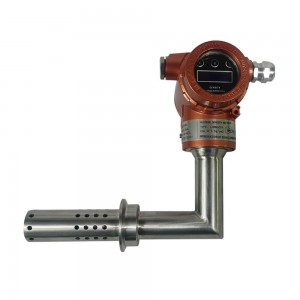
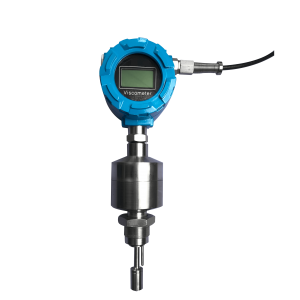
Direct measurement methods include hydrometers, digital density meters, and vibrating-tube sensors. Hydrometers offer simple manual operation but lack the precision and automation needed for high-pressure polymerization processes. Digital density meters provide improved accuracy and can integrate temperature compensation, making them suitable for laboratory calibration and routine control. Vibrating-tube density meters, a core offering from Lonnmeter, operate by measuring oscillation frequency changes as liquid fills a precisely engineered tube. These changes directly correlate to fluid density, with calibration models that account for pressure and temperature dependencies.
Advanced and indirect methods are preferred for continuous, automated reactor operation. Ultrasonic sensors use high-frequency sound waves, allowing nonintrusive real-time measurement of density even at elevated temperatures and pressures, and resist fouling in chemical environments. Nuclear-based sensors apply radiation absorption principles, suited for opaque process streams and high-temperature reactor installations, particularly where gamma or neutron fields are present. Microwave sensors measure dielectric property shifts which correlate to fluid density, valuable for certain solvent-rich or multiphase streams.
Online and in-situ measurement systems in challenging environments must withstand process extremes—such as high-pressure slurry loops or gas-phase reactors in the polyethylene production process. Vibrating-tube densimeters offer small sample volumes and robust operation across wide temperature and pressure ranges. In contrast, ultrasonic and nuclear sensors excel in resisting chemical attack, fouling, and radiation, while maintaining signal fidelity. Real-time sensors deployed directly within reactor loops allow dynamic process adjustment to maintain optimal density targets, minimizing off-spec product and reducing reliance on intermittent lab analysis.
Addressing Process Media Complexity
Complex reactor media such as heterogeneous slurries, emulsions, or reaction suspensions present significant difficulties in liquid density measurement. Solids concentrations, gas bubbles, and emulsion droplets can distort readings by altering effective mass transfer and hydrodynamics. Probe designs must accommodate particle settling and local clustering effects, requiring fluid flow management to minimize density measurement artifacts. For example, in polyethylene polymerization reactors using slurry-phase operation, particle size distribution and added inert gases challenge density measurement consistency.
Accurate compensation for temperature, pressure, and compositional variations is essential. Most liquid density measurement methods integrate temperature and pressure sensors, employing empirical correction tables or automated computational algorithms for real-time feed-forward adjustment. Lonnmeter vibrating-tube meters use calibration models to offset environmental impacts on sensor oscillation. In multicomponent media, density readings can be corrected using reference mixtures or calibration routines matched to expected process compositions. Compensation for phase separation—such as oil-water emulsions or polymer suspension—may require additional probes or sensor fusion to separate particulate, gas, and liquid contributions.

Integration of Liquid Density Data for Reactor Process Optimization
Importance of Real-Time Data in Polymerization Visualized Through Control Strategies
Continuous monitoring of reaction mixture density is essential in the polyethylene polymerization process. Consistent density measurements enable safe reactor operation by allowing immediate detection of deviations that may trigger hazardous temperature excursions or cause off-spec polymer production. Maintaining stable liquid density ensures the resulting polyethylene possesses uniform molecular weight and mechanical characteristics, which are crucial for both commodity and specialty product grades.
PID (Proportional-Integral-Derivative) control strategies leverage real-time density feedback to dynamically adjust reactor parameters. When sensors—such as inline density meters from Lonnmeter—provide continuous density measurement liquid data, the control system refines ethylene feed rates, catalyst doses, and temperature setpoints instantly. These modifications, driven by density feedback, counteract disturbances and stabilize the polymerization reactor, resulting in higher process reliability and operational safety.
Sensitivity analyses reveal that variables such as monomer and catalyst flows, as well as reaction temperature, directly influence the polymerization reactor’s stability. Small changes in feed rates or catalyst concentrations can propagate, resulting in density shifts which, if unchecked, may cause hot spots or suboptimal conversion. The use of real-time data allows PID controllers to preemptively readjust critical setpoints, preserving process integrity. For example, adaptive PID control, relying on live density signals, can accurately counteract abrupt feedstock compositional changes, averting runaway reactions and maintaining consistent polyethylene properties.
Linking Density Data to Product Quality and Process Efficiency
Measuring density of liquid in real time provides actionable insights into the polymerization reactor’s internal dynamics and final product quality. Density trends allow detection of fluctuations linked to poor mixing, precision loss in temperature, or catalyst activity drops. These fluctuations may indicate localized hot spots—zones of excessive reaction—potentially leading to undesirable polymer characteristics and increased risk of fouling.
By integrating density measurement liquid data into reactor operation, operators can continuously adjust feedstock rates, catalyst supply, and thermal conditions to counteract density deviations. Modifications based on trending density reduce fouling, since they prevent conditions favoring build-up of degraded polymer or oligomers on reactor walls. Improved density control translates to more efficient absorption desorption processes within the reactor, supporting better gas absorption and desorption techniques for polyethylene production.
Data visualizations—such as density trend charts—are instrumental in linking observed density changes to downstream process adjustments. Consider the following example of a real-time density chart in a loop reactor:
As illustrated, timely detection of density drops initiates immediate increases in catalyst dosing and subtle decreases in temperature, effectively stabilizing process output. The result is reduced fouling, improved monomer conversion rates, and higher consistency in polyethylene polymerization reaction outcomes.
In summary, continuous, inline liquid density monitoring—achieved via techniques for measuring liquid density such as those engineered by Lonnmeter—cements its role in advanced polymer reactor design and operation, directly impacting the polyethylene production process by supporting both product quality optimization and process efficiency improvements.
Absorption Desorption Processes in Polyethylene Production
Absorption and desorption dynamics are central to the polyethylene polymerization process, governing the movement and transformation of monomer gases as they interact with catalyst surfaces within the polymerization reactor. During the polyethylene polymerization reaction, monomer molecules are absorbed onto the surface of the catalyst. This uptake depends on both the molecular properties of the monomer—such as mass, polarity, and volatility—and the chemical environment inside the reactor. Desorption, in contrast, is the process by which these adsorbed molecules detach and return to the bulk phase. The rate and efficiency of these processes directly affect monomer availability, polymer growth, and overall reactor productivity.
The desorption energy quantifies the barrier that a monomer molecule must overcome to leave the catalyst surface. Parameterization studies reveal that this energy depends largely on the monomer’s molecular makeup rather than specific surface type, allowing for general predictive models across various reactor systems. Desorption lifetime, or the average time a molecule remains adsorbed, is highly sensitive to temperature within the reactor. Lower temperatures extend lifetime, potentially slowing down reaction rates, while higher temperatures promote rapid turnover, impacting the output density of the polyethylene product.
Monomer uptake and catalyst interaction are not governed solely by first-order kinetics. Recent research demonstrates that coverage-dependent desorption behaviors can occur, where adsorbate–adsorbate interactions drive non-linear kinetics, especially at high surface coverages. For example, as the catalyst surface becomes saturated, initial desorption proceeds slowly and linearly until surface coverage drops below a critical threshold, at which point rapid desorption accelerates. This dynamic must be considered in polymer reactor design and operation, as it affects both the efficiency of monomer utilization and consistency of polymer output.
Integrating absorption and desorption data with real-time density measurement liquid methods is fundamental for maintaining a stable polyethylene production process. Inline meters manufactured by Lonnmeter provide ongoing feedback on liquid phase density, reflecting subtle shifts in monomer concentration and polymer growth rates. As absorption brings monomers into the reaction zone—and desorption removes spent or excess molecules—any imbalance or kinetic variation will be directly observable in density readings, enabling fast operational adjustments. For instance, if desorption accelerates unexpectedly, a drop in measured density can signal underutilization of monomers or catalyst deactivation, guiding operators to modify feed rates or thermal profiles.
Figure 1 below illustrates the correlation between monomer absorption and desorption rates, surface coverage, and resulting liquid density in a typical polyethylene polymerization reactor, based on simulated conditions:
| Density (g/cm³) | Monomer Coverage (%) | Absorption Rate | Desorption Rate |
|-----------------|---------------------|-----------------|-----------------|
| 0.85 | 90 | High | Low |
| 0.91 | 62 | Moderate | Moderate |
| 0.94 | 35 | Low | High |
Understanding these dynamics and integrating precise liquid density measurement methods, such as those available from Lonnmeter, enable tight control over the polyethylene polymerization process. This ensures optimal product consistency, maximized yield, and efficient catalyst utilization throughout continuous production.
Best Practices for Accurate Density Measurement in Polyethylene Polymerization Process
Robust density measurement is essential for precise control of the polyethylene polymerization reaction. For inline liquid density measurement in this environment.
Sampling Strategies: Representative Liquid Extraction or Continuous Flow-Through Measurement
Accurate measurement of the density of a liquid in polymerization reactors relies on effective sampling design. Representative extraction methods employ isokinetic nozzles to avoid sample distortion, with system components such as isolation valves and sample coolers preserving sample integrity during transfer. The primary risk of extraction is loss of volatile fractions or changes to polymer composition if the sample is not quenched or cooled rapidly. Continuous flow-through density measurement using inline Lonnmeter sensors provides real-time data critical for the polyethylene production process; however, this approach requires management of issues like fouling, phase separation, or bubbles which may degrade accuracy. Continuous liquid-liquid extraction designs feature solvent recycling to sustain steady-state conditions, with multi-stage setups and automated sample conditioning balancing representativeness and response time. The selection between discrete and continuous methods depends on process scale and dynamic response requirements, with continuous real-time feedback typically preferred for polymer reactor control.
Minimizing Measurement Error: Effects of Temperature Gradients, Phase Separation, and High Viscosity Media
Measurement error in density sensing arises primarily from temperature gradients, phase separation, and high viscosity. Temperature gradients within the reactor, especially at scale, induce local variations in fluid density, complicating sensor feedback. Phase separation between polymer-rich and solvent-rich domains leads to density heterogeneity—sensors located near interfaces may deliver inaccurate or non-representative data. High viscosity, typical for polymerizing media, impedes thermal and compositional equilibration, increasing lag and error in sensor response. To minimize these effects, reactor design must prioritize uniform mixing and strategic sensor placement, ensuring sensors are shielded or isolated from local phase interfaces. Empirical studies underline the link between imposed thermal gradients and sensor performance, finding error magnitudes increase in reaction zones exhibiting poor mixing or rapid phase changes. Predictive modeling using coupled Cahn-Hilliard, Fourier heat transfer, and population balance approaches provides frameworks to anticipate and correct for inhomogeneities, thus enhancing the reliability of inline liquid density measurement.

Validation via Population Balance and CFD Modeling Approaches
Validation of liquid density measurements in polyethylene polymerization reactors is performed by linking observed real-time data to model-based predictions. Population balance models (PBMs) track the growth and distribution of polymer particles, accounting for variations in catalyst activity, molecular weight, and feed rates. Computational fluid dynamics (CFD) simulates reactor hydrodynamics, mixing, and temperature profiles, informing expected sensor conditions. Integrating PBMs with CFD provides high-resolution predictions of phase distributions and density changes throughout the reactor. These models are validated by matching their output against actual sensor readings—especially under transient or non-ideal conditions. Studies demonstrate that CFD-PBM frameworks can replicate measured density variations, supporting measurement reliability and reactor design optimization. Sensitivity analysis, comparing model response to shifts in operating parameters such as temperature or mixing rate, further refines accuracy and diagnostic capability. While model agreement is robust under most conditions, ongoing refinement is necessary for extreme viscosity or heterogeneity, where direct measurement remains challenging. Charts quantifying density error versus temperature gradient, phase separation severity, and viscosity provide visual guideposts for operational best practice and continuous model validation.
Advanced Control Considerations in Polymerization Reactors
Integrating Computational Fluid Dynamics (CFD) modeling with experimental data is essential for advancing control in polymerization reactors, especially for the polyethylene polymerization process. CFD allows for highly detailed simulations of fluid flow, mixing, temperature distribution, and mixing efficiency within a polymerization reactor. These predictions are validated by experimental studies, often with model reactors using transparent vessels and tracer-based measurements of residence time distribution. When simulated and experimental density profiles match, it confirms accurate modeling of real-world process conditions, such as uniform reactant distribution and heat management during the polyethylene polymerization reaction. Density-based process monitoring offers direct feedback for both model accuracy and day-to-day operational control, enabling the detection of dead zones or inadequate mixing before they impact product quality or safety.
CFD validation with experimental benchmarks is crucial for risk reduction. Poor mixing in high-pressure polymerization reactors can cause localized overheating (hot spots), which may trigger uncontrolled initiator decomposition, especially when using peroxides. Hot spots often escape standard temperature probe detection but become apparent through rapid changes in local density. Real-time density measurement liquid data, as generated by inline sensors such as those from Lonnmeter, provides granular insight into flow heterogeneities and conversion zones throughout the reactor. Monitoring liquid density in critical regions allows operators to detect exothermic excursions, initiating control actions before a temperature runaway event can occur. Preventing such runaway scenarios secures safety and ensures efficient peroxide use, as well as minimizes off-spec product due to polymerization rate surges.
Another aspect strongly influenced by density monitoring is molecular weight distribution (MWD) control. MWD variability impacts both the mechanical and processability characteristics of polyethylene. Granular, real-time density data allow indirect, but rapid inference of MWD trends. Model-based control strategies, relying on online density measurement liquid values, adjust initiator feed rates and cooling profiles dynamically in response to density shifts, dampening batch-to-batch MWD variability and ensuring precise polyethylene properties. Simulation and empirical studies confirm that maintaining stable density prevents undesirable nucleation or crystallization behavior, supporting production of trimodal polyethylene grades with targeted characteristics.
To further maximize conversion efficiency, reactor design and operation should leverage optimized mixing and internal cooling, informed by continuous density measurements. In contemporary multizone circulating autoclave reactors, CFD-driven design supported by in-situ density data guides placement of internal baffles and riser cooling coils. These measures ensure singleness of phase, reduce hot spot probability, and enhance conversion. For example, introducing internal cooling informed by density mapping has led to a reported ~7% increase in ethylene conversion during the polyethylene production process, with more uniform temperature profiles. Density-based topology optimization also informs manifold geometry and flow-channel arrangement, leading to improved reactant utilization and superior product uniformity.
In practice, measuring density of liquid in polymerization reactors is not only a tool for process validation, but integral for real-time feedback and risk management. Advanced in-line sensors, such as vibrating element and differential pressure types from Lonnmeter, allow robust, accurate density tracking under high pressure and temperature, suitable for the polyethylene polymerization environment. Their integration into automated process control systems supports tight regulation of absorption desorption process kinetics, minimizes molecular weight deviations, and assures reactor safety.
Overall, effective use of CFD, validated with experimental and real-time density measurement data, underpins modern approaches in polymer reactor design and operation. Harnessing these techniques allows operators to maximize yield, minimize risk, and tightly control the critical quality attributes of the polyethylene polymerization reaction.






FAQ
How do you measure density of a liquid during the polyethylene polymerization process?
Liquid density in the polyethylene polymerization process is measured using in-situ sensors such as vibrating-tube densitometers or ultrasonic devices. These rely on changes in resonance frequency, impedance, or phase shifts as the liquid interacts with the sensor’s surface. Ultrasonic sensors, in particular, offer rapid, real-time analysis and work efficiently under the challenging conditions of high pressure and temperature typical for polymerization reactors. Real-time tracking allows detection of fast density changes, which is essential for supporting automated process control and maintaining product quality throughout the reaction. Recent developments in piezoelectric micromachined ultrasonic transducers enable miniaturization, high precision, and robust integration with industrial setup for continuous density monitoring.
What role does measuring density of liquid play in a polymerization reactor?
Accurate measurement of liquid density is fundamental to polymerization reactor operation. It enables operators to monitor reactant concentrations, detect phase separation, and respond dynamically to fluctuations in process variables. For instance, density readings allow for immediate adjustments in catalyst dosage, mixing rates, or temperature profiles—parameters that directly influence the kinetics and selectivity of the polyethylene polymerization reaction. The ability to observe density changes in real time helps sustain desired molecular weight distribution, reaction conversion rates, and consistent polymer quality.
What is the absorption desorption process and how does it connect to density measurement?
The absorption desorption process in polymerization reactors refers to monomers dissolving into, or being released from, the reaction medium. When monomers or gases are absorbed, the liquid density shifts, reflecting increased solute concentration; when desorption occurs, density decreases as components exit the liquid phase. Monitoring these density variations is critical for detecting the uptake or release events and provides insights into the progress of the polymerization, the status of phase equilibrium, and stability within the reactor. The dynamic tracking of density in response to absorption and desorption enables improved mass transfer modeling and efficient scale-up for industrial reactors.
Why is density measurement important for the polyethylene polymerization process?
Density measurement is indispensable for ensuring optimal process control in polyethylene polymerization. It provides immediate feedback on the reactor’s internal composition, enabling fine-tuning of catalyst usage, mixture ratios, and thermal conditions. These factors not only impact molecular weight and conversion rates but also safeguard against off-spec polymer batches. Direct measurement of density supports safe operation, boosts resource efficiency, and enhances energy management, improving final product uniformity across production cycles.
How does reactor type influence the approach to density measurement liquid?
The design and operation of polyethylene polymerization reactors—such as fluidized bed reactors (FBRs) and high-pressure tubular reactors (HPTRs)—determine the density measurement strategies employed. FBRs present challenges like heterogeneous particle distribution and multiphase gas-solid flows, requiring spatially resolved sensors capable of tracking rapid density shifts. Simulation tools (such as CFD and DEM) and robust inline density meters optimized for multiphase conditions are essential for accurate monitoring. HPTRs, by contrast, demand miniaturized, pressure-resistant, and fast-response sensors to operate under turbulent, high-pressure environments. Appropriate sensor selection and placement ensure reliable data generation, maintaining process stability and supporting efficient scale-up in both reactor types.
Post time: Dec-16-2025


