

Most buyers open a sourcing conversation with one line: “how much is a level meter?” The honest answer is that the price of a level meter is not a number you can quote from a catalogue, because a level meter is not a single product. It is a measurement system assembled around your medium, your tank, your hazardous-area class and your output. A level meter that costs a fraction on paper can cost several times more once you add the wrong material, the missing certification or the field recalibration it forced. This page explains what drives level meter price, what the realistic technology bands look like, and exactly what we need from you to return a quote you can compare like for like. When you are ready, the quote request goes to our application engineers, not to a price bot.
Why “how much is a level meter” has no single answer
A level meter is built from four cost layers that rarely show up in a headline price. The sensor head is the smallest of them. The wetted parts — the probe, the flange, the sealing — are where material cost lives. The certification that lets you mount it in a Zone 1 tank is where a large step change in price hides. And the application engineering that matches the technology to your liquid is the part that decides whether the instrument still reads in month eighteen. Strip any one layer out and the quote looks cheaper and the install gets riskier.
We price to the application, not to the box. That is why a request that arrives with a medium name, a temperature, a pressure and a tank height gets a firm number back in a day, and a request that arrives with only “a level meter for our tank” gets a question list instead of a price.
We do not publish a single price list for the simple reason that a listed price would either be so qualified with caveats that it misleads, or so padded with worst-case options that it overstates every real job. A published number also ages the moment a material or a certification changes. The specification sheet is the price list, and it is written for your tank rather than for a catalogue page. Buyers who need a budget before they spec can ask for the indicative bands above; buyers who need a number can send the sheet and get a firm one.
The six variables that decide the price
Six variables move the price more than anything else. Name them and the quote tightens; leave them vague and the quote widens to cover the worst case.
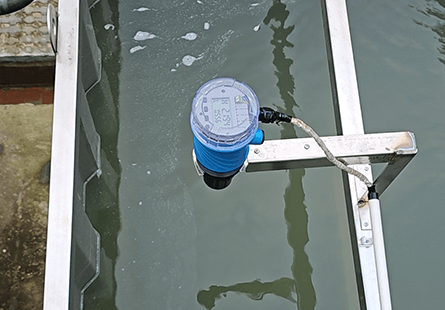
Technology. An ultrasonic level meter measures by sound through the vapor space and is the lowest-cost option on a calm, clean, non-condensing tank. A radar level transmitter launches a microwave and reads through vapor, foam and low dielectric, at a higher head cost. A guided wave radar confines the wave to a probe and reads low-dielectric and boiling liquids that free-space radar struggles with, at a further step. A magnetostrictive gauge gives very high resolution on clean liquids but costs more and fails in turbulent or coating service. The technology choice is the first and largest price lever.
Wetted material. A 316L stainless probe costs more than a 304 one, and both cost far less than a PTFE- or PVDF-lined housing rated for aggressive acid. A polypropylene body is cheap and fine for clean water but useless against solvents. The wetted parts have to survive your medium for years, so the material is priced against the chemical, not against the budget.
Hazardous-area certification. Mounting the head in a classified area — a solvent tank farm, a gas plant, a paint line — requires Ex d flameproof or Ex ia intrinsically safe certification to ATEX or IECEx. That certification is tested, documented and audited, and it carries a real cost. On a safe, open water tank it is unnecessary and you should not pay for it.
Range, dead zone and accuracy. A 20 m measurement span needs a different antenna and signal budget than a 2 m one. The dead zone — the region near the transmitter the instrument cannot read — has to be respected, and a tight accuracy spec (±1 mm versus ±0.5% of span) changes the processing and the verification. Longer spans and tighter accuracy both add cost.
Output and protocol. A bare 4–20 mA loop is the baseline. Adding HART lets you commission and recalibrate without a second scaffold. RS485 or Modbus opens the instrument to a PLC or a building management system. Each protocol adds interface hardware and firmware, and each is priced.
Process connection and mounting. A threaded connection on a small tank is trivial. A welded flange on a pressure vessel, a tri-clamp hygienic fitting for a food line, or a stilling-well installation on a turbulent tank each adds machining, gaskets and sometimes a custom neck. The connection is where “standard” and “custom” part company.
Typical price bands by technology
The bands below are indicative, ex-works, and assume a standard configuration without exotic material or certification. They exist to set expectations, not to replace a quote — your actual price is set by the six variables above.
An ultrasonic level meter for a calm atmospheric tank, 316L or PP wetted parts, 4–20 mA output, sits at the entry tier. It is the right call where the liquid is clean, the vapor is stable and the temperature is honest, and paying more there buys accuracy the loop never uses.
A radar level transmitter at 26 GHz for general industrial service, with HART and a standard antenna, sits one tier up. Moving to 80 GHz with a focused antenna for small nozzles or low-dielectric liquids adds cost but earns it on difficult tanks. A guided wave radar on a coaxial probe for boiling or cryogenic liquids sits at the upper end of the industrial tier, because the probe and the thermal sealing do real work.
A magnetostrictive gauge for a clean, calm liquid where you need sub-millimetre resolution sits in its own band — not the most expensive head, but unforgiving on service conditions. The point of the bands is not the number; it is the ordering. Ultrasonic is cheapest where it fits, radar and guided wave earn their tier on hard liquids, and certification and exotic material sit on top of whichever technology you chose.
What pushes a band up or down within its own tier is consistency of specification. Within ultrasonic, a 316L probe on a small tank is the floor; adding a heated face for condensing vapor, a stilling well for turbulence, or a high-temperature rating for bitumen service each steps the price up, and all are cheaper to specify up front than to retrofit. Within radar, 26 GHz with a standard horn is the baseline; 80 GHz with a focused lens for a small nozzle, a coaxial probe for low dielectric, or a parabolic dish for long range each adds cost that the difficult tank justifies. Within guided wave, a rod probe on a short tank is the entry; a coaxial probe on a tall, boiling or cryogenic column — the kind we put on liquid nitrogen — carries the sealing and the extension that earn its tier. The band moves with the liquid, not with the brand.
Why the cheapest meter is rarely the cheapest install
The failure mode we see most often is a buyer who speced to the lowest headline price and then paid for it three times. The ultrasonic meter bought for a solvent tank where the vapor density varies reads drift; it gets a radar retrofit at full installed cost. The transmitter bought without Ex certification cannot be mounted in the classified area and sits in a warehouse while a certified one is rushed in at expedited freight. The probe bought in 304 where the medium needed PTFE cracks and takes the line down.
Total cost of ownership is the second year, not the quote. A meter that reads correctly, needs no emergency scaffold and carries the right certification costs less across its life than a cheap one that demands a revisit every season. When we quote, we name the conditions under which the cheaper technology is genuinely fine, and we say so — because the trust that earns the next order is built on not selling you a radar where an ultrasonic would have done.
A worked comparison: cheap ultrasonic versus specified radar
A buyer we spoke with had priced an ultrasonic meter for a solvent storage tank because the headline number was a third of the radar quote. The tank held a volatile organic liquid whose vapor density swung with temperature and whose surface foamed during transfer. Within a season the ultrasonic reading drifted by the better part of a metre during hot afternoons, and the plant compensated by manual dipping — the exact exposure the instrument was meant to remove. The radar the original quote had included would have read through the vapor and the foam. The installed cost of the “cheap” choice was the ultrasonic, a season of manual dipping labor, and then a radar retrofit at full installed price including a second scaffold and a line shutdown. The specified radar from the start would have cost one instrument and no retrofit.
This is the comparison we ask buyers to run, because the headline price is never the whole story on a hard liquid. On a calm water tank the same buyer would have been right to choose ultrasonic, and we say so — the technology that is wrong on solvent is right on water, and the price follows the liquid.
How to read a competitor’s quote line by line
When you hold two quotes, read them against the same six variables, not against the bottom line. Check the technology named and whether it fits the medium. Check the wetted material and whether it survives the chemical for the warranty period. Check the hazardous-area certification and whether the area actually requires it — a quote that omits certification on a classified tank is not cheaper, it is incomplete. Check the output and whether it matches your PLC. Check the connection and whether it fits your nozzle. Check the lead time and the commercial terms, because a low price with a long, unspecified lead can cost more in downtime than the difference.
The quote that looks high is often the one that named a risk the low quote ignored. The quote that looks low is often the one that assumed a standard tank and a harmless medium. A line-by-line read turns a price comparison into a risk comparison, and on an instrument that has to read for years, the risk comparison is the one that matters.
Industries and the specs they usually bring
The specification sheet looks different by industry, and knowing the pattern shortens the quote. Water and wastewater plants usually bring a large open channel or a clean water tank, ambient temperature, and 4–20 mA or RS485 — the calm-tank case where ultrasonic is often right. Chemical plants bring aggressive or volatile media, solvent vapor, and a Zone 1 or Zone 2 class that forces certification and often radar or guided wave. Oil and gas brings pressure vessels, hydrocarbon vapor and stringent inspection, where the connection and the certification dominate the price. Food and beverage brings hygienic tri-clamp connections and clean-in-place duty, where the material and the fitting, not the sensor, set the cost. Pharmaceutical brings traceability and calibration certificates as line items. Cryogenic brings liquid nitrogen, oxygen or LNG, where the thermal sealing and the probe geometry decide both the technology and the price.
Naming your industry in the request lets us pre-fill the likely variables and ask only about the ones that differ, which is the fastest route to a firm number.
Documentation and support that come with the price
The price we quote includes the documents that make the instrument installable and auditable, not just the box. A datasheet with the measured performance, a dimensioned drawing for the nozzle, a commissioning guide that walks the cold zero-reference and the dead-zone limits, and a warranty that covers the instrument against the specified service. Where the duty requires it, a calibration certificate, a material certificate or third-party inspection is quoted as a named line, not assumed. Technical support during commissioning is part of the engagement, because an instrument that arrives right but is commissioned against a warm probe will still read wrong, and the support is what prevents that.
None of this is padding on the quote; it is the difference between an instrument that ships and an instrument that reads, and buyers comparing two numbers should check which of these each quote includes.
How we quote: the specification sheet we need
A good quote starts with a specification, and the fastest way to get a firm number is to send us these. Blank lines are a question back to you, not a guess in our quote, because a guess on a hazardous area or a corrosive medium is a liability we will not carry.
Medium and its properties. Tell us what the liquid is, its dielectric constant if known, whether it is conductive, its density and viscosity, and any coating or crystallization tendency. Aggressive acid, slurry, cryogen and hygienic fluid each change the wetted material and the price.
Temperature and pressure. The process temperature at the wall and the vapor-space temperature are not the same on a cryogenic or a superheated tank. The pressure class decides the flange. Both set the sealing and the extension length.
Tank geometry. Height, diameter, internals such as agitators, mixers, baffles or a submerged pump column, and whether the vapor space is open or closed. Geometry decides the beam, the probe and the dead zone.
Hazardous-area classification. The zone, the gas group and the temperature class, if the head sits in a classified area. This is the line item that most often surprises a budget, and we would rather flag it in the quote than discover it at commissioning.
Output and power. Whether you need 4–20 mA alone, HART, RS485 or Modbus, and the supply voltage. Protocol is a small cost that is expensive to add later.
Connection and material. Flange size and rating, threaded or tri-clamp, and the wetted material you require. If you are unsure, tell us the medium and we will specify the material.
Calibration and certification. Whether you need a calibration certificate, a material certificate, or third-party inspection. These are documented and priced, not assumed.
OEM, ODM and minimum order
For integrators and brand owners we build to specification under OEM and ODM terms. OEM means our instrument carries your label and your documentation; ODM means we develop the variant to your drawing. Both change the commercial picture from a single-unit quote: tooling, firmware and labeling are amortized across the volume, and the unit price steps down with quantity. Minimum order quantities apply to custom material, custom connection or custom protocol, because those cannot be drawn from standard stock. For a standard configuration the MOQ is low and the lead time is short; for a custom one, both rise, and we state both before you commit.
Lead time and commercial terms
Standard configurations ship from stock or on a short lead; custom material, custom connection or certified hazardous-area builds carry a longer, stated lead time. We quote the lead time with the price so you can plan the install, not discover it after payment. Commercial terms — incoterms, payment stage, warranty period — are part of the quote, written plainly, because a price without terms is half a contract.
What a quote from us includes
A quote from us is a specification, not a sticker. It names the technology and why it fits your liquid, the wetted material, the certification and the output, the lead time and the commercial terms, and the conditions under which a cheaper alternative would also have worked. That last line is the one buyers tell us they never get elsewhere, and it is the one that lets you compare two quotes honestly: same medium, same connection, same certification, same output. If a competitor’s number is lower, the difference is almost always in one of those four lines, and we will help you find which.
Common quote mistakes that inflate cost
Three habits push level meter price up without adding value. Specifying exotic material where standard 316L would last wastes budget on the wetted parts. Requiring certification the area does not need pays for a test the tank will never justify. Asking for the tightest accuracy on a tank where the control loop only uses the top and bottom thirds buys resolution the process ignores. The reverse mistake — under-specifying on a hard liquid — is more expensive still, because it forces a retrofit. The specification sheet above exists to steer between the two.
Questions buyers ask before requesting a quote
Buyers ask, reasonably, whether we ship worldwide — we do, under stated incoterms, and the quote includes the freight basis so there is no surprise at the port. They ask about warranty — it is written in the quote, and it covers the instrument, not the misapplication, which is why the specification matters. They ask for a calibration certificate — it is available and priced, and for custody or safety duties we recommend it rather than treat it as optional. They ask whether we customize — for connection, material, protocol or label, yes, under the OEM and ODM terms above. None of these should be a separate negotiation after the price; on a page built for quotes, they are part of the first answer.
Request your quote
Sending the specification sheet above to the quote request reaches an application engineer who will return a priced specification, not a brochure. Include the medium, the temperature and pressure, the tank height and any hazardous-area class, and the output you need, and you will have a comparable quote back quickly. If you are not sure of a value — the dielectric constant, the zone, the flange rating — tell us what you do know and we will close the gap with you. The right level meter is the one specified against your liquid, your tank and your area, and that is exactly the instrument the quote will describe.
Post time: Oct-28-2026


