

Inline vs Portable Density Meter: Which One Do You Need?
A Practical Guide for Industrial Applications
Two Tools, Different Jobs
If you’re working with liquid measurement in industrial processes, you’ve likely come across two common options:
- Inline (online) density meters
- Portable (handheld) density meters
At first glance, they seem to serve the same purpose — measuring density.
But in practice, they are used in very different ways.
The real question is not “which one is better,” but:
Which one fits your process, workflow, and operational needs?
At LONNMETER, we often see customers unsure which type to choose — or whether they need both. This guide breaks down the differences in a practical, experience-based way.
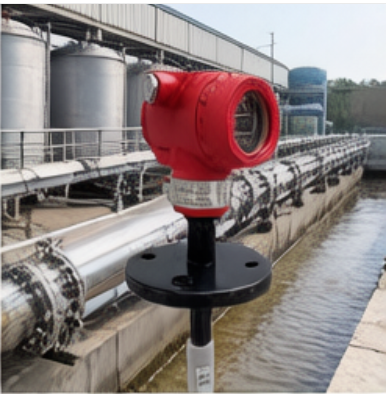
What Is an Inline Density Meter?
An inline density meter (also called an online density meter) is installed directly into a pipeline or tank and provides continuous, real-time measurement.
Key characteristics:
- Fixed installation
- Continuous monitoring
- Real-time data output
- Integration with control systems (DCS / PLC)
Inline density meters are typically used in:
- Petrochemical processes
- Chemical production
- Pipeline systems
- Automated manufacturing
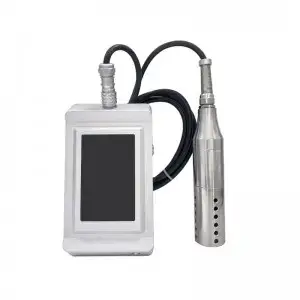
What Is a Portable Density Meter?
A portable density meter is a handheld or mobile device used for spot measurements.
Key characteristics:
- Manual operation
- Used on demand
- No permanent installation
- Often used in field or lab environments
Portable density meters are commonly used for:
- Quality inspection
- Field testing
- Laboratory verification
- Troubleshooting
Key Difference #1: Continuous Monitoring vs Spot Measurement
This is the most fundamental difference.
Inline Density Meter:
- Measures continuously
- Provides real-time data
- Ideal for process control
- Measures at specific points in time
- Requires manual sampling
- Suitable for occasional checks
Portable Density Meter:
If your process requires constant monitoring, an inline density meter is essential.
If you only need periodic verification, a portable density meter may be sufficient.
Key Difference #2: Role in Process Control
Inline Density Meter:
Inline devices play a direct role in automation.
They can:
- Send signals to control systems
- Trigger alarms
- Adjust process parameters in real time
This makes them critical in:
- Blending operations
- Chemical reactions
- Pipeline transport
Portable Density Meter:
Portable devices do not control the process directly.
They are used to:
- Confirm product quality
- Cross-check online measurements
- Perform manual inspections
Think of inline meters as process tools,
and portable meters as verification tools.
Key Difference #3: Accuracy in Real Conditions
Both types can be accurate — but under different conditions.
Inline Density Meter:
- Measures directly in process conditions
- Accounts for real temperature and flow
- Reflects actual operating environment
Portable Density Meter:
- Often used under controlled conditions
- May involve sample handling
- Results can differ from process conditions
This is why engineers sometimes notice discrepancies between lab and inline readings.
Neither is “wrong” — they are simply measuring under different conditions.
Key Difference #4: Installation and Setup
Inline Density Meter:
- Requires installation in pipeline or tank
- Needs proper positioning
- May require integration with control systems
Installation quality directly affects performance.
Portable Density Meter:
- No installation required
- Ready to use in the field
- Easy to transport between locations
Portable devices offer flexibility,
while inline devices offer stability.
Key Difference #5: Maintenance and Operation
Inline Density Meter:
- Designed for long-term operation
- Requires periodic cleaning and calibration
- Minimal manual intervention once installed
Portable Density Meter:
- Requires manual operation each time
- Needs regular handling and storage care
- Dependent on operator consistency
Inline systems reduce labor over time,
while portable devices require ongoing manual effort.
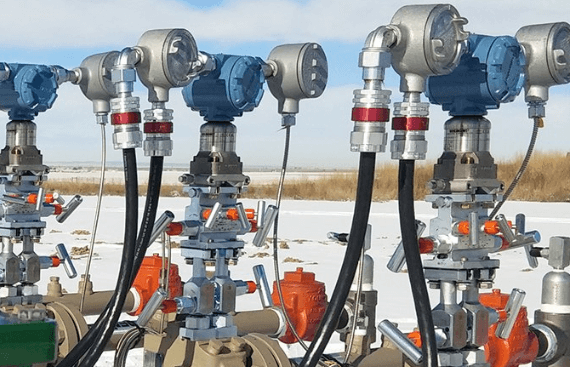
When Should You Choose an Inline Density Meter?
An inline density meter is the right choice when:
- You need continuous monitoring
- Your process is automated
- Density is a critical control parameter
- Real-time decisions are required
Typical applications:
- Oil & gas pipelines
- Chemical processing lines
- Blending systems
- Industrial production lines
At LONNMETER, our inline density meters are designed for stable performance in real industrial environments, with features such as:
- Accuracy up to ±0.002 g/cm³
- Continuous real-time output
- Integration with DCS / PLC systems
- مقاust design for process conditions
When Should You Choose a Portable Density Meter?
A portable density meter is ideal when:
- You need flexible, on-site measurement
- Sampling is acceptable
- Measurements are not continuous
- You require a backup or verification tool
Typical applications:
- Field inspections
- Laboratory testing
- Quality checks
- Troubleshooting
Do You Actually Need Both?
In many industrial operations, the answer is yes.
A common setup:
- Inline density meter → for continuous monitoring
- Portable density meter → for verification and calibration
This combination allows you to:
- Maintain process control
- Validate measurement accuracy
- Increase confidence in your data
At LONNMETER, many customers use both solutions together for a more complete measurement system.
Common Mistake: Choosing Based on Price Alone
Some users choose portable devices because of lower initial cost.
But over time:
- Manual sampling increases labor
- Delayed data affects decisions
- Process inefficiencies add hidden costs
In many cases, an inline density meter provides better long-term value.
Practical Tips Before Making a Decision
Before choosing between inline and portable density meters, consider:
- Do you need real-time data?
- How critical is density to your process?
- Can your process tolerate delays in measurement?
- Will manual sampling affect efficiency?
Answering these questions usually makes the decision much clearer.
How LONNMETER Supports Your Measurement Needs
At LONNMETER, we provide both inline and portable density measurement solutions, depending on the application.
Our focus is simple:
- Match the instrument to the process
- Ensure reliable, stable measurement
- Keep operation and maintenance practical
We work with customers across:
- Oil & gas
- Chemical processing
- Food and beverage
- Industrial manufacturing
Conclusion: It’s Not About Better — It’s About Fit
Inline and portable density meters are not competitors.
They are tools designed for different purposes.
- Inline = continuous control
- Portable = flexible verification
Choosing the right one depends on how you use density data in your process.
In many cases, combining both provides the best results.
Need Help Choosing the Right Solution?
If you’re unsure which option fits your application, it’s worth discussing your process requirements in detail.
At LONNMETER, we help customers select the right measurement approach based on real operating conditions.
Visit: https://www.lonnmeter.com/
Contact us for:
Post time: Apr-22-2026


