

Continuous liquid level measurement preserves inventory accuracy by delivering real-time volume and height data. Real-time readings reduce cumulative reconciliation errors from periodical manual gauging. Accurate liquid level measurement improves custody accounting and reduces financial and operational discrepancies.
Continuous level monitoring supports safe filling and emptying operations. Inline transmitters provide prompt alarms for overfill and sudden drawdown. This quick feedback prevents cascading valve actions and minimizes risk during ship loading or batch transfers.
Inline measurement reduces leak risk by minimizing tank penetrations. Each penetration is a potential leak path and a corrosion site. Using inline liquid level measurement devices reduces the number of process connections and local probe drops required on a tank roof.

Crude Oil Storage Tanks
*
Inline level transmitters lower instrument count and simplify piping compared with multiple local sensors. One inline unit can replace several point sensors and float switches, cutting wiring, junction boxes, and maintenance access points. Example: a single guided radar level measurement technology probe can provide continuous profile data where multiple point devices once served, simplifying retrofits in congested tank roofs.
Continuous measurement improves process control in demanding environments. Operators can apply trend data from continuous liquid level measurement to manage heating, vapor space pressure, and pump sequencing. This reduces manual interventions during heating cycles and crude blending operations.
High-precision level measurement devices and liquid level measuring instruments are key for inventory-sensitive operations. Accurate liquid measurement systems reduce measurement uncertainty during transfers. For custody or reconciliation use cases, continuous level monitoring solutions reduce the need for frequent manual tank gauging.
Guided radar and advanced guided radar sensors are common technologies for continuous level sensing in hydrocarbon tanks. These sensors deliver stable level readings despite surface foam, vapor, or varying dielectric constants. Guided radar level measurement technology provides a non-contact profile that tolerates changing process conditions.
Industry reviews underline continuous level measurement as central to process control and safety. Continuous measurement and integrated sensing strategies receive emphasis in recent reviews of industrial sensing and instrumentation. Overviews of level sensing technology also highlight the role of continuous devices across industrial applications.
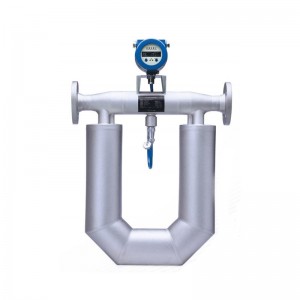
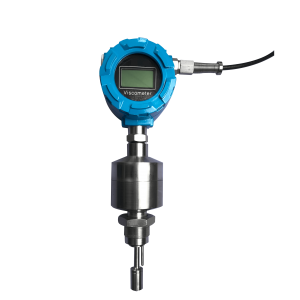
Note on Scope: Lonnmeter manufactures inline density meters and inline viscosity meters; it does not supply tank level transmitters, software, or systems. For crude oil storage tank monitoring, combine high-precision level measurement devices with density/viscosity data for best inventory and custody management.
It therefore remains essentially unaffected by density, conductivity, viscosity, pH, temperature and pressure variations that challenge other instruments.

Key Product Capabilities of Lonnmeter Guided Wave Radar Level Transmitter
Lonnmeter Guided Wave Radar (GWR) Level Transmitter provides industry-leading measurement capability and reliability for crude oil storage tanks. It uses guided radar level measurement technology to deliver continuous liquid level measurement even in vapour, foam, or low-dielectric fluids. The transmitter’s signal guidance along a probe reduces false echoes from tank internals and improves repeatability for crude oil tank level management.
Multivariable Transmitter Reduces Instrument Count and Process Penetrations
The transmitter is a multivariable transmitter that outputs level plus additional process variables from the same probe. Combining level, interface detection signals, and diagnostic variables reduces the number of separate instruments and process penetrations on a tank roof. Example: a single multivariable unit can replace separate level and interface sensors, lowering penetration points and simplifying cable routing in large crude oil storage tanks.
Safety-Certified for Functional Safety and Engineered for Plant Availability
The device is safety-certified for functional safety applications and provides diagnostics designed for plant availability. Built-in predictive diagnostics monitor signal quality and probe condition. These diagnostics flag degrading performance before it causes downtime, enabling planned interventions. Troubleshooting features expose abnormal echoes and signal loss, making root-cause identification straightforward for maintenance teams.
No Moving Parts, Minimal Maintenance, Top-Down Installation to Minimize Leak Risk
The guided wave radar probe has no moving parts, which eliminates mechanical wear and reduces maintenance frequency. Top-down installation minimizes the number of roof penetrations and places the transmitter above the stored product, lowering leak risk. Example: retrofitting a tank with a top-mounted guided wave probe typically avoids expensive manway or side-wall modifications and reduces exposure during installation.
How These Capabilities Translate Into Operational Benefits
Accurate continuous liquid level measurement yields tighter inventory control and fewer interrupted transfers. Multivariable output reduces instrument count and maintenance time, which improves uptime. Predictive diagnostics cut unplanned outages by enabling condition-based maintenance. Reliable interface detection distinguishes crude oil from water layers, aiding pump control, interface dumping, and custody-sensitive operations. Together, these capabilities reduce maintenance interventions, simplify tank monitoring, and support accurate crude oil storage tank monitoring with advanced guided radar sensors and liquid level measuring instruments.
Before cutting into a roof nozzle, confirm scaffold integrity, check grounding continuity, verify gasket type compatibility, and ensure a purge plan is in place.
Focus evaluation on measurement range, resolution and accuracy, response time, dielectric constant sensitivity, blind zone, maximum process temperature and pressure, and probe materials.
Solving Common Measurement Challenges in Crude Oil Tanks With GWR
Vapor and Vapor Space Variability: How Guided Pulses and Probe Guidance Mitigate False Echoes
Vapor composition and condensation in the vapor space change local dielectric properties rapidly. Non-guided pulses scatter in that variable medium, creating false or shifting echoes. Guided wave radar confines the electromagnetic energy along the probe. The guided path reduces interaction with the vapor cloud and delivers a cleaner time-of-flight measurement. Signal gating and matched filtering then ignore near-field noise and short, spurious reflections. Probe attachment points and routing also reduce multiply reflected echoes from tank internals by keeping the main energy on a predictable path. These factors together cut false-echo risks in tanks with fluctuating vapor spaces.
Surface Foam and Turbulence: Why GWR Maintains Accuracy Where Non-Contact Sensors May Wander
Foam and waves scatter or absorb non-contact beams. A surface foam layer can appear as a false liquid surface to radar or ultrasonic heads. Guided wave radar senses along the probe surface, so foam effects are localized and often submerged in the guided field. The measurement point follows the physical probe position, so momentary surface turbulence causes smaller signal amplitude changes than with free-space beams. In practice, GWR keeps the main echo tied to the true liquid interface during heavy agitation, while non-contact sensors can produce wandering or noisy traces. Independent technology reviews list radar methods as favorable for disturbed surfaces and foaming conditions.
Layered Liquids and Interface Detection: Using Residual Wave Timing to Resolve Upper and Lower Product Surfaces
Guided radar detects multiple interfaces by resolving separate echoes along the probe. The primary surface produces a first return; a secondary liquid layer or bottom-phase interface produces a later, distinct return. Residual wave timing measures the time interval between these echoes. Signal amplitude, polarity change, and timing together identify whether the second echo is an interface or a tank reflection. Modern GWR systems apply echo-tracking and deconvolution to separate closely spaced returns. Example: oil over water creates strong contrast, yielding a clear second echo; two similar oils yield smaller amplitude differences that require higher resolution processing to separate. Probe-mounted sensors maintain constant coupling to the media, improving the consistency of interface detection even when layers are thin or partially mixed.
Low Dielectric Crude Blends and Marginal Reflections: Probe Choices and Signal Processing Techniques to Strengthen Detection
Low-dielectric crudes reduce reflected signal strength. When dielectric contrast approaches the sensor sensitivity limit, several engineering choices improve detection:
- Choose probe geometries that increase the guided field and effective aperture, such as coaxial probes or larger-diameter rods. These concentrate the electromagnetic field and raise return amplitude.
- Use probes with dielectric-enhancing profiles (e.g., taped or stranded conductors) where mechanical clearance allows.
- Increase averaging and integrate longer observation windows to raise signal-to-noise ratio for marginal echoes.
- Apply adaptive gain control, time-domain gating, and deconvolution to extract low-amplitude echoes from noise.
- Combine level data with complementary inline measurements — density and viscosity readings help confirm the presence and composition of low-k blends. Inline density meters and inline viscosity meters from manufacturers such as Lonnmeter provide independent property checks that validate weak radar echoes.
Probe selection and signal processing must match the expected dielectric range and tank conditions. For example, a coaxial probe plus echo-averaging often resolves blends with dielectric constants near the lower usable limit, while a thin single rod may fail in the same mix.
Call to Action for RFQ
Ready to optimize your crude oil storage tank level measurement with high-performance guided wave radar solutions? Submit your Request for Quotation (RFQ) today to receive tailored proposals aligned with your operational requirements and budget.
- Provide key project details including process fluid specifications, tank geometry, measurement accuracy needs, allowed tank penetrations, and communication protocol preferences to ensure a precise and efficient quote.
- Our technical team will offer personalized support, from initial product selection to post-installation calibration guidance, to maximize the reliability and cost-effectiveness of your level measurement system.
- Contact our sales department now to kickstart your RFQ process and secure a competitive solution for your crude oil storage monitoring challenges.






FAQs
What is the core advantage of guided wave radar (GWR) over non-contact radar for crude oil tank level measurement?
GWR confines electromagnetic signals along a dedicated probe, which minimizes false echoes caused by vapor clouds, foam, and tank internals. Unlike non-contact radar, it maintains stable accuracy even in low-dielectric crude blends and turbulent surface conditions, making it more suitable for complex crude oil storage scenarios.
Can Lonnmeter’s guided wave radar level transmitter integrate with third-party density and viscosity meters?
Yes. The transmitter supports standard communication protocols (e.g., HART, Modbus TCP) that enable seamless integration with inline density and viscosity meters, including those manufactured by Lonnmeter. This integration allows for accurate volume-to-mass conversions, which is critical for custody transfer and inventory management.
How can we minimize tank penetrations during GWR transmitter installation?
Opt for top-down installation of the GWR probe, which requires only one roof penetration point. Additionally, select a multivariable GWR transmitter that combines level, interface, and diagnostic measurements into a single device, eliminating the need for multiple sensors and additional penetrations. Retrofitting via existing bypass loops also avoids new tank nozzle openings.
What maintenance tasks are required for a GWR level transmitter in crude oil tanks?
GWR transmitters have no moving parts, so maintenance is minimal. Key tasks include annual calibration to verify measurement accuracy, periodic cleaning of the probe to remove crude oil residue or coating, and reviewing diagnostic data (e.g., signal strength trends) to identify potential issues before they cause downtime. Spare parts such as probe gaskets should be kept in stock for replacement.
What diagnostic features should be prioritized when selecting a GWR transmitter for crude oil applications?
Prioritize transmitters with echo profile logging, automatic self-tests, trend alarms, and remote diagnostic access. These features allow maintenance teams to monitor probe condition, detect coating buildup or signal degradation, and troubleshoot issues remotely, reducing unplanned plant downtime and maintenance costs.
Post time: Dec-30-2025


