

Inline density measurement is essential for rubber roller manufacturing, enabling real-time monitoring of rubber compound consistency during mixing and coating to detect deviations like uneven filler dispersion or contamination early. This prevents off-spec production, reduces scrap, ensures uniform vulcanization and strong core-rubber bonding, and maintains batch-to-batch performance consistency critical for meeting industrial quality standards.
Introduction to Rubber Roller Manufacturing
The rubber roller manufacturing process involves a series of meticulously controlled steps to produce cylindrical components, each made from a robust metal core and a precision-engineered rubber layer. These components are engineered to stringent standards for industrial tasks such as material handling, printing, and surface finishing. A rubber roller manufacturing plant setup typically requires specialized equipment for core preparation, rubber compounding, forming, bonding, vulcanization, and final finishing, allowing manufacturers to tailor rollers for diverse operational demands.

Rubber Roller Manufacturing
*
Rubber rollers play a crucial role in many industrial applications by providing a resilient interface that balances delicate handling with mechanical strength. They prevent scratches and damage to materials like textiles, paper, films, and sheets while maintaining controlled grip, even as they absorb impact and dampen machinery vibrations. Their functional versatility makes them integral to automation lines in printing, packaging, paper processing, and textile manufacturing.
The principal benefits of using rubber rollers in industry stem from their reliability, durability, and tailored performance. Properly compounded and cured rubber coatings impart exceptional wear and abrasion resistance due to the process of vulcanization of rubber, which forms strong cross-link bonds within the elastomer matrix. These bonds enable the roller surface to retain elasticity, resist chemicals, and maintain its mechanical properties over extended service cycles.
Rubber vulcanization methods such as steam-heated mold casting, autoclave curing, and hot-air tunneling allow manufacturers to control rubber vulcanization temperature and time precisely, ensuring optimal curing for application-specific performance. The benefits of rubber vulcanization, supported by advances in material science—such as incorporating nano-fillers and modifiers—translate into improved service life, lower maintenance costs, and superior operational consistency in modern roller production.
By leveraging advanced rubber coating techniques and exacting production steps, manufacturers achieve rollers that combine the toughness of engineered metal with the functional adaptability of elastomeric materials. The result is a product that meets the high standards required in today’s manufacturing environments, bridging the gap between heavy-duty capability and material-sensitive precision.
Raw Materials and Rubber Compounding
Core Material Selection and Preparation
Selecting the optimal roller core material is foundational in the rubber roller manufacturing process. The three main choices—steel, aluminum, and composite materials—are driven by performance needs, manufacturing considerations, and operating environments.
Steel roller cores provide high durability, impact resistance, and dimensional stability under heavy loads. They are used where wear and fatigue resistance are prioritized, such as in high-load industrial applications. Aluminum cores are lighter, more malleable, and offer better corrosion resistance, which benefits weight-sensitive or low-volume rolls. However, they have lower tensile and fatigue strength compared to steel and advanced composites, limiting their use in harsher environments.
Composite cores, commonly constructed from carbon fiber-reinforced polymers, offer strength and stiffness on par with high-strength steel but at a significant reduction in weight. These materials are suitable for applications demanding both structural performance and weight minimization. Studies indicate that modern composites can outperform aluminum in both mechanical strength and durability, with new metal matrix composites (MMCs) further enhancing wear and fatigue resistance where balanced performance characteristics are needed.
Machining and surface preparation of any chosen core material are critical for achieving the necessary geometric precision and optimizing adhesion during the rubber coating process. Surface roughness and cleanliness directly affect the bonding between the core and the rubber layer. This step commonly involves precision turning or grinding, followed by surface pre-treatment procedures. Ultrasonic-assisted surface preparation is proven to increase micro-scale roughness, remove contaminants, and promote durable adhesion, especially in metal-to-rubber bonds.
Chemical treatments, such as hydrogen peroxide application or acid etching, further modify the core’s surface at the microstructural level. These improve adhesive properties by altering chemical composition and increasing polar groups on the surface, as evidenced by mechanical and microscopic analysis. Pre-bonding inspection, including nondestructive testing methods such as magnetic flux leakage, ensures core integrity and identifies any defects or irregularities, safeguarding against bond failures later in use.
Rubber Compound Formulation
The rubber compound formulation tailors the roller’s physical and mechanical properties to its end-use requirements. Natural rubber offers outstanding tensile strength, elasticity, and resilience, making it the preferred choice in processes where these attributes are essential and exposure to harsh chemicals or elevated temperatures is limited. For roller applications exposed to oil, solvents, or high temperatures, synthetic rubbers—such as nitrile, styrene-butadiene, and specialty polyisoprenes—are selected for their enhanced resistance to chemicals, heat, and aging.
Compounding involves integrating various additives to achieve required hardness, elasticity, and performance durability. Carbon black is widely used to increase tensile strength and abrasion resistance. The addition of sustainable fillers, such as wood sawdust, can reduce costs while increasing thermal stability and compound hardness when balanced correctly. Advanced nano-additives, specifically carbon nanotubes, drastically enhance surface hardness and heat resistance, optimizing roller performance in demanding applications.
Quality in the process of rubber compounding depends heavily on homogeneous mixing. In industrial settings, internal mixers are favored for their ability to deliver high shear, facilitating fine dispersion of fillers and reinforcing agents. Wet mixing methods have demonstrated advantages over conventional dry mixing when dispersing high-performance nanofillers and silica, leading to superior uniformity and enhanced mechanical properties. Consistency in mixing conditions—such as temperature, rotor speed, and time—directly translates to uniform downstream roller performance and reliability.
Ensuring a defect-free compound before the vulcanization of rubber process is vital for durability, dimensional stability, and operational efficiency of the final roller. Proper preparation and control at every step—from raw material and core selection through compound formulation and mixing—create rollers capable of withstanding complex industrial demands.

Rubber Coating Process Techniques
Mold Casting and Curing Molds
Mold casting is vital in the rubber roller manufacturing process for producing complex shapes and precise tolerances. In this method, raw rubber is placed in a custom-designed mold shaped to the target roller profile. The mold allows the formation of intricate surface features, grooves, or multi-diameter zones that other methods cannot efficiently achieve. For example, a printing roller with integrated tread patterns is typically manufactured using mold casting.
Curing molds—also known as vulcanization molds—play a dual role. They define the geometry of the final product and enable controlled vulcanization of rubber inside the closed cavity. There are several types of curing molds. Compression molds are prevalent for large-diameter rollers; transfer molds suit medium complexity, and injection molds handle high-precision, intricate geometries. Each type ensures intimate contact between the rubber and mold surfaces, promoting uniform curing and minimizing voids.
Success in the mold casting stage relies on precise management of process parameters. Curing temperature, usually between 140°C and 180°C, must be tightly regulated to maintain uniform heat transfer across the entire mold. Molding pressure impacts the rubber’s surface finish and the elimination of trapped air. Accurate curing time—ranging from several minutes to hours, depending on roller size and rubber formulation—is calculated from the degree of vulcanization required for end-use performance. Excessive temperature or time may cause reversion, weakening the mechanical strength.
Thermo-mechanical simulations are increasingly deployed to model in-mold temperature gradients, manage stress evolution in the roller, and determine optimal process windows. Such simulations predict how thermal conductivity and material thickness interact to influence cure uniformity, allowing for data-driven adjustment of molding cycles. Empirical optimization of these parameters has been shown to significantly improve tensile strength and durability while reducing energy use in production.
Extrusion Molding
Extrusion molding is a continuous method widely used for coating roller cores with uniform rubber layers. In this process, compounded rubber is fed through an extruder, heated, and forced through a die shaped to the roller’s contour. The rubber emerges as a continuous profile, which is then wrapped or applied around the metal roller core. This method excels where consistent coating thickness and high production rates are necessary.
Process control is central to this technique. Thickness is governed by die design, material feed rate, and extrusion temperature, often monitored in real-time at the manufacturing line. Uniformity is achieved by precisely calibrating extrusion speed and adjusting the alignment of roller and die. Variance in temperature along the extruder can lead to uneven curing, resulting in defects such as air pockets, poor adhesion, or non-uniform diameter.
Common issues in rubber roller extrusion include material shrinkage after curing, surface roughness, and core-rubber delamination. Solutions involve iterative tuning of extrusion temperature (often within 120°C–160°C, depending on the rubber type), monitoring the cure state using offline mechanical testing or simulation, and optimized pre-treatment of the roller core for improved adhesion. Simulation-based flow analysis aids in foreseeing possible defects and allows for anticipatory equipment adjustments, reducing scrap rates and enhancing yield.
Calendering Molding
Calendering is used for flat or sheet-based coatings and for applying wide, uniform layers to roller surfaces. In the calendering line, the rubber compound is pressed between a series of heated, synchronized rollers. The process produces thin sheets or strips, which can be precisely controlled for thickness (typically up to ±0.01 mm accuracy) and tailored for required surface properties.
Calendering delivers excellent layer quality due to its fine gap adjustment and advanced surface finishing options. The surface of the rubber coating can be polished, textured, or embossed, according to application needs. For example, a nip calender with polished rolls will yield a high-gloss, defect-free finish ideal for printing rollers.
Compared with extrusion, calendering is more suitable for wide, flat surfaces and applications requiring strict thickness uniformity, such as in textile or paper industry rollers. It is not ideal for complex profiles or deep grooves, where mold casting is preferred. However, for bulk production of standard rollers or lamination of wear-resistant coatings, calendering offers speed, low cost, and repeatable consistency.
The choice between these rubber coating techniques—mold casting, extrusion, and calendering—depends on final geometry, performance requirements, and production workflow. Each method serves specific roles within the rubber roller production steps, supported by tailored manufacturing equipment and careful parameter optimization to ensure maximum product quality and process efficiency.
Vulcanization of Rubber: Processes and Importance
What is Rubber Vulcanization?
Vulcanization is the chemical process that transforms raw rubber into a highly elastic, durable, and heat-resistant material suited for industrial use. During vulcanization, cross-links form between individual polymer chains in the rubber matrix. This cross-linking, most commonly achieved by introducing sulfur, connects the long rubber molecules via “sulfur bridges,” resulting in a three-dimensional network structure. As a result, the elasticity, tensile strength, and resistance to environmental stress of the rubber are dramatically increased. The chemical changes occurring in vulcanization—specifically the creation of covalent bonds between chains—reduce stickiness, improve flexibility, and elevate thermal and chemical stability, crucial for demanding applications like industrial rubber rollers.
Vulcanization of Rubber Process Methods
The process of vulcanization of rubber for industrial applications generally uses hot vulcanization. This technique requires precise control of temperature, pressure, and curing time to produce robust and uniform rollers. In a typical rubber roller manufacturing plant setup, vulcanization presses maintain temperatures from 0 to 200°C and pressures up to 200 psi. Time and temperature profiles are programmed for each rubber compound, directly impacting cross-link density, product elasticity, and structural durability.
Traditional sulfur-based curing is the predominant method, creating multiple sulfur bridges (polysulfide cross-links) between natural or synthetic rubber chains. Modern alternatives, such as silicone vulcanization systems, utilize platinum catalysts or organic peroxides. Silicone systems achieve cross-linking in silicone rubbers, producing siloxane (Si–O–Si) linkages and enabling use in high-temperature and chemically aggressive environments. Peroxide vulcanization generates direct carbon–carbon bonds, providing enhanced thermal and oxidative stability for rollers subjected to repeated heating and cooling cycles.
Precision in controlling the vulcanization cycle is critical for mechanical strength and longevity. Undercured rollers lack sufficient cross-links, resulting in reduced resilience and increased wear. Over-curing or excessive filler loading can embrittle the material and reduce elasticity.
Process parameters—including temperature and dwell time within the curing mold for rubber—directly impact roller performance. Advanced rubber roller manufacturing equipment now features automated temperature and pressure controls to ensure consistency in the rubber roller manufacturing process and optimize critical qualities like flexibility, toughness, and resistance to chemical and thermal degradation.
Safety and Environmental Considerations
Safety in vulcanization operations centers on strict management of temperature and emissions. High temperatures and reactive chemicals pose significant risks to workers if not contained and controlled. Modern industrial practices utilize automated systems for temperature regulation and emission capture. Effective ventilation is paired with electrostatic precipitators to control release of volatile organic compounds and particulates, reducing workplace and environmental exposure to hazards produced during vulcanization.
Newer, more environmentally friendly vulcanization methods offer tangible benefits. Systems based on organic peroxides and alternative curatives can lower emissions of hazardous byproducts, especially N-nitrosamines, compared to traditional sulfur vulcanization. Furthermore, research into recyclable and partially biodegradable rubbers leverages polymers that allow greater recovery rates and lower landfill impact, responding to sustainability goals and regulatory requirements. Such advancements, when integrated with proper process control, bolster both safety and the environmental footprint of industrial vulcanization.

Finishing, Quality Control, and Inspection
Surface finishing in the rubber roller manufacturing process is essential for achieving precise functional and performance requirements. Grinding is the primary method used to obtain cylindrical accuracy and roundness. Centerless grinding machines, equipped with advanced abrasives like cubic boron nitride (CBN), apply controlled pressure to shape rollers accurately. Fine adjustment of wheel speed, feed rate, and depth of cut ensures the roller’s surface roughness typically falls within the Ra 0.2–1.2 µm range. For rollers requiring ultra-smooth finishes, superfinishing with fine abrasive stones or films further reduces surface roughness below Ra 0.05 µm, supporting high-speed applications and extending roller lifespan.
Polishing follows grinding to remove micro-defects and produce uniform, mirror-like finishes on the roller surface. Modern polishing uses CNC-controlled equipment, enabling repeatability and accuracy for critical industrial rollers. Gradual use of finer abrasive pads is key for achieving desired smoothness. Enhanced polishing not only boosts product durability and reduces friction but also directly affects long-term product quality and operational reliability. Texturing—a process using controlled abrasive or laser-based methods—introduces micro-patterns onto the surface. This customizes properties, such as grip or ink transfer, vital in applications like printing, plastics, and packaging.
Inspection checkpoints are distributed throughout production to verify compliance with dimensional, surface, and mechanical criteria. Initial inspection confirms physical dimensions using tools like micrometers or vernier calipers for diameter, roundness, and length. For high-throughput plants or complex geometries, machine vision systems automate the assessment of surface defects and dimensional accuracy, offering defect detection rates of about 98% and defect classification accuracy above 95%. Surface integrity is scrutinized through profilometers to measure surface roughness (Ra, Rz). Non-destructive testing methods, such as ultrasonic and dye penetrant techniques, are also deployed for composite rollers to reveal hidden flaws.
Surface hardness is another critical checkpoint, typically measured with a Shore A or D durometer as specified by international standards. Indentation hardness testing ensures each roller’s elastomeric properties meet the application’s grip, wear, or resilience needs, and result interpretation follows strict protocols for dwell time, force, and sample preparation.
Essential equipment used in these processes includes mixers—such as two-roll mills and internal Banbury mixers—tasked with blending raw rubber and additives to achieve a homogenous compound. Extruders shape the mixed rubber into uniform profiles, while calendering machines laminate precision layers onto roller cores. Curing presses—using molds designed for specific roller geometries—apply heat and pressure to complete the vulcanization of rubber, finalizing crosslinking (see typical rubber vulcanization temperature and time recommendations in standard guides). Throughout these steps, programmable controls and real-time monitoring now ensure process stability, tight tolerance control, and high reproducibility, particularly in modern plant setups.
Quality control is crucial at each production phase. It verifies that rollers meet both manufacturer and broader industry standards for physical dimensions, surface properties, and functional performance. This holistic approach uses regular checkpoints, calibrated equipment, and adherence to standardized methods for hardness, roughness, and flaw detection. Failure to maintain rigorous quality control can lead to premature failures, compromised performance, or non-compliance with customer specifications. For roller manufacturing, especially with increasing demands in high-speed printing and precision processing, robust quality control is not optional—it is a core requirement at every step of the rubber roller production proces.
Rubber Roller Manufacturing Plant: Set-Up and Optimization
An efficient rubber roller manufacturing plant setup centers on a seamless flow of materials from raw input to finished product. Proper layout begins with an analysis of processes—compounding, coating, molding, and vulcanization—to minimize transport distances, avoid bottlenecks, and maximize throughput. Factories using production simulations or systematic layout planning see tangible gains, including reduced internal logistics movements and more consistent product flow. For example, a plant reconfiguring its layout to align major processing zones in a linear sequence—from raw material storage to compounding, preforming, roller building, curing, finishing, and inspection—cut unnecessary handling steps and improved space utilization.
Streamlined plant flow depends on zoning. Compounding lines are stationed near storage to feed materials directly into mixing equipment, followed by coating or building zones, where rubber is applied to metal or composite cores. Vulcanization, whether via continuous or batch methods, is strategically placed adjacent to molding lines. This reduces transfer time and risk of pre-cure or contamination before vulcanization.
The selection of manufacturing equipment is core to process reliability and product consistency. High-shear internal mixers, open millers, and batch-off systems form the backbone of compounding. For the rubber coating process, extruders and calenders ensure controllable, uniform layer application. Mold casting in rubber manufacturing benefits from accurate presses—hydraulic or mechanical—paired with customized curing molds, enabling precise control over roller dimensions. Vulcanization is performed in autoclaves or presses, carefully maintained at target rubber vulcanization temperatures and times, for example, ranging between 140°C and 180°C and from a few minutes to several hours, contingent on the rubber type and thickness.
In the vulcanization of rubber process, equipment must be specified for the intended chemistry. The process of vulcanization of rubber involves reacting compounding ingredients, typically sulfur, accelerators, and activators, under heat and pressure to create cross-linked structures that impart elasticity and durability. The benefits of rubber vulcanization—enhanced mechanical strength and resistance to chemicals and abrasion—are only realized if the entire roller (including its core–rubber interface) cures uniformly. Molding equipment must provide tight, repeatable temperature control and even pressure distribution to avoid defects or under-cured sections.
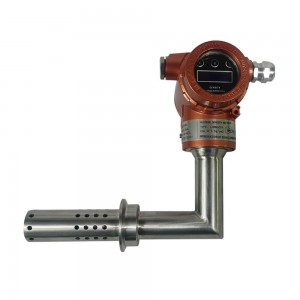
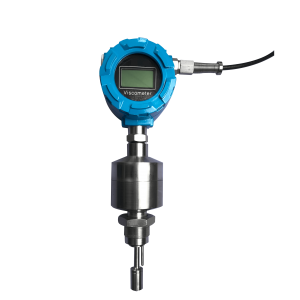
Output optimization hinges on process integration across all steps. Inline density meters and inline viscosity meters from Lonnmeter are installed after mixing and immediately before and after coating to monitor material consistency in real time. These instruments ensure that the rubber compound and applied coating match the targeted parameters for density and flow, eliminating off-spec production early in the rubber roller manufacturing process. By pairing these tools with integrated roller handling systems and real-time process control, plants can synchronize compounding rates with downstream molding and vulcanization, minimizing idle times and work-in-process inventory.
A representative example: a production line integrates high-capacity kneaders, automated coating heads, precision hydraulic presses with modular curing molds, and Lonnmeter inline density measurement devices at trigger points. This configuration enables traceable production steps, early detection of deviations, and rapid correction—key for high-volume output and uniform quality across batches.
A comprehensive plant setup focuses on physical layout, equipment specification, and the seamless integration of process monitoring—particularly for critical steps like vulcanization and coating. The result is a highly responsive, waste-minimized manufacturing operation supporting the full spectrum of rubber roller production steps, from raw compounding to final inspection.






FAQ
What is the rubber roller manufacturing process?
The rubber roller manufacturing process begins with the preparation of the roller core, typically made from steel or aluminum, which is cleaned and treated to promote strong rubber adhesion. Next, the rubber compounding phase involves blending natural or synthetic elastomers with fillers like carbon black, reinforcing agents, vulcanization chemicals such as sulfur, and processing aids. High-shear mixers and two-roll mills are standard equipment at this stage, ensuring uniform dispersion and required rheological properties. The compounded rubber is then formed into sheets of precise thickness through calendering or prepared as a molding charge.
Applying the rubber to the core uses molding or coating techniques. Mold casting can involve manual lay-up, compression, or injection molding methods. The core, fitted with rubber, is inserted into a tailored mold. The assembly is then exposed to vulcanization—controlled heating at appropriate temperature and pressure—with cure time and temperature selected based on the rubber chemistry and roller dimensions. This step drives cross-linking for performance traits like elasticity, durability, and chemical resistance. After vulcanization, rollers are finished through grinding, polishing, and sometimes surface texturing. The final stage is rigorous quality control, which may involve non-destructive testing of thickness and surface homogeneity.
How does a rubber roller manufacturing plant work?
A rubber roller manufacturing plant is organized around sequential production steps and workflow optimization for efficiency and safety. Raw material handling is designed for easy access to elastomers, fillers, and additives. Dedicated mixing areas house two-roll mills and high-precision calenders, critical for consistent compounding and sheet formation. Molding sections include silicone or metal molds, compression or injection presses, and thermal curing ovens. Precise temperature control is central during vulcanization, with curing ovens designed for even heat distribution. Finishing stations equip grinders and polishers for achieving dimensional and surface quality requirements. Inline quality checkpoints leverage sensors for continuous inspection. Equipment for dust extraction and fume management maintains safety and product cleanliness throughout production.
What is mold casting in the context of rubber rollers?
Mold casting involves introducing uncured or semi-cured rubber into a cavity formed by a rigid mold containing the prepared roller core. Compression and injection mold casting are the dominant methods. In compression molding, a pre-measured charge of rubber is placed into the mold, then closed, applying heat and pressure to shape the compound precisely to the core. Injection molding allows the accurate, high-speed filling of molds for complex or high-volume rollers. The process ensures the final coated geometry is controlled, and the interface between rubber and core achieves maximum bond integrity. Mold design is crucial: features like venting and consistent heat transfer are engineered to minimize defects and ensure uniform vulcanization.
What role do curing molds play in rubber roller production?
Curing molds serve to maintain the roller’s specified geometry during the vulcanization process. These molds clamp around the rubber-coated core, withstanding internal pressures and delivering uniform heat to drive cross-linking within the rubber. Without curing molds, rubber expansion or shape loss could occur during heating, leading to defects in finished rollers. Modern curing molds are optimized for rapid thermal equilibrium, proper venting of reaction gases, and ease of cleaning, which helps prevent contamination and ensures coil repetition quality.
What is vulcanization of rubber and why is it important?
Vulcanization of rubber is a chemical process where curing agents, most commonly sulfur, react with unsaturated polymer chains at elevated temperatures. This results in covalent cross-links between chains, converting the rubber from a soft, ductile state to a resilient, elastic, and heat-resistant material. Vulcanization is fundamental because it determines the finalized mechanical and thermal properties of the roller, such as tensile strength and resistance to solvents, abrasion, and deformation. In industrial environments, these traits are crucial for ensuring rollers can withstand continuous operation and exposure to harsh chemicals or mechanical stress.
How does the rubber coating process affect product quality?
The rubber coating process—whether by mold casting, extrusion, or calendering—directly impacts critical quality characteristics: surface smoothness, thickness precision, and bond strength to the core. Inadequate control during coating can lead to thickness variations, voids, or weak adhesion, which degrade roller performance. Facilities employ high-precision calenders and optimized molds to ensure layer uniformity. Inline thickness sensors and analytics spot deviations early, reducing the risk of subpar products reaching subsequent stages. For example, even slight increases in coating thickness variation can accelerate wear and negatively impact machine performance.
What is the process of vulcanization of rubber rollers?
Vulcanization of rubber rollers involves heating the rubber-coated core within a curing mold or oven under strictly regulated conditions. The most common system uses sulfur as a cross-link agent, reacting under heat (typically 140–180°C) and pressure (up to several MPa). Duration varies based on rubber type and roller dimension, often ranging from 30 minutes to several hours to ensure complete cross-linking. The curing mold prevents deformation, while thermal cycling and controlled ramp-up rates assure uniformity of the cured structure throughout the roller cross-section. Upon completion, the roller is cooled, demolded, and sent for post-curing operations such as grinding and polishing. This step locks in resilience, elasticity, and chemical resistance necessary for demanding industrial duty.
Post time: Dec-19-2025


