

Continuous density measurement forms the bedrock of process monitoring equipment for oil refining, especially in the context of hydroisomerization dewaxing and advanced degumming process in oil refining. In these environments, the ability to collect precise, real-time density data directly influences refining efficiency, product consistency, and viscosity control in lubricating oil production.
Modern white oil refining techniques, notably hydroisomerization dewaxing, rely on catalytic conversion processes that demand rigorous process optimization in oil refining. This involves close management of hydrocarbon compositions to achieve reduced pour points while preserving or enhancing the viscosity index, which is critical for qualified lubricating oil production. Continuous density measurement technology enables rapid detection of any compositional shift, as small deviations in density often presage changes in viscosity or signal incomplete impurity removal—both vital metrics for the production of high-grade lubricating oils.
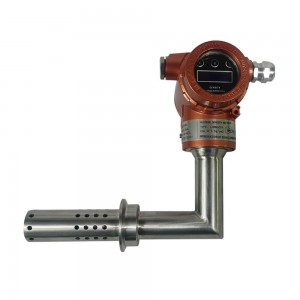
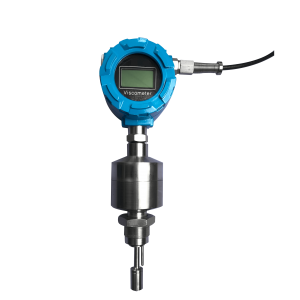
For example, inline density meters—like those manufactured by Lonnmeter—deploy advanced sensors such as acoustic, tuning fork, and cantilever-based technologies. These real-time process monitoring tools extract highly sensitive density readings directly from process streams. When integrated into hydroisomerization dewaxing and degumming stages, they allow operators to immediately identify and correct deviations, supporting direct control over both product purity and viscosity. This minimizes the risk of off-spec oils reaching downstream processes or final product storage.
Process automation enabled by continuous density monitoring extends its influence to process optimization in oil refining by supporting precise control of dewaxing catalysts for hydroisomerization. Catalyst selectivity and effectiveness hinge on the prompt identification of phase changes and compositional shifts, which density data reflects. This level of information allows for tighter titration of catalyst addition, more efficient impurity removal in oil refining, and enhanced control during viscosity index improvement—each a cornerstone of lubricating oil quality control.
The benefits are tangible: inline density sensors enable consistent attainment of product specifications, maximizing batch-to-batch reproducibility and reducing the likelihood of costly product remediation. Fast feedback loops—measured in seconds rather than hours—supplement or in some cases supplant slower, labor-intensive lab testing.

White Oil Applications
*
However, several challenges arise in implementing continuous density measurement technology amid the complexities of modern hydrocarbon dewaxing process optimization. One major hurdle is feedstock variation. Refineries often shift between widely different crude sources, each presenting unique compositions and impurity burdens. Inline sensors must remain robust, precisely calibrated, and capable of delivering repeatable results regardless of matrix variability.
Temperature and pressure fluctuations present another critical challenge. Variations can induce sensor drift or measurement error—directly impacting product consistency in lubricating oils. Modern solutions include hardware-embedded temperature and pressure compensation algorithms, such as bilinear interpolation-based corrections, which drastically reduce calibration error, and machine learning frameworks that adaptively compensate for process hysteresis. This high level of compensation ensures reliable real-time data even as process conditions evolve.
Degumming and dewaxing, as integral steps in advanced degumming methods and hydroisomerization dewaxing process, are characterized by the coexistence of closely related chemical fractions. The practical difficulty lies in distinguishing these fractions to assess the effectiveness of impurity removal in oil refining. Continuous density measurement, when implemented with high-resolution instruments, aids in differentiating subtle changes in density associated with unconverted waxes versus desired isomerized products. Immediate detection of these minuscule differences supports proactive process corrections, sustaining refining efficiency improvement and ensuring qualified lubricating oil production.
In summary, by integrating continuous density measurement technology into all key white oil refining techniques, refineries can achieve improved product consistency, optimized viscosity control, and reliable impurity removal verification. Despite challenges such as complex feedstock variation and environmental instability, the newest generation of inline sensors—exemplified by Lonnmeter equipment—delivers the precision and reliability necessary for next-level process monitoring and oil refining process automation.
Key Steps in Hydroisomerization Dewaxing and Their Impact
The hydroisomerization dewaxing process is an advanced white oil refining technique that transforms normal paraffins—long, straight-chain hydrocarbons—into their branched isomers. This conversion is essential for reducing both pour point and cloud point, enabling the production of base oils capable of performing at low temperatures. In practical terms, normal paraffins solidify at higher temperatures, creating wax crystals that impair oil flow. By using hydroisomerization, these molecules are restructured into isoparaffins, which remain fluid at temperatures where normal paraffins would cause wax formation. This molecular tailoring is fundamental to manufacturing Group II and III base oils, which are required for premium lubricating oil production methods and serve demanding automotive and industrial applications.
Hydroisomerization dewaxing primarily utilizes bifunctional catalysts. These catalysts incorporate metal sites, such as nickel or platinum, to facilitate hydrogenation and dehydrogenation, and acid sites—often on zeolite supports—for isomerization and selective hydrocracking. Catalyst design is central to process optimization in oil refining: for instance, zeolite-based supports like ZSM-22 or MTT can be chosen for their shape-selective channels, which guide the transformation of n-paraffins with remarkable precision. The topology of these supports influences selectivity by controlling which molecular structures are favored—narrow pores encourage branched isomer formation, while wider pores can increase hydrocracking and create lighter product fractions. The balance of metal-to-acid function, combined with tailored pore architecture, is critical to maintaining high refining efficiency while maximizing the yield of low-pour-point, qualified lubricating oils.
A defining characteristic of hydroisomerization dewaxing is its direct effect on product consistency in lubricating oils. Viscosity index—a key metric of oil performance—improves as molecular branching increases because branched isomers resist thickening at low temperatures and thinning at high ones. As a result, the finished oils demonstrate predictable viscosity control across operational ranges. This reliability is vital for engine protection and machinery life, justifying the shift from older solvent-based dewaxing to hydroisomerization in most modern refineries.
Continuous density measurement technology plays a crucial role in sustaining process stability and property uniformity through real-time process monitoring. Devices such as capacitive or radiometric density meters, including those manufactured by Lonnmeter, deliver temperature-compensated measurements directly from process lines. These instruments detect minute shifts in product density—a key indicator of the molecular transformations occurring inside the reactor and, by extension, the stability of the pour and cloud points as well as viscosity index. For instance, operators can adjust temperature, hydrogen pressure, or feedstock flow in response to these density readings, immediately correcting for variability in crude quality, catalyst activity degradation, or inadvertent introduction of oil impurities. This continuous feedback loop ensures process parameters remain within optimal windows, thus safeguarding both product specifications and operational efficiency.
In practice, the impact of process parameters—such as reactor temperature, catalyst formulation, and hydrogen-to-oil ratio—can be visualized using process control charts correlating density readings to pour point and viscosity outcomes (see Figure 1). A stable process will show flat-density trends within designated control limits, while spikes or drifts correspond to excursions in product quality, often traceable to changes in feedstock or shifts in catalyst performance. The real-time data provided by inline density measurement allows for rapid intervention, maintaining output within qualified lubricating oil production standards and minimizing off-spec volumes—an imperative for cost control and regulatory compliance.
By integrating selective catalytic chemistry with advanced process monitoring equipment for oil refining, current white oil hydroisomerization systems achieve high levels of consistency, efficiency, and product quality. These advances underpin the production of base oils and lubricants with tightly controlled cold-flow properties, minimal impurities, and optimized viscosity indices—attributes central to qualified lubricating oil production and end-use reliability.

Integrating Degumming and Dewaxing for Enhanced Refining Performance
Degumming and Impurity Removal
Degumming is fundamental to white oil refining techniques. It targets the removal of phospholipids and other hydrophilic impurities that, if left unchecked, compromise oil stability and downstream process effectiveness. Wet degumming employs water or acids to hydrate and separate phospholipids, whereas dry or enzymatic degumming leverages designed enzyme cocktails to selectively degrade phospholipids, achieving removal efficiencies near 99% with extended reaction times. These advanced degumming methods not only reduce overall phosphorus content to meet regulatory specifications but also enhance oil yield by conserving beneficial natural components and minimizing neutral oil loss.
An effective degumming process in oil refining demands precise control, as variations in crude oil composition or reaction parameters can alter impurity content and affect subsequent refining steps. Continuous density measurement technology, such as inline density meters from Lonnmeter, provides real-time insights into process changes. By capturing immediate feedback on mixture density, operators can quickly assess phase separation and impurity loading. This data-driven approach allows adjustment of water, acid, or enzyme addition rates, maintaining optimal conditions for impurity removal. The result is a stable refining baseline, reduced process variability, and consistent delivery of oil within strict impurity limits .
Modern Dewaxing Techniques and Their Optimization
For both edible and lubricating oil production methods, dewaxing is crucial in reducing pour points and ensuring desirable oil characteristics at low temperatures. The hydroisomerization dewaxing process, based on catalytic transformation of straight-chain paraffins into branched isomers, supersedes older solvent-based techniques in efficiency and selectivity. Dewaxing catalysts for hydroisomerization—typically metal-loaded, shape-selective zeolites—enable significant wax reduction while preserving valuable base oil fractions and enhancing the viscosity index, a key marker of oil quality.
Optimization of these processes hinges on real-time monitoring tools. Inline density and viscosity meters, such as those from Lonnmeter, deliver immediate process feedback during dewaxing. Continuous process monitoring equipment for oil refining allows tight control over solvent usage, cooling gradients, and filtration stages. This immediate feedback permits dynamic adjustment, minimizing wax content without excessive cracking or oil loss. For example, as wax crystallization progresses, a marked increase in slurry density triggers adjustments in solvent flow or filtration rates, ensuring both efficient wax removal and protection of desired product specifications. In lubricating oil production, stable process control supports consistent viscosity, vital for product consistency and qualified lubricating oil production .
Integrated approaches—combining advanced degumming with modern catalytic dewaxing—are now pivotal for refining efficiency improvement and reliable lubricating oil quality control. The synergy of precise impurity removal and optimized dewaxing not only improves refining throughput but also sustains low product loss and repeatable product quality. Coupled with real-time process monitoring tools, these white oil refining techniques ensure the demands of both the edible and industrial lubricant markets are reliably met.
State-of-the-Art Process Monitoring Equipment in Lubricating Oil Production
Modern lubricating oil production calls for uncompromising control at every stage, especially as product specifications tighten and efficiency targets rise. Essential process monitoring tools now include inline density meters, inline viscometers, and high-accuracy temperature sensors—often integrated directly into process streams for seamless, real-time data acquisition. These instruments form the backbone for robust process automation, enabling precise adjustment and verification of product quality as soon as deviations occur.
Inline density meters, such as those produced by Lonnmeter, are typically installed at critical process junctures. In crude distillation, real-time density data optimize separation efficiency, allowing operators to maximize yield and minimize over- or under-processing. During solvent extraction and blending, density measurements maintain consistent product grades and support the rapid detection of off-spec material. Inline viscometers add another layer of control, directly measuring viscosity—a key property that defines the end-use behavior and durability of lubricants. Temperature sensors, when networked with these devices, allow for compensation of temperature-induced physical property shifts, ensuring meaningful and reliable readings under all operating conditions.
The integration of these core tools yields a closed feedback system. For example, as an oil stream is processed through hydroisomerization dewaxing, inline density and viscosity readings reflect catalyst activity and reveal the progress of the desired structural transformations. A sudden drop in density or a shift in viscosity directly signals a phase transition or a change in hydrocarbon composition, likely tied to changes in catalyst performance or to impurity breakthrough. Operators can respond with immediate process corrections—adjusting feed rates, temperatures, or even regenerating or replacing dewaxing catalysts—based solely on these sensor signals.
Continuous density measurement technology has proven especially impactful for improving processing efficiency and maintaining product consistency. Real-time monitoring allows rapid feedback during degumming, impurity removal, and blending. Subtle density changes can expose the presence of residual gums or water, prompting inline separation or process adjustments before impurities affect larger batch volumes. By eliminating reliance on periodic, laboratory-based sampling, these sensor systems sharply reduce process downtime, minimize operational disruptions, and mitigate human error risks seen with manual methods.
A vital aspect of these systems is their ability to withstand the rigors of refinery conditions. Inline density meters often employ robust sensor principles—such as vibrating tube or gamma absorption techniques—that are tolerant to high pressure, variable temperature, and corrosive chemicals encountered throughout oil refining. They operate maintenance-free for extended durations, a crucial advantage in round-the-clock production environments. Data from these instruments integrate directly with plant control systems, supporting automated process control and centralized monitoring. This capability reduces the need for manual intervention and supports remote oversight, crucial for large-scale operations with distributed assets.
Taken together, the deployment of inline density meters, viscometers, and temperature sensors forms the foundation for reliable, qualified lubricating oil production. Their combined, real-time data outputs drive continuous process optimization, automatic product grade targeting, and immediate detection of impurities or process upsets. Ultimately, these technologies support refined product consistency, maximize refining efficiency, and enhance quality control across all stages of lubricating oil manufacturing.
Process Optimization Strategies: From Real-Time Monitoring to Qualified Products
Closed-loop control, enabled by continuous measurement, is central to process optimization in white oil refining and hydroisomerization dewaxing. Inline density meters from Lonnmeter are installed directly into pipelines or reactors, providing real-time data streams on fluid density. This immediate feedback is crucial for dynamic adjustment of feed rates, catalyst dosing, and temperature within units such as hydroisomerization reactors or solvent dewaxing columns. Operators and automated systems can maintain catalyst activity, prevent undesirable side reactions, and ensure steady flow throughout the process, securing stable yields with reduced manual intervention. The ability to finely tune these operating variables increases both resource utilization and product consistency, which is vital as regulatory standards tighten and market requirements shift.
Continuous measurement using inline density and viscosity meters ensures that product properties remain within targeted specifications. There is a direct, positive correlation between density and kinematic viscosity in lubricating oils when processing temperatures are constant. Monitoring these parameters in real time enables producers to consistently achieve desired viscosity grades, optimize cold flow performance, and maintain clarity—critical for white oils used in cosmetic, pharmaceutical, and food applications. For example, if density data trends higher than set thresholds, viscosity typically rises as well, signaling the system to adjust temperature or catalyst conditions to restore product compliance. Such property control safeguards against product non-conformance and loss, while responding nimbly to variations in feedstock quality or operational upsets.
Automated correlation and control based on continuous density and viscosity measurement also ensure robust impurity removal, specifically targeting components such as waxes and gums. The degumming process, essential for removing phospholipids, and the dewaxing process, which targets high-melting-point hydrocarbons, both benefit significantly from continuous monitoring. Efficient removal of these impurities prevents formation of unstable or hazy products and maintains downstream catalyst performance. For instance, uninterrupted density tracking at key purification stages allows identification of incomplete separation or process fouling, prompting on-the-fly re-optimization that minimizes downtime and supports optimal throughput.
Importantly, the removal of waxes and gums is tightly linked to process efficiency. Accumulation of these substances can lead to frequent equipment cleanings and even catalyst deactivation, both of which increase operational costs and downtime. By integrating Lonnmeter’s real-time process monitoring equipment across degumming and dewaxing units, refineries can detect impurities before they reach problematic concentrations, directly supporting qualified lubricating oil production and extending the operational life of valuable equipment. Inline density measurement thus becomes a cornerstone for refining efficiency improvement, final product quality control, and achieving consistent delivery of oils meeting both international standards and specific market demands for product clarity, viscosity index, and cold flow properties.
By deploying real-time monitoring tools, especially inline density meters, refiners achieve substantial gains in automation, responsiveness, and qualified product output, ultimately ensuring that every batch meets specification while minimizing energy, catalyst, and material wastage.
Quality Assurance and Product Consistency Benefits
Real-time, continuous density measurement has become vital for quality assurance and product consistency across white oil and lubricating oil production. Inline density meters, such as those from Lonnmeter, provide uninterrupted data streams, enabling operators to rapidly assess and adjust processes. Uniform density values, measured throughout a batch or across continuous production, directly support batch-to-batch consistency—a central requirement for high-quality lubricating oil and pharmaceutical-grade white oil.
This real-time data forms the backbone of consistent product output. During critical white oil refining techniques—including hydroisomerization dewaxing and the degumming process for impurity removal—density must be tightly controlled to meet specification. For example, if a deviation in density is detected during hydrocarbon dewaxing, operators can immediately fine-tune temperature or catalyst concentration, helping to prevent off-spec viscosity or out-of-range composition. This supports rapid product certification, minimizes the risk of recalls, and accelerates shipment by providing real-time evidence that each lot matches standards set during qualified lubricating oil production.

Continuous density measurement also underpins viscosity control in advanced process monitoring equipment for oil refining. Because viscosity and density are intricately linked—especially after key steps like dewaxing or degumming—constant monitoring allows for fine-tuned process optimization. Real-time measurement reduces the production of off-spec material, minimizing yield losses from blending or re-work, and supports compliance with strict regulatory and end-user requirements for lubricating oil and white oil quality control.
Operators leverage real-time data from inline meters during product transfers and blending to ensure that the delivered or shipped products meet market criteria for viscosity index, color, and purity. Instead of relying on periodic laboratory analyses, continuous measurement with Lonnmeter tools gives immediate feedback. For instance, when the density of a lubricating oil rises outside the expected process window—perhaps due to an imbalance in dewaxing catalysts or unexpected feed variation—in-process corrective actions become possible, ensuring the final product is always market-ready.
In automated and modern refining environments, integration of density and viscosity monitoring into closed-loop control enables refiners to promptly adjust conditions and maintain consistent output quality. Such methods not only boost quality assurance, but they also improve refining efficiency, reduce manual interventions, and expedite market release of finished oils, helping meet rapidly shifting customer and regulatory demands for purity and performance.
The shift toward continuous, inline measurement is thus pivotal in sustaining process optimization, reducing off-spec production, supporting impurity removal in oil refining, and delivering product consistency in lubricating oils and white oils demanded by pharmaceutical, cosmetic, and industrial applications.






Frequently Asked Questions
What is hydroisomerization dewaxing and why is it crucial in lubricating oil production?
Hydroisomerization dewaxing is a process that alters long, straight-chain (normal) paraffins present in waxy oil fractions. Through catalytic conversion, these paraffins are transformed into branched isoparaffins. This significantly lowers both pour and cloud points of base oils, thereby enhancing their suitability for lubricating oil production—especially for products that must perform reliably at low temperatures. Dewaxing is essential since it enables the manufacture of lubricating oils that resist solidification in cold climates, supporting high performance and stability while maximizing yield and maintaining required product specifications.
How does continuous density measurement improve refining efficiency in white oil production?
Continuous density measurement technology performs real-time monitoring of fluid density within process lines. By providing immediate, ongoing feedback, operators can promptly adjust operating conditions for optimal process control. This leads to better consistency in product quality, efficient use of resources, and an expedited response when deviations arise—such as changing feedstock composition or accidental contamination. The elimination of manual sampling increases throughput and minimizes downtime, improving overall efficiency in white oil refining. Systems equipped with inline density meters, like those produced by Lonnmeter, play an integral role in achieving these outcomes by ensuring precise, automated density profiles throughout the refining stages. Real-time density tracking assists in blending, separation, and product transfer operations, reducing off-spec incidents and improving yield stability.
Why is viscosity control important in the production of high-quality lubricating oils?
Viscosity defines the flow behavior and protective film strength of lubricating oils. Maintaining precise, target viscosity ensures the oil will provide necessary lubrication under varying temperatures and mechanical stresses. If viscosity falls, lubrication may fail, causing equipment damage; if it rises excessively, energy losses occur and flow becomes inefficient. Continuous viscosity monitoring enables immediate process corrections, helping manufacturers comply with stringent standards and deliver consistent, high-performing lubricants. Inline viscosity meters supplied by Lonnmeter allow real-time tracking and adjustment, supporting both quality control and compliance with industry performance grades.
What role does degumming play in the overall quality of refined white oils?
Degumming is a foundational purification step in white oil refining, targeting phospholipids and metal ions that may compromise oil clarity, stability, and longevity. Left untreated, these impurities catalyze degradation and destabilize the oil, undermining downstream processing and end-use performance. Techniques such as water, acid, or enzymatic degumming remove these contaminants, resulting in colorless and stable products. Accurate, real-time analysis—achieved with modern process monitoring tools—verifies degumming effectiveness and ensures impurities do not persist through later refining stages.
How does process monitoring equipment contribute to impurity removal in oil refining?
Modern process monitoring equipment—including inline density meters and turbidity meters—enables rapid, non-intrusive measurement of impurities like waxes and gums as they evolve throughout the oil refining process. These tools provide immediate feedback pivotal for maintaining optimal process conditions and swiftly eliminating impurities before they affect final product quality. By integrating such equipment, refiners can achieve effective impurity removal without interrupting production, resulting in consistently high standards and stable output. Lonnmeter’s inline measurement solutions are essential for real-time impurity tracking and add significant value to process optimization and qualified end-product assurance.
Post time: Dec-15-2025


