

Temperature Is Usually the First Thing Engineers Check
When an inline density meter suddenly starts showing different values, experienced operators rarely blame the instrument immediately.
Most of them check the process temperature first.
That’s because density and temperature are directly connected.
Even when the liquid itself hasn’t changed chemically, the density reading can still move simply because the process temperature moved.
This catches people off guard more often than you’d expect, especially in plants where temperature changes slowly throughout the day.
In some systems, operators think the product concentration shifted, when in reality the process just warmed up by a few degrees.
Why Density Changes with Temperature
Most liquids expand as temperature increases.
Once the liquid expands, the same mass occupies slightly more volume, so the density decreases.
The opposite happens when temperature drops.
It’s basic physics, but inside an operating production line, those small changes become surprisingly important.
For example:
- heated chemicals may show lower density during startup
- outdoor pipelines behave differently between summer and winter
- blending systems often fluctuate during temperature transitions
The density meter is simply reporting what the fluid is doing in real time.
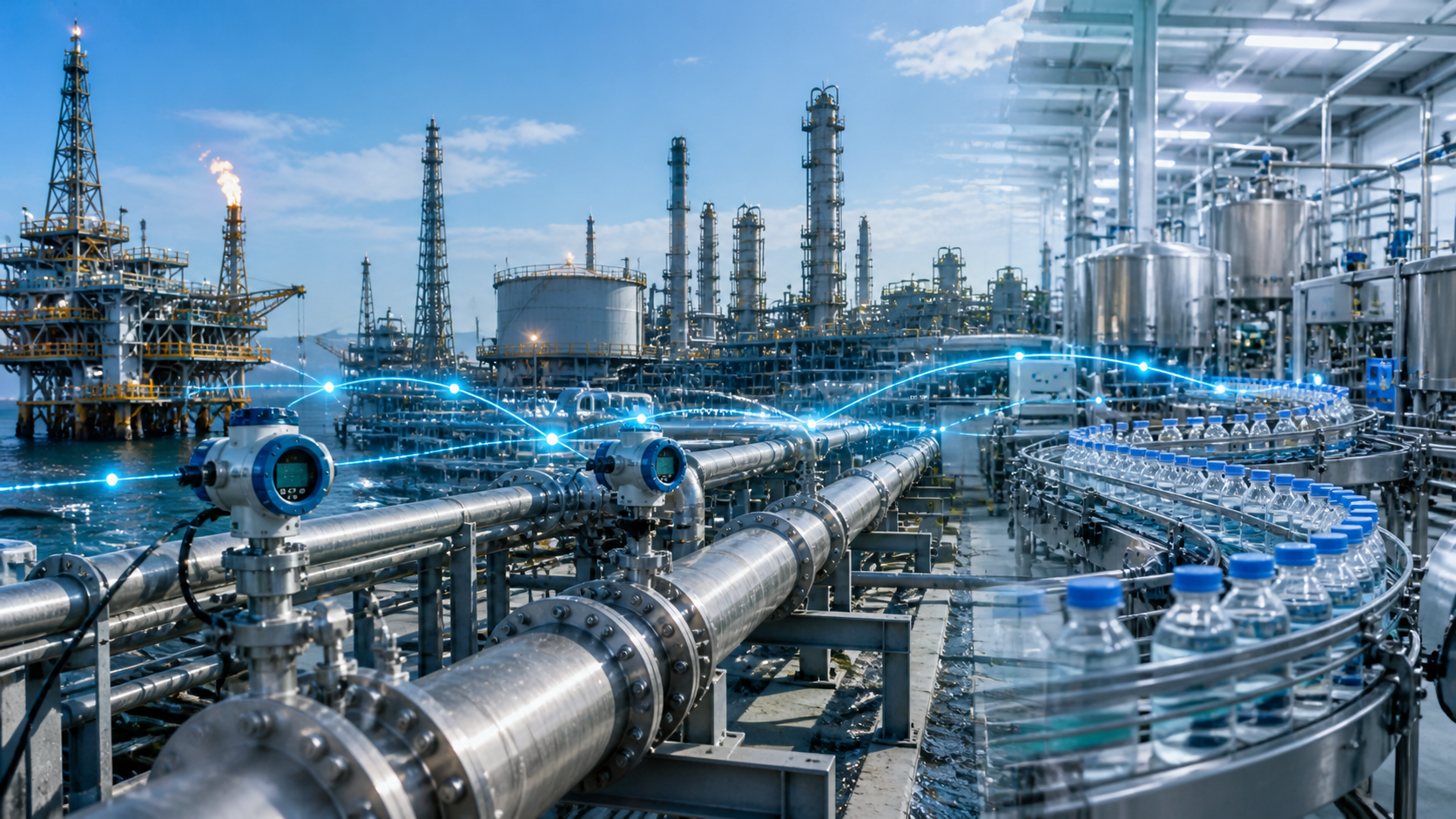
Small Temperature Changes Can Create Big Confusion
One thing that surprises many operators is how sensitive density can be to relatively small temperature shifts.
Sometimes a process changes only:
- 2°C
- 3°C
- 5°C
and suddenly the density trend no longer matches yesterday’s production data.
At first glance, it looks like:
- concentration drift
- product inconsistency
- calibration problems
But after checking the process history, temperature usually explains the difference.
This happens frequently in:
- chemical dilution systems
- fuel blending
- solvent processing
- food production lines
Especially in facilities where ambient temperature changes throughout the day.
Outdoor Pipelines Are Often the Most Unstable
Temperature-related density problems appear constantly in outdoor installations.
Pipelines exposed to:
- sunlight
- weather changes
- seasonal temperature swings
rarely operate under truly stable conditions.
A pipeline running perfectly at 8 AM may produce noticeably different density readings by mid-afternoon after hours of sun exposure.
Operators sometimes assume the meter became unstable, but the process temperature itself changed first.
In long pipeline systems, even different sections of the same line can experience different temperatures simultaneously.
Why Temperature Compensation Matters
This is exactly why industrial density systems use temperature compensation.
Without compensation, the density reading alone can become misleading.
The system continuously:
- measures density
- measures temperature
- applies compensation calculations
to provide more stable process values.
In practical terms, compensation helps operators distinguish between:
- actual product changes
- normal thermal behavior
Without it, process control becomes much harder.
Compensation Helps — But It Doesn’t Solve Everything
One misunderstanding is assuming temperature compensation automatically fixes all density instability.
It doesn’t.
Compensation works best when:
- temperature measurement is accurate
- process conditions remain relatively stable
- the fluid properties are properly characterized
If the temperature sensor itself responds slowly, the compensated value may still drift temporarily during rapid process changes.
This is common during:
- startup
- CIP cleaning cycles
- fast batch transitions
The density meter may technically be working correctly while the process itself remains thermally unstable.
Rapid Temperature Changes Create Difficult Conditions
Stable processes are always easier to measure.
Problems usually appear when the process temperature changes faster than the system can stabilize.
For example:
- hot product suddenly enters a cooler pipeline
- blending temperatures fluctuate
- production restarts after shutdown
During these moments, density readings often move around temporarily.
Experienced operators usually wait for the process to stabilize before making major adjustments.
Otherwise, they may end up correcting a problem that doesn’t actually exist.
Installation Can Make Temperature Effects Worse
Temperature-related instability isn’t always caused by the fluid alone.
Poor installation can amplify the problem.
Common examples include:
- sensors mounted near heat sources
- outdoor piping without insulation
- installation points exposed to direct sunlight
- uneven heating around the sensor body
In some cases, the measurement environment changes temperature faster than the actual process fluid.
That creates unnecessary signal instability.
Good installation design often reduces temperature-related problems significantly.
Different Fluids React Differently
Not every liquid responds to temperature the same way.
Some fluids show only minor density variation.
Others change very quickly with temperature shifts.
This becomes especially important in:
- chemical concentration measurement
- petroleum blending
- solvent processing
Two processes operating at the same temperature may behave completely differently depending on the liquid properties involved.
That’s why understanding the process itself matters just as much as understanding the instrument.
Stable Trends Matter More Than Perfect Numbers
In real industrial production, operators usually focus more on process trends than isolated readings.
A perfectly stable trend is often far more valuable than chasing tiny numerical fluctuations caused by temperature movement.
Experienced engineers usually ask:
- Is the process behaving consistently?
- Does the density trend match the operating conditions?
- Are temperature changes expected?
Those questions matter more than trying to force every reading to stay identical all day long.
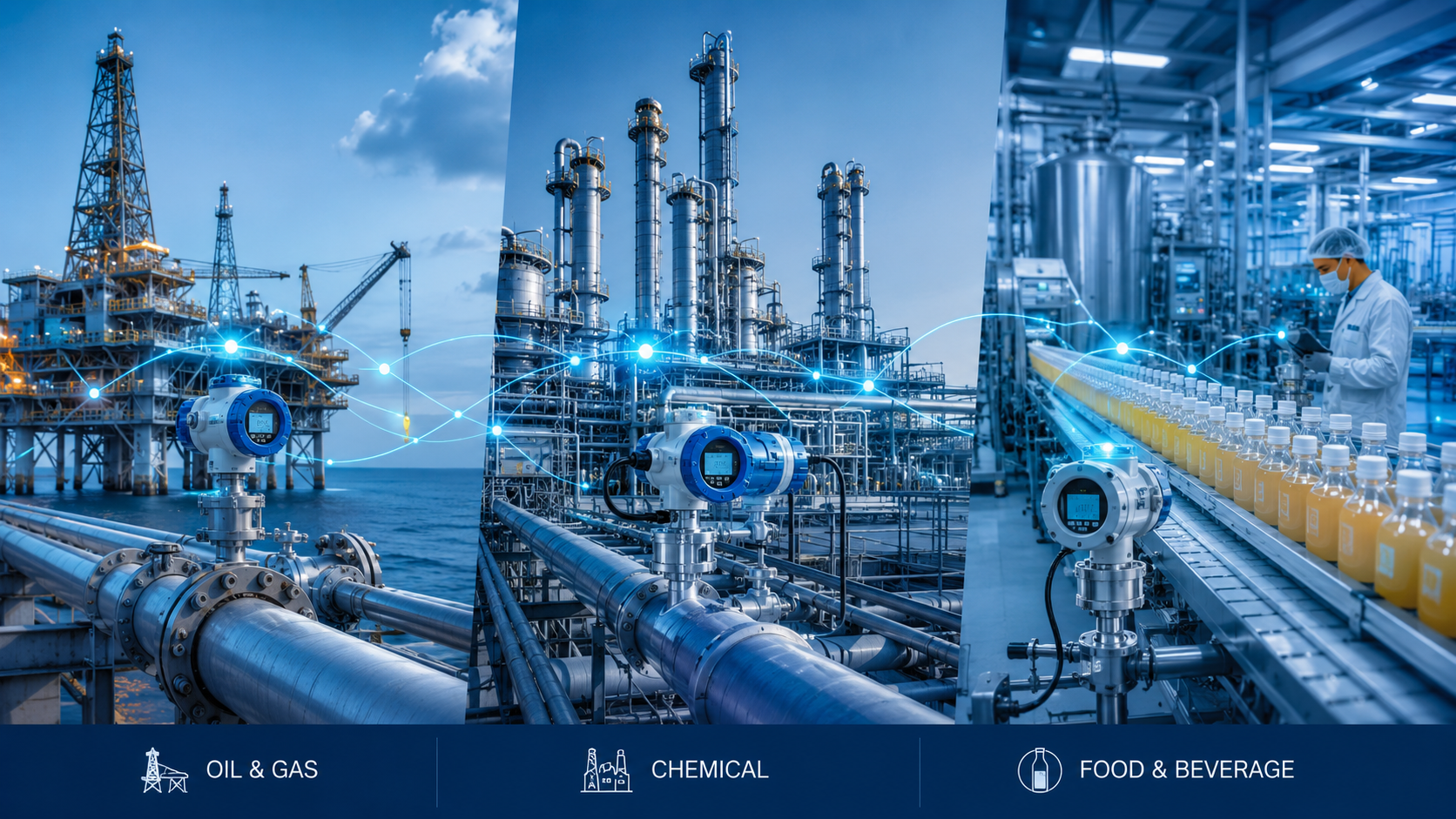
Why Many Industrial Systems Use Vibrating Fork Density Meters
In continuous industrial environments, many facilities prefer measurement systems that remain stable under normal operating variation.
That’s one reason vibrating fork inline density meters are widely used in:
- pipelines
- chemical systems
- blending operations
They tend to handle everyday industrial conditions relatively well without excessive complexity.
In long-term operation, reliability and stability usually matter more than theoretical laboratory precision.
How LONNMETER Supports Temperature-Sensitive Applications
At LONNMETER, temperature behavior is treated as part of the overall measurement process, not as a separate issue.
In many applications, support discussions involve:
- process temperature stability
- compensation behavior
- installation conditions
- thermal response during operation
Because accurate density measurement depends heavily on understanding how the process behaves under real operating conditions.
Temperature Is Part of the Measurement, Not a Disturbance
One of the biggest mistakes in industrial density measurement is treating temperature as something separate from the process.
In reality, temperature is part of the measurement itself.
Most long-term density instability comes from:
- thermal variation
- changing process conditions
- installation exposure
- misunderstanding compensated values
Once operators understand how temperature influences density, the readings usually make much more sense.
And in production environments, understanding the process is often more valuable than simply watching the numbers.
Need Help Improving Density Measurement Stability?
If your inline density measurement system behaves differently as temperatures change, the issue may be related more to process conditions than to the instrument itself.
You can learn more at:
https://www.lonnmeter.com/
Post time: May-19-2026


