

Mold flux is a multi-functional engineered material essential to the continuous casting process. Its strategic deployment atop the molten steel bath directly determines product quality, yield, and consistency in modern steelmaking.
Liquid mold flux density is fundamental for controlling heat transfer and ensuring uniform cooling in the continuous casting process. Variations in flux density result in uneven heat extraction, raising the risk of thermal stress, shell formation issues, and surface defects in the slab. Simulations and plant measurements confirm that solid slag film thickness—a property tied closely to flux density—dominates the local heat transfer regime. Thicker, denser slag films increase thermal resistance and reduce local heat flux, while more uniform flux density supports consistent cooling, which is crucial for slab stability and quality control.
Core Functions of Mold Flux
Controlling Heat Transfer
Mold flux governs the heat flow from the molten steel to the copper mold, ensuring stable and uniform solidification. The formation of a solidified slag film—whose thickness and crystallinity evolve during casting—acts as a thermal resistor. This slag layer, together with transient air gaps, establishes the thermal gradient that directs steel shell growth. Optimal heat control prevents local overheating or excessive cooling, both of which cause surface defects or incomplete solidification. Mathematical modeling and industrial measurements show that slag film thickness and flux viscosity are primary factors influencing thermal resistance and, thus, heat transfer efficiency within the mold.

Continuous Casting Process
*
Providing Lubrication
A liquid mold flux layer reduces friction between the growing steel shell and the mold wall, preventing sticking and mechanical tearing. Uniform lubrication minimizes defects such as oscillation marks and longitudinal cracks on the billet or slab surface. Viscosity, melting temperature, and the stability of the liquid slag at the steel-mold interface are decisive; under-lubricated interfaces lead to thermal fluctuations and local solidification disturbances. Enhancing lubrication through flux chemistry adjustments directly correlates with surface smoothness and operational reliability.
Preventing Secondary Oxidation
Mold flux serves as both a physical cover and a reactive barrier, shielding molten steel from atmospheric gases. By preventing oxygen ingress, the formation of unwanted oxides at the steel surface is suppressed. Flux composition and physical property stability—especially basicity (ratio of CaO to SiO₂)—ensure robust barrier formation and limit inclusion generation. Flux must also limit absorption of harmful transitions such as perovskite precipitation, which can otherwise compromise steel cleanliness.
Adsorbing Inclusions
During solidification, non-metallic inclusions rise to the steel surface. Well-designed mold fluxes efficiently adsorb and entrap these inclusions, preventing their re-entrainment into the product. The flux’s composition must facilitate this function without supporting secondary reactions or adversely altering viscosity. This dual role—removing inclusions while maintaining flow—is critical for high-grade steel production.
Impact on Surface Quality and Operational Speed
The effectiveness of mold flux directly determines billet, bloom, or slab surface finish. Uniform control of heat transfer and lubrication ensures even shell growth, reducing oscillation marks and cracks. Plant scale studies confirm that optimized flux parameters deliver smoother surfaces and fewer defects, especially at casting speeds above 3 m/min.
Operational speed improvements in the continuous casting process hinge on advances in mold flux management. At higher speeds, incomplete or erratic melting, insufficient lubrication, or local overheating can trigger catastrophic surface failures or shell breakouts. Speed increases further stress the relationship between heat flux profile, lubrication stability, and defect control, reinforcing the need for stringent mold flux property control.
High-Speed Casting: Challenges in Flux Selection and Management
High-speed continuous casting amplifies the challenges in controlling mold flux behavior:
- Unstable Heat Transfer: Rapid solidification increases thermal gradients, risking uneven shell formation or localized cracking if flux properties are insufficiently robust or responsive.
- Crystallization Control: Fast casting rates may disrupt the intended crystalline/glassy balance in the solidified slag layer. Overly rapid crystallization can trap layers of flux, raising thermal resistance beyond optimal, causing internal cracks. Too slow crystallization causes over-lubrication and excessive heat loss, increasing oscillation marks and depressions.
- Lubrication Performance: At higher speeds, the time window for slag film formation narrows. Fluxes must maintain low viscosity and synchronized melting, or else sticking and surface tearing are likely.
- Oxidation Prevention: Increased agitation and metal level fluctuations promote atmospheric contact, requiring fluxes with high compositional stability and rapid melt coverage properties.
- Inclusion Absorption: High dump rates demand fast-acting fluxes to maintain continuous entrapment and removal without allowing inclusions to escape.
Industrial experience shows that properties like flux viscosity, crystallization temperature, and compositional resistance to chemistry changes must be continuously managed and monitored. Approaches to this include real-time characterization using advanced fluid density measurement instruments such as the Lonnmeter ultrasonic density meter or Lonnmeter tuning fork density meter, enabling adaptive control of flux layer dynamics.
In short, achieving continuous casting process improvements—especially in terms of quality control and operational speed—stands on rigorous mold flux properties and control: balancing heat transfer, lubrication, oxidation prevention, and inclusion absorption across diverse steel grades and casting conditions.
Critical Properties of Mold Flux for Optimized Performance
Mold flux is central to continuous casting process improvements and quality control. Its physical properties directly determine the efficacy of heat transfer control methods in steel casting, mold lubrication techniques, and defect prevention.
Viscosity: Lubrication, Heat Transfer, and Crack Prevention
The viscosity of mold flux governs lubrication between the steel shell and the copper mold. Proper viscosity ensures a stable lubricating film, which is required to reduce friction between billet and mold and to prevent secondary oxidation in molten steel. A lower viscosity increases lubrication, which minimizes the risk of longitudinal cracks by preventing direct shell–mold contact and uneven shell growth. However, viscosity must be carefully controlled: if it is too low, excessive heat transfer can cause surface cracks; if too high, lubrication becomes insufficient, leading to shell sticking or crack formation.
Additions such as MgO serve as network breakers in the melt, reducing activation energy and modifying the melt structure. This results in decreased viscosity, enhancing both lubrication and crystallization behavior and producing more uniform cooling in continuous casting. For instance, adjusting viscosity in high-speed thin slab casting has led to significant reductions in surface defects, with optimized fluxes resulting in improved shell growth uniformity and fewer surface cracks.
Melting Rate and Temperature: Rapid Mold Coverage and Heat Control
The melting rate and temperature determine how quickly the mold is covered by liquid flux. Rapid and uniform mold coverage is essential to controlling heat extraction and providing lubrication in the earliest stages of shell formation. For high-speed casting operations (≥3 m/min), mold fluxes must achieve melting temperatures below 1000°C and complete melting within 41 seconds to maintain casting efficiency and prevent surface defects.
Exothermic components (e.g., CaSi or Si) and tailored particle size distributions accelerate the melting rate by supplying additional reaction heat. When these properties are optimized, defects such as flux entrapment and coverage delays are minimized. Examples include fast-melting mold fluxes achieving defect-free, consistent lubrication layers at casting speeds exceeding 3 m/min, while controlled melting kinetics help maintain even heat distribution and suppress longitudinal cracks.
Basicity and Component Fractions: Tuning Rheology and Crystallization
Basicity (CaO/SiO2 ratio) strongly influences the rheological behavior of mold flux and its crystallization pattern. Higher basicity typically reduces viscosity and accelerates crystallization, impacting how well the flux can adsorb inclusions in molten steel and promote uniform shell growth. The content of other oxides such as MgO, Al2O3, and alkali oxides (e.g., Na2O, Li2O) further modulates the flux structure.
Component fractions adjust key rheological properties:
- Increasing MgO or Na2O disrupts the silicate network, reducing melt viscosity and supporting the development of a glassy, well-lubricated interfacial layer.
- Controlled basicity stabilizes the crystallization process, which governs heat flow between the steel and the mold; balanced crystallization is required for steady billet withdrawal and consistent product quality.
Changes in these component ratios must align with target steel grades and casting speeds to avoid deviations that could compromise mold flux properties and control.
Environmental Considerations: Fluorine-Free Flux Development
Growing environmental regulations are prompting a transition to fluorine-free mold flux, as traditional formulations using CaF2 or NaF produce fluorinated gas emissions that threaten workplace air quality and sustainability. Replacing fluoride with oxides such as B2O3, Na2O, and TiO2 meets technical demands for viscosity and heat transfer control while reducing harmful emissions.
For example, CaO–SiO2–Al2O3–Na2O–B2O3 systems exhibit melting and rheology similar to fluorinated analogues. Additions of Li2O or moderate Na2O further simplify the glass structure, reducing viscosity and improving lubrication. Bench trials confirm these alternative formulations offer competitive performance with lower emission rates. However, component selection and basicity must remain tightly controlled to avoid unforeseen deviations in challenging casting conditions.
Incorporating real-time fluid density measurement instruments, like the Lonnmeter ultrasonic density meter and Lonnmeter tuning fork density meter, helps verify flux physical properties, supporting continuous casting mold flux optimization and continuous casting quality control. These instruments provide precise liquid mold flux density measurement data, informing day-to-day process adjustments for robust, environmentally conscious operations.
Optimizing these critical properties ensures mold flux fulfills its roles in inclusion removal, lubrication in continuous casting, and effective, uniform cooling—every phase in the continuous casting process is tied to the right balance of these characteristics.

Fluid Density Measurement in Mold Flux Management
Significance of Fluid Density in Mold Flux Behavior
Flux density also affects the mold flux’s ability to absorb non-metallic inclusions, preventing them from becoming defects in the steel. A denser flux layer improves the “sinkability” and adsorption rate of suspended inclusions at the slag–steel interface. When process conditions promote upward flow—such as through electromagnetic braking—flux density further enhances inclusion removal, supporting the goal to prevent secondary oxidation in molten steel and maximize cleanliness. However, high density must be balanced with the correct viscosity to maintain proper lubrication between the billet and mold. Excessive density without corresponding flow behavior can lead to instability at the slag/steel interface, increasing the risk of flux entrapment and operational disturbances.
The control of these properties underpins critical aspects of process optimization: from heat transfer control methods in steel casting to the reduction of friction and improvement of slab and billet quality. Continuous monitoring and adjustment of mold flux density optimize key goals—uniform cooling, inclusion removal, and effective lubrication in continuous casting.
Modern Fluid Density Measurement Instruments
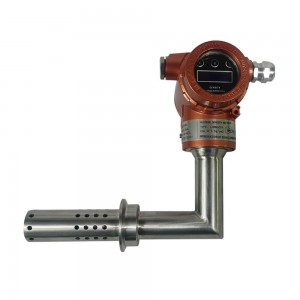
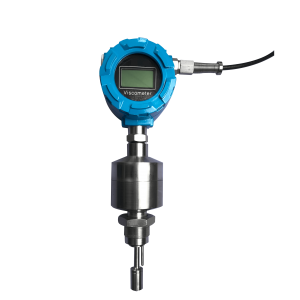
Precise measurement of mold flux density is essential for continuous casting process improvements and for achieving high-performance steel production. Multiple instrument types are available, the most prominent being the liquid mold flux density meter, Lonnmeter tuning fork density meter, and Lonnmeter ultrasonic density meter.
The liquid mold flux density meter is specifically designed for the challenging environment of molten flux measurement. This device typically relies on the buoyancy principle: a sensor of known mass and volume is immersed in the molten flux, and the upward force exerted by the flux allows the instrument to determine its density. Due to the highly reactive and high-temperature environment, such meters are engineered with robust, non-reactive materials and protective housings, enabling repeatable measurements without contaminating the flux.
The Lonnmeter tuning fork density meter offers enhanced accuracy and reliability because of its physical measurement principle. It operates on the resonance frequency change of a vibrating fork immersed in the molten or liquid flux. As the density of the fluid changes, the resonance frequency shifts, allowing for a real-time, inline density measurement. Key advantages include:
- Built-in temperature compensation—vital for process stability amidst temperature fluctuations.
- Digital data output for direct integration with process control systems.
- Proven suitability for explosive, corrosive, or high-temperature atmospheres, including compliance with safety standards.
- Operational resilience for continuous, round-the-clock monitoring, unlike periodic manual sampling.
For instance, in a steel plant’s flux handling system, a Lonnmeter tuning fork density meter installed in the flux transfer line provides continuous feedback, enabling operators to promptly adjust casting parameters to maintain optimal mold flux properties and reduce the likelihood of defects.
The Lonnmeter ultrasonic density meter delivers rapid, non-contact density assessments. It sends ultrasonic pulses through the molten or liquid flux, measuring the time and attenuation of acoustic signals. Density is derived from the propagation speed and energy loss, which depend on the medium’s density. The critical benefits include:
- Fast, repeatable readings, supporting real-time operational decisions.
- Seamless integration with process automation for continuous casting mold flux optimization.
- Reduced risk of sensor corrosion and buildup, since the sensor doesn’t require direct contact with the flux.
Instrument selection for high-performance continuous casting environments depends on several criteria:
- Temperature range capability: Sensors must tolerate the extreme heat of molten flux.
- Compatibility with flux composition: Sensor materials must resist corrosion and chemical attack.
- Speed and frequency of measurement: Real-time, continuous data is preferred for dynamic process control.
- Integration with existing process automation systems.
- Accuracy and repeatability: Instruments like the Lonnmeter ensure tight process tolerances and data-driven quality management.
Maintaining Accuracy During Process Fluctuations:
Temperature and flux composition variations are common in continuous casting. Both Lonnmeter tuning fork and ultrasonic density meters include temperature compensation features, correcting for the thermal dependency of sensor response and resonance frequency. Operation procedures include routine checks of sensor cleanliness and integrity, especially after major process changes or at regular intervals.
Ensuring Repeatability and Data Integrity:
Repeatable measurements depend on stable installation, avoidance of air pockets (which can affect both buoyancy and vibrating fork readings), and prevention of debris or solid particles adhering to sensor surfaces. For inline applications, flow management around the sensor ensures a constant, representative sample of the process stream. Redundant sensor installation—using primary and backup units—further guards against data drift and ensures continuous casting quality control is not compromised by sensor failure.
Data logged from fluid density measurement instruments must be stored securely, with real-time outputs integrated into process control dashboards. Automated alarms can alert operators to deviations beyond specifications, enabling immediate corrective action to maintain precise control over mold flux properties and, by extension, all downstream quality-critical parameters in the continuous casting process.
Integration of Density Measurement into Continuous Casting Process Improvements
Real-time fluid density measurement is central to modern continuous casting process improvements. Direct monitoring of mold flux density provides actionable data for adaptive control, enhancing steel quality by precisely influencing heat transfer, lubrication, and solidification.
Real-Time Density Monitoring for Adaptive Casting Control
Continuous, in-situ mold flux fluid density measurement enables operators to track density changes throughout the casting sequence. With advanced instruments—such as interferometric sensors—critical properties like flux film thickness and air gap evolution are monitored in real time. These insights allow for immediate adjustment of mold flux composition or casting parameters, minimizing lag between condition detection and corrective action. For example, if a drop in mold flux density is detected, operators can increase mold powder addition or adjust temperature setpoints to stabilize flux behavior and prevent shell defects.
While fiber optic and interferometric systems dominate current high-resolution monitoring, Lonnmeter ultrasonic and tuning fork density meters offer robust alternatives for broader process control. These instruments deliver instantaneous feedback on flux density, providing early warnings for evolving conditions that could impact solidification or lead to non-uniform casting.
Feedback Loops: Density Data with Speed, Lubrication, and Heat Management
Integrating fluid density measurement instruments into a closed-loop control architecture transforms process responsiveness. Real-time density data feed programmable logic controllers (PLCs) and advanced process control systems, tightening the interaction between key casting variables:
- Casting Speed: Anomalies in mold flux density signal suboptimal heat extraction or potential breakout risk. Systems use density readings to modulate casting speed, minimizing defects related to inappropriate shell growth rates.
- Lubrication Adjustment: Accurate density tracking ensures the molten flux forms a proper lubricating film, reducing friction between billet and mold. Lower-than-expected density can prompt automated lubrication adjustments, maintaining optimal casting interface conditions and preventing sticking.
- Heat Management: Density readings deeply influence heat transfer control methods in steel casting. Real-time measurements enable operators to adjust cooling water flow or secondary cooling regimes, ensuring uniform cooling across the mold width and thickness.
Examples include the use of adaptive water spray regulation tied directly to flux density and temperature sensor readings, which ensures consistent shell development even with variable raw material input or environmental fluctuations.

Mold Flux for Continuous Casting
*
Role in Reducing Surface Longitudinal Cracks by Optimizing Heat Transfer and Solidification Growth
Longitudinal cracks represent a persistent challenge for continuous casting quality control. These defects are often linked to inconsistent heat transfer and uneven shell solidification. Real-time density measurement of mold flux acts as an early indicator of flux film irregularities or changes in thermal conductivity.
Continuous casting mold flux optimization leverages this data to fine-tune the flux’s composition, achieving uniform coverage and predictable solidification rates. Fluid density measurement techniques help maintain the optimal balance between insulation and lubrication, ensuring steady heat dissipation from the billet surface. Modifying casting conditions in response to density drifts supports uniform cooling in continuous casting, crucial to reducing thermal stresses that give rise to surface cracks.
Routine use of liquid mold flux density meters, such as the Lonnmeter ultrasonic density meter or Lonnmeter tuning fork density meter, also helps prevent secondary oxidation in molten steel, as appropriate flux coverage isolates the steel from atmospheric oxygen. At the same time, these solutions enhance inclusion removal by ensuring the flux remains in its ideal viscosity and density range for adsorbing non-metallic inclusions, directly impacting steel cleanliness and overall quality.
By integrating high-resolution, responsive density instrumentation into continuous casting, steelmakers systematically reduce the risk of casting-related defects and elevate operational reliability, achieving higher process stability and finished product quality through data-driven interventions and feedback mechanisms.
Enhancing Mold Flux Performance Through Analytical Techniques
The performance of mold fluxes in the continuous casting process depends on carefully designed properties that ensure uniform cooling, effective lubrication, and consistent inclusion removal. Advanced analytical techniques have become critical in optimizing these fluxes to improve steel quality and casting reliability.
Correlating Density Measurement with Surface Quality Outcomes
Validation of flux optimization strategies involves correlating laboratory data with real-world casting outcomes. Instruments like the Lonnmeter ultrasonic density meter and Lonnmeter tuning fork density meter provide in situ fluid density measurement during casting. These tools, representative of modern fluid density measurement instruments, deliver real-time tracking of liquid mold flux properties. By continuously monitoring flux density, operators can adjust process parameters to maintain optimum heat transfer control and reduce friction, directly impacting the surface quality of cast billets.
Lubrication, Heat Transfer, and Quality Control: Synergistic Effects
In the continuous casting process, precise fluid density measurement is vital for improving mold flux performance. The measured density directly affects lubrication, heat transfer, and quality control, driving continuous casting process improvements through robust mold flux properties and control strategies.
Influence of Density on Lubrication and Friction Reduction
Accurate density values of liquid mold flux are central to controlling friction between the solidifying billet or slab and the mold walls. Higher-density mold flux generally forms a thicker liquid flux film at the steel–mold interface, effectively separating the mold from the growing shell. This film layer lowers the friction coefficient at critical contact points—the denser and more uniform the flux film, the greater the friction reduction and process stability. For example, measurements from a Lonnmeter tuning fork density meter can help maintain optimal film thickness, ensuring smooth strand movement and minimizing breakout risk.
Precise control of density enables adjustment of mold flux composition and casting parameters to tune film viscosity and infiltration. Lower viscosity and controlled density allow flux to flow more freely, reducing resistance as the strand moves. However, excessive film thickness, while reducing friction, may impede heat extraction and shell solidification. Maintaining the right balance—guided by fluid density measurement instruments—is a key mold lubrication technique to reduce friction between billet and mold without undermining heat transfer or causing sticking or cracks.
Controlling Heat Transfer for Uniform Cooling and Defect Minimization
Density influences not only lubrication but also heat transfer in continuous casting. The thermal conductivity and thickness of mold slag films—both liquid and solid—are linked to flux composition and density. Uniform heat transfer through the mold is critical for consistent cooling rates, a prerequisite for defect-free steel production. By using fluid density measurement techniques, operators can fine-tune slag compositions for continuous casting mold flux optimization, targeting ideal density values that foster even slag film formation.
A measured density profile provides real-time feedback for modifying mold cooling rates. For instance, a Lonnmeter ultrasonic density meter offers quick readings, supporting rapid adjustments in heat transfer control methods in steel casting. Uniform liquid mold flux thickness, dictated by consistent density, ensures even temperature gradients, minimizing the occurrence of cracks, uneven shell growth, and surface oscillation marks.
Examples include extending mold length or optimizing mold taper to limit air gaps—actions made reliable when driven by data from fluid density measurement instruments. These efforts collectively assure stable heat removal, vital for quality control and stable process operation.
Density and Inclusion Adsorption, Secondary Oxidation Prevention
Density also governs the capacity of mold flux to adsorb inclusions in molten steel and to prevent secondary oxidation. Specifically, higher-density fluxes provide a more substantial interface for absorbing non-metallic inclusions (such as Al₂O₃ and SiO₂), pulling these particles from the steel and trapping them within the slag. This results in cleaner steel and improves metallurgical quality.
Optimized density supports the development of continuous, uniform slag films, which act as physical and chemical barriers to atmospheric oxygen. This shield suppresses reoxidation, or secondary oxidation, that could otherwise yield brittle phases or harmful oxides in the product. Uniform flux density, optimized using advanced fluid density measurement techniques, reinforces prevention strategies—especially during high-speed or dynamic bulging conditions in the mold.
Advanced tools, such as liquid mold flux density meters, provide onsite measurement to support quality-driven inclusion removal in molten steel and to prevent secondary oxidation in molten steel, even as casting conditions fluctuate.
Integrative Quality Control via Density Management
Continuous regulation of mold flux density enables real-time quality control strategies. By integrating data from Lonnmeter fluid density measurement instruments, casting operators can optimize lubrication, refine heat transfer, and sustain cleanliness objectives. Correlating density with process control actions ensures all synergistic effects—lubrication, controlled cooling, and purification—are harmonized for enhanced continuous casting process performance.
Practical Recommendations for Industrial Implementation
Integrating Liquid Mold Flux Density Meters Into Continuous Casting Workflows
For optimal continuous casting process improvements, proper integration of liquid mold flux density meters—such as the Lonnmeter ultrasonic density meter and Lonnmeter tuning fork density meter—requires meticulous alignment with existing measurement routines. Assess the workflow to identify crucial checkpoints where real-time mold flux density monitoring supports controlling heat transfer in continuous casting, achieving uniform cooling, and enhancing mold lubrication techniques. Install density meters at stabilized sampling points near the mold to capture representative flux properties while minimizing fluid dynamic disturbances.
Route instrument data streams directly to process control systems. Enable automatic alerts for out-of-spec readings to prompt operator intervention for mold flux properties and control. Maintain secure and redundant wiring for harsh mill environments, protecting equipment from vibration, heat, and slag splash. Commissioning protocols must include baseline calibration using standardized reference fluids to anchor ongoing quality control.
Selection of Fluid Density Measurement Instruments
Select fluid density measurement instruments based on process needs:
- Use Lonnmeter ultrasonic density meters where process temperatures, pressures, or flux compositions fluctuate. Ultrasonic technology ensures reliable, continuous readings and lower recalibration frequency, matching environments sensitive to tight process control, such as those preventing secondary oxidation in molten steel and supporting continuous casting mold flux optimization.
- Choose Lonnmeter tuning fork density meters for installations with stable temperature, flow, and composition, where vibration and turbulent flow are minimal.
By rigorously observing these recommendations, plants will consistently ensure mold flux properties support inclusion removal in molten steel, effective lubrication, and optimal casting quality across the full workflow.






Frequently Asked Questions (FAQs)
What is mold flux and why is its density important in the continuous casting process?
Mold flux is an engineered material applied to the surface of molten steel in continuous casting. Its primary functions are lubrication—in particular, reducing friction between the billet and mold wall—and regulating heat transfer for uniform solidification. Mold flux also serves as a protective barrier, preventing secondary oxidation and adsorbing nonmetallic inclusions from the steel. The density of mold flux directly affects its performance; correct density ensures a consistent layer for effective heat transfer and lubrication, while also maintaining physical integrity under varying casting speeds and conditions. Insufficient flux density can compromise insulation, leading to surface defects and increased susceptibility to oxidation, especially in advanced alloy steels or high-speed casting applications. Continuous monitoring and adaptive control of flux density are necessary to achieve optimal casting quality and process stability.
How does a liquid mold flux density meter improve continuous casting process control?
A liquid mold flux density meter enables real-time, high-precision monitoring of mold flux density within the casting mold. By integrating such measurement tools, operators gain immediate feedback on flux conditions, allowing prompt adjustment of application rates, chemistry, and temperature settings. This precise control ensures stable heat transfer and lubrication, reducing instances of surface cracking, shell breakout, and re-oxidation. The enhanced process transparency also facilitates better quality control, with consistent adsorption of inclusions and fewer defects. Continuous casting process improvements are realized by correlating density data with process parameters, leading to uniform cooling, optimized lubrication, and overall casting stability.
What are the differences between the Lonnmeter tuning fork and ultrasonic density meters in fluid density measurement?
The Lonnmeter tuning fork density meter utilizes vibrating elements sensitive to changes in fluid density, providing highly precise and stable readings. It excels in environments with viscous or bubbly fluxes, adapting well to rapid property changes and allowing fast response times. The tuning fork design is robust, with no moving parts and reduced maintenance needs.
The Lonnmeter ultrasonic density meter offers a different approach, using sound waves to measure density non-invasively. It delivers rapid measurements and can be more easily integrated into automated monitoring systems. Ultrasonic meters are less sensitive to temperature and viscosity fluctuations, performing reliably in harsh, high-temperature environments. They typically incur lower operational costs over the long term and maintain stable, long-term accuracy. The choice between these instruments should consider flux viscosity, installation requirements, and the desired level of automation.
How does controlling mold flux density contribute to preventing secondary oxidation?
Stable and sufficient density in mold flux forms a continuous, uninterrupted protective layer over the molten steel surface. This physical barrier isolates molten steel from atmospheric oxygen, minimizing the risk of secondary oxidation. Effective density control ensures the flux remains evenly distributed, regardless of fluctuations in casting speed or steel composition, maintaining consistent barrier properties. Without proper density, gaps or thinning can occur, exposing steel to oxidation and resulting in inclusions and degraded surface quality. Real-time monitoring via fluid density measurement instruments enables operators to maintain this protective function throughout the casting cycle.
In what ways do fluid density measurement instruments support process improvements in continuous steel casting?
Fluid density measurement instruments empower operators to continuously adjust casting parameters based on real-time feedback. This supports uniform cooling by regulating heat transfer, which is essential to avoid internal cracks and ensure desired shell thickness. Proper density measurement also promotes effective lubrication, reducing friction between the billet and mold, minimizing breakout risks, and enabling higher casting speeds. Furthermore, these instruments help maintain flux properties optimal for the adsorption of inclusions in molten steel, leading to cleaner steel output. The data-driven approach facilitated by such instruments drives robust continuous casting quality control and mold flux optimization, ensuring improved product consistency and fewer defects.
Post time: Dec-01-2025


