

Most buyers start a flow-meter project with one question: how much does it cost? The honest answer is that a flow meter has no single price. The same nominal bore quoted by two suppliers can land three times apart, and both can be right — because the number is built from a stack of engineering choices, not pulled from a catalogue. This page explains the cost drivers we use when we price a Coriolis, electromagnetic, or ultrasonic meter, gives indicative order-of-magnitude bands for budgeting, and shows exactly what to send us to turn an estimate into a firm quote.
We are LONNMETER, a manufacturer that designs, machines, welds, and calibrates flow meters in-house. We are not a reseller marking up a third-party tag, so the price you discuss with us goes straight to the configuration, not a distribution margin. That does not make pricing simple — it makes it explainable.
Why there is no flat price list
A flow meter is closer to a configured instrument than a shelf product. The base sensor is maybe a third of the delivered cost on a complex job; the rest is the lining, the electrodes, the transmitter, the hazardous-area certification, and the calibration certificate your end client demands. When a procurement officer compares a $400 quote against a $1,200 quote for a “DN50 flow meter,” they are usually comparing two different instruments wearing the same label.
Our job in a quote is to make those differences visible before you buy, not after you commission.
The levers that move price
1. Measurement technology
The principle sets the floor.
- Electromagnetic meters measure conductive liquid with no moving parts. The sensor is relatively cheap to build, which is why magmeters dominate water, wastewater, and utility metering on price.
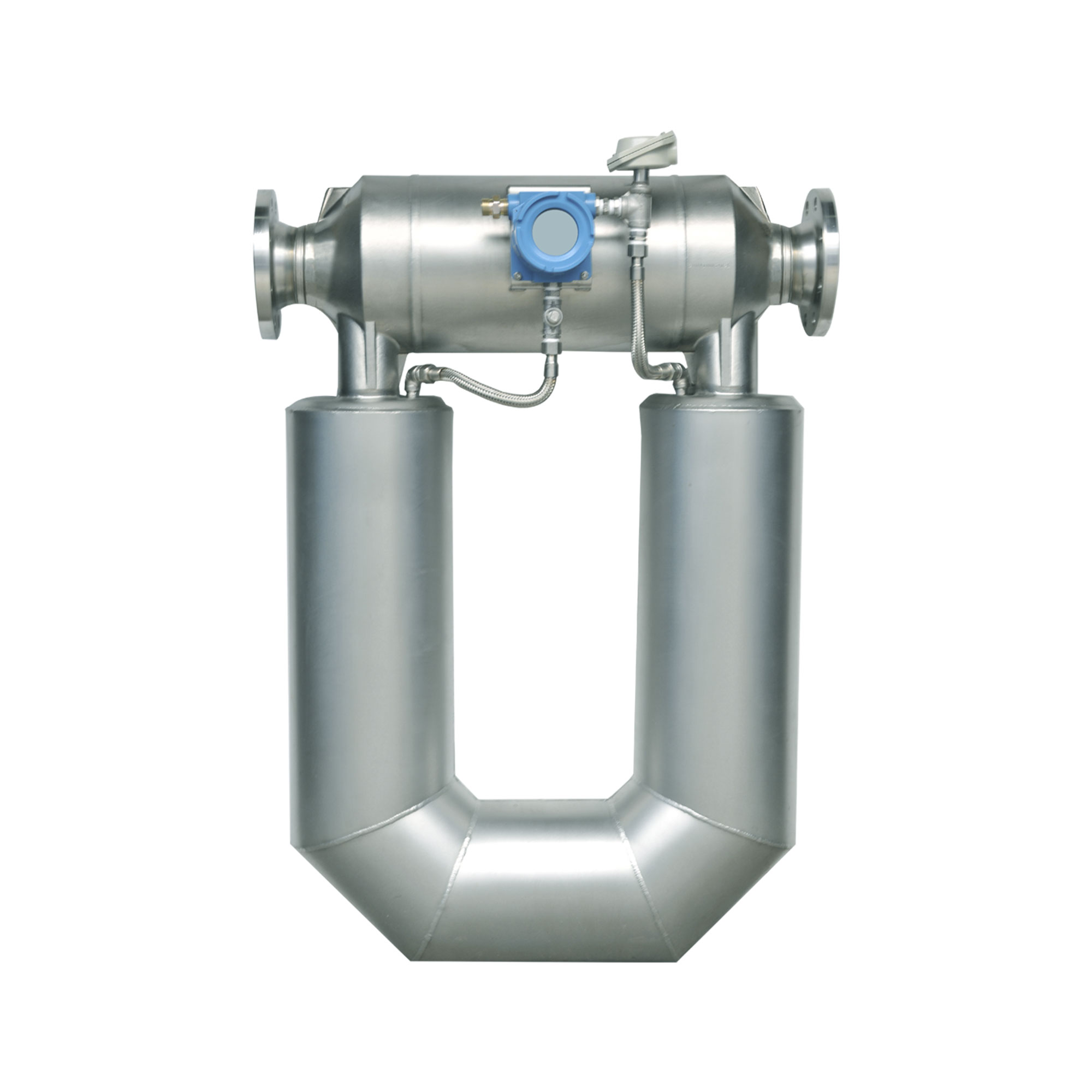
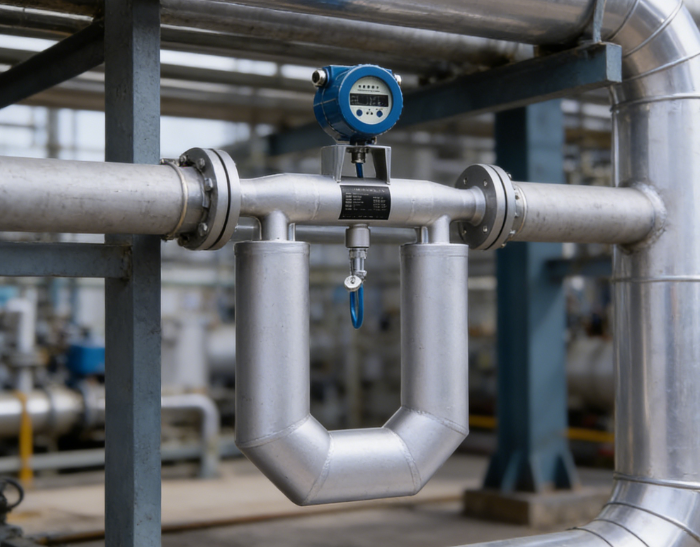
- Coriolis meters measure mass directly and throw in density as a free output. The vibrating-tube mechanics, the precision welding, and the density-grade calibration push the base cost well above a magmeter of the same bore.
- Ultrasonic splits two ways. Clamp-on units add almost no wetted material, so the hardware stays lean; inline ultrasonic with a wetted sensor costs more like a magmeter but keeps working on non-conductive and very clean liquids where a magmeter cannot.
2. Nominal bore
Bore is the single biggest lever after technology. A DN15 Coriolis tube is a few grams of welded alloy; a DN300 Coriolis is a fabricated spool piece with heavy flanges and a structural frame. Material, machining time, and calibration rig size all scale with the pipe. Expect the price curve to rise steeply past DN200 and again past DN600, where handling and testing stop fitting a bench.
3. Wetted materials
The tube, lining, and electrodes decide what the meter survives.
- Linings: hard rubber and polyurethane are economical for water and slurry; PTFE and PFA cost more but handle aggressive chemicals and higher temperatures.
- Electrodes: 316L stainless covers most water and mild chemical duty. Hastelloy C-276, titanium, tantalum, and platinum enter the bill when the medium is corrosive, and they enter hard — a set of tantalum electrodes can rival the rest of a small meter.
- Sanitary finishes: an electropolished 316L body with Tri-clamp ends, 3-A, and EHEDG paperwork carries a real premium over the industrial-flange version, because the surface finish and the documentation are themselves the product.
4. Process conditions and certification
Pressure rating, temperature class, and hazardous-area approvals are not free. An ATEX/IECEx flameproof transmitter, a high-pressure flange rating, or a cryogenic seal package each adds cost and lead time. Trade and custody applications pull in OIML R117 or MID approvals, and those certificates are priced into the unit because they are verified per instrument, not per batch.
5. Output and communication
A bare 4–20 mA loop is the cheap default. HART is a modest step up. Fieldbus options — Modbus RTU, Profibus PA/DP, Foundation Fieldbus, or Ethernet-APL — add transmitter hardware and validation time. If your DCS needs a specific protocol, say so in the inquiry; retrofitting it later costs more than specifying it once.
6. Quantity and customization
A single DN50 magmeter is priced differently from a run of 200 with private-label branding. OEM and ODM work — custom spans, laser-etched logos, matched firmware, dedicated calibration points — moves the unit price down at volume and the engineering cost up front. We price the tooling and the first-article validation as a separate line so the per-unit number stays clean.
Indicative price bands (budgeting only)
The figures below are order-of-magnitude, ex-works reference ranges in USD. They are for early budgeting, not offers. Every application changes the number through the levers above, and the only firm price is the one on a quote against your specification. Treat these as the shape of the curve, not a catalogue.
| Technology | Small bore (DN15–DN50) | Mid bore (DN50–DN200) | Large bore (DN200+) | Sanitary premium |
| Electromagnetic | entry-tier | mid-tier | rises with bore | adds for 3-A/EHEDG finish |
| Coriolis | mid-tier base | higher | steep rise past DN150 | adds for polish + Tri-clamp |
| Ultrasonic (clamp-on) | lean hardware | moderate | scales with pipe | n/a (no wetted part) |
| Ultrasonic (inline) | near magmeter | near magmeter | rises with bore | adds for hygienic design |
Read the table as relative, not absolute: a small electromagnetic meter for clean water sits at the low end of the industrial field; a large Coriolis with Hastelloy tubes and OIML custody approval sits at the top. The spread inside one bore can be 3× to 5× depending on materials and certificates.
A worked example of the spread
Take “a DN50 flow meter for a chemical dose line.” Three valid configurations:
- Option A — electromagnetic, PTFE lining, 316L electrodes, 4–20 mA, industrial flange. Solid, common, low cost.
- Option B — same electromagnetic but with Hastelloy C-276 electrodes, PFA lining, and a corrosive-duty seal. The medium demanded it; the price moved up.
- Option C — Coriolis DN50 with density output and OIML R117 for custody transfer. Different job entirely; much higher price, different value.
All three answer “DN50 flow meter,” and only one of them is the right buy. The price page that hides this is the one that burns you at commissioning.
How we price and quote
When you email or fill the inquiry form, an application engineer — not a script — reads it. We confirm the medium, the flow range, the bore, the pressure and temperature, the lining and electrode needs, the output, and the certificates. If the application is ambiguous we ask, because a wrong assumption is more expensive than a question. For OEM and ODM, we scope the tooling and the first article before we quote volume.
We do not publish a live price table with fixed numbers, for a simple reason: a fixed number attached to a configurable instrument is a lie the moment your medium is not water at 20 °C. The honest deliverable is a quote against your spec, and we turn those around as fast as the information allows.
What to send for a fast, accurate quote
The more you give, the tighter the number:
- Medium — name it, plus concentration, conductivity, and whether it is abrasive or fibrous.
- Flow range — normal and peak, in mass or volume per hour. We size to the window, not the peak.
- Bore and flange — DN or NPS, flange standard and rating.
- Process — pressure, temperature, hazardous-area class if any.
- Materials — lining and electrode preferences, or let us specify.
- Output — 4–20 mA, HART, Modbus, Profibus, or other.
- Certificates — 3-A, EHEDG, OIML, MID, ATEX, WRAS, NSF-61, or none required.
- Quantity and branding — single unit, project lot, or OEM/ODM private label.
Send that to our inquiry desk and you will get an engineering quote, not a placeholder.
OEM and ODM
For distributors and equipment builders, we supply private-label flow meters with custom spans, branding, and calibration. Volume pricing, dedicated models, and first-article reports are part of the package. If your product needs a meter that looks like yours, tell us in the inquiry and we will scope it.
The honest disclaimer
The bands on this page are indicative. They are built from typical configurations and they will not match your quote exactly, because no two process lines are identical. We would rather give you the drivers and a real quote than a pretty number that collapses the day your medium is not water. Prices change with material cost and exchange rate; confirm the current figure when you order.
If you came here for a number, the number is: send us the spec, and we will price the instrument you actually need.
Post time: Oct-10-2026


