

Regulatory requirements, process control, and where inline density fits in a GMP environment
A FDA inspection finding from a few years ago: a liquid pharmaceutical manufacturer was controlling syrup concentration using periodic lab samples. The last sample before a batch release was 48 hours old. The inspector asked how they knew the density had not shifted in those 48 hours. They could not answer. The batch was held pending re-testing.
That is the core problem. Pharmaceutical quality rules demand documentation at release. But lab testing is slow, batch-based, and a single point in time. Inline density measurement gives you a continuous record of what happened throughout the process, not just what the lab measured at the end.
What the regulators actually require
Density measurement in pharma sits at the intersection of two regulatory frameworks: the USP (United States Pharmacopeia) and GMP (Good Manufacturing Practice) requirements under 21 CFR Parts 210 and 211.
USP <841> defines specific gravity as a test method for liquid preparations. It is the reference method against which your inline reading must be traceable. The lab result is the gold standard. Your inline instrument must demonstrate correlation to the lab method.
21 CFR Part 11 governs electronic records. If your density meter outputs a 4-20 mA signal that feeds a data logger, that log is an electronic record. It must be audit-trailed, time-stamped, and unalterable. If the meter is on a network and the data goes straight to a server, the server software must be Part 11 validated.
For process design, FDA’s PAT (Process Analytical Technology) guidance encourages inline monitoring where it improves process understanding. A density meter on a mixing vessel is a PAT tool. It is not required, but if you have it and you use the data, you need to justify why the measurement method is appropriate for its intended use.
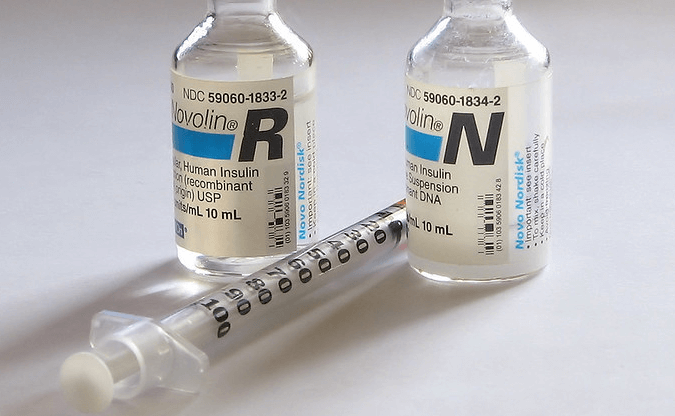
Where density is measured in a pharma plant
Most density measurement in pharmaceutical manufacturing falls into three areas.
API dissolution and concentration monitoring. Liquid APIs (active pharmaceutical ingredients dissolved in a solvent) need concentration control. For a solution that is 5% API by weight, density correlates directly with concentration. The density target is set from the lab, and the inline meter tracks whether the dissolution process reached it.
Syrup and suspension density. Oral liquid formulations (cough syrups, suspensions) are sugar-based. The target Brix is typically 50–65°Bx, which translates to a density of 1.20–1.30 g/cm³. Blending accuracy of ±0.5°Bx is common. A density meter on the blend tank gives real-time visibility of when the syrup is on target.
Final product release density. For some liquid products, the release specification includes a density or specific gravity limit. The inline reading during manufacture supports the batch record. The lab result at QC release is the official number.
Sanitary design is not optional in pharma
Pharmaceutical processes have two things that distinguish them from most industrial applications: the fluid being measured is a drug product, and the plant must be cleaned between batches to prevent cross-contamination.
Clean-in-place (CIP) is the standard. Between batches, the vessel and piping are flushed with a cleaning solution (typically 2–4% NaOH at 60–80°C, followed by a water rinse). The density meter sensor must survive this cycle without corrosion, surface degradation, or residue retention.
The instrument must also have a surface finish that does not support microbial growth. A roughness of Ra ≤ 0.8 µm (32 µin) is standard for pharmaceutical wetted surfaces. Anything rougher creates a surface where bacteria can adhere and biofilm can form. The gap between the sensor housing and the process connection must be self-draining — no dead legs where product can stagnate.
|
Sanitary density meter checklist for pharmaceutical applications: ✓ Ra ≤ 0.8 µm wetted surface finish ✓ 316L stainless steel or polished Hastelloy wetted parts ✓ CIP/SIP compatible (60–80°C cleaning cycles) ✓ EHEDG or 3A sanitary certification ✓ No dead legs or stagnant pockets in the installation ✓ Materials of construction traceable (mill certs for 316L) ✓ USP Class VI elastomers in any seals |
Field example: syrup blending at a contract manufacturer
A contract manufacturer in India was blending oral rehydration salts and cough syrups. Their process: dissolve sugar in purified water, add API and excipients, adjust volume. Density was checked by hydrometer at the end of blending. If the batch was off-target, they would re-blend.
The re-blend rate was running at 12–15% of batches. Lab turnaround on the density sample was adding 2–3 hours to cycle time because samples had to cool to 20°C before the hydrometer reading was valid. The whole batch sat waiting.
They installed an inline tuning fork density meter in the blend tank. Temperature compensation brought the reading to 20°C reference automatically. The operator watched the density trace in real time. The blend valve closed when the density target was hit. Re-blend rate dropped to under 2%. Batch cycle time fell by 90 minutes per batch.
The Part 11 concern was addressed by configuring the meter to log to a validated SCADA system with audit trail. The continuous density record became part of the batch record. The lab hydrometer remained in the QC release procedure as the official test.
Wetted materials and what to specify
For aqueous sugar solutions and most liquid formulations, 316L stainless steel is the standard wetted material. Ra ≤ 0.8 µm is achievable with electropolishing. The fork and process connection are 316L; the only exception is if the formulation contains chloride above 200 ppm, in which case 316L is at risk of stress corrosion cracking and you need Hastelloy C-276.
Seals must be USP Class VI rated. EPDM and PTFE are common. Check compatibility with your CIP chemistry — some PTFE grades soften at high temperature, and some EPDM grades swell in oil-based formulations.
Calibration in a GMP environment
Pharma calibration follows USP <1058> (Analytical Instrument Qualification). The density meter must be qualified as a process instrument: Design Qualification, Installation Qualification, Operational Qualification, and Performance Qualification. The calibration standard is traceable to NIST.
In practice, the calibration check is simple: run a reference standard (purified water at 20°C gives 0.998 g/cm³, USP <841> allows this as a reference) and verify the meter reading is within specification. Do this at startup, then quarterly or semi-annually depending on your validation protocol.
LONNMETER instruments for pharmaceutical applications
The LONNMETER LONN700 is available with a pharmaceutical-grade configuration: 316L stainless steel, Ra ≤ 0.8 µm electropolished surface, EHEDG-compliant process connection, USP Class VI seals, and a calibration traceable to NIST standards.
For validation documentation, the LONNMETER team can provide IQ/OQ/PQ protocols, NIST-traceable calibration certificates, and material certification packages (mill certs, FDA compliance letters) as required for regulatory submissions.
If you are specifying a density meter for a pharmaceutical process and need to review the regulatory requirements, installation qualification, or the calibration protocol, the LONNMETER technical team can walk through the requirements against your specific formulation.
Common questions on pharmaceutical density measurement
Does an inline density meter replace the QC lab test?
No. The QC lab result is the official number for product release. An inline density meter supports the process and provides a continuous record, but the lab test under USP <841> remains the release specification. The two should correlate — and if they do not, that is a calibration or method qualification problem.
What surface finish is required for pharmaceutical service?
Ra ≤ 0.8 µm (32 µin) is the standard for wetted surfaces in pharmaceutical vessels and instruments. Electropolished 316L stainless steel achieves this consistently. Ra 0.4 µm is used in some biopharma high-purity water applications but is not typically required for oral liquid density measurement.
Can a standard industrial density meter be used in a pharma plant?
It depends on the qualification. A standard industrial meter with 316L wetted parts can work if your validation protocol accepts it and the material certs are in order. However, an EHEDG or 3A-certified sanitary design simplifies the qualification significantly and is standard expectation in regulated markets like the US, EU, and Japan.
How do we handle Part 11 compliance for the density meter data?
The data from the density meter is an electronic record under Part 11 if it is used in batch release decisions. The SCADA or DCS receiving the signal must be validated. The meter itself must be configured to output time-stamped data with no ability to alter historical records. Work with your validation team on the IQ/OQ/PQ for the data system — this is not a meter specification issue alone.
What is the calibration frequency for a pharma density meter?
Set by your validation protocol. A common starting point is monthly verification with a reference standard and re-calibration every 6 months. After a year of stable data, some plants extend to quarterly verification and annual re-calibration. If your process involves abrasive or coating fluids, shorten the interval.
Post time: Jul-17-2026


