

Flow measurement is indispensable in silicon wafer diamond wire cutting, as it ensures precise delivery of cutting fluids to the wire-wafer interface—critical for maintaining optimal cooling, lubrication, and debris removal. Real-time flow data prevents inadequate or excessive fluid supply, which would otherwise cause overheating, wire breakage, surface defects, or waste. Accurate measurement mitigates process variability, safeguards wafer flatness and surface integrity, extends wire lifespan, and optimizes resource efficiency.
Overview of Silicon Wafer Cutting and the Role of Cutting Fluids
Diamond wire cutting is the dominant technique for slicing monocrystalline and multicrystalline silicon ingots into wafers for semiconductor and photovoltaic applications. In this process, a steel wire—typically 40–70 μm in diameter—is coated with diamond abrasive grains. The wire moves at high speeds, and the embedded diamonds grind away the silicon by abrasion, minimizing surface defects and promoting wafer uniformity. The reduced diameter wires introduced in recent years lower the kerf loss, which refers to the material wasted as fine silicon particles during the slicing operation. Kerf loss is determined by the wire diameter and the height of abrasive grains protruding from the wire surface.

Diamond Wire Cutting
*
Cutting fluids play several crucial roles in diamond wire sawing. Their primary function is to cool both the ingot and wire, preventing overheating that could damage the silicon or reduce wire life. They also wash away fine silicon particles generated during cutting, which helps maintain a clean interface, prevent redeposition of debris, and reduce surface micro-cracks on the wafer. Moreover, cutting fluids lubricate the process, lowering friction between wire and silicon, thus lengthening wire lifespan and improving cut quality. The composition and physical properties of silicon wafer cutting fluids—such as viscosity and density—must be carefully managed to optimize cooling, chip removal, and wire protection.
There are several wafer cutting fluid types, including water-based fluids with additives for enhanced lubrication and particle suspension. The choice depends on equipment design, wafer specifications, and environmental constraints. Examples include deionized water with surfactants or glycols, formulated to balance cooling efficiency with low residue formation.
The evolution toward ultra-thin diamond wires in modern wafer plants amplifies challenges in fluid delivery and process control. As wire diameters shrink below 40 μm, the risk of wire breakage increases and the tolerance for process fluctuation tightens. Precise flow rate measurement—supported by technologies such as cutting fluid flow meters, high-precision flow measurement sensors, and Coriolis mass flow sensors—is essential to maintain effective cooling and debris removal. Cutting fluid monitoring sensors and industrial cutting fluid flow measurement solutions enable operators to track and adjust flow rates in real time, achieving optimal lubrication and surface quality. The accuracy of Coriolis flow meters is especially critical for managing fluids with varying densities and viscosities, ensuring consistent conditions even as cutting speeds and wire tensions increase.
This increasing demand for precision has shifted focus toward monitoring dynamic fluid parameters such as flow rate, density, and viscosity. Instruments like those from Lonnmeter provide reliable, real-time measurements that are indispensable for quality assurance and process optimization in advanced diamond wire cutting operations. As wire technology continues to advance, the integration of robust flow measurement technologies is integral to sustaining wafer throughput, minimizing kerf loss, and reducing downstream finishing requirements for the silicon wafer manufacturing sector.
Fluid Delivery Challenges in Precision Diamond Wire Cutting
In diamond wire cutting of ultra-thin silicon wafers—especially those below 40 µm—delivering the right amount of silicon wafer cutting fluid to the slicing interface becomes a formidable challenge. As wire thickness decreases, so does the space for fluid flow. Maintaining consistent cutting fluid supply is crucial to ensure lubrication, temperature control, and debris removal at the contact point.
Inconsistent or inadequate fluid flow leads directly to wafer adsorption, where the wafer undesirably adheres to equipment due to insufficient lubrication. This not only disrupts the cutting process but also increases the risk of wafer breakage or damage. Surface roughness rises significantly when the wire and wafer do not receive continuous lubrication and cooling from the diamond wire cutting fluid. Resulting damaged surfaces and micro-defects reduce wafer quality and yield, posing major hurdles for semiconductor and photovoltaic industries.
Three main factors affect fluid penetration into the micro-scale sawing gap: wire geometry, cutting speed, and capillary action. Wire geometry—specifically wire diameter and the distribution of diamond grains—directly influence how easily silicon wafer cutting fluid flows and adheres to the contact zone. When using wires under 40 µm, the smaller surface area restricts free movement of fluid. Higher cutting speeds decrease the available time for the fluid to reach and cool the interface, leading to localized overheating and poor lubrication. Capillary action, the natural ability of the liquid to be drawn into narrow spaces, strongly determines fluid retention. However, the same liquid bridges that enhance fluid transport can introduce capillary adhesion between adjacent wires, causing non-uniform tension and increasing wafer thickness variation.
The introduction of advanced wafer cutting fluid types—including nanoparticle-enhanced solutions—provides measurable improvements. Fluids engineered with SiO₂ or SiC nanoparticles penetrate narrow gaps more effectively due to optimized viscosity and surface interaction. These fluids enhance lubrication and carry heat away more efficiently, resulting in lower surface roughness and improved wafer flatness. Research shows that using nanoparticle-laden fluids modifies the temperature field during slicing, further reducing stresses that threaten wafer integrity. This, combined with techniques such as ultrasonic vibration to amplify capillary transport, allows for more uniform diamond wire cutting fluid delivery.
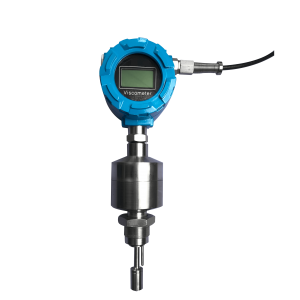
Consistent fluid delivery requires accurate, real-time monitoring and adjustment. High precision industrial cutting fluid flow measurement becomes essential, especially in tightly controlled processes. Implementing a cutting fluid flow meter—such as a high-accuracy Coriolis mass flow measurement sensor—enables precise regulation of delivery rate. Lonnmeter’s inline density and viscosity meters, when paired with precise flow rate measurement tools, contribute to optimizing fluid supply so even the thinnest wafers are cut smoothly, with minimal defect risk.

Fluid Flow Measurement in Wafer Cutting Operations
Precise flow rate measurement is fundamental for optimizing cutting fluid delivery in diamond wire cutting of silicon wafers. The effectiveness of silicon wafer cutting fluid directly shapes cooling, lubrication, and debris removal at the contact interface, impacting wafer surface quality, kerf loss, and overall production yield. Inadequate or excessive flow alters abrasive efficacy, increases tool wear, and can cause inconsistent wafer quality or higher resource costs. Empirical research indicates that surface roughness (Ra) and subsurface damage can be minimized by maintaining the cutting fluid flow rate within the optimal 0.15–0.25 L/min range for typical single-wire machines, as inadequate flow leads to microcracks and debris accumulation, while excess flow introduces turbulence and unnecessary consumption.
Technologies for Cutting Fluid Flow Rate Measurement
Cutting fluid flow meters integrate into the fluid supply lines, measuring the delivered volume of diamond wire cutting fluid in real time. Common flow meter technologies include mechanical, electronic, and ultrasonic types:
- Mechanical flow meters, such as turbine and paddlewheel designs, use rotating components displaced by fluid flow. They are simple and robust but susceptible to wear from abrasive-laden fluids.
- Electronic flow meters, particularly electromagnetic designs, measure fluid velocity using principles of electromagnetic induction, offering reliable, maintenance-light operation for conductive fluids.
- Ultrasonic flow meters employ high-frequency sound waves transmitted and received across the pipe. By measuring the time difference of sound transit with and against flow, these devices provide non-intrusive, accurate measurement suitable for various wafer cutting fluid types.
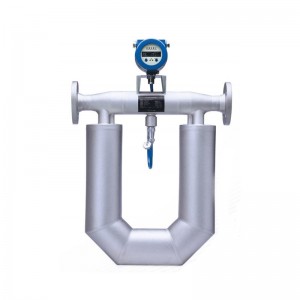
Coriolis mass flow measurement stands out in applications where precise control of fluid mass is required, regardless of viscosity or temperature changes. Coriolis mass flow sensors directly measure the mass flow rate based on the Coriolis effect, providing high precision and suitability for both water-based and oil-based diamond wire cutting fluids. Lonnmeter manufactures inline density and viscosity meters, which further enable monitoring of fluid properties for consistency and optimal process control in silicon wafer cutting.
Critical Measurement Parameters and Sensor Placement
Accurate measurement of cutting fluid flow in wafer cutting requires attention to several key parameters:
- Flow rate (L/min): The primary measurement for process optimization and quality assurance.
- Density and viscosity: Both significantly affect cooling performance, abrasive transport, and debris clearance.
- Temperature: Impacts viscosity and fluid behavior at the cut site.
Sensor placement is pivotal. Flow measurement sensors must be positioned directly in the fluid delivery line as close to the cutting zone as possible to minimize discrepancies due to piping resistance, leakage, or evaporation prior to the cut interface. Real-time inline measurement ensures that the reported flow value matches actual supply to the diamond wire cutting area.
Function of Flow Measurement in Maintaining Optimal Cutting Environments
Flow measurement sensors are essential for real-time monitoring and adaptive control of the fluid delivery in industrial silicon wafer cutting. Maintaining an optimal flow rate ensures adequate heat dissipation, continuous debris evacuation, and uniform lubrication along the diamond wire. Without this, process stability declines, wire life shortens, and yields suffer due to increased risk of surface defects or excessive kerf loss.
By integrating high-precision flow rate measurement with other feedback parameters (e.g., wire speed, feed rate), manufacturers can enforce adaptive control of the process threshold, directly linking flow rate adjustments with observed cutting performance. As a result, any deviation from the programmed flow envelope triggers immediate corrective action, safeguarding both process quality and resource efficiency.
In summary, industrial cutting fluid flow measurement—relying on robust flow measurement sensors and real-time data—serves as a cornerstone for high-yield, cost-effective silicon wafer production in the diamond wire cutting era.
Coriolis Mass Flow Measurement: Principles and Application
Coriolis mass flow measurement is based on detecting the force exerted by liquid moving through vibrating tubes. As the fluid flows—such as diamond wire cutting fluid or specialized silicon wafer cutting fluid—the tubes experience a small, measurable phase shift. This shift is proportional to the mass flow rate, providing direct, real-time quantification of the mass of cutting fluid delivered. The same principle allows simultaneous measurement of fluid density, supporting high precision across changing fluid types, compositions, and temperatures—a critical requirement in silicon wafer manufacturing and diamond wire cutting applications.
The advantages of this approach for wafer cutting fluid types, particularly when using high-performance diamond wire cutting fluids, are substantial. Coriolis flow measurement is independent of fluid viscosity and composition changes, remaining highly accurate amidst the presence of abrasive particles, nano-additives, or heterogeneous mixtures often found in cutting fluids for silicon wafers. This robustness makes it superior to traditional volumetric flow methods, which can be impacted by bubbles, suspended particulates, and changing physical properties of advanced cutting fluids.
Semiconductor wafer cutting increasingly relies on advanced fluid flow sensor technology to ensure reliable monitoring of cutting fluid for silicon wafers. Lonnmeter inline mass flow sensors, employing the Coriolis effect, are implemented directly in process lines. This enables precise delivery and monitoring of nano-fluid and diamond wire cutting fluid during wafer slicing. Signs of fluid degradation, mixture inconsistencies, or density shifts are promptly detected, allowing for immediate control interventions to maintain process yield and surface quality.
Comparing Coriolis mass flow sensors to other cutting fluid monitoring sensors—such as thermal, electromagnetic, or ultrasonic flow systems—reveals several strengths. Coriolis mass flow sensors excel in high precision flow measurement and deliver mass-based readings unaffected by viscosity fluctuations or magnetic properties. Electromagnetic and ultrasonic meters struggle with cutting fluid mixtures containing nanoparticles, air pockets, or minute density variations, often leading to unreliable flow rate measurement and increased maintenance frequency.
Coriolis flow meter accuracy is maintained under changing fluid compositions, as signal processing and temperature compensation schemes efficiently filter out noise and environmental variation. Operators can leverage real-time data to optimize cooling, lubrication, and particulate removal, responding to the diverse properties of different wafer cutting fluid types and nanofluid mixtures.
The adaptation of Coriolis mass flow measurement to ultra-thin wire sawing and cutting fluids with nanoparticles marks a shift in industrial monitoring. Sensors reliably measure true mass flow and density, irrespective of particle content or fluid heterogeneity, enabling closed-loop control and automated fluid management tailored for wafer cutting. This level of high precision flow measurement is central to maintaining process stability, reducing material loss, and securing surface integrity during silicon wafer fabrication and diamond wire cutting processes.

Integrating Flow Measurement Data into Process Control
Real-time flow measurement using Coriolis mass flow sensors has transformed cutting fluid management during diamond wire cutting of silicon wafers. Inline density and viscosity meters, like those produced by Lonnmeter, enable immediate monitoring of fluid properties and flow rate, directly supporting precise process control.
Maintaining optimal flow rates is essential for the effective cooling, cleaning, and lubrication of the diamond wire and silicon wafers. Coriolis mass flow meters excel in this environment by providing high-precision, real-time feedback on mass flow and fluid characteristics. With this data, automated systems can adjust pump speeds, valve positions, or recycle rates to precisely deliver the required volume and composition of wafer cutting fluid. For example, during rapid cutting cycles, sensor data may trigger increased fluid delivery for improved debris removal and cooling, while slower cycles might require reduced flow to avoid waste.
Feedback from flow measurement sensors is also critical for responding to changing fluid conditions. As fluid viscosity or density shifts—due to temperature changes or contamination—Lonnmeter’s inline meters detect these variations instantly, allowing control systems to compensate by adjusting flow rates or initiating fluid filtration. This granular, data-driven approach ensures the fluid remains within tight specifications for optimal cutting performance.
In high-volume environments, the ability to monitor and control cutting fluid flow in real-time supports consistent thickness and reduces the occurrence of costly defects, as shown in leading-edge manufacturing lines in Asia and Europe. Advanced fluid management also supports predictive maintenance, prolonging diamond wire lifespan.
Industrial operations benefit substantially from flow-controlled cutting fluid systems. Efficient fluid management cuts consumption and disposal costs by ensuring just enough fluid is used for each wafer, supporting sustainability and regulatory compliance. Reduction in fluid waste—enabled by continuous feedback and adjustment based on sensor data—translates to lower operational expenses and a reduced environmental footprint.
In summary, the integration of real-time flow measurement data, enabled by Lonnmeter’s inline solutions, is not only a cornerstone for wafer quality assurance but also an operational advantage for the diamond wire cutting process. It delivers measurable improvements in surface finish, mechanical reliability, production yield, and cost effectiveness.
Experimental Insights and Industrial Guidance
Recent experimental studies have reshaped best practices in fluid delivery for diamond wire cutting of silicon wafers. Research shows that precisely managed cutting fluid supply, especially using advanced techniques, directly correlates with lower wafer adsorption and better surface quality.
The application of ultrasonic capillary effect in fluid delivery has emerged as a game-changer. Ultrasonic waves drive cutting fluid deeper into ultrathin kerfs—particularly in regions narrower than 50 μm—where traditional supply methods often fail. This enhanced infiltration substantially decreases adsorption of abrasive particles and debris onto the wafer surface. Empirical tests illustrate wafers subjected to ultrasonic-assisted fluid supply show measurably fewer surface defects, thus higher yield and reliability in downstream processes.
Parameter optimization is critical for maximizing the benefits of both ultrasonic enhancement and nano-fluid technologies in cutting fluid delivery. Key parameters include:
- Plate distance: The gap between the fluid reservoir and the cutting zone must be minimized for optimal fluid rise.
- Ultrasonic transducer position and setup parallelism: Clearly defined geometry ensures uniform wave transmission and capillary action.
- Fluid temperature: Controlled heating increases fluid mobility and capillary efficiency.
- Duration and frequency of ultrasonic application: Proper timing prevents overheating while maximizing infiltration.
- Fluid type selection: Different base fluids and additives respond uniquely to ultrasonic stimulation.
Nanofluid technology introduces another major advance. Cutting fluids infused with nanoparticles such as SiO2 and SiC show improved thermal conductivity and lubrication. This modification leads to more effective cooling, enhanced debris removal, and reduced wafer surface roughness. Data indicate that mixed nano-particle formulations offer synergistic improvements, further decreasing warpage and producing superior wafer morphology than single-type or conventional cutting fluids.
Manufacturers seeking to optimize their cutting fluid efficacy can implement the following operational guidelines:
- Use inline density meters and viscosity meters (such as those from Lonnmeter) to monitor and control cutting fluid consistency, ensuring flow properties remain ideal for ultrasonic and nano-assistance.
- Monitor and adjust cutting fluid flow rates using a high precision flow measurement sensor. Coriolis mass flow measurement is especially useful for industrial cutting fluid flow measurement, offering real-time accuracy for both density and volume.
- Regularly calibrate flow measurement sensors to maintain reliable readings, critical for consistent wafer processing.
- Select wafer cutting fluid types and nanoparticle concentrations matched to specific wafer size, diamond wire characteristics, and operational environment.
Comparative studies confirm that single-factor parameter changes—such as increasing wire velocity or adjusting feed rate—correlate with shifts in wire wear, surface roughness, and total thickness variation (TTV). Maintaining flow precision and rapid, responsive fluid supply are vital to both minimizing defects and prolonging wire life.






Frequently Asked Questions
How does silicon wafer cutting fluid improve diamond wire cutting performance?
Silicon wafer cutting fluid serves as both a lubricant and coolant in diamond wire cutting. Its primary function is to reduce friction and dissipate heat generated at the wire-wafer interface. Lower friction and temperatures minimize microcracks and surface scratches, which can lead to wafer damage and lower overall yield. Fluid also carries away debris from the cutting area, keeping the diamond wire and wafer surface clean. This continuous removal of particles results in smoother wafer surfaces and supports consistent, high-quality manufacturing. For example, enhanced nano-cutting fluids with SiO₂ and SiC nanoparticles can penetrate deeper into the kerf, reducing surface roughness and wafer warpage, further improving wafer output for semiconductor use.
What is a cutting fluid flow meter, and why is it important in wafer sawing?
A cutting fluid flow meter measures the exact amount of fluid delivered to the sawing zone. Maintaining precise flow is vital for adequate lubrication, heat dissipation, and debris clearance. If flow is too low, the wire overheats or accumulates debris, causing scratches and fractures. Excessive flow can waste fluid and create pressure imbalances, affecting wafer flatness and tool life. Cutting fluid flow meters, such as inline density meters and viscosity meters manufactured by Lonnmeter, help operators monitor and adjust supply in real time. This ensures the process stays within optimal parameters, maximizing wafer yield and minimizing tool wear.
How does Coriolis mass flow measurement benefit silicon wafer cutting fluid control?
Coriolis mass flow measurement is invaluable for high precision flow measurement in silicon wafer production. Unlike traditional flow meters, Coriolis sensors directly measure mass flow regardless of fluid viscosity, density, or temperature variations. This feature enables accurate monitoring of various wafer cutting fluid types, including those with nanoparticles. The result is consistent delivery of cutting fluid at the correct rate, maintaining stable lubrication and cooling despite process fluctuations. These benefits contribute directly to superior wafer quality in demanding diamond wire cutting applications, where precise control reduces defects and optimizes productivity.
What factors affect flow rate measurement in diamond wire saw applications?
Accurate flow rate measurement depends on several interconnected variables. Sensor selection is key; for example, Coriolis mass flow sensors provide reliable data even for viscous or particle-laden fluids. Fluid composition—such as the presence of nanoparticles—may alter viscosity and density and influence sensor calibration requirements. Wire diameter and cutting speed also impact how much fluid is needed for effective cooling and debris removal. Calibration for each specific process is essential to guarantee the sensor reads true values, ensuring the right amount of cutting fluid is used for each batch.
Can nano-fluids and ultrasonic techniques enhance fluid penetration during silicon wafer cutting?
Research demonstrates that nano-fluids, particularly those with SiO₂ and SiC nanoparticles, increase the efficiency of fluid delivery to the critical wire-wafer interface. These particles help the fluid reach microscopic gaps, ensuring better cooling and lubrication. Additionally, ultrasonic capillary effect techniques further enhance fluid movement and penetration, especially in ultra-thin wire cutting. This means less cutting fluid is needed to achieve optimal performance, and results include reduced fluid adsorption, improved surface morphology, and lower defect rates. These advances support the move toward thinner, larger-diameter wafers in both semiconductor and photovoltaic industries, with cutting fluid monitoring sensors ensuring the process stays controlled and consistent throughout each production cycle.
Post time: Dec-25-2025


