

If you run a milk, cream, or beverage line, you have been told a Coriolis mass flow meter is the “safe” choice. On a dairy floor it usually is. But “safe” hides the parts that decide whether the meter earns its cost or quietly lies to your batch report. We build these instruments, calibrate them on our own mass benches, and commission them on food lines, so this is written from the manufacturing side of the table, not a catalog.
What follows is the engineering detail a specifier actually needs: how the tube measures, which numbers in the datasheet matter on a dairy, what “sanitary” means past the marketing word, how the density output drives fat standardization, what a CIP loop does to the hardware, where the meter pays back, and the failure modes that bite real plants. Bring a duty point and you can size one by the end.
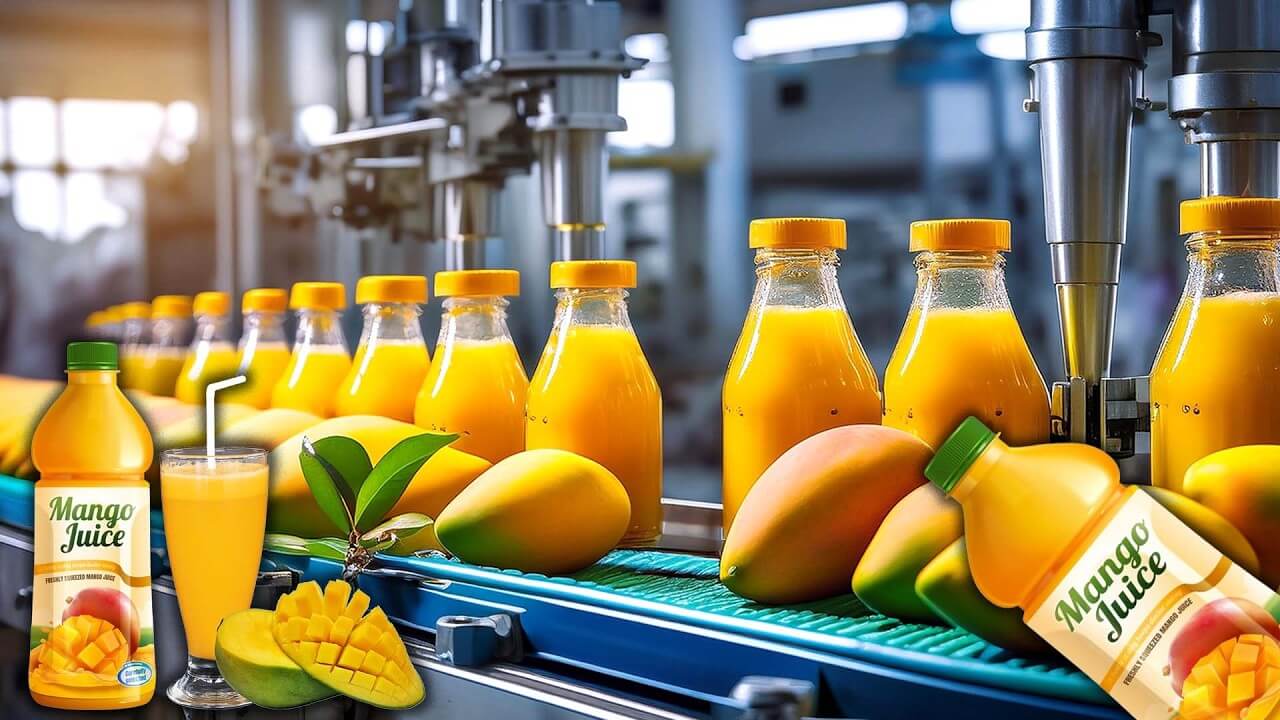
1. How a Coriolis meter measures on a dairy line
A Coriolis tube is driven to oscillate at its resonant frequency, typically 80 to 120 Hz for the small bores used in dairy. Product flows through the tube. The Coriolis effect splits the vibration into a drive mode and a Coriolis mode: the inlet side lags, the outlet side leads, and the phase difference between them is proportional to mass flow. The resonant frequency itself shifts with density, so the transmitter computes density from the same vibration without a second sensor.
That is the whole trick, and it is why the meter reads mass directly. No temperature correction, no assumed specific gravity, no separate density instrument hanging off the line. Cold milk at 4 C and hot return at 72 C weigh the same per kilogram, and the tube does not care which one is moving.
The practical consequence is the one dairy engineers care about: you bill and blend by mass, and the instrument gives you mass without you having to defend a temperature-compensation curve to a quality auditor. On a volume meter, every degree of product-temperature swing is an error you have to model out. On Coriolis, that error source is simply not in the signal path.
One correction worth stating plainly. Coriolis does not measure “flow” by magic. It measures the inertia of what is in the tube. If the tube is not full, or the product is mostly gas, the inertia signal breaks down. We will come back to entrained air, because on dairy and beverage it is the single most common cause of a meter that reads fine on the bench and wanders on the floor.
2. The datasheet numbers that decide whether it works
Spec sheets lead with accuracy, and accuracy is the wrong first filter. Here is the order we actually use when we size a dairy meter, with typical ranges for a food-grade Coriolis (confirm against the specific model’s certificate, never against a brochure average):
- Mass flow accuracy: ±0.10% to ±0.20% of reading on a calibrated unit. The ±0.1% figure is real on good tubes at mid-range; near the low end of the span it stretches. Treat ±0.15% as a planning number.
- Repeatability: ±0.05% of reading. This is what matters for blending and batching, where you repeat the same recipe all day. A meter can be biased and still repeat; for dosing, repeatability beats absolute accuracy.
- Density accuracy: ±0.001 g/cm3 typical, some tubes to ±0.0005 g/cm3. This is the number that drives fat-standardization and Brix control, so do not spec it loosely.
- Turndown (rangeability): around 20:1. This is the weak spot versus electromagnetic (which reaches 100:1). If your line runs mostly at 5% of maximum, Coriolis is the wrong size or the wrong principle.
- Process temperature: commonly -50 C to +200 C. CIP loops hit 60 to 140 C, so the rating is not the limit; the elastomer is (see section 5).
- Pressure rating: PN40 (40 bar) is common on the tube; your process rarely needs it, but it sets the safety margin.
- Ambient and enclosure: -20 C to +60 C, enclosure IP67, often IP69K for washdown floors.
- Bore range: DN8 to DN150 (roughly 1/4 in to 6 in). Past 6 in the price climbs and the benefit does not.
- Explosion protection: optional ATEX Ex d or Ex ia for solvent or dust zones. Most dairy rooms are not, but flavor and extraction areas sometimes are.
The mistake we see most: a buyer fixes on “plus or minus 0.1 percent” and ignores turndown and density accuracy. On a dairy, density accuracy is doing real work in standardization. Spec the density number as carefully as the flow number.
3. Sanitary design: what “cleanable” actually means
“Sanitary” is the most abused word in food instrumentation. On a Coriolis it means concrete things, and an auditor will check each one.
The wetted body is 316L (1.4404), sometimes Hastelloy C-22 where the product is acidic or the CIP aggressive. The internal surface finish is specified, not assumed: Ra 0.5 micrometer is the common sanitary line, electropolished to Ra 0.25 micrometer where biofilm risk is high. You can feel the difference with a finger; more importantly, a smooth surface gives biofilm nowhere to anchor during a long production run.
Connections are clamp unions, not flanges with trapped pockets. Tri-clamp dominates in the US; DIN 11851 and SMS are standard in Europe and Scandinavia; ISO 2852 is the international clamp standard. The joint must be full-bore, with no step into the flow where product stalls. If liquid pools when you pull the line, you have a cleanability defect, full stop.
Seals are food-grade elastomer: EPDM rated to FDA 21 CFR 177.2600 and EC 1935/2004. EPDM survives the CIP temperature window but ages; FKM (Viton) takes more heat and more chemicals at a cost; FFKM (Perfluoroelastomer) is the option when you run both aggressive acid and high temperature and will not compromise. The seal is a consumable. We tell customers to put seal replacement on the planned-maintenance calendar, not wait for a leak.
Certifications are the part auditors ask for by name. 3-A 02-02 is the US sanitary standard for flow meters; EHEDG Type EL Class I is the European hygienic-design guidance. A unit carrying both tells the inspector the geometry was reviewed for cleanability, not just that it is stainless and shiny. We stamp both on every dairy build now. Early on we shipped a cheaper body with neither mark, and a third-party audit flagged it on a customer line. That was the last time.
4. Density as a second instrument: fat standardization and Brix
The density output is why a dairy pays for Coriolis instead of a cheaper volume meter. Two jobs use it directly.
Fat standardization works on a simple fact: milk density falls as fat rises. Whole milk at about 3% fat sits near 1.028 g/cm3; skim runs near 1.033; cream near 1.010. The relationship is close to linear over the normal fat range, so a plant builds a calibration: measure density at two known fat points, fit a line, and the controller holds density on that line by trimming cream into skim through a control valve. Target 3.0% fat, hold the matching density window, and you stop both over-filling cream and shipping under-spec product. The Coriolis gives you that density at line temperature, continuously, with no sampling lag.
Brix is the sugar side. Density at 20 C maps to Brix through the ICUMSA tables, and most transmitters compute Brix internally for juice, syrup, and sweetened beverage. You size a dosing run by mass and check concentration by the same density signal. One instrument, two controlled variables.
A note on honesty: density-to-fat is an empirical model, not a first-principle law. It drifts if solids or protein shift. Plants that need legal-grade fat declaration still run a lab or NIR check; the Coriolis handles the in-line control loop, not the certificate. We size for control, and we say so.
5. CIP and SIP: surviving the clean cycle
CIP is where a dairy meter is proven. A typical loop runs 1 to 2% NaOH (caustic) at 60 to 80 C, then 1 to 2% nitric acid at similar temperature, then a water rinse, each leg 20 to 30 minutes, often daily. SIP pushes to 121 to 140 C for aseptic lines.
A proper Coriolis rides this with no disassembly. The measuring tube is the only wetted path, so there is no gasket maze to swab and no cavity to trap caustic. The limit is the elastomer: EPDM handles the standard CIP window but has a temperature and cycle-life ceiling; for SIP or aggressive cleaning, FKM or FFKM is the call. We specify the seal against the actual CIP recipe, not a generic “food grade.”
What fails if you get this wrong: a seal that softens at the top of the CIP window weeps, caustic wicks into the sensor head, and the transmitter dies mid-cycle. We have seen it. The fix is boring (spec the seal to the recipe) and the cost of missing it is a stripped meter. The trade everyone complains about is price: a sanitary build costs more than the bare industrial tube. But the alternative, pulling the meter to clean it, loses a pasteurizer line for half a shift. The steel was never the expensive part.
6. Where Coriolis earns the money on a dairy
Three spots, and we will put numbers on two of them.
Fat standardization. Blend skim and cream to a target fat. The density read closes the loop. Hold fat within 0.1 percentage point and the cream saving across a year on a mid-size line is measurable in tonnes, not grams. The meter pays for itself in trim cream before the warranty expires, on most lines we have sized.
Dosing and batching. Syrup, flavor, culture, acid. A Coriolis totalizes the exact mass added, so the recipe repeats batch to batch. We have watched plants remove a weighing vessel entirely because the meter did the job inline. Less equipment, fewer clean points, one less thing to calibrate.
Transfer and custody totals. If you bill by the kilo leaving the plant, the mass total is the number the accountant wants, with no density guess and no temperature fudge. For loads that cross a legal custody boundary, the meter needs OIML R117 approval (section 11). A volume meter would force you to defend a temperature and a specific-gravity assumption on every load. Coriolis removes both.
None of this needs the meter to be exotic. It needs it to be honest, cleanable, and sized to the real flow. The rest of the brochure is decoration.
7. The traps that actually bite
Bore too big. Coriolis accuracy falls as velocity drops. A line that trickles through a DN50 body reads worse than the same product in a DN25. Size to your normal flow, then check the low end: if most of your day sits at 20% of range, you bought the wrong meter. The catalog bore chart is where most specs go wrong, and we will die on this hill: anchor the size to operating flow, not to peak.
Vibration. Coriolis measures tube oscillation, so plant vibration couples straight into the signal. Anchor both ends of the meter to a solid run. Keep it off pumps and compressors. Use the support the maker ships; a flexible hose at both ends is not support. We have watched a meter on a skid drift all morning until it was bolted down. Simple fix, long argument with the installer first.
Entrained air. This is the killer on dairy and beverage. Product picks up air at an agitated tank, a poorly primed suction, or a falling inlet. A few percent of bubbles and the density read wanders, then the mass read follows, because the tube is now partly full of something with almost no inertia. One juice line we commissioned read clean for weeks, then jumped every Monday. The weekend CIP had left an air pocket; a de-gas vessel upstream fixed it in an afternoon.
8. Managing entrained air: hardware and signal
You do not beat entrained air by hoping. You design against it.
Mount the meter on a rising run so air bubbles rise past it instead of collecting on the tube. Put a deaeration step or a properly vented header ahead of the meter when the process is foamy or the suction is lift. Some transmitters detect the micro-movement signature of a partially filled tube and flag it instead of reporting a confident wrong number; treat that flag as a process alarm, not a nuisance.
The deeper point: a Coriolis is honest about gas. It will not silently fake a reading the way a volume meter might. That is a feature, but only if the line is designed so the tube stays full. If your process is chronically gassy, solve the process before you blame the meter. We say this to customers who would rather we just “make the number stable,” and it is not popular. It is correct.
9. Coriolis vs electromagnetic vs turbine vs positive-displacement
A spec table beats a paragraph here. Numbers are typical food-grade ranges; confirm on the model certificate.
| Property | Coriolis | Electromagnetic | Turbine | Positive-displacement |
| Measures | Mass + density | Volume only | Volume | Volume |
| Conductive fluid only | No | Yes | No | No |
| Density / Brix output | Yes | No | No | No |
| Typical accuracy | plus or minus 0.1 to 0.2% | plus or minus 0.2 to 0.5% | plus or minus 0.5% | plus or minus 0.1 to 0.5% |
| Turndown | around 20:1 | around 100:1 | around 10:1 | around 10:1 |
| Entrained air tolerance | Poor (needs design) | Good | Poor | Poor |
| Moving parts | None | None | Rotor | Gear or oval |
| Wear / recalibration | None | None | Yes | Yes |
| Max bore | around DN150 | above DN2000 | around DN300 | around DN150 |
| Sanitary build | Yes | Yes | Limited | Limited |
| Relative cost | High | Low to mid | Low | Mid |
The choice is not “which is best.” It is which job. Line metering and standardization on dairy product: Coriolis. Bulk conductive liquid at large bore, no density needed: electromagnetic. Coriolis costs more and tops out on bore, but it returns mass and density from one device with no wearing parts. If you want the longer commercial comparison with our model numbers, that is a separate piece.
10. Installation rules we enforce on every food line
These are not suggestions; they are the difference between a meter that reads and one that lies.
- Support both ends. The meter is a vibrating element. One clamped end and one free end is a resonance problem waiting to happen. Bolt both, and bolt them to structure, not to a flexible line.
- Keep the tube full. Slope the run or mount rising so gas cannot sit in the tube. A full, single-phase tube is the only condition under which the physics holds.
- Avoid direct pump coupling. Mount downstream of a stable section, off the pump skid, with a flexible break if vibration is unavoidable.
- Respect the straight-run need. Coriolis is forgiving on upstream profile compared with EMF, but it still wants a calm, full inlet. We ask for 5 to 10 diameters of straight, calm pipe when the upstream is turbulent.
- Isolate, do not strain. Pipe strain from welding or misalignment bends the tube and biases the zero. Use unions, not hard pulls, and re-zero after the line is welded in.
- Re-zero on site. Factory zero is not field zero. After installation and at temperature, run a zero calibration with product static. A meter that skipped this step will carry a fixed bias all season.
11. Calibration, certification, and what auditors want
Calibration is traceable mass, not a guess. We calibrate on our own benches against reference weights, and the certificate traces to a national standard. For a dairy that is mostly internal control; for loads crossing a custody boundary it is the legal backbone.
- OIML R117 governs automatic gravimetric filling and the pattern approval of instruments for custody transfer of liquids by mass. If you bill by the kilo across a legal boundary, specify an approved body and keep the calibration current.
- 3-A 02-02 and EHEDG cover hygienic design, discussed in section 3. Auditors ask for the mark; have it.
- ISO 9001 is the system baseline; it tells you the build is documented, not that any given unit is good. We hold it, and we still certificate every food meter individually.
- ATEX / IECEx matters where solvent or dust is present. Most dairy rooms are not zoned; flavor and extraction areas sometimes are. Spec it only if the area is.
- FDA / EC 1935/2004 cover the wetted elastomer and any coating. The seal certificate should travel with the meter.
The pattern we recommend: buy the meter with a current calibration, install to section 10, re-zero on site, and calendar the seal replacement. That is the whole maintenance story for a Coriolis on a food line.
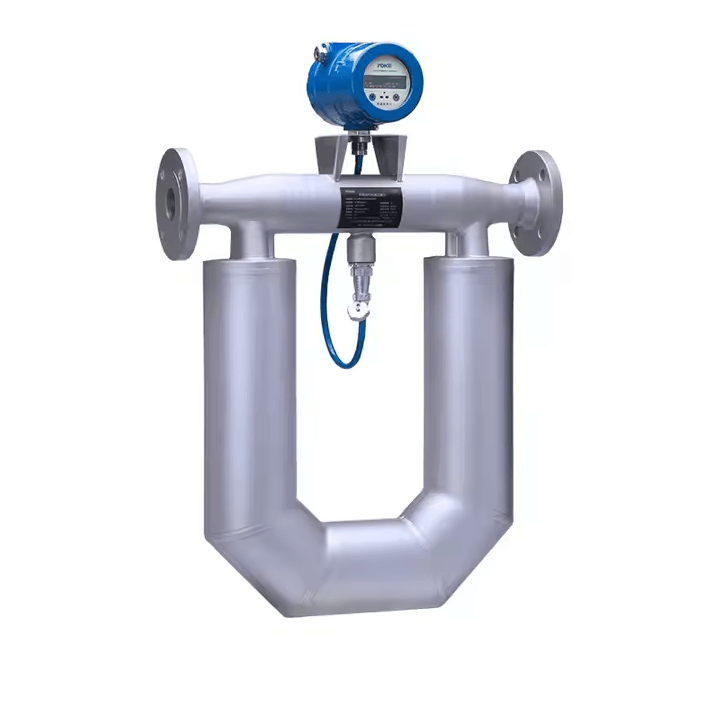
12. Why buying from a manufacturer changes the outcome
We are a group that develops, manufactures, and sells these instruments, not a trader reselling someone else’s tube. That shows up in places a spec sheet does not list.
We machine and weld the 316L bodies in-house, so the hygienic geometry and the surface finish are ours to hold, not a supplier’s to vary. We run our own calibration benches, so a food meter ships with a traceable certificate instead of a generic certificate of conformity. Our application engineers commission the lines, so the sizing you get back fits the plant rather than the catalog. For OEM and ODM programs we build to your connection, bore, and certification list and label under your brand.
The practical upshot for a dairy specifier: one accountable entity from the vibrating tube to the service call. When a meter reads odd on a Monday, you do not get passed between a distributor and a factory in another time zone. You get the people who built and calibrated it.
Closing
If you are speccing a dairy or beverage line, start from the product, not the catalog. Write down the medium, the temperature swing, whether it carries air, the bore and the real operating flow, and whether you need density out of the same device. Size the meter to the flow you actually run. Bring that duty point to a supplier who has commissioned food lines and calibrates its own benches, and the quote will fit the plant.
We build the LONN-CMF series for exactly this: 316L, tri-clamp or DIN/SMS, 3-A and EHEDG, CIP and SIP rated, density output on by default, calibrated on our own mass benches before it ships. Send the duty point and we will size it and return the calibration basis. The worst outcome is a meter that reads pretty on the bench and lies on the floor, and that failure is almost always a sizing or installation mistake, not the tube.
Post time: Sep-23-2026


