

Overview of Copper Electrorefining
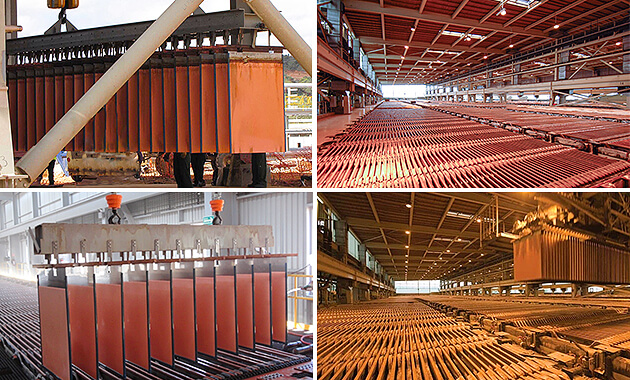
Copper electrorefining is the industrial process used to produce high-purity copper cathodes, typically with purities exceeding 99.99%. This process is essential in meeting international standards, including LME Grade A, demanded by electronics, telecommunications, and renewable energy sectors. During electrorefining, impure copper anodes are immersed in an electrolyte composed of copper sulfate and sulfuric acid. Through controlled electrical current, copper dissolves at the anode and redeposits on high-purity cathode sheets.
The primary function of this process is the separation of copper from contaminants such as lead, arsenic, and antimony. At the anode, copper atoms lose electrons, forming copper ions (Cu²⁺) that migrate through the electrolyte. At the cathode, these ions gain electrons and plate as pure copper. Simultaneously, undesired metals either remain dissolved in the electrolyte or precipitate as insoluble anode slimes, allowing efficient impurity codeposition prevention. The ability to prevent impurity deposition during the refining operation is crucial for copper cathode quality assurance and control.
Electrorefining copper process performance relies heavily on rigorous electrolyte management. The precise composition of the copper sulfate-sulfuric acid mixture, alongside its density and conductivity, directly affects current efficiency in copper electrorefining. Maintaining optimal electrolyte flow ensures homogeneous deposition, prevents local concentration gradients, and facilitates impurity rejection. Operators utilize tools like the Lonnmeter liquid density meter for electrolyte to monitor and adjust liquid density, which impacts solution conductivity and mass transport.
Copper Electrorefining
*
Operational excellence depends on energy consumption reduction in electrorefining and cell voltage optimization. Uncontrolled cell voltages increase energy waste and can degrade cathode quality. Optimizing cell voltage copper refining minimizes electrical resistance losses and lowers production costs. Energy consumption is further reduced by improving electrolyte circulation rates and applying pumping energy saving in electrorefining systems. Effective electrolyte density measurement supports these goals, as solution properties influence both pumping energy and electrical efficiency.
Key challenges in copper electrorefining encompass achieving consistent cathode copper quality, maximizing efficiency, and minimizing energy use. High current densities raise throughput but risk spongy or rough cathode formation and the incorporation of impurities unless carefully managed. Older refineries using starter sheets encounter more frequent cathode replacements and increased operational complexity. Modern cell designs integrate automation, permanent cathodes, digital monitoring, and solution purification reactors to optimize operational safety and product quality while supporting copper electrolyte composition and electrolyte conductivity optimization for industrial-scale output.
Electrolyte management, process optimization, and advanced measurement tools underpin current strategies to enhance copper cathode quality control, reduce operational costs, and address efficiency obstacles in the electrorefining of copper. This continual refinement of copper electrorefining supports the industry’s central role in delivering ultra-pure copper for the modern economy.
Composition and Function of the Copper Sulfate-Sulfuric Acid Electrolyte
The copper sulfate-sulfuric acid mixture is the standard electrolyte in copper electrorefining, providing the essential medium for controlled copper ion transport and deposition. It has two main components: copper sulfate (CuSO₄) as the primary copper ion source and sulfuric acid (H₂SO₄) as the conductivity enhancer and chemical stabilizer.
Chemistry and Key Properties
In practice, the electrolyte commonly consists of 40–50 g/L copper sulfate and approximately 100 g/L sulfuric acid in industrial operations. The mixture is a clear, highly conductive aqueous solution where copper sulfate furnishes Cu²⁺ ions for the electrodeposition process. Sulfuric acid increases the solution’s ionic conductivity, improves electrolyte stability, and helps manage side reactions such as hydrogen evolution at the cathode.
The main electrochemical reactions are as follows:
- Anode: Cu(s) → Cu²⁺(aq) + 2e⁻
- Cathode: Cu²⁺(aq) + 2e⁻ → Cu(s)
Precise control over the concentrations of each component directly impacts reaction rates, current distribution, and the resulting copper cathode’s quality.
Significance of Precise Density and Concentration Control
High-precision control of electrolyte density and composition is critical for copper cathode quality assurance and quality control. Variations in electrolyte density, which correlate with concentration, influence ion mobility and the uniformity of copper deposition. Deviations from target concentrations can result in uneven deposit thickness, increased impurity codeposition, or dendritic (tree-like) copper growth, which compromises product purity and smoothness.
Modern copper refineries use liquid density meters—such as the Lonnmeter—for continuous online liquid density measurement in copper refining. These instruments support real-time electrolyte monitoring to maintain the required copper sulfate and sulfuric acid balance and support downstream copper cathode quality control.
Examples from recent process optimization work highlight that sulfuric acid maintained around 100 g/L achieves optimal current efficiency. This balance maximizes copper yield and supports stable cell conditions, minimizing the occurrence of short circuits or sludge formation from excessive or insufficient acid levels.
Interrelationship Between Electrolyte Composition, Conductivity, and Impurity Codeposition Prevention
Electrolyte conductivity is tightly linked to composition. Sulfuric acid concentration dictates the bulk conductivity of the solution; too little acid leads to high cell resistance and increased energy consumption, while too much acid suppresses copper deposition and can promote impurity codeposition.
Copper sulfate concentration determines the flux of copper ions to the cathode and impacts current efficiency in copper electrorefining. If concentration falls too low, depletion occurs at the cathode, increasing the risk of hydrogen evolution and deposit defects. High concentrations, however, demand precise control to avoid excessive energy use and crystallographic anomalies in the deposited copper.
Proper control of composition and, therefore, conductivity is essential for:
- Cell voltage optimization in copper electrorefining (keeping cell voltage low to reduce energy consumption and heat generation)
- Optimizing current efficiency (ensuring nearly all current is used for copper deposition, not undesired side reactions)
- Preventing impurity codeposition in copper refining (minimizing co-deposition of elements such as lead, arsenic, or antimony that can occur if electrolyte composition is improper)
The result is lower energy consumption, pumping energy savings in electrorefining, improved deposit morphology, and enhanced cathode copper quality assurance. Liquid density and composition monitoring, including inline Lonnmeter systems, is thus central to reducing losses, improving process efficiency, and maintaining consistent copper cathode quality from batch to batch.
These relationships are validated in studies showing that maintaining sulfuric acid at approximately 100 g/L not only optimizes current efficiency but also ensures the lowest risk of impurity co-deposition and robust control over deposit structure, all while supporting energy consumption reduction in copper electrorefining.
Density Measurement in Copper Electrorefining
Electrolyte density is a pivotal indicator in the copper electrorefining process, as it directly reflects the copper sulfate-sulfuric acid mixture’s composition. Maintaining optimal liquid density is essential for reliable cathode copper quality assurance and copper cathode quality control. Operators use density as a rapid measure to infer both copper ion and acid concentrations, enabling precise adjustment for improved current efficiency in copper electrorefining and energy consumption reduction.
The Role of Density in Process Control
Density governs several critical process outcomes:
- Current efficiency and conductivity: Higher copper and acid concentrations increase density, generally improving electrolyte conductivity and current efficiency—up to a threshold. Beyond optimal density, diffusion rates slow and may decrease efficiency, impacting cell voltage optimization and the ability to optimize cell voltage for copper refining.
- Impurity codeposition prevention: Consistent density helps prevent impurity deposition during copper refining by minimizing density fluctuations that encourage codeposition of metals like arsenic, antimony, and bismuth.
- Cathode characteristics: Stable density supports uniform crystal formation, contributing to smoother copper cathodes with fewer defects. Deviations can lead to rough, nodular, or powdery deposits, lowering cathode quality and necessitating more frequent corrective actions.

Liquid Density Meter Technology for Real-Time Optimization
Liquid density meters, particularly vibrating element types, are pivotal tools for electrolyte density monitoring in modern copper electrorefining. These devices enable real-time oversight and control of the copper sulfate–sulfuric acid mixture, directly supporting cathode copper quality assurance and optimizing process efficiency.
Principle of Operation and Process Integration
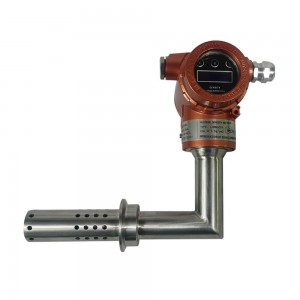
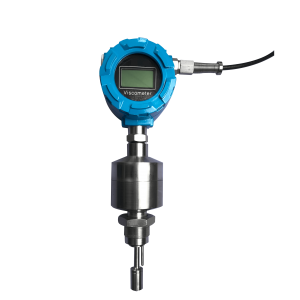
A vibrating element liquid density meter operates by immersing a sensor—often a U-shaped tube, fork, or cylinder—directly into the copper electrolyte. The device measures the sensor’s resonant frequency, which decreases as the electrolyte’s density increases. This frequency is converted into a density value via calibration with standards (such as deionized water and copper sulfate solutions), yielding direct readouts in g/cm³.
Within the electrorefining copper process, these meters integrate seamlessly into the electrolyte circulation loop or process tank. The sensor’s wetted materials, such as titanium or Hastelloy, ensure chemical compatibility with aggressive copper sulfate–sulfuric acid mixtures. Integrated temperature sensors compensate for temperature-induced density shifts, maintaining high precision even as operating conditions fluctuate.
Advantages Over Traditional Measurement Methods
The vibrating element meter surpasses outdated density monitoring tools—for instance, manual hydrometers and periodic gravimetric analyses—by delivering automated, high-frequency digital density data.
Enhanced Process Automation and Supervisory Control:
Real-time inline and online data streams can be linked to the plant’s PLC/SCADA system, enabling automated adjustments of copper sulfate or sulfuric acid dosing, and providing tight feedback for optimal copper electrolyte composition. This automation strengthens cathode copper quality control by stabilizing process parameters and supporting data logging for traceability.
Superior Precision for Electrolyte Management:
Vibrating element liquid density meters provide accuracy up to ±0.001 g/cm³, critical for fine-tuning the copper sulfate–sulfuric acid ratio. Minor deviations in electrolyte density can trigger increases in cell voltage or energy consumption, reduce current efficiency, or promote impurity codeposition onto cathodes. Such meters facilitate optimized cell voltage management and reduce overall energy consumption in electrorefining without frequent manual interventions, directly impacting operating costs and product quality.
Reduced Pumping Energy and Improved Safety:
Inline monitoring reduces the need for sampling, which minimizes electrolyte exposure to air, reducing both risks of contamination and pumping energy required for off-line sample transfer.
Application Examples for Inline and Online Monitoring
Typical setups feature a Lonnmeter vibrating element density sensor installed directly in the electrolyte recirculation line. For instance, in a large-scale tankhouse, the Lonnmeter supplies continuous density readings every few seconds, allowing engineers to observe density trends and respond rapidly to process drifts.
In a practical application, a plant running 1.2 g/cm³ copper sulfate electrolyte achieved tighter control of copper ion concentration using inline density feedback. The improvement raised current efficiency in copper electrorefining, cut energy costs, and reduced the incidence of impurity codeposition. Plants with chemical dosing systems can automate acid or copper dosing based on density setpoints for further electrolyte conductivity optimization.
Battery manufacturers preparing copper sulfate electrolytes also deploy vibrating element meters for quality control; the Lonnmeter ensures target density and concentration are reached before product transfer. Regular calibration with process samples maintains measurement reliability in challenging environments.
Overall, vibrating element density meters fundamentally transform the way copper refining operations monitor and control electrolytes, acting as dependable, high-precision, real-time analyzers that boost both quality and efficiency in every stage of the copper cathode production chain.
Impact of Electrolyte Density Control on Key Performance Indicators
Precise control of electrolyte density, especially in copper sulfate-sulfuric acid mixtures, is central to high-performance copper electrorefining. Density influences cathode copper quality, energy consumption, current efficiency, cell voltage, and overall productivity.
Correlation with Cathode Copper Quality Assurance
Electrolyte density directly affects copper cathode purity and surface quality. When density rises due to increased copper or acid concentration, the movement of anode slimes shifts, heightening impurity codeposition risks—particularly for nickel, lead, and arsenic. Higher-density electrolytes can entrap more particulates, especially under suboptimal electrode spacing or high current density. These embedded impurities degrade cathode smoothness, mechanical integrity, and market acceptance. Multivariate studies show that higher nickel content in dense electrolytes leads to rougher, less pure cathodes, confirmed by scanning electron microscopy and atomic absorption spectroscopy. Additives such as thiourea and gelatine sometimes reduce surface roughness but may, at improper doses, amplify impurity incorporation if electrolyte properties are not tightly regulated.
Influence on Energy Consumption Reduction and Pumping Energy Saving
Density impacts viscosity—higher densities increase resistance to free-flow movement. Pumping the electrolyte thus demands more energy at greater densities; controlling density can provide significant pumping energy savings. Lower-density solutions reduce viscous drag, enabling more efficient electrolyte circulation and heat removal, directly supporting energy consumption reduction in copper electrorefining. Proper liquid density measurement is essential not only for batch quality but also for operational cost control; tools like the Lonnmeter enable accurate, inline density monitoring of the copper electrolyte composition, optimizing pumping schedules and energy expenditure.
Effect on Current Efficiency, Cell Voltage Optimization, and Overall Productivity
The balance of copper and acid concentration (reflected in electrolyte density) governs ion mobility, affecting current efficiency in copper electrorefining. Excessive density leads to sluggish ion transport, boosting cell voltage and reducing efficiency. At ideal density levels, copper ions migrate efficiently to the cathode, decreasing wasteful side reactions and stabilizing cell voltage. Optimizing cell voltage in copper refining is essential—too high increases energy costs and impurity codeposition, too low impedes production rates. Electrolyte density control sharpens these outcomes, maximizing productivity by maintaining optimal charge transfer and cathode build rates. Mathematical models confirm a direct link between electrolyte density, current efficiency, and cell voltage.
Role in Maintaining Optimal Electrolyte Conductivity and Reducing Impurity Codeposition
Copper electrolyte conductivity optimization depends on maintaining target density and copper sulfate content. If density climbs from elevated solute loading or temperature drift, conductivity drops, further increasing cell voltage and risking product quality. High-density electrolytes also increase the chance for impurity codeposition—solid particles and dissolved species (nickel, lead) are more likely to become immobilized or reduced at the cathode surface, especially under improper additive regimes or poor flow conditions. Preventing impurity deposition in copper refining thus requires rigorous density and composition control, robust liquid density measurement in copper refining, and vigilant adjustment of copper sulfate and acid ratios. This integrated approach minimizes impurity incorporation pathways (particle entrapment, electrolyte inclusion, and co-electrodeposition) and supports stringent copper cathode quality control objectives.
Careful management of density within targeted ranges using modern liquid density meters like Lonnmeter reinforces electrolyte cleanliness, reduces energy costs, heightens productivity, and supports high-purity copper production, underscoring its foundational role across all key performance indicators of copper electrorefining.

Refining of Copper - Electroplating Surface Treatment
*
Integration of Density Measurement for Real-Time Adjustment
The real value of density measurement lies in its seamless incorporation into process control workflows. Integrated with SCADA, live density readings from instruments like the Lonnmeter directly inform critical control loops:
- Cell voltage optimization: Adjusting current and voltage parameters in real time, based on measured electrolyte density, avoids overpotential losses and reduces unnecessary energy use.
- Current efficiency control: Maintaining target density ensures high current efficiency by keeping optimal ion concentrations at the cathode, maximizing metal deposition and minimizing parasitic reactions.
- Electrolyte conductivity optimization: Proper density control ensures that the electrolyte remains highly conductive, supporting efficient and uniform metal deposition throughout the electrorefining cells.
- Impurity codeposition prevention: By stabilizing electrolyte characteristics, real-time density data helps maintain conditions that favor selective copper deposition, reducing the risk of co-depositing impurities such as nickel or iron.
Benefits for Reliability, Troubleshooting, and Consistency
Integrating real-time instrumentation within a robust SCADA-platform enhances operational reliability. Operators gain round-the-clock visibility of key process indicators, speeding up detection and response to any deviation in copper electrolyte composition.
This approach provides:
- Better troubleshooting: Immediate data access and historical trend logs support root cause analysis when product quality dips or cell voltages rise unexpectedly.
- Operational reliability: Model-driven control reduces process upsets, minimizes downtime, and prevents costly episodes such as impurity-laden cathode production.
- Batch consistency: Automated control of parameters like density and temperature assures uniform copper deposition characteristics from batch to batch or during continuous runs.
- Reduced energy consumption: Optimizing cell voltage and minimizing unnecessary electrolyte heating directly lowers operational costs.
- Improved current efficiency: By holding optimal electrolyte conditions, more electrical input translates into pure copper recovery instead of side reactions.
- Pumping energy savings: Monitoring electrolyte density facilitates efficient pump control, avoiding over-circulation or cavitation, extending equipment life.
These benefits combine to support effective copper cathode quality control and assure overall productivity and environmental compliance in modern electrorefining operations.
Best Practices for Implementing Liquid Density Meters in Copper Electrorefining
Installation and Calibration Guidelines for High-Concentration Acid Mixtures
Selecting the right liquid density meter for copper electrorefining starts with its material. Wetted parts must resist high concentrations of sulfuric acid and copper sulfate. PTFE, PFA, PVDF, and glass are the preferred materials, offering reliable corrosion resistance in aggressive electrolyte environments. Metals should be avoided unless required; use only high-alloy grades like Hastelloy C-276 or titanium if metallic parts cannot be excluded.
Installation should be in a spot that reflects the bulk copper electrolyte composition. Avoid flow dead zones or places where electrolyte stratifies. Main circulation or recirculation lines are ideal, ensuring uniform copper sulfate–sulfuric acid mixture and consistent density readings. A bypass loop lets you isolate the meter during calibration or maintenance, stabilizing operating conditions and reducing process downtime.
Temperature changes alter sulfuric acid density and, by extension, copper electrolyte composition. Integrate a temperature sensor alongside the density meter and enable temperature compensation on your device. Use calibration samples that mirror actual copper and acid concentrations in your plant. This ensures your liquid density meter for electrolyte provides precise, actionable data for cathode copper quality assurance and current efficiency optimization in copper electrorefining.
Control flow through the density meter to a moderate, stable level. High turbulence causes measurement noise and mechanical wear, while low flow can trap bubbles, skewing readings. Ground all wiring and electrically isolate the instrument. The electrolyte’s high conductivity makes stray currents a risk, potentially affecting cell voltage optimization and copper cathode quality control.
Safety Protocols and Compatibility with Aggressive Electrolytes
Install splash shields and secondary containment around the density meter wherever personnel exposure to copper sulfate–sulfuric acid mixtures is possible. Place warning signage and access restrictions near all meter installations. Ensure that fittings, seals, and junctions are compatible with aggressive electrolytes, avoiding elastomers and plastics not rated for high acid and oxidative conditions.
Electrical isolation and robust grounding are crucial. The risk of stray currents is amplified in copper electrorefining, threatening sensor accuracy and personal safety. Regularly inspect barrier and isolation components to prevent hazardous faults.
Recommendations for Seamless Integration Into Existing Plant Operations
Integrate the density meter into your plant’s existing control system, making use of digital outputs for real-time copper electrolyte composition monitoring. Place meters in main pipelines or recirculation loops for centralized data. Use bypass installations for quick isolation when calibration or maintenance is required, preventing interruptions to cell operation and supporting current efficiency in copper electrorefining.
Coordinate with process engineers to validate density meter location using flow modeling; CFD studies can pinpoint stratification and mixing zones. Use the meter’s output to drive automatic adjustments for cell voltage and electrolyte conductivity, optimizing energy consumption and preventing impurity codeposition during copper refining.
Establish protocols for regular sensor calibration, use reference samples that match the plant’s copper sulfate–sulfuric acid mixture. A maintenance schedule and rapid-access design allow quick reinstatement after cleaning or servicing, minimizing productivity losses and supporting pumping energy saving in electrorefining.






Frequently Asked Questions
What is the role of a liquid density meter in copper electrorefining?
A liquid density meter, such as Lonnmeter, provides continuous, real-time monitoring of the copper sulfate-sulfuric acid mixture in copper electrorefining cells. This enables operators to assess the electrolyte’s density as a direct indicator of copper and sulfuric acid concentrations—two vital parameters for effective copper cathode quality control. Continuous density data integrates with process control systems, allowing precise, automated adjustments to temperature, feed rates, and acid concentrations, markedly reducing reliance on manual sampling. This approach enhances consistency in copper electrolyte composition, supporting targeted conditions for maximizing cathode copper quality and minimizing operational variability.
How does electrolyte density affect cathode copper quality assurance?
Electrolyte density reflects the balance of copper and sulfuric acid in solution. Deviations in density signal shifts in concentration, which, if uncorrected, can lead to the unwanted codeposition of impurities such as nickel, tin, or antimony on the cathode. Maintaining the target density range prevents impurity codeposition, supporting cathode copper quality assurance and ensuring that the final copper product meets stringent purity requirements. Advanced density control also assists in diagnosing problems with electrolyte inclusion, further bolstering copper cathode quality control efforts.
Can accurate density measurement help in energy consumption reduction?
Yes. Precise density measurement enables tighter control over the copper sulfate-sulfuric acid mixture, directly impacting electrolyte conductivity. Since conductivity determines the cell voltage required to drive copper deposition, maintaining the optimal density through real-time measurement ensures minimal energy losses—supporting both cell voltage optimization and reducing energy consumption in copper electrorefining. Proper density management also reduces unnecessary pumping and mixing, further lowering energy demand and operational costs.
Why is current efficiency in electrorefining copper dependent on electrolyte density?
Current efficiency measures the fraction of supplied electrical current used to deposit pure copper. Optimal density guarantees the electrolyte delivers the right balance of copper ions and acid, which is essential for efficient ion transport. If density falls outside the recommended range, unwanted side reactions (like hydrogen or oxygen evolution) can occur, diverting current away from copper deposition and lowering current efficiency. Keeping density within specification is a fundamental strategy for improving current efficiency in copper refining.
How does liquid density measurement contribute to pumping energy saving?
Electrolyte circulation and flow rates must match the solution’s viscosity and density to ensure uniform current distribution and copper deposition. Real-time liquid density measurement offers precise feedback on electrolyte property changes, enabling automated adjustment of pump speeds and mixing systems. By maintaining the correct density, plants avoid excessive pumping, thereby achieving pumping energy saving in electrorefining and extending equipment life through reduced mechanical wear. This also minimizes the potential for localized impurities and uneven copper growth due to stagnant zones in the electrolyte bath.
Post time: Dec-05-2025


