

Continuous density measurement is critical in wax pattern manufacturing for investment casting, directly ensuring dimensional stability, predictable shrinkage, and surface/internal integrity—qualities that transfer to final castings. Density inconsistencies spawn defects like air bubbles, incomplete filling, or uneven shrinkage, which escalate into costly casting flaws downstream. Real-time monitoring controls wax composition, injection parameters, and material uniformity, mitigating risks and upholding the precision needed for reliable investment casting.
Why Wax Pattern Quality Matters
The foundation of the investment casting process lies in the precision of the wax pattern manufacturing process. Every dimensional deviation, surface imperfection, or internal inconsistency in the wax pattern is directly transferred to the final casting. Small variations in wax pattern density or consistency amplify during subsequent steps, resulting in casting defect risks such as shrinkage, dimensional instability, or surface blemishes.

Investment Casting Waxes
*
Wax pattern shrinkage is a core concern. As molten wax cools and solidifies in a mold, it undergoes both linear and volumetric contraction. If the density of the wax blend is inconsistent, this shrinkage becomes unpredictable, jeopardizing wax pattern dimensional accuracy and ultimately the dimensional stability in investment casting. Studies demonstrate that controlling wax density—even with the addition of tailored fillers and resins—can reduce shrinkage by over 4%, vastly improving high-precision wax pattern fabrication used in aerospace and turbine castings.
Surface finish issues are another risk linked to wax pattern consistency. Voids, bubbles, or foreign particulate inclusions in the wax lead to pitting on the mold’s internal surface. As a result, investment casting defects prevention focuses heavily on upstream wax pattern quality control. Even with advanced dewaxing process optimization, if initial shrinkage or patterns defects are present, defects such as cold shuts, rough surfaces, or incomplete fill can arise, increasing rejection rates and costs.
Pattern consistency impacts dimensional stability throughout the entire investment casting process, not only during initial solidification but also during transport, handling, and assembly into clusters. If wax patterns possess heterogeneous strength or density, cluster assembly becomes prone to misalignment, sag, and breakage, compounding the risk of further dimensional errors. Careful monitoring of material quality and handling parameters enables robust investment casting material quality control from the outset.
Wax Types, Blends, and Their Effects
Wax pattern blends are meticulously designed to balance injectability, demolding ease, and finished pattern stability. Paraffin wax is the most widely used constituent; it lends fluidity during molten wax handling for casting and forms a smooth outer surface. Paraffin wax properties—especially melting point and purity—determine both moldability and the shrinkage rate control in casting.
Stearic acid serves as a plasticizer, softening paraffin and promoting both flexibility and demolding efficiency. Peer-reviewed analysis suggests that optimizing paraffin wax ratios in casting, commonly at or near a 1:1 ratio with stearic acid, yields superior results for moldability, shrinkage control, and investment casting surface finish improvement. Precise ratios are adjusted to suit the application: a higher paraffin content increases strength and reduces pattern fragility but may cause bubbling or unstable dimensional returns if too high. Raising the stearic acid proportion beyond optimum improves thermal resistance and surface finish but may reduce pattern mechanical toughness. Mass ratios of 1:1, especially with higher melting point paraffin (above 60°C), are found optimal for many general-purpose wax patterns.
Additives such as beeswax, microcrystalline wax, or minor polymers are routinely incorporated into blends to tune wax patterns for specific casting requirements. Beeswax enhances ductility and modifies curing characteristics; microcrystalline wax improves strength and reduces grain size, producing a finer surface. In settings demanding both low shrinkage and high-fidelity casting, multi-wax blends with paraffin (60%), beeswax (25%), microcrystalline (5%), and carnauba (10%) have demonstrated lower shrinkage and enhanced surface quality.
The presence and ratios of additives impact not just the physical but mechanical properties—pattern strength, elongation at yield, resistance to thermal deformation, and even chemical compatibility with ceramic shell slurries. The correct formulation prevents cluster handling failures, mitigates distortion during molding, and ensures robust performance through to final casting. Additionally, precise control of injection temperature, applied molding force, and holding time are as critical as wax selection for maintaining high-precision wax pattern fabrication.
Wax blend optimization is a data-driven, iterative process. Each material change—whether in paraffin wax properties, stearic acid in wax mixtures, or additive type—can affect pattern shrinkage rate, thermal expansion, and ultimately, casting defect prevention techniques. The resulting gains in pattern accuracy, shrinkage reduction, and surface improvement are integral to the broader agenda of investment casting defects prevention and investment casting surface finish improvement.
Injection Molding for Wax Patterns: Process Considerations
Injection Molding Parameters and Wax Chemistry
Precise control of injection molding parameters is central to the wax pattern manufacturing process and the overall investment casting process. The integrity and dimensional accuracy of wax patterns for casting are strongly affected by injection temperature, pressure, and material flow. Maintaining accurate temperature during injection is particularly important for paraffin wax properties and formulations with additives like stearic acid, as temperature shifts can change molten wax viscosity by an order of magnitude. Lower temperatures rapidly increase viscosity, resulting in incomplete mold filling and surface defects, while excessive temperatures may cause overfilling, surface roughness, or undue shrinkage.
Pressure plays a dual role: sufficient injection pressure ensures full mold filling, capturing fine details critical for high-precision wax pattern fabrication, while excessive pressure risks cavitation—formation of voids and internal cracks. Adjusting injection speed allows manufacturers to balance fill time with pattern detail replication, impacting both surface finish and the potential for investment casting defects.
Wax chemistry critically sets the baseline for injection behavior. Variations in paraffin wax ratios, microcrystalline content, and the use of additives such as cross-linked polystyrene or terephthalic acid directly alter the viscosity profile of the melt. For example, higher paraffin content typically lowers viscosity, aiding flow but raising the risk of sink marks or excessive shrinkage. Conversely, the addition of fillers can increase viscosity and mechanical strength, but, if not well-dispersed, may diminish flow and surface quality. Optimization is iterative and closely tied to real-world feedback; recirculating process learnings into parameter adjustments is vital in investment casting surface finish improvement efforts.
The interplay between wax mixture composition and process parameters is evident: a blend high in polyethylene, for instance, needs careful calibration of injection temperature and pressure to ensure complete mold filling and keep shrinkage rate within target limits. Experimental evidence demonstrates that real-time viscosity adjustments—responsive to wax batch and environmental conditions—are crucial for maintaining pattern integrity and minimizing defects.

Monitoring Density and Material Quality
Continuous density measurement during wax pattern injection molding is necessary for robust investment casting material quality control and shrinkage rate control in casting. Density fluctuations during injection can herald inconsistencies in wax composition, incomplete mold filling, or air entrapment—all significant contributors to investment casting defects.
Lonnmeter, as a manufacturer of inline density meters, provides the capability for real-time tracking of wax pattern density immediately after injection. These instruments, installed on the injection line, submit continuous measurements, allowing quality teams to quickly detect deviations from set density thresholds. This approach aligns with best practices recommending continuous monitoring and logging of density data, which reveals trends and enables immediate material quality monitoring in casting operations.
Real-time density and composition tracking informs operators if molten wax handling needs adjustment—whether through temperature, pressure, or even wax mixture ratio changes. Patterns deviating from target density often display poor dimensional stability in investment casting, leading to variable shrinkage and surface finish problems downstream.
Empirical studies show a direct link between consistent pattern density and the dimensional accuracy of final castings. Patterns with uniform density not only resist warping during de-molding and handling but also minimize unpredictable shrinkage during dewaxing process optimization and ceramic shell firing. These density-driven controls enable tighter process windows and substantially improve as-cast geometry adherence.
Continuous monitoring with precise tools supports defect prevention, enhances the reproducibility of the wax pattern manufacturing process, and forms the backbone of casting defect prevention techniques. By tightly coupling process parameters, wax chemistry, and inline density tracking, manufacturers can deliver consistent, high-quality wax patterns tailored to stringent investment casting applications.
Dimensional Stability, Shrinkage Rate, and Surface Finish
Controlling Shrinkage and Maintaining Dimensional Accuracy
During the investment casting process, the wax pattern undergoes thermal contraction as it cools and solidifies. This contraction, known as shrinkage, is a primary determinant of dimensional stability for the final cast product. The contraction manifests in two phases: initial cooling inside the mold and further shrinkage after demolding as the wax equilibrates with the environment. Both phases are influenced by the wax blend, mold material, geometry, and ambient temperature.
Paraffin-based waxes, commonly used in wax pattern manufacturing, display particularly high sensitivity to thermal variation. Patterns made with unfilled paraffin wax are prone to display greater dimensional changes—up to ±0.4% in length—over a 24-hour period when exposed to temperature fluctuation, compared to filled wax blends. Silicone rubber molds show the least dimensional change among mold materials, offering a notable reduction in shrinkage for paraffin wax patterns.
Material formulation, especially the incorporation of fillers such as starch powder and teraphenolic resin, plays a crucial role. Fillers can diminish linear shrinkage by approximately 4.5% without sacrificing surface integrity. Highly filled waxes not only stabilize dimensions but also make shrinkage less sensitive to environmental temperature variations.
Process parameters also hold significant weight. Injection temperature, holding pressure, and holding time dictate thermal history, internal stress, and the homogeneity of the wax fill. Precision tuning of these parameters, such as with a Taguchi L9 orthogonal optimization, leads directly to reduced variability in shrinkage. For highly complex or dimensionally sensitive parts, finite element analysis (FEA) is vital. FEA enables accurate prediction and correction of shrinkage, warpage, and other deformations at the design stage. For example, turbine blade patterns fabricated with FEA-guided parameters exhibit significantly less warping, as validated by coordinate measuring machines and optical analysis.
Real-time density monitoring during the wax pattern injection phase validates and tunes simulations to actual conditions. Such continuous measurement supports dynamic adjustment of process parameters, thus tightly controlling shrinkage allowance and ensuring dimensional accuracy. The implementation of in-line density meters, such as those produced by Lonnmeter, has been shown to provide immediate feedback essential for compensation during the wax pattern fabrication process.
A representative chart below illustrates the shrinkage rate for wax patterns as a function of paraffin–filler ratios and ambient temperature:
| Wax Formulation | Ambient Temp -5°C | 20°C | 35°C |
|---------------------------|-------------------|------|------|
| Pure Paraffin | +0.31% | 0.00%| -0.11%|
| Paraffin + 10% Starch | +0.10% | 0.00%| -0.03%|
| Paraffin + 10% TP Resin | +0.12% | 0.00%| -0.04%|
| Silicone Mold (Best Case) | +0.05% | 0.00%| -0.01%|
This emphasizes that both formulation and controlled environment are required to constrain shrinkage for high-precision wax pattern manufacturing.
Achieving Optimal Surface Finish
The surface finish of wax patterns has a direct impact on investment casting surface finish improvement and defect prevention. Surface character is primarily governed by wax formulation and precise control of the injection molding process. Smooth patterns minimize the risk of surface-related investment casting defects and facilitate easy demolding.
The ratio of paraffin wax to stearic acid within a blend is a critical lever for controlling surface quality. Increasing the stearic acid proportion, in ranges from 5% to 15%, has been shown to both improve surface smoothness and enhance demolding. Stearic acid acts as a plasticizer, augmenting the flow properties of wax during the injection phase and enabling finer mold replication. Near-equal ratios of paraffin to stearic acid (e.g., 1:1) are patented for yielding optimal results: lower shrinkage, superior dimensional stability, and considerable surface finish improvement.
However, the benefit is nuanced—higher stearic acid ratios lower shrinkage but may alter wax flow and curing properties if exceeded beyond optimal bounds. The paraffin–stearic acid blend impacts the rheology of the molten wax, affecting both surface finish and internal pattern density. As such, material quality monitoring and strict process control are essential during molten wax handling for casting.
Wax pattern injection molding parameters—particularly temperature and pressure—also carry powerful influence. Wax viscosity, which can vary by an order of magnitude between 60°C and 90°C, determines the completeness and fidelity of mold filling. Inadequate temperature or pressure causes incomplete fill, cold shuts, surface burrs, and roughness. Conversely, optimized parameters enhance wax flow, yielding patterns with finer surface details and minimal surface inconsistencies.
Graphical data highlight the effect of stearic acid ratio on average surface roughness (Ra):
| Stearic Acid (%) | Avg. Surface Roughness Ra (µm) |
|------------------|-------------------------------|
| 0 | 1.7 |
| 5 | 1.3 |
| 10 | 1.0 |
| 15 | 0.9 |
This demonstrates that increasing stearic acid content in controlled ranges results in perceptibly smoother wax pattern surfaces, beneficial for downstream casting processes.
In summary, managing key variables—shrinkage and surface finish—relies on the synergy between careful wax blend selection, real-time process measurement, process optimization, and rigorous control of environmental and injection parameters. This holistic approach underpins high-precision wax pattern fabrication, robust investment casting defect prevention, and superior final surface quality in castings.
Paraffin Ratio Control and Additive Management
Precise control of paraffin wax ratios in wax pattern manufacturing is foundational to the investment casting process. The proportion of paraffin within a blend alters core material responses: liquidity for injection molding, mechanical strength, and efficiency of pattern removal during dewaxing. Fine-tuning these characteristics addresses both casting defect prevention and the drive for improved surface finish and dimensional accuracy.
Paraffin wax, when present at higher concentrations—up to approximately 40–45 wt%—increases the elasticity of wax blends and reduces their vulnerability to thermal fluctuations. Such compositions support robust energy absorption during handling and processing, yielding patterns with both good processability and stable shape retention. However, excessive paraffin can compromise mechanical integrity by destabilizing the blend’s crystal network, which weakens the pattern and can introduce dimensional inaccuracies or microcracks that surface during dewaxing or metal casting.
Shrinkage rate control and dimensional stability remain directly tied to paraffin content as well. A balanced paraffin ratio governs melt behavior and cooling-induced contraction, both major variables influencing the final geometry of wax patterns for casting. For instance, patterns with suboptimal paraffin ratios may display increased linear or volumetric shrinkage, impacting mold-fit and downstream casting quality. Keeping this balance enhances both wax pattern injection molding yield and surface detail transfer.
Additive selection—particularly the use of stearic acid—complements paraffin ratio control in tailoring wax blend function. Stearic acid modifies crystallization, promoting denser and larger crystallites that impart greater compactness and shear work capacity. With paraffin–stearic acid blends, the optimization of this ratio boosts not only mechanical robustness but also dewaxing process reliability. Properly formulated, these blends yield patterns that demold cleanly and result in better surface finish of the resulting castings. If stearic acid concentrations stray too high, however, unwanted chemical reactions (like saponification) may occur, risking surface roughness and even mold deterioration.
Underpinning these material choices are rigorous quality monitoring practices. Blends must undergo regular density measurement to verify homogeneity and detect contamination with non-target waxes or particulates. Modern protocols call for both laboratory analysis—using methods such as gas chromatography and differential scanning calorimetry to establish compositional fingerprints—and in-process physical testing for key properties like melt point and viscosity. Consistent physical parameters flag a blend as homogeneous, supporting dimensional stability and defect prevention.
Manufacturers increasingly rely on continuous measurement tools—like inline density meters produced by Lonnmeter—to deliver real-time feedback during molten wax handling for casting. These tools, integrated into manufacturing lines, allow close monitoring of paraffin wax properties at all stages. Combined with periodic laboratory techniques for contaminant screening and microstructural verification, this approach forms a robust shield against quality variation.
Routine monitoring enables immediate correction of paraffin ratios or additive levels, supporting stable shrinkage rates and repeatable pattern dimensional accuracy. In production environments, blend data from inline measurement systems can be incorporated into broader quality management protocols, ensuring that each batch aligns with targeted wax pattern fabrication parameters and regulatory requirements.
In summary, achieving optimal paraffin wax ratios and managing additive content—particularly stearic acid—demands a rigorous system of blend design, real-time process control, and continuous measurement. This strategy ensures reliable mechanical behavior, efficient dewaxing, and consistent high-quality wax patterns essential for high-precision casting outcomes.
Dewaxing Performance and Casting Defect Prevention
Dewaxing Efficiency Linked to Wax Composition
Wax pattern composition plays a decisive role in the dewaxing step of the investment casting process. The thermal expansion and melting behaviors of the wax mixture directly affect ceramic shell robustness. Paraffin wax, with its low cost and favorable injection molding properties, expands rapidly when heated. If not carefully managed, this rapid volumetric increase exerts excessive internal pressure that can fracture the shell, especially near thin or geometrically complex regions. In contrast, microcrystalline wax or waxes with controlled stearic acid additions can offer more gradual softening and lower expansion rates, reducing the risk of shell cracking during dewaxing.
The paraffin-to-stearic acid ratio must be balanced. Higher stearic acid lowers wax viscosity, making molten wax drain more efficiently and reducing the chance of incomplete evacuation and residue. However, excessive stearic acid can increase the expansion rate, paradoxically increasing the risk of cracking. Precise formulation tailoring—such as limiting stearic acid levels and using in-process thermal expansion measurement—helps align wax properties with shell strength and the specific parameters of autoclave or furnace dewaxing cycles.
Experimental data confirms that waxes with optimized shrinkage and expansion characteristics reduce the occurrence of defects like shell cracks and incomplete wax removal. Uniform pattern wall thickness and strategically placed cores or vents further help relieve pressure and promote thorough drainage. Vent design, fast autoclave pressurization, and controlled heating rates are proven strategies to minimize damage during rapid paraffin wax removal.
Incomplete wax removal or uneven melting leaves residues trapped on the ceramic shell surface, risking inclusion-type defects. To address this, the dewaxing process must be closely aligned with pattern composition—requiring robust monitoring of wax melting behaviors and shell temperature profiles. The use of dewaxing methods such as FlashFire—involving inert gas shielding—can further protect shells from failure or wax combustion, especially in volatile paraffin or mixed wax patterns.
Preventing Casting Defects through Process Control
Rigorous control of the wax pattern manufacturing process is foundational to investment casting defects prevention. Variations in density, composition, and dimensional stability within the wax pattern propagate directly to ceramic shell quality, and later, to the cast metal. Patterns with density inconsistencies or poorly controlled shrinkage rates can cause localized shell weakness, increasing the risk of shell failure or casting rejects with surface pits, misruns, or dimensional anomalies .
Continuous monitoring of wax pattern density, possibly through inline density meters such as those manufactured by Lonnmeter, helps ensure high-precision wax pattern fabrication. By confirming the uniformity of paraffin wax properties across all injected patterns, process engineers can quickly detect issues such as cold or poorly mixed wax leading to voids, air inclusions, or surface graining. Early detection and process correction at this stage prevent later emergence of shell cracks or dimensional instability during dewaxing and metal pouring.
Surface pitting and dimensional defects often trace back to improper handling or formulation of wax mixtures—such as temperature fluctuations, excessive moisture, or contamination during pattern injection. Strict material quality monitoring and environmental controls (temperature, humidity) during wax pattern injection molding substantially improve surface finish in castings and limit the risk of shrinkage distortion.
The dewaxing process, particularly the rate and uniformity of shell heating, must be precisely controlled to safeguard shell integrity. Monitoring temperature rise, shell permeability, and wax evacuation kinetics allows for rapid intervention if anomalies—like excessive pressure build-up or incomplete removal—are detected. In-line process control, paired with data on wax density and composition, enables manufacturers to maintain dimensional stability and reduce downstream defects related to shell failure, surface inclusions, or out-of-tolerance castings.
Comprehensive root cause analysis of common defects—ranging from shell cracking and surface inclusions to shrinkage cavities—reveals that proactive interventions at the wax handling and dewaxing stages are the most effective means for casting defect prevention. With investment casting tolerances becoming more stringent, the synergy of controlled material preparation, precise process monitoring, and optimized dewaxing cycles is crucial to achieving both robust shell molds and defect-free final castings.

Continuous Measurement and QA Integration
Continuous measurement of wax pattern density and consistency is the cornerstone of quality assurance in high-precision wax pattern manufacturing. Two primary strategies exist: sample-to-sample and inline measurement. Sample-to-sample measurement relies on selecting parts from production, then measuring their weight, dimensions, or displacement to calculate density. While straightforward, this method introduces latency between deviation occurrence and detection, potentially allowing out-of-specification patterns to continue down the line undetected.
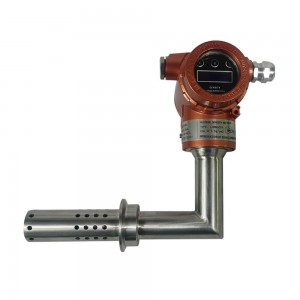
Inline measurement addresses these shortcomings by integrating sensor platforms directly into the wax pattern injection molding process. Inline density meters, such as those produced by Lonnmeter, continuously monitor parameters like mass flow, volume displacement, or density proxies in real time during production. For instance, an inline density meter can be installed downstream of the injection press to track the density profile of each wax pattern as it exits the mold. Deviations from set density thresholds immediately trigger alarms or process adjustments, minimizing the risk of investment casting defects and stabilizing both shrinkage rate and dimensional accuracy.
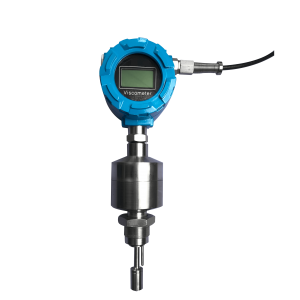
Advanced inline viscosity meters complement density monitoring by measuring the flow characteristics of molten wax. Since the ratio of paraffin wax to stearic acid and other additives influences both material flow and solidified pattern density, real-time viscosity data provides valuable feedback for maintaining optimal wax mixture properties. In practice, sensor signals from inline density and viscosity meters are integrated into the wax pattern fabrication process, driving tight control over both wax composition and molten wax handling for casting.
Although Lonnmeter focuses strictly on physical sensor instrumentation, sensors are designed to output continuous, high-resolution data that is crucial for documentation and process traceability. Each density reading can be synchronized with unique pattern identifiers—such as batch numbers or digital tags—forming a cohesive quality data record that extends from wax injection through to mold assembly.
This quality data serves several critical functions:
- Immediate defect detection and investment casting defect prevention, by triggering responses to deviations in material consistency, density, or viscosity.
- Long-term process improvement, enabling retrospective analysis of density trends, paraffin wax properties, and their effects on wax pattern dimensional stability or surface finish.
- Full traceability, by maintaining a digital trail of measurement results across an entire production run. This supports regulatory requirements in high-reliability industries and allows precise targeting during investigations of casting defect origins.
The data captured by inline meters such as those from Lonnmeter is typically mapped to pattern characteristics including density variability, shrinkage rate profiles, and other key parameters influencing the investment casting process. As a practical example, density readings outside a predefined range can indicate issues in paraffin wax ratios, temperature fluctuations, or improper handling, all of which can be rapidly identified and addressed to prevent defects and improve casting surface finish.
Graphical representation of wax pattern density trends over time, constructed from inline meter data, is a critical visualization tool for both operators and process engineers. These visualizations help to quickly identify process drifts—whether cyclical, random, or systematic—which can then be correlated with operational events or material changes, ensuring robust material quality monitoring in casting.
Comprehensively, continuous, inline measurement and rigorous QA data integration enable wax pattern manufacturing operations to minimize manual inspection, increase throughput, and systematically improve core casting outcomes: dimensional accuracy, shrinkage control, and surface quality. This approach delivers a structured and auditable path to reducing defects and enhancing the reproducibility of high-precision wax patterns across all investment casting applications.






Frequently Asked Questions
What is the importance of continuous density measurement in wax pattern manufacturing?
Continuous density measurement acts as a cornerstone of wax pattern manufacturing. Uniform density ensures that wax patterns replicate design geometry accurately, crucial for investment casting process success. Variations in wax density directly impact dimensional stability, shrinkage rates, and surface finish quality of patterns. Inconsistent density can lead to trapped air, incomplete filling, and internal flaws, which ultimately increase the risk of casting defects or rework. Early detection of such inconsistencies—especially with inline density meters like those manufactured by Lonnmeter—enables immediate process adjustments. This leads to improved process yield, tighter dimensional tolerances, and enhanced surface integrity across both traditional and rapid prototyping approaches for wax patterns for casting. Direct, real-time measurement provides critical material quality monitoring in casting and supports rapid response in high-throughput settings, making it fundamental for robust investment casting material quality control and casting defect prevention techniques.
How does paraffin wax ratio affect wax pattern manufacturing?
The paraffin wax ratio in a blend governs core properties such as liquidity, mechanical strength, shrinkage behavior, and pattern release ease. Higher paraffin content typically boosts liquidity, making molten wax handling for casting more efficient and enabling smooth pattern filling during wax pattern injection molding. However, excessive paraffin can increase shrinkage and lower strength, risking distortion and defects during cooling or dewaxing. By optimizing paraffin wax ratios in casting, manufacturers can achieve a balance—sufficient strength for handling, controlled shrinkage for dimensional precision, and surface finish improvement. Integration of microcrystalline wax or polymers with paraffin wax can further enhance mechanical robustness and shrinkage rate control in casting. The precise ratio must align with specific pattern requirements, influencing everything from pattern removal to investment casting defects prevention.
Why is dimensional stability critical in the investment casting process?
Dimensional stability in wax patterns is the basis for producing final castings that match design specifications. If a wax pattern deforms or shrinks unpredictably, the corresponding metal casting will inherit these deviations, resulting in parts that may not fit or function as intended. For high-precision wax pattern fabrication, controlling dimensional stability at every stage is vital to avoid costly post-casting adjustments or scrap. Consistent patterns underpin the investment casting process, where even small instabilities can translate to expensive mold rework, assembly failures, or compromised product reliability. As such, dimensional stability supports overall process efficiency and investment casting material quality control.
What role does stearic acid play in wax pattern injection molding?
Stearic acid is incorporated into wax mixtures as a process modifier. Its inclusion improves the flow characteristics of molten wax during wax pattern injection molding, reducing the viscosity and enabling wax to fill mold cavities thoroughly—even those with complex geometries. Besides enhancing liquidity, stearic acid acts as an internal mold release agent, minimizing the pattern’s adherence to mold walls and lowering the chance of pattern tearing or incomplete filling. This results in cleaner separations, fewer surface imperfections, and reliable reproductions—channeled benefits for improving surface finish in castings and minimizing pattern-related casting defect risks.
How can monitoring shrinkage rate prevent casting defects?
Shrinkage rate control in casting is essential for preventing dimensional deviations, porosity, and cracking in finished products. Real-time monitoring of wax pattern shrinkage—using either direct measurement or adaptive modeling—enables process engineers to proactively adjust parameters such as mold temperature, injection speed, or cooling rate. Close surveillance allows identification of regions at risk for excessive contraction, so conditions can be modified before defects arise. Examples in literature demonstrate that this adaptive management reduces both minor and major casting defects, leading to higher first-pass yields and reduced scrap. In investment casting, continuous shrinkage monitoring aligns closely with other defect prevention techniques, particularly when patterns must retain intricate geometries for critical applications.
Post time: Dec-15-2025


