

Continuous density measurement delivers real-time, high-resolution data on fluid density within the hydrocarbon processing industry. This approach is indispensable for advanced petroleum refining, where in-line measurements drive quality and efficiency in processes such as blending, separating, and evaporating. As refiners strive for tighter product specification and process flexibility, unbroken density tracking has become a standard supporting precise operational control and safety.
Reliable continuous density measurement is critical for key refinery operations. In blending processes, especially those involved in hydrocarbon blending optimization techniques, density data enables the creation of on-spec final products by allowing for continuous, automated adjustment of component ratios. Inaccurate density readings can lead to costly re-blends, product downgrades, or out-of-spec shipments. The atmospheric distillation in oil refining and vacuum distillation applications depend heavily on real-time density profiles to determine product cut points and maximize yields. For instance, advanced distillation technologies use inline density meters to monitor separated fractions, ensuring optimal recovery of light and heavy ends with minimal contamination between streams.

Petroleum Refinery
*
Density measurement also improves separation and evaporation processes. In the fluid catalytic cracking (FCC) process and hydrocracking fractionation methods, continuous knowledge of density enables operators to dynamically control operational parameters such as temperature, pressure, and feed rates. This regular data flow boosts refining unit performance optimization by reducing energy consumption and preventing off-spec products. Similarly, industrial evaporating techniques in refining rely on process density control to achieve precise removal of volatiles, crucial for both safety and economic performance in operations such as the delayed coking process overview.
The specific demands of liquid hydrocarbon measurement techniques in modern refinery environments are significant. Most units operate under high pressure and temperature, introducing potential measurement errors due to vapor formation, phase transition, or fouling. There is a need for robust, durable in-line density meter designs—such as those produced by Lonnmeter—that withstand aggressive conditions without frequent recalibration or drift. Additionally, custody transfer in hydrocarbon processing places legal and commercial weight on density measurements: accuracy is vital during custody transfer, since even minor deviations impact invoicing, taxation, and contractual compliance. Accurate custody transfer measurement methods must address entrained gases and multiphase flows to ensure trustworthy handed-over value.
Liquid interface detection technology is also fundamental for hydrocarbon fractionation processes and reforming unit operations. Interface detection sensors for liquids, often integrated with inline density meters, identify phase boundaries and prevent mixing of light and heavy streams—key to quality and operational uptime. Mixture interfaces in tanks or pipelines must be rapidly detected and controlled to avoid cross-contamination or yield loss.
Modern refinery constraints—complex product slates, frequent grade changes, and heightened environmental oversight—underscore the need for reliable continuous density measurement in oil and gas streams. The current technological landscape leverages advanced instrumentation for uninterrupted performance, with in-line meters remaining central to process resilience and profitability. Without real-time density readings, the risk of process upset, safety incident, or regulatory breach increases markedly, highlighting the measurement’s essential role from the crude distillation unit through downstream hydrocarbon blending.
The continuous application of these technologies demands solutions that provide consistent accuracy, withstand harsh conditions, and integrate seamlessly into existing plant architectures. This convergence of operational necessity, measurement technology, and process control is where inline density meters underpin the advanced performance of the contemporary hydrocarbon processing industry.
Integration of Continuous Density Measurement Across Refining Units
Atmospheric and Vacuum Distillation
Continuous density measurement is central to the atmospheric and vacuum distillation processes in petroleum refining. Real-time monitoring of liquid density enables operators to separate crude oil into distinct hydrocarbon fractions with greater precision. Inline density meters, such as those from Lonnmeter, provide immediate feedback on process streams, allowing for tighter control of product specifications and blend quality.
Crude fractions in atmospheric distillation—including naphtha, kerosene, and diesel—have unique density profiles. Real-time density readings ensure fractions meet strict requirements for downstream hydrocarbon blending optimization. In vacuum distillation, continuous density measurement is vital for managing challenging high-boiling-point fractions. The dense and viscous nature of vacuum residues makes accurate measurement difficult with traditional offline methods, which often suffer from sample non-homogeneity and slow response times.
The adoption of advanced techniques, such as solvent (toluene) dilution, has transformed density analysis of heavy and viscous fractions. By diluting residues prior to measurement, operators achieve higher repeatability and reliability, eliminating error caused by sample handling and viscosity effects. Experimental research demonstrates substantial improvements in density data quality for vacuum residues and fractions using this method, underpinning enhanced separation and consistent adherence to product specifications.
With integrated inline density meters, the distillation towers benefit from real-time alerting and adjustments. This supports compliance with environmental standards, minimizes operational inefficiencies, and meets demands for advanced distillation technologies.
Fluid Catalytic Cracking (FCC) and Hydrocracking Fractionation
During fluid catalytic cracking and hydrocracking, precise density measurement is used to optimize fraction quality and achieve efficiency in catalyst use. Inline density meters enable instant detection of shifts in hydrocarbon composition, facilitating control over the cracking reactions and product slate. This real-time data mitigates process variability and improves the selective hydrocracking of heavier molecules.
Continuous density measurement directly impacts the hydrocarbon fractionation process, ensuring that lighter and heavier products are properly separated, which is critical for maximizing throughput and economic value. Operators utilize density readings to adjust cut points and maintain quality in gas oils, cycle oils, and lighter cracked products. Consistent monitoring increases return on investment by optimizing liquid hydrocarbon measurement techniques and maintaining stringent custody transfer in hydrocarbon processing.
Density data also provides insights into catalyst deactivation rates and fouling, helping inform proactive maintenance and operational adjustments. Inline measurement allows blending processes in hydrocarbon refining to be precisely managed, reducing off-spec product generation and minimizing downtime.
Delayed Coking and Reforming Units
In delayed coking units, density measurement is essential for efficient conversion of heavy residual oils into lighter products and coke. Inline sensors continuously classify product streams, improving yield forecasting and providing robust product quality assurance. Accurate data distinguishes between heavy gas oil, light gas oil, and intermediate products. This enhances industrial evaporating techniques in refining and supports the control of the coking process.
For reforming units, density readings track shifts in chemical composition as feedstocks are transformed to produce high-octane hydrocarbons. Continuous data supports hydrocarbon fractionation processes and guarantees that product specifications for reformate and hydrogen-rich streams are consistently met. Real-time density information sharpens refining unit performance optimization by enabling operators to respond immediately to process variations.
The integration of continuous inline density measurement across atmospheric distillation, vacuum distillation, FCC, hydrocracking, delayed coking, and reforming units elevates overall plant transparency, process control, and product quality. The result is efficient operation and optimized product streams throughout the hydrocarbon processing industry.

Applications in Key Refinery Operations
Blending Optimization
Achieving precise control over blending processes in hydrocarbon refining requires accurate and continuous density measurement. Inline density meters, such as those produced by Lonnmeter, deliver real-time data crucial for automating the mixing of various petroleum fractions. Since the density of each feedstock affects both blending ratios and target qualities such as API gravity and octane number, even minor fluctuations can lead to off-spec products.
Operators use continuous density readings to rapidly adjust flow rates and proportions among components, ensuring that the blend consistently meets specification. This minimizes the volume of rework or downgraded product and reduces the risk of deviation from regulatory standards. For example, in a gasoline blending unit, continuous density data enables the system to automatically respond if one input stream varies in density—correcting proportions without manual intervention. Studies show these methods decrease blend failure incidents and enhance traceability for hydrocarbon product batches, directly supporting industry and contractual obligations.
Custody Transfer Assurance
Accurate custody transfer in the hydrocarbon processing industry depends on precise and traceable liquid hydrocarbon measurement techniques. During product movement between companies, such as from refinery to terminal or pipeline, measurement errors can produce significant financial consequences and disputes. Continuous density meters from Lonnmeter ensure that volume-to-mass conversions are accurate during these transfers, supporting both regulatory compliance and financial risk reduction.
Refinery operations apply these inline density measurement devices to cross-check transaction figures against contractual terms. Strict adherence to standards, like those set by API and ASTM, maintains the credibility of custody transfer records and minimizes the potential for costly disputes. In advanced distillation technologies, the assurance of density consistency directly impacts billing, inventory control, and regulatory audits.
Liquid Interface Detection
Identifying liquid interfaces is critical during product changeovers, storage, and transfer to prevent contamination and maintain product integrity. Inline density meters deployed as interface detection sensors for liquids rapidly identify phase boundaries, such as the transition from gasoline to diesel or from hydrocarbon to water, by monitoring sudden changes in density values.
Operators rely on these readings to trigger process actions—like diverting flow, switching tanks, or initiating flushes—to protect quality and safety. For example, in crude oil storage, accurate interface detection technologies prevent mixing of incompatible grades, which supports efficient hydrocarbon fractionation processes and protects downstream equipment. Inline density measurement in oil and gas also enhances operator response during abnormal events, reducing risks related to flammable or hazardous liquid excursions.
Summary Table: Key Applications of Continuous Density Measurement
| Application | Control Variable | Primary Outcome | Key Technology |
| Blending Optimization | Blend ratio, density | Minimizes off-spec product | Inline density meter |
| Custody Transfer Assurance | Density, mass | Regulatory and fiscal accuracy | Inline density meter |
| Liquid Interface Detection | Density shifts | Product and safety integrity | Interface detection sensor |
Constant, accurate density monitoring by Lonnmeter’s inline devices is essential for hydrocarbon blending optimization techniques, accurate custody transfer measurement methods, and liquid interface detection technology, supporting safe, efficient, and compliant refinery operations at every key process junction.
Refinery Complexity and Process Control Enhancement
Integration of continuous density measurement using inline sensors such as those manufactured by Lonnmeter has transformed complexity management in refining operations. In the hydrocarbon processing industry, real-time data from inline density meters now serves as a critical variable in orchestrating the intricate workflows of atmospheric distillation, vacuum distillation, blending, fluid catalytic cracking (FCC), hydrocracking fractionation, and delayed coking. Continuous density measurement in oil and gas allows the rapid identification of deviations in feedstock quality and product streams. This supports not only immediate process corrections but also enables more adaptive and intelligent process control across all refinery units.
Real-time density data feeds directly into the calculation of refinery complexity indices. These indices incorporate both the physical structures and operational parameters of a site, and are vital for benchmarking, economic decision-making, and strategic planning. Continuous updates from inline density meters ensure that these indices faithfully represent actual, rather than nominal, process performance—especially as crude qualities, processed volumes, and yields can change rapidly with each delivery or operational adjustment.
Modern process modeling approaches rely on this high-frequency data to improve accuracy. For example, in blending processes for hydrocarbon refining, density tracking at key points allows for precise ratio adjustments to achieve product specifications. In atmospheric and vacuum distillation, continuous density measurement alerts operators to shifts in column draw-off composition, supporting immediate correction and safeguarding product cuts. These enhanced liquid hydrocarbon measurement techniques also add substantial rigor during custody transfer in hydrocarbon processing, improving traceability and regulatory compliance through robust, validated data trails.
Hierarchical optimization strategies have gained ground as refineries grow more complex. These strategies leverage process models structured in layers—from individual unit operation to site-wide orchestration. Mixed-Integer Linear Programming (MILP), a class of optimization supported by real-time measurement, is increasingly deployed for end-to-end scheduling and resource allocation. For example, MILP models routinely integrate live density data to refine crude slate scheduling, adapt to stochastic events (such as cargo arrivals), and optimize product distribution along the supply chain. This hierarchical control allows refineries to align feed management, distillation, blending, and product shipment in nearly seamless real-time, reducing bottlenecks and maximizing throughput.
Continuous density measurement supports digital twins and predictive control frameworks by providing updated process state information for simulations and scenario analysis. In hydrocarbon fractionation processes, inline density sensors from Lonnmeter deliver critical feedback, maintaining accurate process models that underpin advanced distillation technologies and real-time control loops. These technologies also improve the reliability of liquid interface detection technology, helping to determine transition points between products or batches, and assist interface detection sensors for liquids during grade changeovers or tank switching.
The application of these measurement systems underpins a new paradigm of process performance optimization. For example, refinery-wide density profiles enable predictive adjustments to control parameters during industrial evaporating techniques, or as input data for final product reconciliation in reforming unit operations. Correctly calibrated density measurements become foundational to accurate custody transfer measurement methods—a crucial requirement in both domestic and international hydrocarbon commerce.
The impact is best visualized by examining typical refinery workflows. Prior to integration of continuous, real-time measurement, complexity management relied largely on human expert estimates and infrequent lab measurements, often leading to operational lag and inefficiency. The introduction of real-time density streaming enables dynamic recalibration of complexity indices and process models. The chart below illustrates this transition:
This time series demonstrates both smoother operational schedules and greater agility in responding to crude changes after continuous density measurement adoption. Each anomaly or process inflection shown aligned with density deviations, triggers immediate model recalibration, and drives optimization decisions through the plant hierarchy. Consequently, hydrocarbon blending optimization techniques are improved, process waste minimized, and product quality specifications achieved with higher confidence.
In sum, continuous density measurement is not only a critical enabler of accurate process control in modern refining, but is now essential infrastructure for complexity management, unit performance optimization, and sustainable economic operation in the hydrocarbon processing industry.
Methods and Technologies in Continuous Density Measurement
Continuous density measurement forms the backbone of critical operations across the hydrocarbon processing industry, from custody transfer in oil and gas to blending processes in refinery units. The principal instrument types are Coriolis flowmeters, vibrating tube densitometers, and nuclear density gauges—each with particular strengths and selection criteria suited for specific applications ranging from atmospheric distillation to fluid catalytic cracking (FCC) and hydrocracking.
Coriolis flowmeters provide direct, real-time measurement of both mass flow and density by monitoring the vibration frequency of fluid-filled tubes. As the resonant frequency is modulated by the density of the process stream, these meters can accurately quantify density to within ±0.001 g/cm³, independent of fluid composition. This makes them highly versatile for blending operations, custody transfer measurement, and real-time process control in distillation and reforming units. Their robustness against varying temperature, pressure, and viscosity profiles ensures sustained accuracy across varied refining conditions. They are especially valuable in liquid interface detection technology and slop oil management, where clear phase differentiation is crucial to product quality and contamination mitigation. However, their application may be limited for large-diameter pipelines or when a high content of entrained gas is present, necessitating careful consideration of operational parameters and, occasionally, the integration of more advanced calibration routines.
Vibrating tube densitometers, such as those employed in many sections of a hydrocarbon fractionation process, operate on similar vibrational frequency principles but with a fixed or oscillating tube section. The fluid’s density alters the vibration characteristics, which are electronically monitored for continuous measurement. These densitometers offer high sensitivity and stability, making them ideal for lab and pilot-plant settings and for inline measurement in streams where compositional variations are minimal or well-characterized. Their compact design suits applications with space constraints, such as on skids or small pipeline loops.
Nuclear density gauges leverage gamma radiation attenuation across the process stream. The degree of signal absorption correlates with the flowing media’s density, making these gauges useful for applications with highly viscous or multiphase fluids where mechanical meters might fail or require excessive maintenance. Though they offer reliable results for complex mixtures, regulatory requirements, safety protocols, and disposal standards for radioisotopes increase operational costs and complexity.
Selection between these technologies hinges on operational demands, product compatibility, and cost-efficiency. Coriolis flowmeters strike the best balance for broad applications in continuous density measurement in oil and gas, including accurate custody transfer measurement methods and hydrocarbon blending optimization techniques. For high-pressure hydrocracking processes or vacuum distillation applications, vibrating tube densitometers may be preferred due to their compactness and ability to provide stable readings at extreme process conditions. Nuclear density gauges are reserved for high-solids slurries, delayed coking process overview operations, or other challenging environments where non-contact measurement is mandatory.
Advanced implementations of these instruments increasingly support visualization of process behavior and reduction of operational risk. For example, real-time density data from a Coriolis flowmeter integrated with process control enables operators to spot compositional shifts in atmospheric distillation or during industrial evaporating techniques. This allows immediate response to irregularities, improving refining unit performance optimization and minimizing costly off-spec production. During custody transfer, continuous inline density measurement ensures compliance with commercial standards and prevents disputes, particularly at fiscal metering points.
Accurate, real-time continuous density measurement with technologies such as Lonnmeter’s inline density meters underpins safe, efficient, and regulation-compliant liquid hydrocarbon measurement techniques at every stage of the modern refinery, enhancing both process insight and financial integrity in the hydrocarbon processing industry.

Challenges and Solutions in Implementing Continuous Density Measurement
Implementing continuous density measurement in the hydrocarbon processing industry presents distinct challenges due to the highly heterogeneous nature of process units and the complexity of refining operations. Integration hurdles frequently arise as refineries often operate legacy control systems that lack compatibility with modern high-resolution inline density meters such as those manufactured by Lonnmeter. Each process unit—ranging from atmospheric distillation and advanced vacuum distillation to FCC and delayed coking—has specific operational requirements, with variations in chemical composition, temperature, and pressure that complicate sensor deployment and integration.
Technical integration across these disparate units requires careful consideration of system architecture. Inline density meters must interface seamlessly with process control platforms to support real-time operational decisions. This is particularly vital for high-value operations such as custody transfer in hydrocarbon processing, hydrocarbon blending optimization, and fractionation processes, where measurement accuracy directly impacts profitability. Achieving effective integration often involves scalable middleware and interfacing solutions capable of assimilating continuous data streams without disrupting existing workflows.
Maintaining calibration, data accuracy, and reliability is an ongoing challenge. Density meters are subject to fouling, drift, and fluctuating environmental conditions. For example, the accumulation of residue on sensor surfaces during industrial evaporating techniques or hydrocracking fractionation can degrade measurement accuracy. To address this, regular maintenance protocols—such as scheduled sensor cleaning and calibration—are essential. Predictive models based on operational data can be leveraged to forecast calibration needs and optimize maintenance schedules, minimizing downtime while maximizing measurement reliability. Cross-validation, using multiple sensors in critical streams, enhances custody transfer measurement integrity and supports fluid catalytic cracking process optimization.
The accuracy of continuous density measurement relies on robust calibration strategies. Lonnmeter’s inline density meters, for instance, require periodic calibration to counteract sensor drift and environmental variation. Calibration schedules should be adaptive, informed by historical data and trends in process conditions. Stringent validation during atmospheric distillation and hydrocarbon fractionation ensures that liquid hydrocarbon measurement techniques remain precise, even under dynamic operational demands.
Data management and interpretation present further complexities. Real-time acquisition of density measurement data generates large, heterogeneous datasets requiring advanced analytics for actionable insights. Filtering anomalies—such as those caused by transient process events or sensor errors—necessitates sophisticated data validation algorithms. This is particularly important during blending processes in hydrocarbon refining, where incorrect density readings can derail optimization efforts and product quality assurance.
Efficient data management extends to interface detection sensors, monitoring liquid interfaces during custody transfer and blending operations. Precise interface detection underpins accurate custody transfer measurement methods. Leveraging industrial-grade analytics helps process engineers interpret incoming data, identify deviations, and facilitate corrective interventions, ensuring process parameter stability and unit performance optimization.
Wireless sensor networks are increasingly deployed to extend measurement coverage and flexibility, especially in hard-to-reach or hazardous refinery areas. These enable real-time data transmission, supporting continuous monitoring across atmospheric distillation towers and reforming unit operations. However, integrating wireless networks with existing control systems brings additional challenges, such as ensuring network reliability and maintaining robust cyber-security protocols to safeguard the integrity of critical process data.
The implementation of continuous density measurement by Lonnmeter requires a structured approach to overcome these hurdles. This includes integrating sensors into legacy platforms, adopting robust calibration and maintenance practices, and utilizing advanced data analytics for interpretation and optimization. These solutions collectively underpin accurate measurement of liquid hydrocarbons, support advanced distillation technologies, and drive improved performance across all hydrocarbon fractionation processes, blending optimization efforts, and overall refinery operations.
Advances in Refinery Optimization Frameworks: Scalability, Real-Time Control, and Complexity Management
Efficient refinery optimization frameworks now surpass manual scheduling by leveraging scalable mathematical models, such as Mixed-Integer Linear Programming (MILP) and Mixed-Integer Nonlinear Programming (MINLP), to deliver rapid, actionable solutions for complex operations. These frameworks can solve practical refinery scheduling subproblems—including tank management, blending, and logistics—in less than one minute, unlocking real-time adaptability important for the hydrocarbon processing industry and fast-moving production environments.
Real-time control is central to advanced refinery optimization. When technological upgrades like continuous density measurement by Lonnmeter are integrated, these frameworks gain crucial, live process feedback, supporting liquid hydrocarbon measurement techniques and refining unit performance optimization. This data-driven approach accelerates payback and raises operational reliability, as process disturbances or market shifts can be promptly recognized and addressed. For instance, the use of inline density meters improves custody transfer in hydrocarbon processing, refining accuracy in hydrocarbon blending optimization techniques and fluid catalytic cracking (FCC) process control.
Refinery complexity quantification has become indispensable. Modern frameworks often adopt a hierarchical structure, capturing intricate details of production units—such as atmospheric distillation in oil refining, vacuum distillation applications, and hydrocracking fractionation methods. Complexity indicators are computed to ensure optimal throughput and equipment load balancing. By explicitly modeling logistics, including physical pipeline networks, the frameworks boost representativeness, bringing closer alignment between model and real operational scenarios.
Sophisticated scheduling networks using nonconvex MINLP allow for dynamic re-optimization whenever deviations occur, enhancing flexibility across industrial evaporating techniques in refining and delayed coking process overview. This not only maximizes hydrocarbon fractionation processes and advanced distillation technologies performance but also supports integrated environmental targets. Recent applications of these models go beyond economic optimization, factoring in emissions, energy usage, and sustainability—increasingly important due to tightening regulations and market volatility.
Integrated frameworks now extend beyond single refineries to enterprise-wide, multi-chain optimization, covering related operations in ethylene and aromatics plants. By combining nonlinear modeling of process units with advanced sensors—such as Lonnmeter’s liquid interface detection technology and interface detection sensors for liquids—refineries not only improve accurate custody transfer measurement methods but also achieve rapid scalability in logistics and blending processes.
In summary, scalable, real-time control frameworks paired with continuous measurement and complexity management are foundational to modern refinery optimization. These approaches are empirically validated to boost throughput, profitability, and sustainability—key drivers in today’s hydrocarbon processing industry.






FAQs
How does continuous density measurement enhance efficiency in the hydrocarbon processing industry?
Continuous density measurement provides refineries with immediate insight into fluid properties, which is crucial for managing processes such as blending, separating, and evaporating. Real-time data enables operators to adjust process conditions quickly—essential during hydrocarbon fractionation and chemical conversion stages typical in fluid catalytic cracking (FCC), hydrocracking, and reforming unit operations. This continuous adjustment ensures refined products meet stringent quality specifications, reduces off-spec production, and minimizes material waste. It also lets facilities optimize energy consumption, improving throughput and reducing operational costs while supporting regulatory and environmental compliance requirements in the hydrocarbon processing industry. Modern density sensors such as those from Lonnmeter deliver this performance as inline, automated measurements.
What is the role of density measurement in custody transfer?
Custody transfer in hydrocarbon processing involves changes in product ownership, often involving large economic stakes. Accurate density measurement is critical during these transfers because hydrocarbon value is based not just on volume, but on mass—especially given fluctuating temperatures and pressures. Inline density meters provide the necessary accuracy to determine the true mass of the liquid hydrocarbon being transferred. This reduces the likelihood of financial disputes and supports compliance with commercial and regulatory standards, ensuring all parties can trust the reported figures for product quantity and quality. Density data are also routinely archived as verifiable records to back transaction settlements.
How is liquid interface detection achieved using density measurement?
Liquid interface detection technology leverages the distinct differences in fluid density to pinpoint transition layers in pipelines, storage tanks, or during batch operations. When switching between hydrocarbon grades or during pipeline transfers, inline density meters like those offered by Lonnmeter instantly detect changes in composition. This rapid response ensures phase changeovers occur with minimal product cross-contamination. Accurate, real-time interface detection supports operational safety by preventing unintended mixing of incompatible fluids and safeguards product integrity by enabling precise valve sequencing and flow direction during blending, storage, and transfer operations within the refinery.
Why is continuous density measurement important in atmospheric and vacuum distillation?
Both atmospheric and vacuum distillation applications rely on precise separation of hydrocarbons by boiling point and molecular weight. Continuous density measurement in oil and gas operations offers immediate feedback to control the process: it enables timely adjustments that optimize the draw-off of specific fractions and help maintain tight control over product streams. By providing a live indicator of which fraction is being recovered at each process stage, refineries can ensure products match specification, increase overall yield, and reduce reprocessing. This also improves operational responsiveness and enhances overall refining unit performance optimization, especially during feedstock changes or process upsets.
What technologies are commonly used for liquid hydrocarbon measurement?
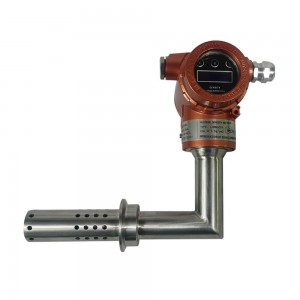
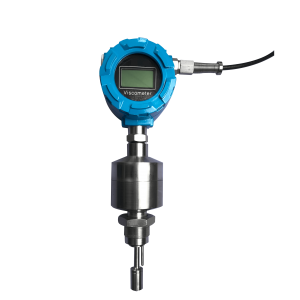
Several liquid hydrocarbon measurement techniques are deployed within modern refineries. These include Coriolis flowmeters, which directly measure mass flow and density; vibrating tube densitometers, which sense fluid density via changes in resonance frequency; and nuclear density gauges, which infer density by detecting gamma ray absorption. Lonnmeter specializes in manufacturing inline density meters and viscosity meters that support robust, continuous monitoring in demanding process conditions typical of the hydrocarbon industry. These technologies ensure accuracy for custody transfer measurement, product blending optimization, interface detection, and process fractionation management, all while minimizing manual sampling and human error.
Post time: Dec-15-2025


