

Steam turbines in power plants and factories apply lubricating oil for long-term smooth operation even in high pressure and temperature conditions. Continuous viscosity measurement of lube oil determines life span, breakdown time and maintenance costs to a certain extent.
Function and Importance of Lube Oil
Lubricating oil fulfills an array of indispensable tasks, starting with its primary duty to create a thin, resilient layer between rotating shafts, bearings, and gears, thereby curtailing frictional losses that could otherwise escalate into severe mechanical erosion. Besides, the fluid excels in thermal management by absorbing and conveying away excess heat generated during high-velocity rotations, which prevents overheating and preserves structural integrity across the turbine assembly.

Turbine Lubrication
*
Its sealing properties further contribute by filling microscopic gaps to block ingress of air or contaminants, while its anti-corrosive additives form protective barriers against oxidative degradation and rust formation on vulnerable metallic components. Additionally, the oil's cleansing action sweeps away particulates, varnish deposits, and sludge that accumulate from operational byproducts, maintaining internal cleanliness and unobstructed pathways. In hydraulic contexts, it transmits force efficiently to actuate control valves and governors, ensuring precise regulation of turbine speed and load response.
Why Precise Measurement Is Vital
Minor deviations in lube oil viscosity could cascade into significant operational accidents. Therefore continuous viscosity control emerges as a non-negotiable element for upholding the integrity of the lubricating film that bears immense loads without faltering. This precision directly correlates with diminished abrasion on critical parts like thrust bearings and journals, extending service intervals and reducing the frequency of invasive inspections.
Moreover, it fosters heightened efficiency by optimizing fluid dynamics within the system, allowing for smoother energy transfer and lower parasitic losses that might otherwise inflate operational expenses.
Adverse Effect Caused by Low Viscosity vs. High Viscosity
When viscosity falls below optimal thresholds, the resultant thinning of the oil layer invites film rupture, exposing surfaces to direct contact that accelerates erosive wear and potentially culminates in bearing failures or shaft scoring. Immediate halts for repairing is needed to prevent long-term degradation and equipment wearing.
Over-viscous oil imposes undue burdens on circulation pumps, causing heightened resistance that drives up energy demands and generates surplus thermal buildup. Then subsequent oxidation and varnish formation result in broader systemic strains, including reduced fuel economy and elevated emissions.

Ideal Viscosity Range of Lube Oil in Steam Turbine Power Plant
Based on industry benchmarks and turbine manufacturer specifications, the sweet spot for lubricating oil viscosity in steam turbines generally spans ISO viscosity grades 32 to 68, corresponding to kinematic viscosities of approximately 28.8 to 74.8 centistokes at 40 degrees Celsius, which accommodates the typical operating temperatures and shear rates encountered in these systems. This range ensures adequate film thickness for load-bearing while facilitating efficient pumping and heat dissipation, with adjustments often made for specific turbine designs or ambient conditions to maintain fluidity without compromising protection. In our automation projects, selecting oils within this bracket, coupled with continuous verification, has proven instrumental in harmonizing performance across diverse setups, from compact industrial units to large-scale utility turbines.
Challenges in Traditional Viscosity Measurement
Conventional laboratory-based approaches to assessing oil viscosity, reliant on periodic sampling and off-site analysis, inherently suffer from a lack of immediacy in data acquisition, which delays the identification of emerging faults and allows minor issues to evolve into major malfunctions before intervention. Compounding this, inaccuracies stemming from inconsistent sampling techniques—such as contamination during extraction or temperature variations during transport—further undermine result reliability, while the associated expenses for specialized equipment and trained personnel strain budgets without yielding proportional returns. Moreover, these methods foster isolated data pockets that resist integration with broader plant monitoring systems, hindering holistic oversight, and fail to capture dynamic shifts during transient states like startups or load changes, leaving operators blind to real-time fluctuations.
Common Issues in Steam Turbine Lubrication
Among the recurrent hurdles in turbine lubrication, water ingress stands out as a pervasive threat, emulsifying with the oil to impair demulsibility and accelerate corrosion, often exacerbated by seal failures or condenser leaks that demand vigilant monitoring to prevent. Varnish accumulation, arising from thermal degradation and oxidation, clogs filters and coats servo valves, disrupting hydraulic controls and necessitating frequent cleanings or oil purges to restore functionality. Particle contamination from wear debris or environmental dust further aggravates abrasion, underscoring the value of robust filtration systems in prolonging oil usability.
Learn About More Density Meters


More Online Process Meters


How to Measure Lube Oil Viscosity in Steam Turbine Power Plant?
Addressing how to measure oil viscosity involves a spectrum of techniques, from kinematic methods using capillary tubes to determine flow rates under gravity. In power plant contexts, portable viscometers offer on-site convenience for spot checks, while automated benchtop units provide higher precision through controlled temperature baths. However, for comprehensive oversight, transitioning to inline instruments that continuously gauge viscosity directly in the flow path represents a leap forward, eliminating sampling biases and delivering instantaneous feedback.
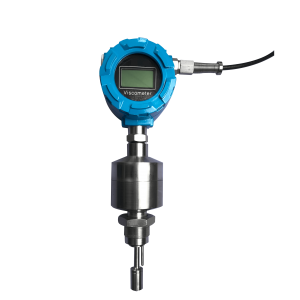
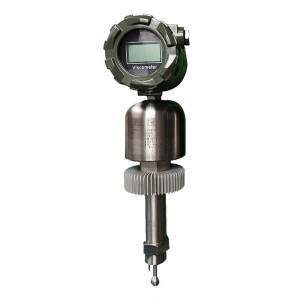
Lonnmeter Oil Viscometer
Engineered for demanding industrial arenas, the Lonnmeter oil viscosity measuring instrument leverages vibrational technology, where a tuned resonator immersed in the fluid oscillates at a natural frequency, with the damping effect proportional to viscosity, allowing precise calculations without moving parts susceptible to wear. This principle guarantees elevated accuracy across wide ranges, steadfast stability amid temperature variances, and unyielding reliability even in abrasive or high-pressure settings typical of turbine environments.
Benefits of Inline Viscosity Measurement
Embracing inline viscosity assessment unlocks a cascade of advantages, foremost among them the provision of uninterrupted data streams that enable swift responses to fluid property shifts, thereby enhancing fault anticipation and curtailing unscheduled outages. This approach bolsters energy efficiency by fine-tuning oil circulation to minimize drag and thermal buildup, while simultaneously curbing maintenance expenditures through targeted interventions rather than blanket overhauls. Integration with existing automation infrastructures amplifies its impact, fostering a unified view that supports advanced analytics for longevity forecasting and resource allocation.
The viscosity of an industrial lubricating oil is measured in centistokes or similar units, reflecting its flow characteristics under standard conditions. Eplore how the Lonnmeter lube oil viscosity meter can revolutionize your viscosity management, request a customized quote today and discover tailored solutions that align with your operational needs, backed by expert support in deployment and integration.


