

I. The Viscosity Imperative in Hydrocarbon Separation
The conditioning of raw crude oil—a process encapsulated by crude oil dehydration and desalting process (D/D/D)—represents one of the most critical and expensive steps in hydrocarbon production and refining. These processes are inherently high-stakes, as failure to efficiently separate water and salts directly compromises product quality and jeopardizes downstream refinery operations through accelerated corrosion and catalyst deactivation.
Viscosity is recognized as the single most critical, real-time indicator of separation kinetics and emulsion stability. A high-viscosity emulsion acts as a physical barrier, severely inhibiting the necessary gravitational settling and coalescence of dispersed water droplets.
However, the operating environment of D/D/D—characterized by extreme pressures, high temperatures, corrosivity, and the presence of complex, non-Newtonian, multiphase fluids—renders traditional viscosity measurement methods unreliable and prone to failure. Conventional technologies, often reliant on moving parts or narrow capillary tubes, quickly succumb to fouling, wear, and mechanical breakdown.

Crude Oil desalter
*
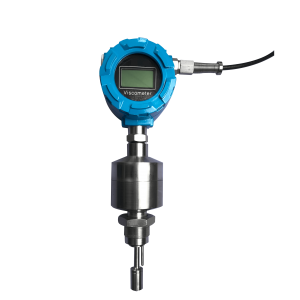
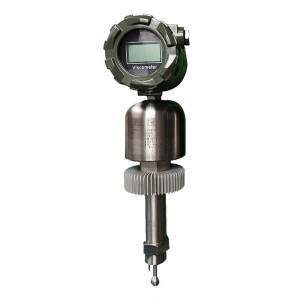
The market demands a paradigm shift toward robust instrumentation capable of continuous, high-fidelity measurement. The Lonnmeter Inline Vibrational Viscometer provides this necessary reliability. Utilizing a robust, simple mechanical structure with no moving parts, seals, or bearings , this technology offers unparalleled accuracy and durability in hostile conditions. By integrating this real-time viscosity feedback loop into the Distributed Control System (DCS), operators gain the ability to dynamically optimize demulsifier dosage and heating profiles. This capability yields a significant, quantifiable return on investment through substantial chemical cost avoidance, energy savings, enhanced product quality compliance, and increased operational efficiency.
II. Crude Oil Emulsions: Formation, Stability, and Process Objectives
2.1. The Chemistry and Physics of Crude Oil Emulsion Stability
The production of crude oil invariably results in the formation of stabilized emulsions, most commonly the water in oil and oil in water type, where water droplets are finely dispersed throughout a continuous oil phase. The stability of these emulsions is a function of both chemical composition and physical properties, which must be overcome for successful conditioning.
The long-term stability of these emulsions is primarily driven by natural surface-active agents inherent in the crude. These indigenous emulsifiers include complex polar molecules such as asphaltenes, resins, naphthenic acids, and finely divided solid particles derived from production activities, such as clays, drilling mud residues, and corrosion by-products. These substances exhibit a crucial function: they rapidly adsorb onto the critical oil-water interface, where they organize into a rigid, protective film. This film physically prevents the dispersed water droplets from interacting and aggregating, reducing the Interfacial Tension (IFT) and stabilizing the system.
The combined physical and chemical challenges imposed by the crude chemistry are integrated and manifest directly in the bulk rheological properties of the fluid. High crude oil viscosity is a direct enhancement factor for emulsion stability. Viscosity acts as a fundamental physical barrier to separation kinetics.

2.2. Objectives of Demulsification, Dehydration, and Desalting (D/D/D)
The integrated D/D/D process sequence aims to prepare the crude oil stream for transportation and subsequent refining, ensuring compliance with strict safety and quality standards.
2.2.1. Demulsification and Dehydration
Demulsification of crude oil involves the application of specialized surface-active agents designed to disrupt the stabilizing interfacial film. These demulsifier molecules adsorb at the interface, effectively displacing the indigenous emulsifiers, substantially reducing the interfacial tension, and weakening the mechanical strength of the protective membrane. Once this chemical action is complete, the process proceeds to dehydration of crude oil (phase separation).
The primary objective of crude oil dehydration process is to achieve complete phase separation, ensuring the resulting crude oil meets strict specifications for Basic Sediment and Water (BS&W). Typically, pipeline transportation specifications mandate that the treated crude oil contain less than 0.5% to 1.0% BS&W. Studies have shown that optimum demulsifier formulations must achieve high separation efficiency, with effective formulations demonstrating separation rates of 88% or higher during testing. Furthermore, the process must yield effluent water with sufficiently low oil content (e.g., below 10 to 20 mg/L) to satisfy environmental discharge or reinjection requirements.
2.2.2. Desalting
Desalting is a crucial water-washing operation performed to reduce the salt content of the crude, measured in Pounds per Thousand Barrels (PTB). This process, performed either at the production field or at the refinery site, involves mixing the heated crude oil with wash water and emulsion-breaking chemicals. The mixture is then subjected to a high-voltage electrostatic field within a gravity settler tank to facilitate the breaking of the residual oil in water and water in oil emulsion and the removal of the brine phase.
The necessity of rigorous desalting is non-negotiable. If salts and heavy metals are not removed, they hydrolyze when heated in subsequent refining stages, generating corrosive acids (such as hydrogen chloride). This acidity results in severe corrosion of downstream process equipment, including heat exchangers and distillation columns, and can cause catastrophic catalyst poisoning. Therefore, achieving salt separation efficiency of approximately 99% is critical to operational integrity and economic viability. Temperature control is vital in desalting, as the stripping temperature is often reached by heating the crude or the gas/vapor mixture, accelerating the separation of both water and contaminants.
III. The Critical Role of Real-Time Viscosity Measurement
3.1. Viscosity as the Real-Time Process Control Parameter
Viscosity is not merely a descriptive property; it is the fundamental dynamic parameter that dictates the kinetics of separation. Every control measure implemented in the D/D/D process—be it chemical injection, thermal input, or mechanical mixing—is ultimately aimed at overcoming or reducing the viscosity barrier to speed up droplet coalescence.
Monitoring viscosity serves as the essential dynamic feedback mechanism for assessing the performance of the demulsifier. The successful chemical breakdown of the stabilized emulsion should produce a measurable and often rapid decrease in the bulk fluid viscosity. This rheological change can be quantified in a closed-loop system, allowing continuous evaluation of chemical agent effectiveness. This real-time feedback loop is essential because it allows operators to move beyond static, periodic laboratory testing, which is prone to errors due to crude oil sample aging and loss of light components.
Furthermore, viscosity is intrinsically linked to energy optimization. The optimal desalter operating temperature is fundamentally dependent on the crude oil's viscosity and density, as well as the solubility of water within the crude. Heavy or viscous crude requires significantly higher temperatures to reduce viscosity enough for effective water droplet movement and gravitational settling. Continuous viscosity data allows process engineers to establish and maintain the minimum effective temperature required for efficient separation, preventing both costly over-heating and insufficient separation caused by temperatures that are too low.
This relationship positions viscosity at the nexus of operational control. Desalter performance is driven by four key factors: fluid quality, operational parameters (P/T), chemical dosage, and mechanical aspects. Operational and chemical factors are the primary control levers. Viscosity connects these levers directly. For instance, if the continuous monitoring system detects an increase in viscosity, the integrated DCS can dynamically assess the situation and choose the most cost-effective path to separation—either a minimal increase in thermal energy (for density or solubility challenges) or a targeted increase in demulsifier concentration (for chemical stability challenges). This capacity for dynamic intervention shifts control from conservative, reactive adjustments to precise, proactive optimization.
3.2. Consequences of Inaccurate or Delayed Viscosity Measurement
The absence of accurate, continuous viscosity data introduces significant operational risks and guarantees economic inefficiency.
Chemical Over-Dosing and OPEX Inflation
If viscosity measurement is reliant on intermittent lab samples, or if the inline instrument provides imprecise data, the demulsifier dosage cannot be optimized relative to the immediate stability challenge of the incoming crude stream. Consequently, operators resort to injecting chemical doses far exceeding the required minimum to ensure separation. Considering that achieving optimum separation typically requires a formulation dosage in the range of 50 to 100 ppm , habitual over-injection of specialized, expensive demulsifiers results in substantial and avoidable inflation of Operational Expenditure (OPEX).
Energy Inefficiency
Without accurate, real-time viscosity feedback, process heating must be conservatively set at a point guaranteed to reduce the viscosity of the worst-case crude anticipated. Relying on fixed, high setpoints or delayed data leads to continuously heating the crude beyond the necessary minimum. This results in substantial and continuous thermal energy waste, constituting one of the largest controllable variable costs in the D/D/D process train.
Product Quality Failure and Downstream Damage
Inaccurate measurements translate directly into sub-optimal separation performance. If the emulsion is inadequately resolved, the resulting treated crude will fail to meet the required BS&W or PTB specifications. Off-spec crude not only incurs commercial penalties but, more critically, risks the entire downstream refining operation. Salt contamination that remains untreated accelerates corrosion due to acid formation and leads to plugging and fouling of critical heat exchange surfaces and process towers. Failure to monitor and control viscosity therefore indirectly contributes to costly maintenance, unplanned shutdowns, and potential capital equipment replacement.
Operational Instability
Crude oil emulsions often exhibit complex non-Newtonian behavior, where their apparent viscosity changes depending on the shear rate applied. Inaccurate measurements complicate the modeling and control of multiphase flow dynamics, which can lead to flow anomalies such as problematic slug characteristics, unstable holdups, and uneven phase distributions. Furthermore, inadequate demulsification may necessitate increased retention times in the settling vessel, which can paradoxically lead to re-emulsification, further reducing efficiency and increasing risks.
Learn About More Density Meters


More Online Process Meters


IV. Challenges of Viscosity Measurement in Crude Oil Conditioning
4.1. The Hostile Process Environment Mandates Robustness
The inline viscometer selected for D/D/D applications must be capable of withstanding operational conditions that far exceed the design limits of standard laboratory or industrial equipment.
Extreme Pressure and Temperature Conditions
The D/D/D process often involves high operational pressures and elevated temperatures. For instance, desalters utilize heated crude oil, and specialized measurements like Reservoir Fluid Analysis (RFA) often require sensors that can operate across all reservoir conditions globally. The specialized instrument must be robust, with temperature resistance typically needing to reach up to 450 ℃ and pressure ratings capable of handling standard operational pressures (e.g., up to 6.4 MPa) or custom-engineered solutions for extreme services exceeding 10 MPa.
Corrosivity, Fouling, and Scaling
The fluid being processed is highly aggressive. Raw crude oil contains brines, acidic components (like naphthenic acids), and sometimes hydrogen sulfide (H2S), creating a corrosive environment that rapidly degrades standard materials. Furthermore, the presence of finely divided solids (clays, sand, asphaltenes) and salts leads to persistent fouling and scaling on sensor surfaces. Instrumentation must be constructed from highly durable materials, such as 316 Stainless Steel, with customization options utilizing specialized corrosion-resistant coatings or materials (e.g., Teflon coatings) to ensure longevity in contact with the corrosive brine phase.
Multiphase and Non-Newtonian Complexity
Crude oil streams in the conditioning phase are rarely homogenous. They are complex, multiphase mixtures containing entrained gas/bubbles, dispersed water droplets, and suspended solids. This complexity is compounded by the non-Newtonian rheology typical of heavy crude or high-asphaltene emulsions. Measuring the viscosity of a fluid whose flow behavior is dependent on the instantaneous shear rate, and which contains multiple phases and suspended particles, presents a formidable challenge to any sensor technology.
4.2. Fundamental Limitations of Conventional Viscometry
The limitations inherent in conventional viscosity measurement techniques demonstrate why they are fundamentally unsuitable for continuous, inline crude oil processing control.
Rotational Viscometers
Rotational viscometers rely on measuring the torque required to rotate a spindle within the fluid. This principle requires a mechanically complex design incorporating moving parts, seals, and bearings. In the D/D/D environment, these components are highly vulnerable to failure: abrasive solids and corrosive brines cause rapid wear and seal failure, leading to high maintenance costs and intermittent operation. Furthermore, rotational devices are limited in very high viscosity ranges, cannot effectively handle large particles , and are highly sensitive to temperature fluctuations, which makes them prone to operator-dependent results rather than reliable continuous feedback.
Capillary and Other Traditional Methods
Methods like capillary viscometry rely on measuring the flow rate through a restrictive tube. While precise under laboratory conditions, they are impractical for industrial service. They struggle to provide precise results for non-Newtonian fluids and are extremely susceptible to clogging from the suspended particles and solid deposits present in crude oil streams. This vulnerability necessitates high maintenance, results in frequent operational interruptions, and fundamentally precludes their use for high-uptime, continuous control in a process stream.
The convergence of failure modes for conventional viscometers—mechanical vulnerability (seals, bearings) and sensitivity to dirty, corrosive flow conditions (clogging, abrasion)—establishes a clear engineering requirement. Successful inline crude oil measurement mandates a sensor technology that completely eliminates moving parts and restrictive flow paths, shifting the burden of measurement away from vulnerable mechanical mechanisms toward resilient physics principles.
V. The Lonnmeter Inline Vibrational Viscometer: A Robust Solution
5.1. Unique Design and Working Principle
The Lonnmeter inline vibrational viscometer is engineered specifically to address the critical gaps left by conventional technology in hostile fluid environments.
Principle of Operation
The viscometer operates on the principle of axial vibration damping. The system employs a solid sensor element, often conical, that is induced to oscillate continuously at a precise frequency along its axial direction. As the crude oil emulsion flows over and is sheared by this vibrating element, the fluid absorbs energy due to viscous drag—a damping effect. The lost energy resulting from this shearing action is measured by an electronic circuit and is directly correlated and converted into a dynamic viscosity reading, typically measured in centipoise (cP). This method essentially measures the power necessary to maintain a steady vibration amplitude.
Simple Mechanical Structure
A profound technical advantage of the Lonnmeter inline viscometer is its simplicity. The fluid shearing is achieved exclusively through vibration, which permits a completely simple mechanical structure—one that contains no moving parts, seals, or bearings. This structural integrity is paramount: by removing the components most susceptible to wear, corrosion, and failure in high-pressure, abrasive environments, the Lonnmeter ensures exceptionally high durability and minimal maintenance requirements, directly overcoming the core limitations of rotational instruments. The standard configuration utilizes robust 316 Stainless Steel, with customization available for aggressive media, including the use of Teflon coatings or specific anti-corrosion alloys.
5.2. Parameters Addressing Specific Process Challenges
The technical specifications of the Lonnmeter in-line vibrational viscometer demonstrate its fitness for the extreme demands of the D/D/D process train:
Robust Specifications of the Lonnmeter Viscometer
|
Parameter |
Specification |
Relevance to Crude Oil D/D/D Challenges |
|
Viscosity Range |
1 – 1,000,000 cP |
Comprehensive coverage for varying crude grades, including heavy oil, bitumen, and high-viscosity emulsions. |
|
Accuracy / Repeatability |
±2% ~ 5% |
High precision is vital for the precise calculation of demulsifier chemical usage and energy optimization setpoints. |
|
Max Temperature Resistance |
< 450℃ |
Ensures reliable performance across high-temperature pre-heater and desalter operations. |
|
Max Pressure Rating |
< 6.4 MPa (Customizable >10 MPa) |
Handles standard process pressures, with custom engineering for extreme high-pressure upstream applications. |
|
Materials |
316 Stainless Steel (Standard) |
Standard construction provides high resistance to general corrosion; customized materials address specific brine and H2S challenges. |
|
Protection Level |
IP65, ExdIIBT4 |
Meets stringent explosion-proof and environmental standards for hazardous industrial settings. |
5.3. Technical and Operational Advantages
Superior Performance in Complex Flows
The vibrational principle provides intrinsic benefits in handling the complex, multiphase nature of crude oil emulsions. The continuous high-frequency vibration provides a gentle, self-cleaning effect on the sensor surface, actively inhibiting the buildup of fouling, scaling, and wax deposits. Unlike vortex or rotational technologies, the Lonnmeter sensor is inherently less susceptible to measurement error caused by entrained gas bubbles or suspended solid particles (multiphase flow). This resistance to fouling and solid accumulation ensures continuity of measurement where conventional instruments would fail or require constant servicing.
The absence of seals and bearings represents a critical competitive edge. Since the D/D/D environment is defined by its corrosive brines and high potential for solids contamination, eliminating the most vulnerable mechanical components removes the largest source of operational downtime and costly maintenance associated with instrument failure in crude service. This fundamental engineering decision guarantees maximum uptime for the crucial viscosity feedback loop.
Accurate Non-Newtonian Measurement
The Lonnmeter system operates by imparting high shear rates onto the fluid through vibration. For the complex, non-Newtonian crude oils common in D/D/D, where viscosity is shear-rate dependent, this high-shear measurement is crucial. It accurately captures the "true viscosity change" relevant to the actual high-flow dynamics of the process line, preventing the rheological artifacts that can occur with low-shear devices, such as certain rotational viscometers, which may inadvertently alter the effective viscosity of the fluid during measurement.
Seamless Digital Integration Leadership
To realize the full optimization potential, the viscometer must provide data that is easily actionable by control systems. The Lonnmeter provides standard industrial outputs (4–20 mADC, Modbus) for both viscosity and temperature. This seamless digital data stream facilitates rapid integration into existing Distributed Control Systems (DCS) or SCADA platforms. Implementing this advanced technology requires a phased digital transformation approach, starting with the integration of the sensor data to mitigate initial complexity and demonstrate early return on investment (ROI). This integrated data forms the basis of a diagnostic matrix, allowing operators to rapidly correlate viscosity anomalies with other data streams (e.g., temperature, pressure differential) to guide effective corrective action.
VI. Optimization and Economic Value Proposition
The true economic value of the Lonnmeter Inline Vibrational Viscometer is realized when passive measurement is converted into active, closed-loop process control. The precise, high-integrity data stream establishes the necessary feedback mechanism to dynamically manage the two largest variable operating expenditures: chemical consumption and thermal energy usage.
6.1. Linking Real-Time Viscosity to Dynamic Process Control
The optimization strategy relies on integrating viscosity readings with the primary control levers—demulsifier dosage and heating temperature—to ensure optimal separation kinetics are maintained at the lowest possible cost.
The primary control objective is to identify and maintain the point of minimum effective separation viscosity. If the system detects a deviation, the response is calculated based on current operational costs.
Optimization Feedback Loop
|
Observed Viscosity Trend (Real-Time) |
Process Condition Diagnosis |
Corrective Action (Automated/Operator) |
Anticipated Economic Impact |
|
Viscosity is increasing post-mixing/injection |
Incomplete Demulsification or Insufficient Coalescence Rate |
Increase Demulsifier Dosage (PPM) OR Increase Heating Temperature Setpoint |
Maximizes throughput; Prevents re-emulsification and slugging |
|
Stable, consistent viscosity, but historical data shows higher than necessary |
Sub-optimal Operating Temperature for current crude rheology |
Reduce Pre-heater/Desalter Temperature Setpoint to lowest effective T |
Directly reduces thermal energy consumption; Primary OPEX saving |
|
Viscosity rapidly decreasing and stabilizing at a low point |
Near-Optimal Separation Achieved / Risk of Chemical Overage |
Reduce Demulsifier Dosage (PPM) towards the minimum effective dose |
Directly reduces chemical procurement and disposal costs |
Demulsifier Dosage Optimization
The control system uses real-time viscosity as a performance metric to dynamically adjust the demulsifier injection rate. This capability eliminates the costly and common practice of over-dosing chemicals to compensate for crude variability or reliance on delayed lab results. By reducing the dosage to the minimum effective concentration required to achieve target separation, operators guarantee the optimal use of expensive chemical agents while maintaining high efficiency (e.g., achieving 99% salt separation).
Thermal Energy Management
Since desalter temperature requirements are dictated by the crude’s rheological profile, accurate viscosity readings permit the system to maintain the pre-heater and desalter temperatures at the lowest effective setpoint needed for phase separation. This capability prevents massive and unnecessary energy expenditure associated with crude oil heating, yielding significant and sustained OPEX savings.
By maintaining dynamic control over these variables, the plant transitions from a reactive, set-point-based operation to a proactive, rheology-optimized system. This data stream allows operators to transition toward a predictive maintenance philosophy. For example, a sudden, unexplained increase in viscosity, when cross-referenced with stable temperature and demulsifier dosage, can signal an impending mechanical problem, such as excessive fouling or pump wear, allowing for preemptive intervention before a catastrophic operational failure occurs.
6.2. Quantifiable Benefits and ROI Realization
The integration of the Lonnmeter Inline Vibrational Viscometer delivers tangible and sustained financial return across the production value chain.
Reduced Operational Costs:
Chemical Savings: Dynamic dosage control minimizes the injection of costly chemical demulsifiers, securing immediate cost avoidance.
Energy Savings: Optimization of heating temperature based on real-time rheological data drastically cuts the massive fuel/steam consumption inherent in heating crude oil.
Maintenance Savings: The simple structure, devoid of moving parts, seals, and bearings, coupled with the self-cleaning property of the vibrational sensor, eliminates the high maintenance and servicing costs associated with conventional instruments in corrosive, fouling service.
Enhanced Product Quality and Value: The guaranteed attainment of strict quality targets, such as achieving $\le 0.5$% BS&W and high PTB removal, ensures that the crude oil meets sales specifications, avoiding commercial penalties and the massive downstream costs associated with reprocessing or corrosion mitigation.
Increased Operational Efficiency and Throughput: Optimization of chemical and thermal inputs leads to faster, more consistent separation kinetics. This reduces the required settling time and retention time, thereby increasing the effective throughput capacity of the facility.
Improved Safety and Reliability: Minimizing the reliance on manual sampling and laboratory testing reduces operator exposure to high-pressure, high-temperature, and corrosive process lines. The superior reliability of the robust sensor structure significantly reduces the likelihood of instrument-related unplanned shutdowns.
Effective Demulsification, Dehydration, and Desalting are foundational to the financial success and operational integrity of the hydrocarbon industry. The process complexity, crude variability, and highly aggressive operating conditions demand a level of measurement precision and sensor robustness that conventional technologies simply cannot provide. Mechanical complexity, susceptibility to corrosion, and vulnerability to fouling render traditional viscometers liabilities, risking both process efficiency and asset protection.
The Lonnmeter Inline Vibrational Viscometer stands as the definitive solution, engineered specifically to thrive in this hostile industrial environment. Its simple, no-moving-parts design guarantees continuous, high-integrity data flow, overcoming the intrinsic failure mechanisms of conventional rotational and capillary systems. By accurately measuring the true, high-shear viscosity of complex, non-Newtonian crude oil, the Lonnmeter enables a dynamic, predictive control strategy. This strategy provides the engineering foundation for the closed-loop optimization of demulsifier dosage and heating profiles, ensuring consistent product quality and maximum operational efficiency.
The integration of this advanced technology transitions the D/D/D process from conservative, risk-averse operation to a precise, cost-optimized system. This approach delivers immediate, quantifiable return on investment through substantial reduction in chemical consumption and energy waste.
Request a Detailed RFQ Consultation.
Take the crucial step toward guaranteeing compliant crude quality while maximizing economic returns. Start Saving on chemical and energy expenditures today by implementing the industry's most robust inline viscometry solution. Claim your offer of a customized process solution consultation and detailed Request for Quotation (RFQ). Contact our engineering specialists now to initiate your optimization roadmap tailored to your specific crude rheology, operational constraints, and demanding ROI objectives.


